
Why did Ford stop making the Model T? The short answer is in Ford's own production figures. In 1923 the company built 1,817,891 cars in the United States. In 1926 it built 1,368,383. In 1927 it built 356,188, and by then Chevrolet had passed Ford for first place. A car that once accounted for half of all the automobiles in America was losing buyers fast, and on May 25, 1927, Ford announced it would be discontinued.
Car Features
7 min read
Why Ford Stopped Making the Model T in 1927
Ford car sales fell from 1.8 million in 1923 to 356,188 in 1927 as Chevrolet took first place. Why the Model T ended.
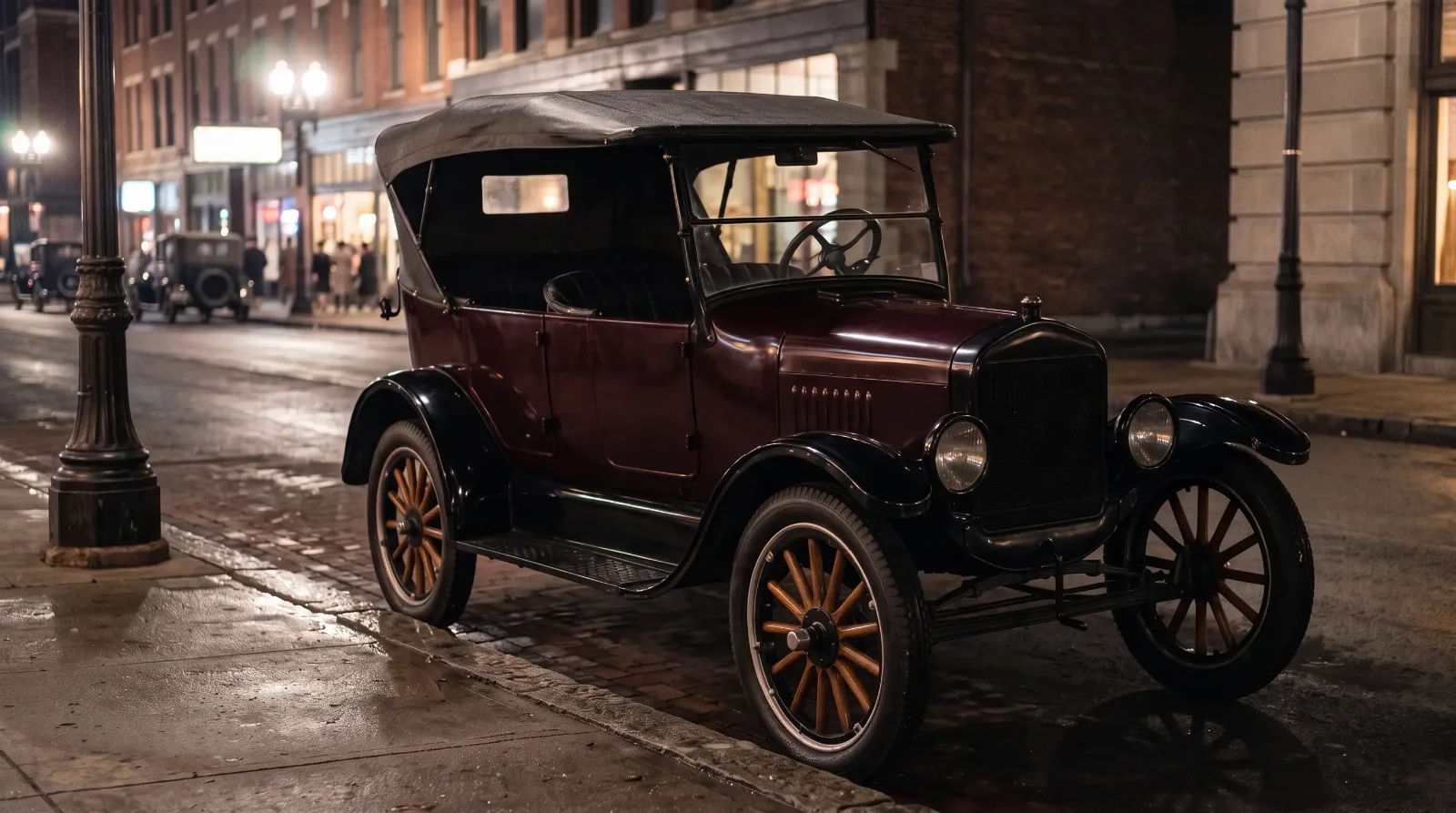
The popular version of the story says Henry Ford was too stubborn to see it coming, then killed the car overnight. Both halves need some correction. The decline took several years to show in the numbers, and the end was not a single day. Highland Park stopped on May 26, 1927, and US branch plants finished days later, but Model Ts were still being built in Cork, Ireland, in December 1927, and Model T engines kept coming off a Ford line until 1941. For the full production run in context, the parent history has the details.
The numbers that ended the Model T
The record shows a car at its peak in the early 1920s. In 1918, half of all cars in America were Model Ts, and in the early 1920s more than half of the registered cars in the world were Fords. Ford's US car output of 1,817,891 in 1923 was the high water mark.
Then the line bends. The fall from 1923 to 1926 was about a quarter, which a company of Ford's size could absorb. The fall from 1926 to 1927 was something else. Part of the 1927 figure reflects the shutdown, since production stopped at the end of May. Even so, Chevrolet outsold Ford by more than two to one that year.
| Year | Ford US car production | What else happened |
|---|---|---|
| 1923 | 1,817,891 | Peak year for Ford cars |
| 1925 | Price low point | Runabout list price reaches its all time low, $260 |
| 1926 | 1,368,383 | Runabout price rises to $360; colors return on closed cars |
| 1927 | 356,188 | Chevrolet outsells Ford more than two to one and takes first place; Highland Park ends Model T production May 26; branch plants finish days later |
One detail in that table deserves attention. Ford had spent nearly two decades cutting the price. The Runabout fell from $825 in 1909 to $260 in 1925. Price cuts were the company's answer to every slowdown, and for years they worked. When the Runabout went back up to $360 for 1926 and 1927, the old lever was no longer pulling sales.
Chevrolet and the case for trading up
The competitor that did the damage was General Motors, and specifically Chevrolet. GM's president, Alfred P. Sloan, bet that Model T owners would trade up for comfort, features and style. GM's own phrase for the strategy was "a car for every purse and purpose," from Sloan's 1924 annual report.
The 1927 Chevrolet Capitol Series AA showed what that meant in steel. It had an overhead valve four, a three speed sliding gear transmission and steel disc wheels, offered in seven body styles from $525 to $745. Its best seller, the $695 two door Coach, accounted for about a quarter of the volume. That was more money than a Model T. Buyers paid it anyway. In 1927 Chevrolet outsold Ford more than two to one.
The Model T, by contrast, still used a two speed planetary transmission worked by pedals, the same basic layout as 1908. It was simple and tough. It was also what the buyer's father had driven. A buyer trading in a first Ford in the mid 1920s could step up to a more modern car for somewhat more money, and plenty did.
"The sales ledger tells you more than any of the legends. Ford did not lose the market in a year. It lost it a few hundred thousand cars at a time, and the price cuts that had always worked stopped working."
Tom Ramirez
Ford's last attempt to keep it going
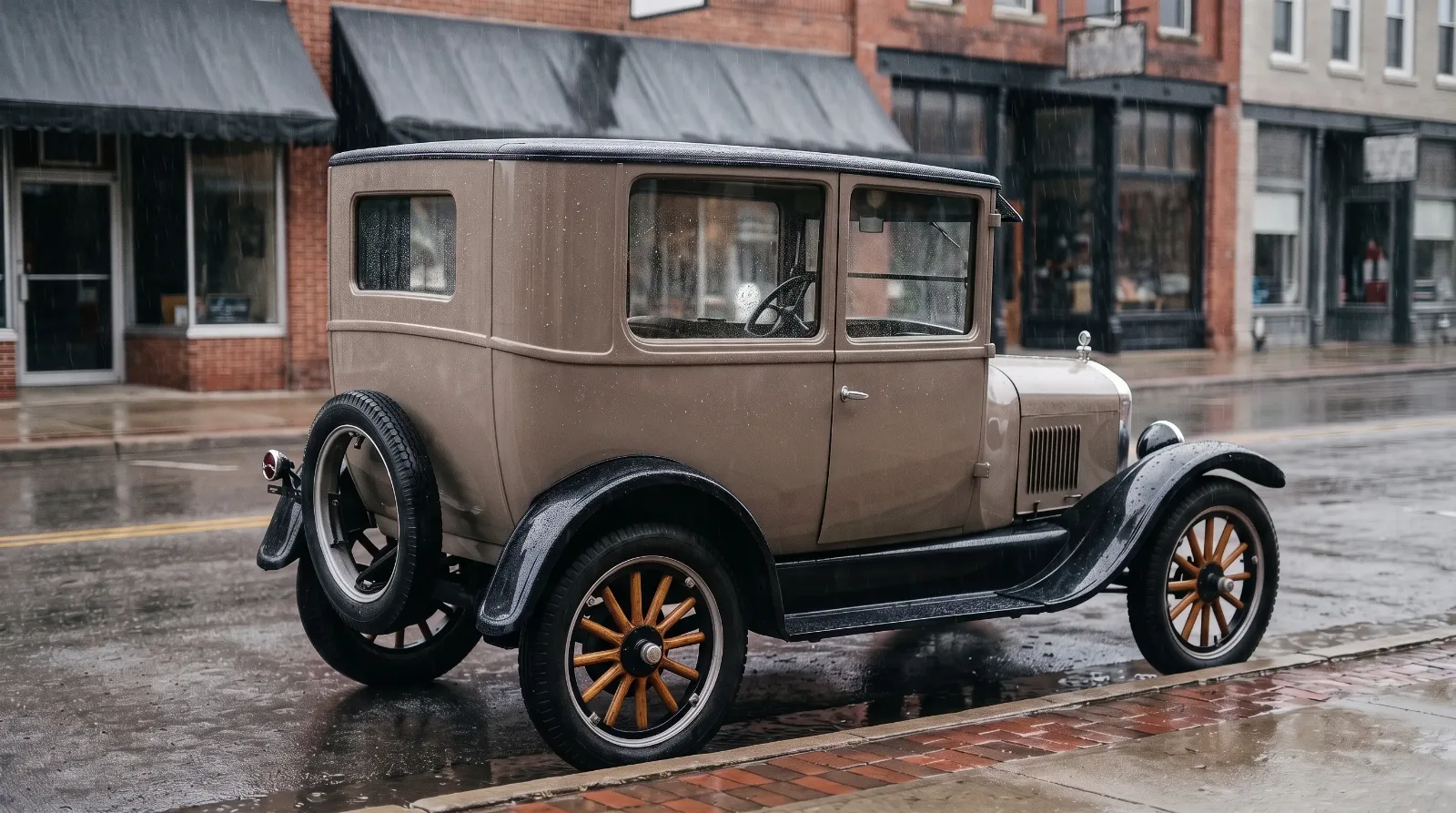
Ford did respond, if late. The Improved Model T for 1926 and 1927 brought a wider, straighter cowl, the fuel tank moved into the cowl on most models, larger brakes and pedals, updated fenders and a ride height lowered by about an inch. Closed cars got colors again, with names like Fawn Gray, Royal Maroon and Highland Green, while the fenders stayed black.
Inside the company, the push for something new came largely from Edsel Ford. He had been president of Ford since 1919, pushed for the Model T styling changes of the mid 1920s, and pressed for a replacement for the T. Henry Ford overruled him repeatedly. The facelift was what Henry would allow. It was not enough to change the trend in the numbers above.
It is fair to correct one part of the stubbornness story here. Henry Ford did eventually allow colors, a new body and a series of improvements on the old car. What he would not accept until 1927 was the idea that the T itself had run its course. When he did accept it, he moved quickly.
Why did Ford stop making the Model T all at once?
The way Ford ended the Model T was unusual. The company did not phase in a new model alongside the old one. It announced the discontinuation on May 25, 1927. The next day, May 26, Henry and Edsel Ford drove the 15 millionth car off the line at Highland Park. Factories shut in early June 1927, and production stopped for about six months while the Model A was readied.
The cost was severe. By two accounts, about 60,000 workers lost their jobs during the changeover, though at least one source attaches that same figure to the end of the Model A in 1931, so treat it with some care. Model A assembly moved from Highland Park to the River Rouge complex.
Why stop completely rather than overlap? The Model A shared no parts with the Model T. It needed new tooling, a new engine, a three speed sliding gear transmission in place of the planetary, and a new plant arrangement. There was no easy way to run both. Ford chose a clean break, and the Model A was introduced in December 1927. The changes Ford made in that new car are covered in depth if you read more here.
What the record says, in plain terms
Taken together, the evidence points to a few clear causes rather than one dramatic decision:
- Ford car output fell from 1,817,891 in 1923 to 1,368,383 in 1926, then collapsed in 1927.
- Price cuts, Ford's usual remedy, had reached their limit at $260 in 1925.
- Chevrolet, under GM's trade up strategy, offered a more modern car and passed Ford in 1927.
- The 1926 and 1927 Improved Model T was a facelift on an old design, not a new car.
Total production finished at more than 15 million, counting branch plants and overseas assembly. The last Model T built anywhere came from Cork in December 1927. The car did not fail. It succeeded for so long that its buyers outgrew it, and Ford took a few years too many to admit it.
Sources and notes
- The Henry Ford, Benson Ford Research Center: Model T production figures (Nevins and Hill)
- Mac's Motor City Garage: Tin Lizzie's last stand, the 1926-27 Model T
- Mac's Motor City Garage: the 1927 Chevrolet Capitol Series AA
- History.com: last day of Model T production at Ford
- Ford Motor Company, From the Road: the Model T
- Wikipedia: Edsel Ford
Related Reading
Have a
Ford Model T
for Sale?
Reach thousands of serious classic car collectors across the US.
Sell It Here →
Selling a classic? Here's how: compare the places to sell classic cars
Are You a Classic Car Dealer?
List your full inventory and connect with targeted classic car buyers.
Join as a Dealer →

About the author
Tom Ramirez
Corvette researcher and historian based in Bowling Green, Kentucky. Two decades documenting Corvette production history from original factory records.
Related Listings - Ford Model T

Comments
Be the first to comment on this article.