
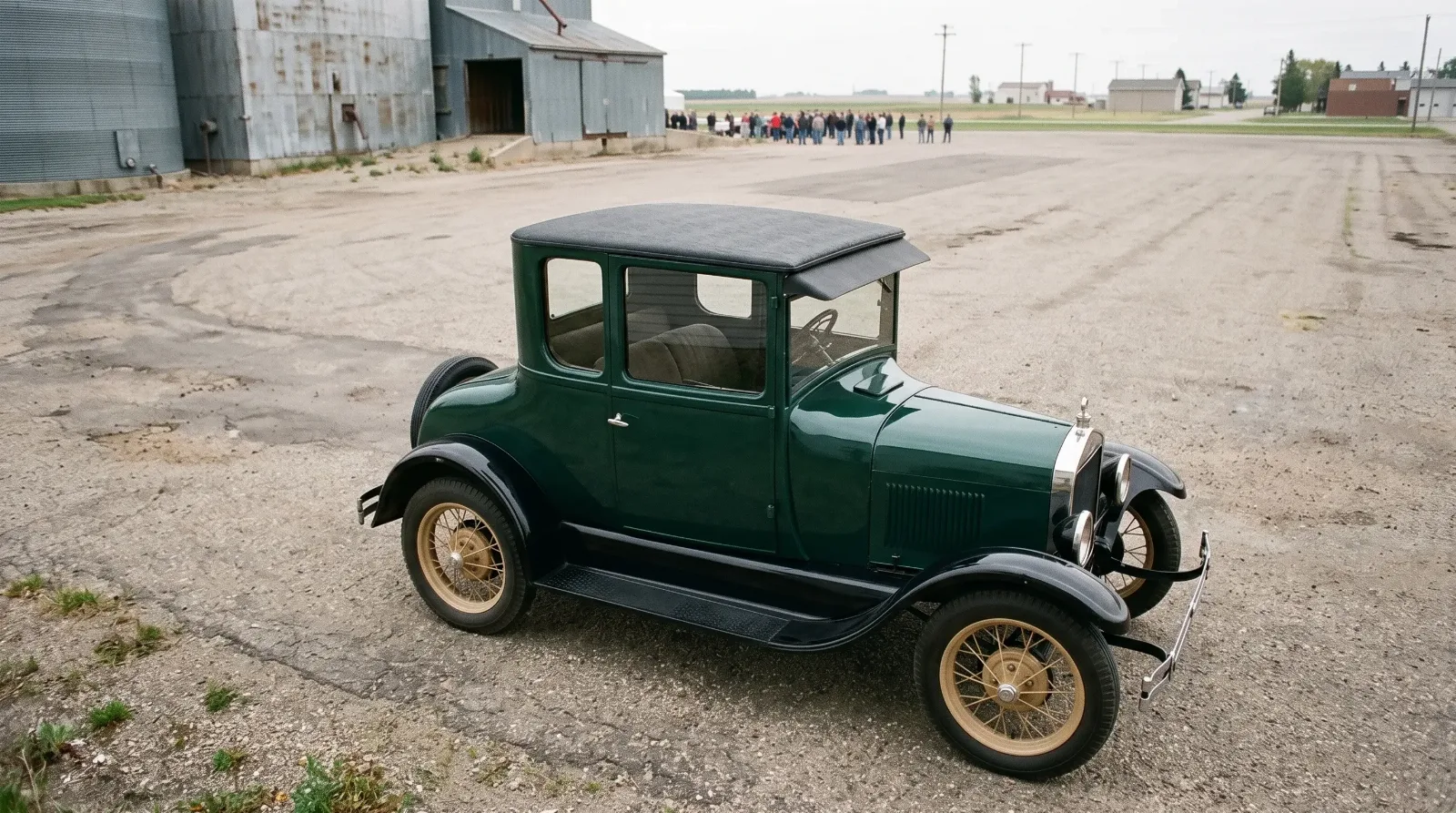
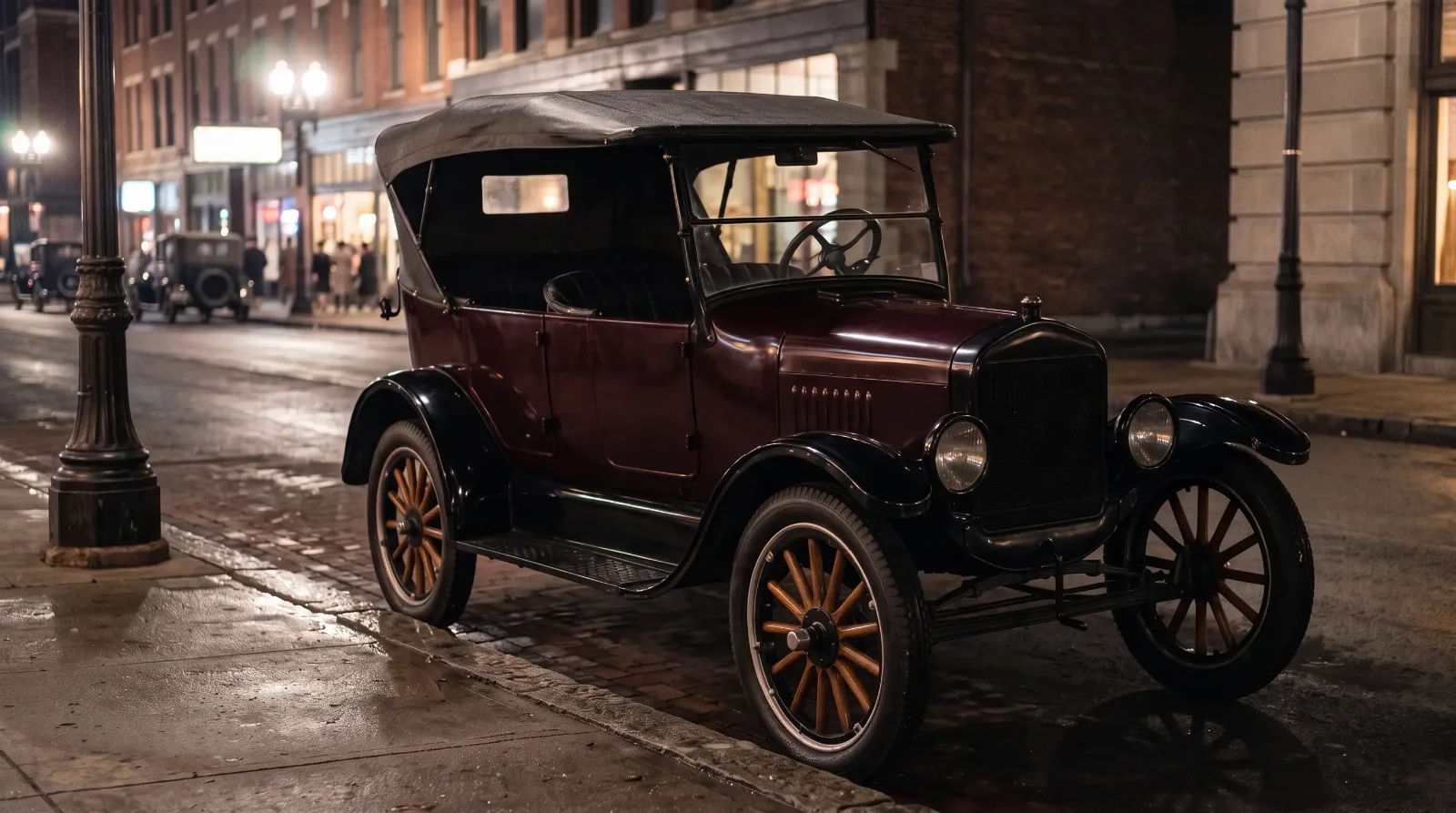
Ford introduced the changes in the summer of 1925, and the cars were sold as the 1926 model. To anyone standing beside one, the 1926 Model T Ford looked like a different car: a higher hood, a longer cowl, new fenders and, on the closed cars, paint that was not black. Under that new sheet metal, the 177 cubic inch engine and the two-speed planetary transmission were the same ones Ford had been building since 1908. Collectors call these the Improved Model Ts, and they were the last real update the car received before production ended in May 1927.
Car Features
7 min read
The 1926 and 1927 Improved Model T: Ford's Last Facelift
The 1926 Model T Ford got a high hood, a cowl fuel tank, bigger brakes and color. What changed, what did not, and why sales kept falling.
The record is worth reading closely, because the Improved car is often described as either a complete redesign or a cosmetic trim job. It was neither. Ford changed the body, the chassis height, the brakes and the options list, then held the mechanical core where it was. Where that fits in the wider Model T story is a matter of timing: Ford was answering a market that had already started to move.
What changed on the 1926 Model T Ford
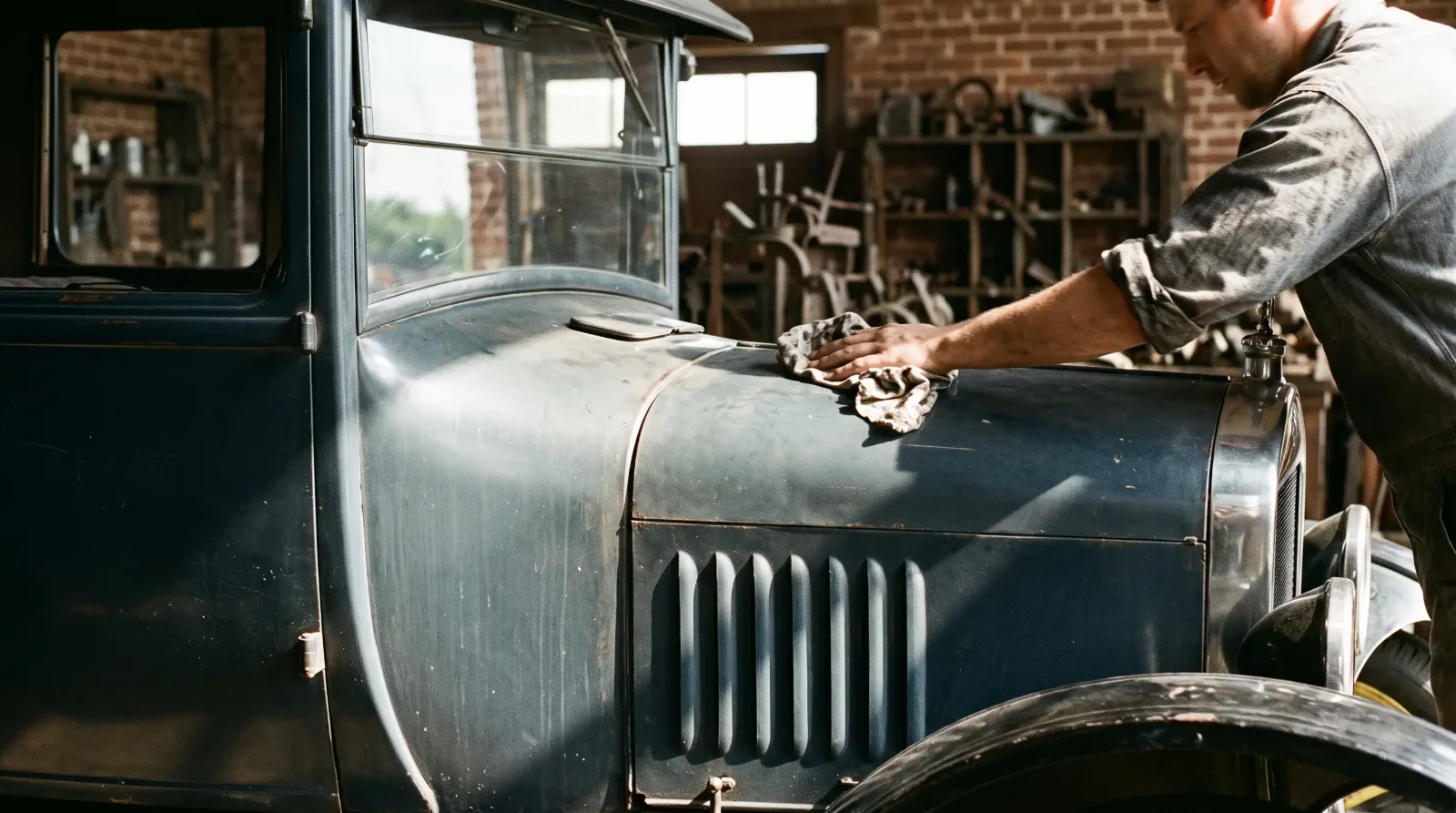
The body work is the part most people notice. The cowl became wider and straighter, which gave front-seat passengers more legroom. The hood was raised to match, giving the "high hood" profile that marks these cars as a third visual era after the brass cars and the earlier black ones. The fenders were redesigned, and on the Coupe, Tudor and Fordor a nickel-plated radiator shell came standard. It was optional on the other bodies.
The fuel tank moved. On earlier cars the 10 gallon tank sat under the front seat. On most Improved models it went forward and up, into the cowl. That mattered more than it sounds. With the tank under the seat and the system fed by gravity, a car climbing a steep hill on a low tank could leave the carburetor above the fuel level, which is the reason owners learned to back up hills. A cowl tank sat higher, which helped, though the system was still gravity fed with no fuel pump.
The chassis was revised too. Ford fitted larger brakes and larger pedals, and changes to the frame, axles and spindles lowered the car by about an inch. Balloon tires in 4.40 x 21 size had arrived for 1925, and steel welded-spoke wheels were offered for the 1926 and 1927 cars alongside the wooden artillery wheels. By 1926 the electric starter was standard on every Model T.
| Item | 1925 Model T | 1926 and 1927 Improved Model T |
|---|---|---|
| Engine | 177 cu in four, 20 hp | Unchanged |
| Transmission | Two-speed planetary | Unchanged |
| Fuel tank | Under the front seat | In the cowl on most models |
| Hood and cowl | Earlier, lower profile | High hood, wider and longer cowl |
| Ride height | Earlier frame and axles | About an inch lower |
| Brakes and pedals | Earlier size | Larger |
| Wheels | Wood artillery, balloon tires from 1925 | Wood, or steel welded-spoke as an option |
| Closed car colors | Black | Channel Green, Windsor Maroon early on; Fawn Gray, Royal Maroon, Highland Green later; black fenders |
| Runabout price | $260 | $360 |
Color comes back, and so does a higher price
Ford's closed cars returned to color with the Improved line. Ford's own advertising from early 1926 shows a Coupe in deep Channel Green and a Fordor in Windsor Maroon. The three colors most often listed for these cars, Fawn Gray, Royal Maroon and Highland Green, appear to belong to the later production sold as 1927 models, and the fenders stayed black throughout. Wire wheels were offered in Straw, Casino Red Orange and Emerald Green, although the source for those wheel colors gives no year. The exact shades are still argued over among Model T owners, so a restorer is better off matching the color to the car's build date than to a single list.
The price moved in the wrong direction for a car whose whole case had been cost. The Runabout listed at $260 in 1925, the lowest figure of the entire run. For 1926 and 1927 it was $360. Some of that difference was standard equipment, since the starter was now on every car, but a buyer comparing showroom stickers saw a Ford that had become more expensive just as its rivals were becoming better.
Ford's advertising shifted with the product. A 1926 Model T Coupe ad pitched the car as "an ideal car for a woman's personal use," showing a mother and daughter. Another 1926 ad, which ran in the Saturday Evening Post and Collier's, explained the torque-tube drive. The company was selling comfort and engineering, which was new ground for a car that had been sold on price for most of its life.
The numbers: a facelift that did not turn the curve
The production record is blunt. According to the figures compiled by Allan Nevins and Frank Hill, Ford built 1,817,891 cars in the United States in 1923, the peak year. Output was 1,643,295 in 1925, 1,368,383 in 1926 and 356,188 in the shortened 1927 run. A second series, from Ford's own production department in August 1927, counts Model Ts specifically and gives 1,911,705 for 1925 and 1,554,465 for 1926. The totals differ because the two tables count different things, but they agree on the direction.
The Improved car did not change the sales trend. Chevrolet passed half a million cars in 1926, and in 1927 it sold more than a million and took first place in the US market. Its 1927 Capitol Series AA came in seven body styles from $525 to $745, with the $695 two-door Coach the most popular. That was more money than a Ford, and buyers paid it. General Motors president Alfred P. Sloan had bet that Model T owners would trade up for comfort, features and style, and the 1926 numbers suggest he was right.
"People sometimes say the Improved Model T failed. The records say something narrower. It was a good body on an old chassis, and it arrived after buyers had decided they wanted a different kind of car."
Tom Ramirez
Identifying a 1926 or 1927 car today
For a buyer or a judge, the Improved cars are among the easiest Model Ts to date by eye. Look for the high hood and the longer cowl, which change the whole side profile. Check where the fuel tank sits: in the cowl on most bodies, rather than under the seat. A nickel radiator shell on a Coupe, Tudor or Fordor is correct. On an open car it was optional, so it proves nothing on its own.
The supply is reasonable. Ford built more than 1.3 million cars in the United States in 1926 alone. Current listings of 1920s Model Ts for sale will include plenty of Improved cars, so a buyer can afford to be selective about originality.
How the Improved car ended the line
The facelift bought time, not a reprieve. Ford announced the end of the Model T on May 25, 1927, and the next day Henry and Edsel Ford drove the 15 millionth car off the Highland Park line. The plants then shut down for about six months while the Model A was readied. The full account of why production stopped belongs to the decision itself, but the 1926 and 1927 numbers are the evidence that forced it.
What the Improved car did was show the limit of the old design. Ford could change the body, the colors and the brakes, and it did. What it could not change without starting over was the planetary transmission, the transmission brake and the 20 horsepower engine. Starting over is what the Model A was, and the story of both cars turns on that point. The Improved Model T is the last chapter of the first one: the most refined version of a car whose time had already passed.
Sources and notes
- Mac's Motor City Garage: Tin Lizzie's last stand, the 1926-27 Model T Ford
- The Henry Ford, Benson Ford Research Center: Ford production figures by year
- Mac's Motor City Garage: the 1927 Chevrolet Capitol Series AA
- Ford Model T advertising art, 1926 (Channel Green Coupe, Windsor Maroon Fordor)
- The Henry Ford: Ford automotive advertisements and female consumers
- Wikipedia: Ford Model T
Related Reading
Have a
Ford Model T
for Sale?
Reach thousands of serious classic car collectors across the US.
Sell It Here →
Selling a classic? Here's how: sell my classic car
Are You a Classic Car Dealer?
List your full inventory and connect with targeted classic car buyers.
Join as a Dealer →

About the author
Tom Ramirez
Corvette researcher and historian based in Bowling Green, Kentucky. Two decades documenting Corvette production history from original factory records.
Related Listings - Ford Model T

Comments
Be the first to comment on this article.