
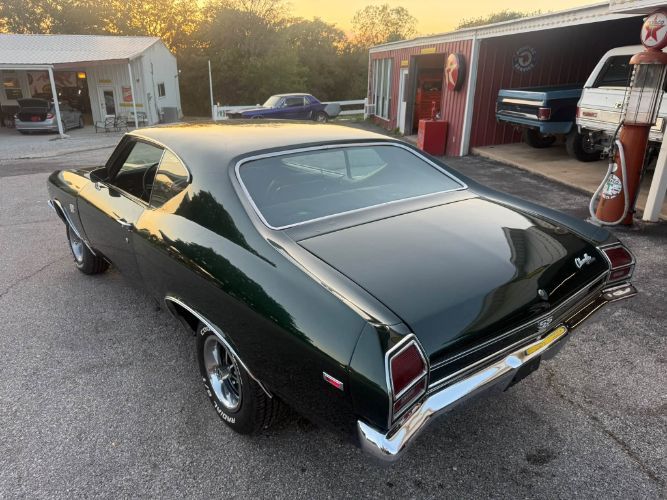
You can learn a lot about a car by looking at where the sheetmetal changes direction. The 1964-65 Chevelle had clean, almost conservative lines, the kind of shape a stylist draws when the brief says "don't scare anybody." For 1966, GM's stylists threw that brief out. The restyle gave the Chevelle a longer hood, a more pronounced fastback roofline on the SS coupe, and body sides that finally had some muscle in them instead of just flat panels doing their job quietly. It's the year the Chevelle stopped looking like a nice family car with an option package and started looking like it meant it.
History & Heritage
6 min read
1966: The Restyle Story
How the 1966 restyle gave the Chevelle a fastback SS coupe roofline and brought the 396 big block to the whole SS line for the first time.
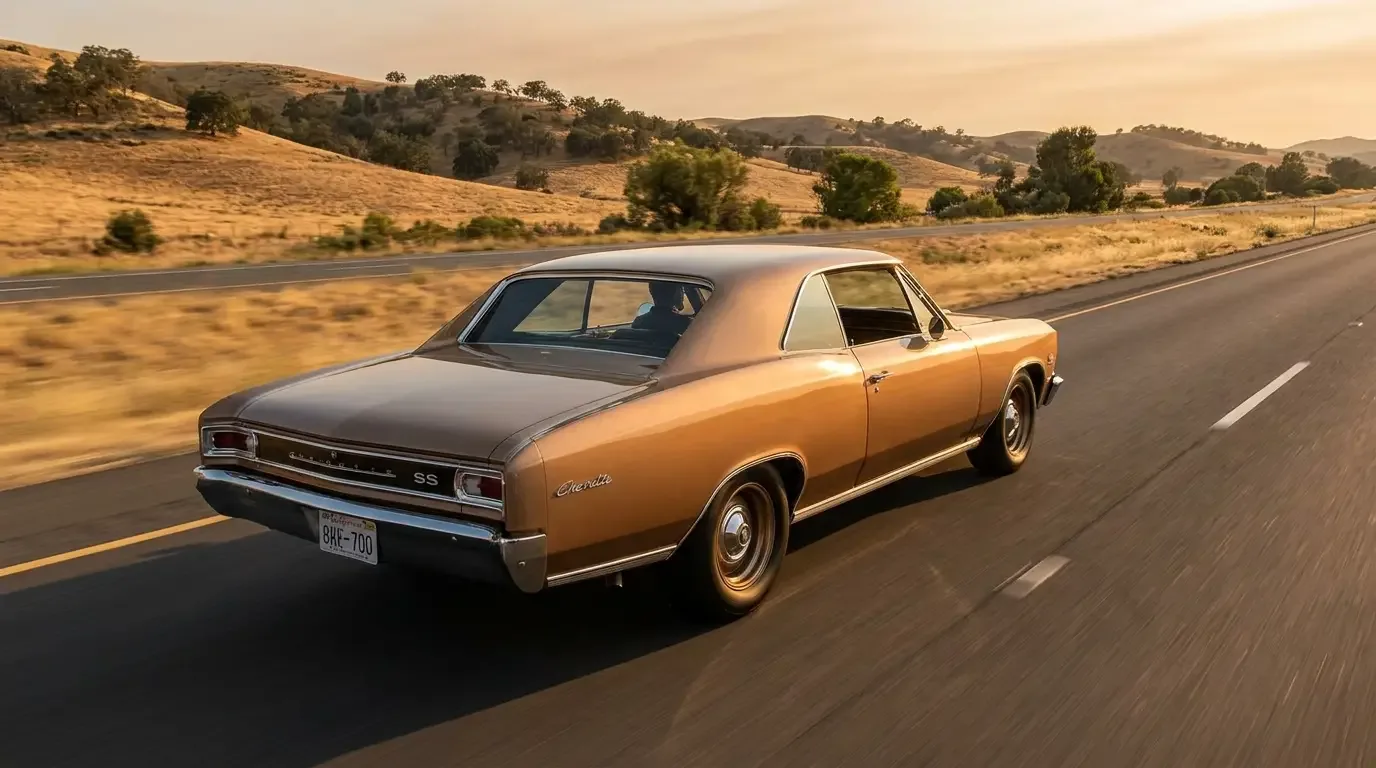
I look at body lines the way other guys look at engine specs, and the '66 restyle is where this car's shape actually earns the SS badge it had been wearing since '64.
What actually changed on the outside
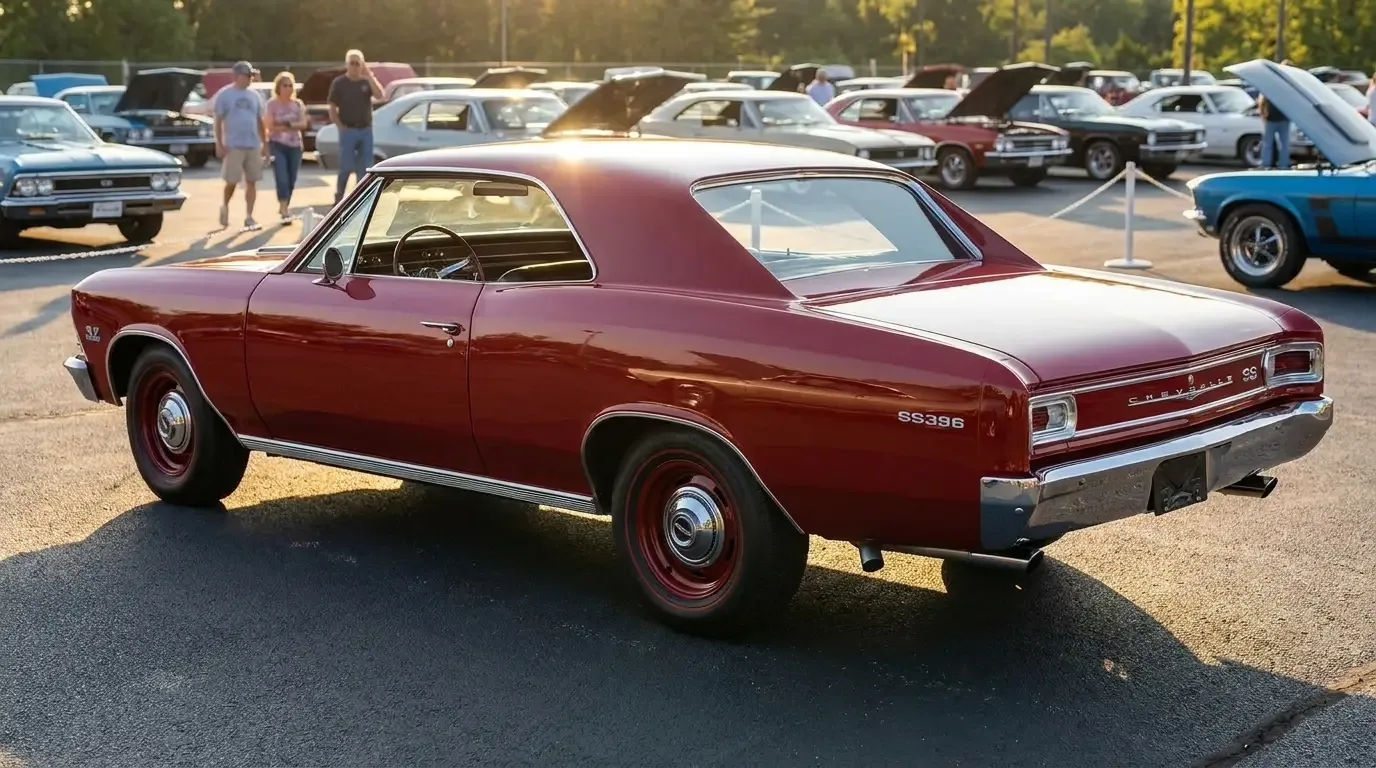
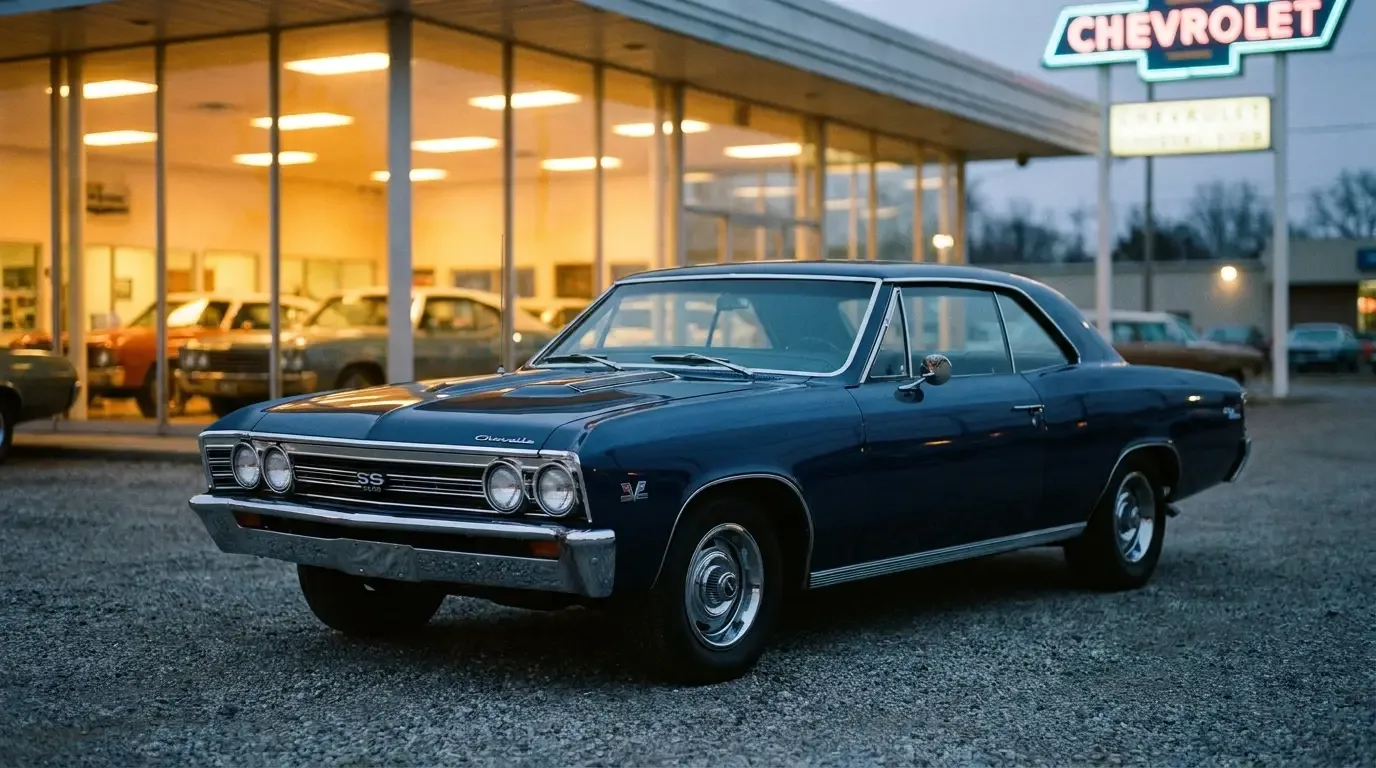
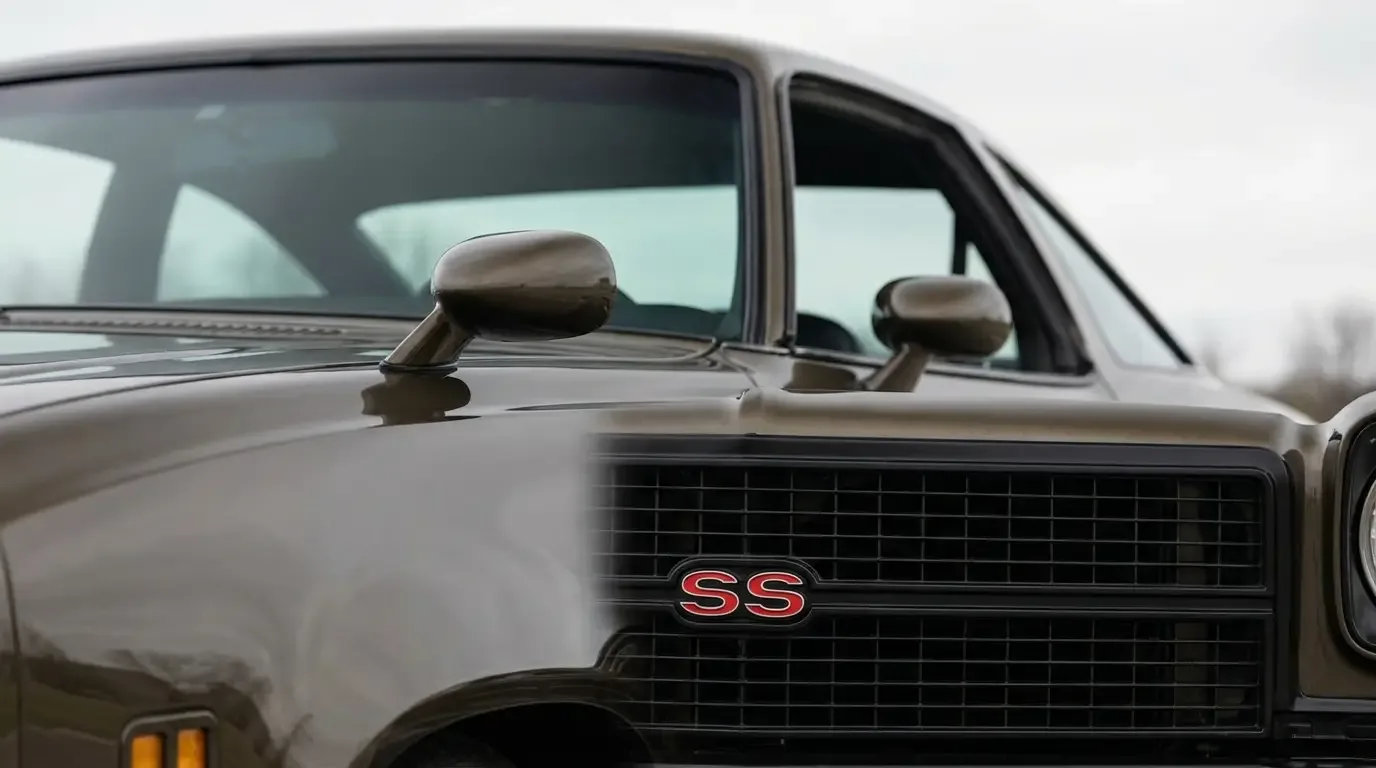
The '66 got new front and rear fascias, a more aggressive grille treatment, and a semi-fastback roofline on SS coupes that gave the greenhouse a lower, leaner look than the boxier '64-65 cars. The character line running down the body side got sharper, catching light differently depending on the angle, which is a small detail but the kind of thing that separates a car that photographs flat from one that has some presence sitting in a parking lot. Chevrolet also cleaned up the taillight treatment and reworked the trim so the whole car read as one design instead of a facelift bolted onto last year's body.
None of this happened by accident. GM was pushing hard on styling across the whole A-body lineup in this period, and the Chevelle's restyle tracks with what was happening across first-gen Chevelle history more broadly, a market where a fresh shape sold cars just as much as a fresh engine did.
The 396 goes mainstream, and the SS badge grows up with it
The bigger story under the skin is that the 396 big block, which had been a nearly unobtainable Z16-only option in 1965, became a real production choice across the SS line in 1966. Buyers could order the base L35 396 rated at 325 horsepower or step up to the L34 at 360 horsepower, with the solid-lifter L78 essentially picking up where the Z16's L37 left off at 375 horsepower, giving buyers the closest thing to the old Z16's punch without hunting down one of the 201 cars that carried it the year before.
That shift changed what "SS" meant on a Chevelle. In '64 and '65, the SS was mostly a trim and image package with modest performance behind it. By 1966, with the 396 in wide release, the SS badge finally carried the muscle to back up the looks, and Chevrolet leaned into that with the Chevelle SS396 designation on the badging itself.
| Engine code | Displacement | Approx. horsepower | Notes |
|---|---|---|---|
| L35 | 396 cid | 325 hp | Base 396, hydraulic cam |
| L34 | 396 cid | 360 hp | Mid-range performance option, taller cam and larger four-barrel |
| L78 | 396 cid | 375 hp | Solid-lifter high-output, essentially an updated Z16 engine, roughly 3,100 built |
It wasn't just the SS that got the new body
Every trim level in the lineup, from the base 300 through the Malibu, rode on the new '66 body, not just the SS coupe. That matters because the restyle changed the whole car's proportions, not just its performance flagship's presentation. A plain-Jane 300 sedan from '66 has the same longer hood and reworked greenhouse as the SS396, even wearing the same dog-dish hubcaps it always did. Chevrolet clearly decided the new shape needed to sell across the entire range, not get held back as a halo-only treatment, which tells you how much confidence they had in the design once the tooling was locked.
The Malibu, sitting in the middle of the lineup as it always had, picked up its own visual refresh too, more brightwork and a cleaner side trim treatment that made the ordinary trim levels look sharper without needing the SS package to get there. It's worth remembering when you're pricing out a '66 project car that the shape you're drawn to is available across a wider range of budgets than just the top-tier SS396, if the badge isn't the point for you.
Why builders and buyers still favor the '66 shape
Ask a hot rodder which first-gen Chevelle they'd rather build on, and a lot of them will point to '66 before '65. The longer hood gives more room to work with under the skin, the fastback roofline holds up better visually with modern wheel and stance choices, and the sharper character line takes paint and graphics packages in a way the softer '64-65 body doesn't do quite as well. That's not a knock on the earlier cars, it's just a different canvas, and the '66 canvas has more to say.
None of that changes what you're buying underneath. A '66 SS396 still needs the same honest inspection any first-gen Chevelle needs, rust in the usual places, verified numbers on any car claiming the L78, and a real look at how much of the body has been massaged over the decades versus how much is factory steel. The shape draws you in. The fundamentals still decide whether it's a good buy.
"The '66 body has a line running down the side that catches light the way the '64-65 cars never quite did. That's not nostalgia talking, that's just good sheetmetal. You feel it before you can explain it."
Jim Vasquez
The '66 restyle set the tone for the final year of the first generation, and the story keeps building from here, right into the Chevrolet Chevelle story as a whole and on to next: 1967, the last year before the whole car changed again.
Sources and notes
- 1966 Chevrolet Chevelle SS 396: A Profile of a Muscle Car: HowStuffWorks
- 1966 Chevrolet Chevelle fact sheet: Over-Drive Magazine
- 1966 Chevelle: Muscle Car Facts
- Birth of the Big-Block Chevelle: The 1965 Z16: Mac's Motor City Garage
- Chevrolet Chevelle: Wikipedia
- Differences between 396 L34 & L35: Team Chevelle forum
Related Reading
Have a
Chevrolet Chevelle
for Sale?
Reach thousands of serious classic car collectors across the US.
Sell It Here →
Are You a Classic Car Dealer?
List your full inventory and connect with targeted classic car buyers.
Join as a Dealer →
#l78 396
#1966 Chevelle
#Chevrolet Chevelle
#Chevelle SS396
#Chevelle restyle
#classic muscle car styling
About the author
Jim Vasquez
Southern California hot rod and custom car builder with roots in the traditional kustom kulture scene.
Related Listings - Chevrolet Chevelle
More in History & Heritage
Comments
Be the first to comment on this article.