
For sixty-seven years Rolls-Royce and Bentley had been one company, sharing a factory, an engineering department, and most of their parts. In 1998 that ended in one of the strangest corporate episodes in the history of the car business, a sale in which the winning bidder did not, at first, win the right to use the most valuable name on the table. The result split the two marques for good and sent them to different German owners, Bentley to Volkswagen and Rolls-Royce to BMW, though the path to that outcome was anything but tidy.
History & Heritage
6 min read
1998: How BMW and Volkswagen Finally Split Rolls-Royce and Bentley for Good
How the 1998 sale split Rolls-Royce and Bentley: VW bought Crewe and Bentley, BMW licensed the Rolls-Royce name, and the marques went separate ways by 2003.
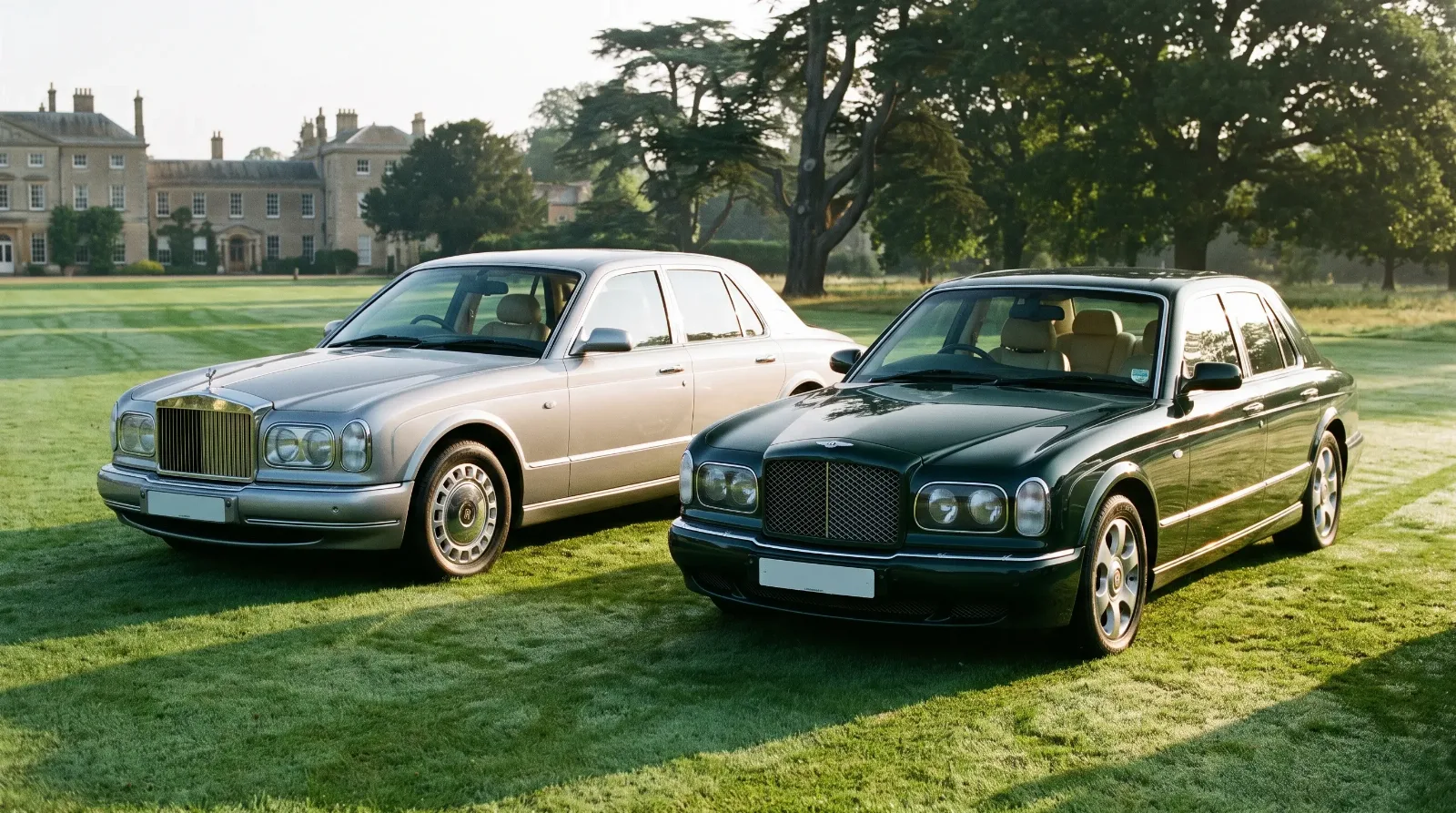
To understand how it happened you have to remember what had gone before it, the whole shared history that runs through the Rolls-Royce/Bentley story. By the 1990s the two names were owned by Vickers, an engineering conglomerate that had held the car business since 1980 and now wanted out. When Vickers put Rolls-Royce and Bentley up for sale in 1998, the auction that followed exposed just how tangled the ownership of a great name can become.
Two German bidders, one factory
The obvious buyer was BMW. It already supplied engines for the new cars Crewe was preparing, the Rolls-Royce Silver Seraph and the Bentley Arnage, so a BMW purchase would have kept the supply chain intact. BMW bid what it thought was a sensible price, somewhere around £340 million by most accounts. Then Volkswagen, under Ferdinand Piëch, came in over the top with a substantially higher offer, roughly £430 million, and Vickers took the money.
On paper Volkswagen had won. It had bought the Crewe factory, the Bentley marque outright, the tooling, the workforce, and the physical trademarks that clothed the cars, including the Spirit of Ecstasy mascot and the shape of the Rolls-Royce radiator grille. What it had not bought was the one thing that mattered most, and this is where the deal turned into a puzzle.
The name Volkswagen could not buy
The Rolls-Royce name and the interlocked-RR badge were not Vickers' to sell in full. The trademark rights to the Rolls-Royce name belonged to Rolls-Royce plc, the aero-engine company that had separated from the car business decades earlier. That firm had a long relationship with BMW, which built engines under license with it, and it chose to license the Rolls-Royce automotive name and logo to BMW rather than to Volkswagen, reportedly for a sum around £40 million, a fraction of what Volkswagen had just paid for the factory.
So the situation at the close of 1998 was genuinely absurd. Volkswagen owned the factory, the Bentley name, the Spirit of Ecstasy figurine, and the grille shape, but could not use the Rolls-Royce name on a car for long. BMW owned the right to call a car a Rolls-Royce, but had no factory, no grille, and no flying-lady mascot to put on it. Neither could build a complete Rolls-Royce without the other.
The compromise that split the marques
The two companies had little choice but to negotiate. The settlement they reached was a phased handover. Volkswagen would continue building Rolls-Royce cars at Crewe through the end of 2002, using the name under an interim arrangement, while keeping Bentley permanently. On the first day of 2003, the right to build Rolls-Royce motor cars would pass to BMW, which by then had built an entirely new factory at Goodwood in Sussex and prepared a new car, the Phantom, to launch the marque on its own. Volkswagen also agreed to let BMW use the Spirit of Ecstasy and the grille shape from that date, since a Rolls-Royce without either would not have been credible.
The table below lays out who ended up with what, because the split is easy to get wrong even in careful accounts.
| Asset | Went to | Note |
|---|---|---|
| Crewe factory | Volkswagen | Purchased with the car business in 1998 |
| Bentley marque | Volkswagen | Kept permanently; still built at Crewe |
| Spirit of Ecstasy mascot & grille shape | Volkswagen | Licensed to BMW for Rolls-Royce use from 2003 |
| Rolls-Royce name & RR badge | BMW | Licensed from Rolls-Royce plc, the aero firm |
| Rolls-Royce car production | VW until end of 2002, BMW from 2003 | Phased handover; BMW built new Goodwood plant |
What each owner did next
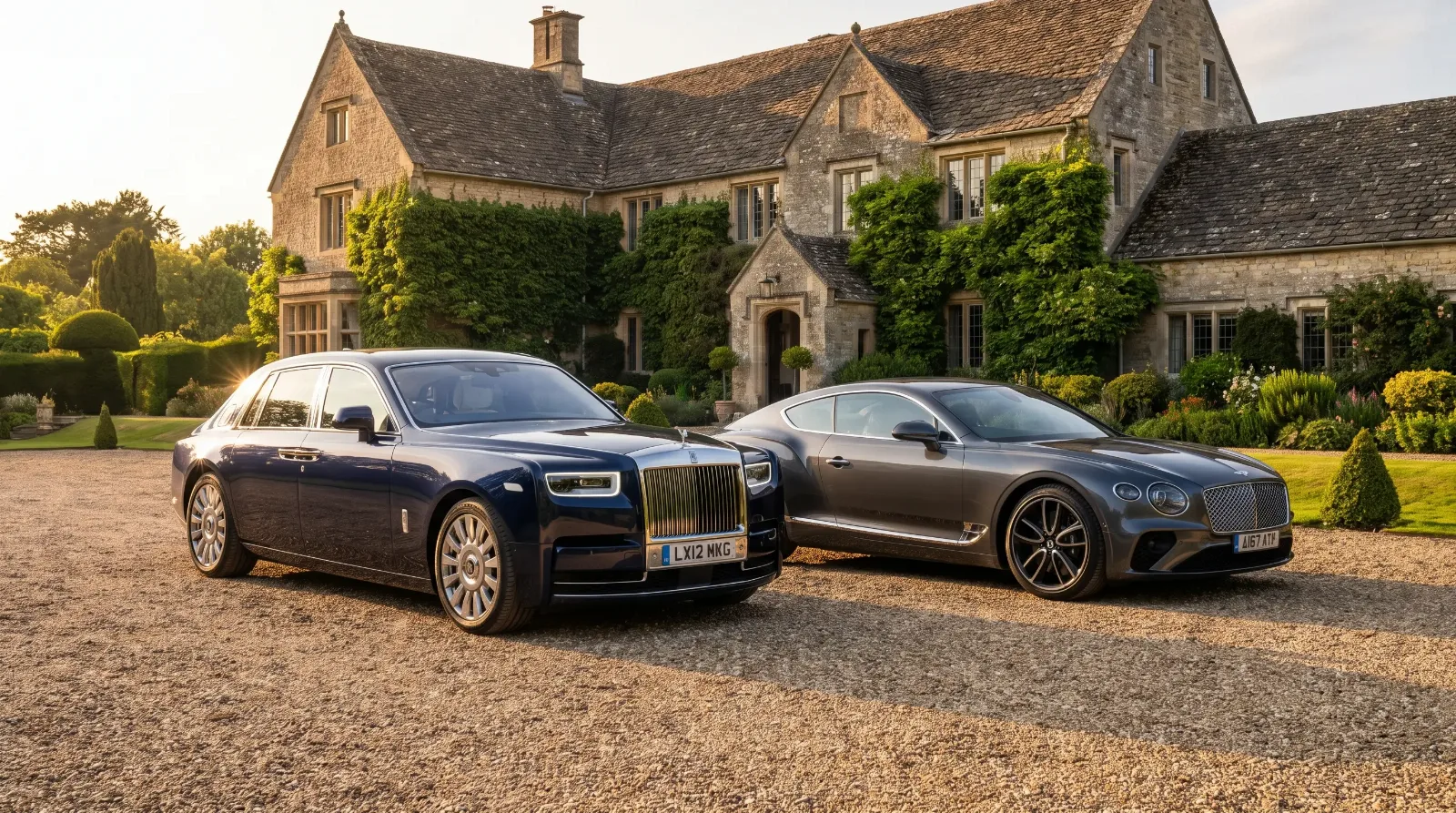
The divorce turned out to suit both cars. Volkswagen poured money into Crewe and rebuilt Bentley around performance, reviving the Continental name for a modern GT that became the most successful Bentley ever made. BMW gave Rolls-Royce a clean start at Goodwood, positioning it once more as the senior marque, aloof and chauffeur-associated, exactly the identity it had carried before the badge-engineered decades blurred the two names together. For the first time since 1931, the sporting Bentley and the stately Rolls-Royce were owned, funded, and engineered by different companies, and the old division of temperament finally had corporate structure behind it again.
"The 1998 sale is the moment the badges stopped being a marketing choice and became a matter of ownership. After that, a Bentley was a Volkswagen product and a Rolls-Royce was a BMW product, and the difference between them was no longer just a grille."
Sarah Whitfield
Why the split still matters to collectors
For anyone studying the marques, 1998 is the dividing line. Everything built at Crewe before it belongs to the shared era, when a Rolls-Royce and a Bentley were the same car underneath. Everything after it belongs to two separate companies with separate engineering. That break shapes values, parts supply, and even how the earlier cars are understood, and it is the natural endpoint of the long shared narrative told across the full classic luxury car story. The cars did not change overnight, but the companies behind them never shared a roof again.
With the marques finally separated, the question of who bought which badge, and why, takes on a new sharpness, especially on the American side of the Atlantic. Read on: next: Famous American Owners.
Related Reading
Have a
Classic Car
for Sale?
Reach thousands of serious classic car collectors across the US.
Sell It Here →
Are You a Classic Car Dealer?
List your full inventory and connect with targeted classic car buyers.
Join as a Dealer →

About the author
Sarah Whitfield
Third-generation classic car collector specializing in pre-war American and European coachbuilt automobiles. Researcher and concours enthusiast.
More in History & Heritage
Comments (1)
T
Theresa
1 day ago
Photographed a Green Label Arnage once, and the owner opened the hood to show off the BMW V8. Volkswagen brought back the old 6.75 for the Red Label.