
I've spent a fair amount of time with build sheets and option code lists from this period, and the 454 option on a Colonnade Chevelle is one of those details that surprises people who assume the big-block era ended cleanly with the last of the SS454 models. It didn't. Chevrolet kept the LS4 454 in the Chevelle and Malibu order books for several years into the Colonnade generation, quietly, without much of the marketing push the same engine got in 1970 and 1971. Understanding why it stuck around, and why it eventually disappeared, tells you almost everything about how emissions rules and insurance pressure reshaped what "big-block" even meant by the mid-1970s.
History & Heritage
6 min read
The 454 Big Block in the Colonnade Era
How the LS4 454 survived years into the Colonnade Chevelle lineup, its declining output, which trims offered it, and what to check before buying one.
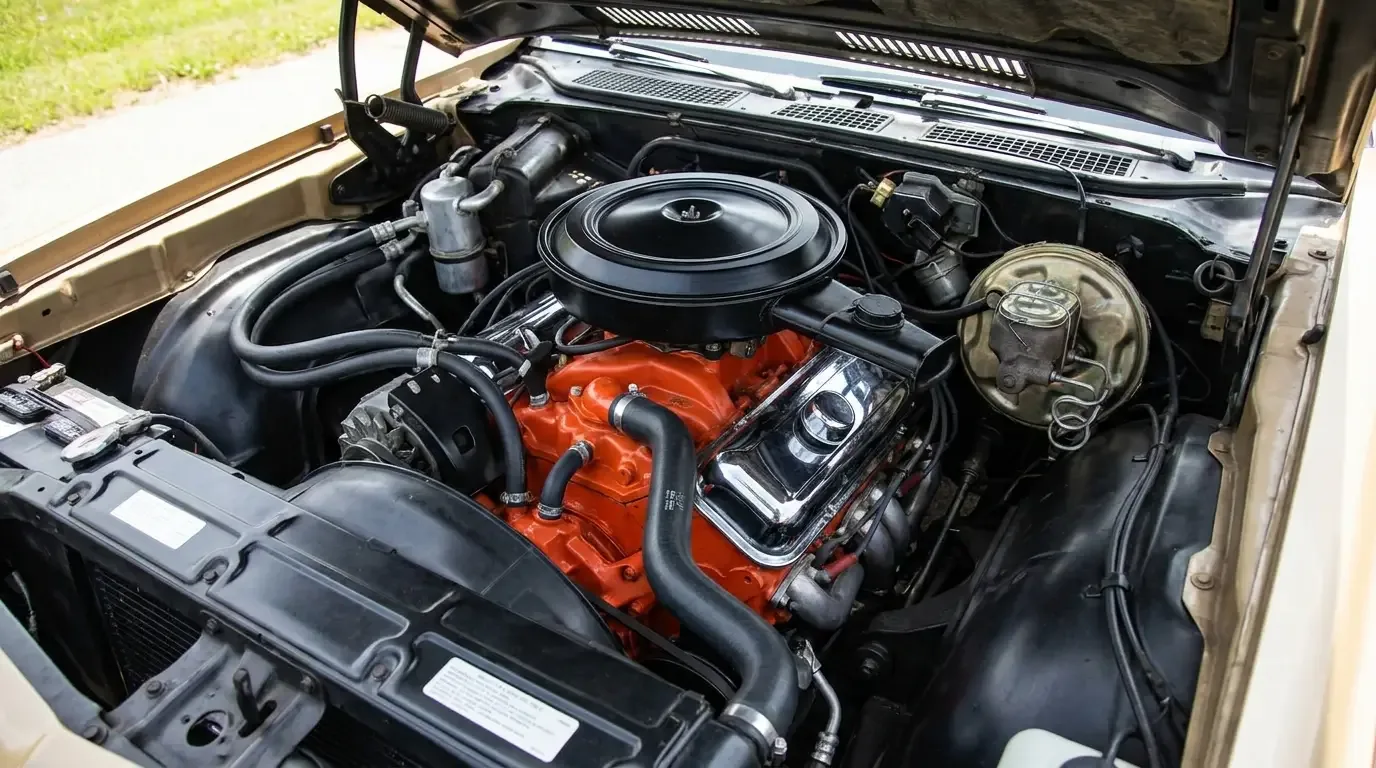
The LS4, not the LS6
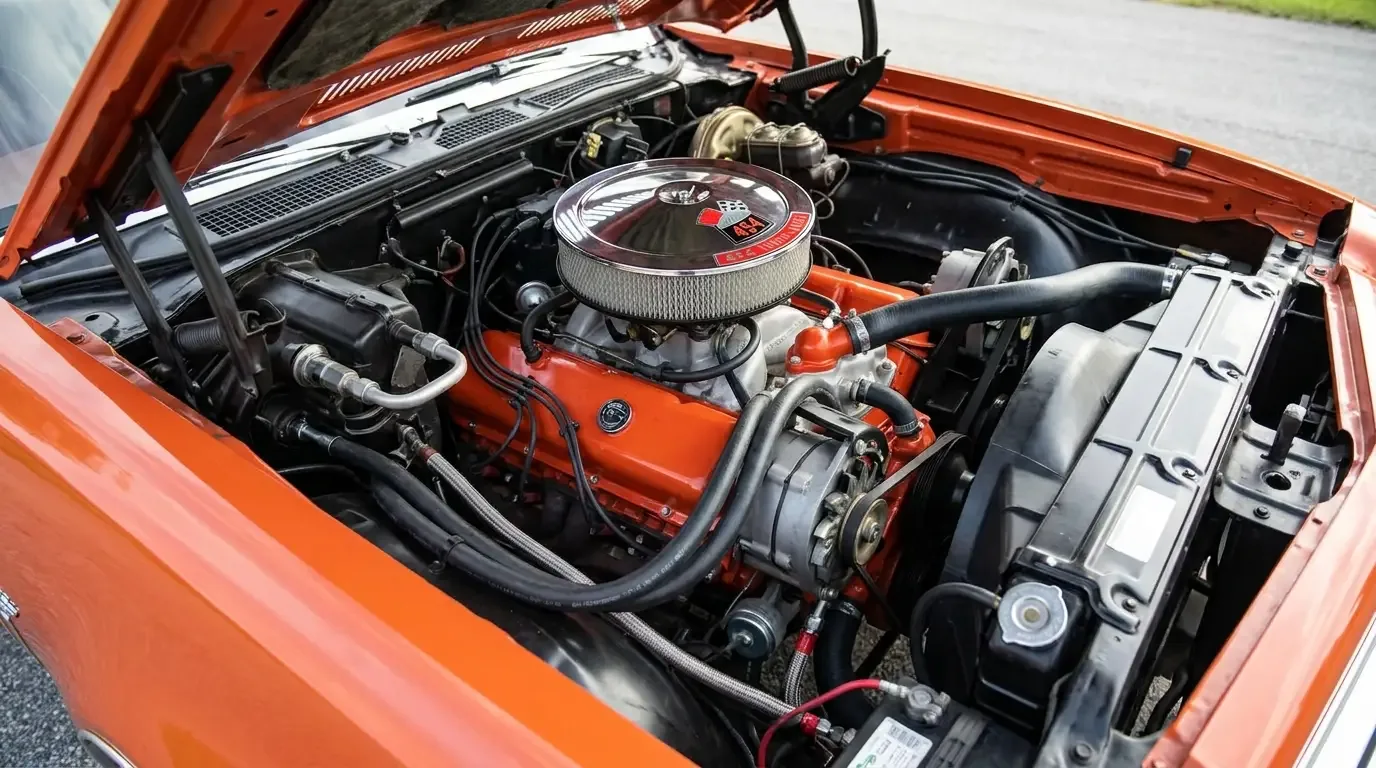
The engine offered in Colonnade Chevelles carried the RPO code LS4, a 454 cubic inch big-block descended from the same family as the LS5 and LS6 units that powered the legendary early-1970s SS454. It was not the same engine in tune or in output. GM's switch to SAE net horsepower ratings starting with the 1972 model year already made direct comparisons to earlier gross-rated figures misleading, and on top of that accounting change, real detuning was happening under the hood: lower compression ratios to run on unleaded and lower-octane fuel, and early catalytic converter and emissions equipment by 1975 that choked back output further. The LS4 in a 1973 Chevelle was rated at 245 net horsepower and 375 lb-ft of torque, well below the 275 hp the same LS4 code carried in the Corvette that year, a gap that came down to different exhaust manifolds rather than a different engine. That number continued to drift downward through 1974 and 1975 as emissions equipment tightened.
None of that means the LS4 was a bad engine. It was still the largest, torquiest option in the lineup, and for a buyer who wanted real low-end pull for towing or just wanted the biggest available displacement, it remained a meaningful choice years after Chevrolet had otherwise walked away from marketing performance. What it didn't offer anymore was the era-defining bragging rights of an LS6. The magazine road tests and quarter-mile numbers that made the early SS454 famous simply didn't exist for the Colonnade-era LS4 the same way. It was sold and bought as a strong engine for a comfortable car, not a performance flagship.
Where and when it was actually ordered
The 454 option ran across the Malibu, Malibu Classic, and Laguna trims of the Colonnade Chevelle, not tied to any specific performance package the way the old SS badge had worked. A buyer could order a Malibu Classic four-door sedan with a 454 under the hood if they wanted to, which sounds strange next to the sporty image the engine still carries in enthusiast circles today, but it reflects exactly how Chevrolet was selling the option: as a torque-and-towing choice available across the range, not a halo performance model.
Take rates on the option dropped every year through the mid-1970s as fuel prices climbed following the 1973 oil embargo and buyers increasingly steered toward the small-block V8 or even the base six-cylinder for economy reasons. Chevrolet dropped the 454 option from the Chevelle and Malibu lineup partway through the 1975 model year, once the switch to mandatory catalytic converters made the big-block increasingly hard to justify. After that, the largest available engine in the range had shrunk to a 400 cubic inch small-block, itself a far cry from the 454's peak output a few years earlier. That's the throughline connecting these years to the rest of the Chevelle's later era: displacement kept shrinking, quietly, year over year, as the market and the regulations both pushed in the same direction.
| Model year | LS4 454 net hp | Notes |
|---|---|---|
| 1973 | 245 hp | Available across Malibu, Malibu Classic, Laguna |
| 1974 | 235 hp | Further emissions tuning reduces output |
| 1975 | 215 hp | Catalytic converter era, final year offered, dropped mid-model-year |
Finding and evaluating one today
A genuine LS4-equipped Colonnade Chevelle is a real find for a buyer who wants period-correct big-block presence without paying SS454 money, because the market has been slow to fully price in these later big-block cars. The engine itself is a durable, well-understood platform for anyone familiar with Chevrolet big-blocks generally, and parts availability is solid thanks to the engine family's long production run across multiple GM divisions. The things to verify before buying are the same things that matter on any surviving 454 car of this era: whether the engine is the original numbers-matching unit for that VIN, whether it's had the emissions equipment removed or altered over the decades, which affects both authenticity and how the car actually runs, and whether the transmission and rear axle ratio pairing were the factory-correct combination for a 454 car rather than a later swap.
For collectors focused specifically on the biggest available factory engine of a given model year, these big-block Chevelles from the Colonnade years occupy an interesting niche: genuinely rare relative to how few were ordered by this point, genuinely underappreciated relative to the earlier SS454, and still built on the same fundamentally strong big-block architecture that made the nameplate famous in the first place.
"I get asked constantly why anyone would care about a 454 that doesn't make anywhere near LS6 numbers. My answer is always the same. This is still a big-block Chevrolet from the last years anyone offered one in this body style, and the survivors are thinner on the ground than people assume. Rarity doesn't always show up where the magazines were looking at the time."
Tom Ramirez
The 454's slow fade from the lineup runs parallel to another change happening at the same time, one that hit the car's identity even harder than an engine option ever could. See the full Chevelle story for the broader arc, and continue with next: Why the SS Badge Disappeared After 1973 for the badge's own ending.
Sources and notes
- Team Chevelle forum, "454 '74 LS4 - '71 LS5 differences"confirms 1973 Chevelle/Monte Carlo/full-size LS4 rating of 245 net hp at 4,000 rpm, 375 lb-ft at 2,800 rpm, versus the Corvette's 275 hp on the same code.
- Automobile-Catalog, 1974 Chevrolet Monte Carlo Landau 454 Turbo-Jet spec sheet235 net hp / 360 lb-ft for the shared Chevelle/Monte Carlo LS4.
- Automobile-Catalog, 1975 Chevrolet Chevelle Malibu Classic Coupe 454 Turbo-Jet spec sheet215 net hp for the final-year 454.
- Wikipedia, "Chevrolet big-block engine"LS4 production span and application across Chevelle, Monte Carlo, El Camino, Corvette, and full-size Chevrolet.
- Barn Finds, "Faded Glory: 1974 Chevrolet Monte Carlo 454"period context on LS4 detuning and the 1973 oil embargo's effect on take rates.
- CorvetteForum, "1973-1974 LS4 454 Gross Horsepower"cross-check on gross-vs-net rating confusion between Corvette and A/G-body LS4 applications.
Related Reading
Have a
Chevrolet Chevelle
for Sale?
Reach thousands of serious classic car collectors across the US.
Sell It Here →
Are You a Classic Car Dealer?
List your full inventory and connect with targeted classic car buyers.
Join as a Dealer →

About the author
Tom Ramirez
Corvette researcher and historian based in Bowling Green, Kentucky. Two decades documenting Corvette production history from original factory records.
Related Listings - Chevrolet Chevelle
More in History & Heritage
Comments
Be the first to comment on this article.