
Every few weeks somebody brings me a car they're calling an "SS Chevelle" and it turns out what they've got is a Malibu with an SS package added later, or a 300 Deluxe somebody re-badged at some point in the last forty years. I don't say that to be a jerk about it. The trim naming across the 1968-1972 era is genuinely confusing if nobody's walked you through it, and there's real money riding on getting it right before you buy.
History & Heritage
7 min read
Malibu, 300, or SS: Second-Gen's Trim-Level Language
SS was never its own Chevelle model, it was an option package added to a 300 Deluxe or Malibu. Here's how to read the trim tag before you buy one.
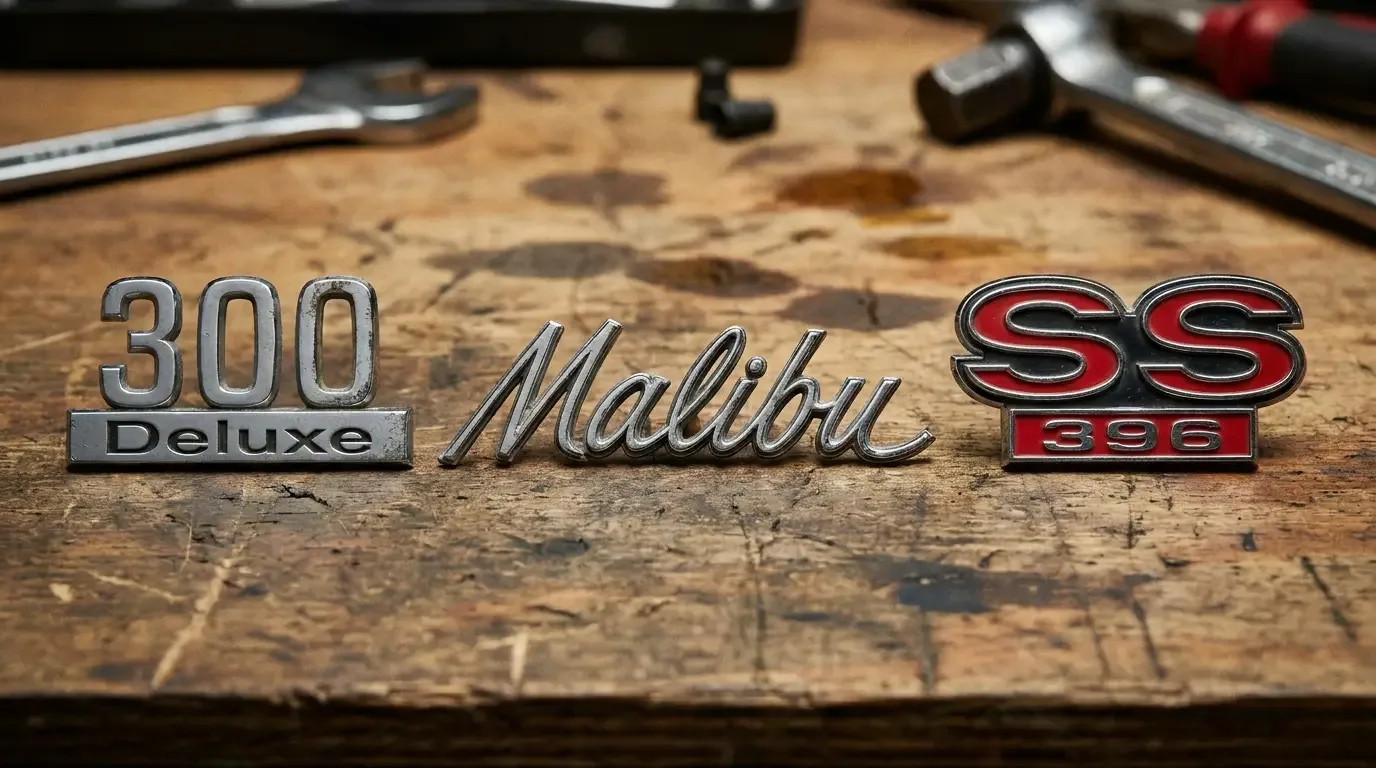
Here's the part that trips people up the most: SS meant two different things depending on which side of 1969 you're standing on. In 1968 it really was its own series, with its own VIN prefix, sitting apart from Malibu entirely. From 1969 on, Chevrolet folded it into the option list, and that one change is exactly what people get backwards when they're reading a build sheet or a trim tag.
The base ladder: 300, 300 Deluxe, and Malibu
Chevrolet built the second-generation Chevelle on three basic trim tiers before you ever get to performance options. The Chevelle 300 was the plain, low-content base model, aimed at fleet buyers and budget-conscious customers who wanted a mid-size Chevy without paying for chrome they didn't need. Above that sat the 300 Deluxe, which added trim and comfort items without moving the car into a different market entirely. Above both of those sat Malibu, the volume trim level most people picture when they think "Chevelle," with better interior materials, more exterior brightwork, and the trim level most buyers actually walked into a dealership wanting.
None of these three tiers were performance designations. They were content levels, the same idea as trim tiers on any car today. A 300, a 300 Deluxe, and a Malibu could all be ordered with the same engine. The difference was carpet, chrome, upholstery, and badging, not what was under the hood.
Where SS actually fits
In 1968, SS396 was its own series, full stop. It carried a distinct VIN prefix (138) separate from Malibu, built as a sport coupe, convertible, or El Camino, and a 396 engine simply wasn't available on a regular Malibu that year. If you wanted the big-block, you bought the SS series car, not a Malibu with an option box checked.
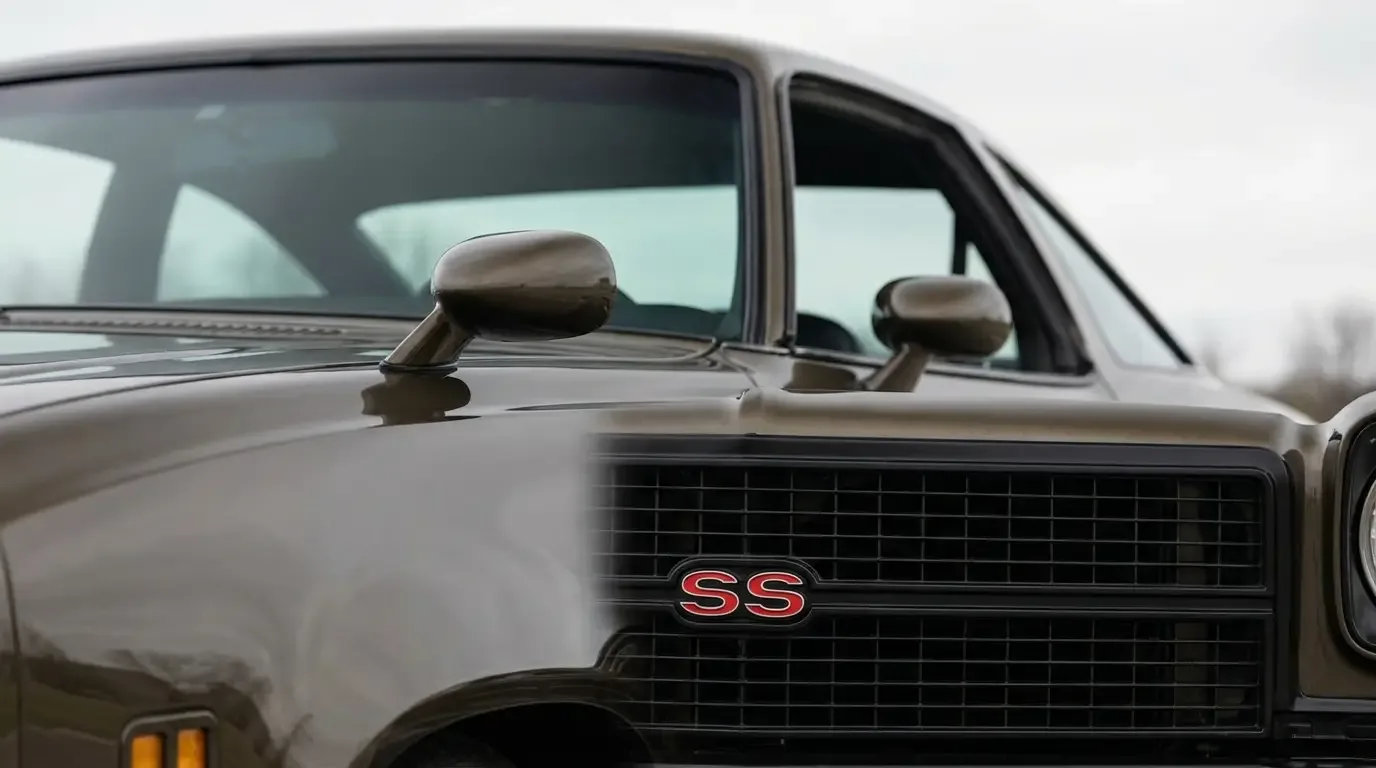
Starting in 1969, Chevrolet changed the structure entirely. SS became an RPO-coded option package, Z25 for the SS396 and later Z15 as the badge shifted to SS454, added on top of an existing body rather than sold as its own line. It brought the SS-specific suspension, badging, instrumentation, and access to the performance engine lineup that weren't otherwise available on the plainer trims. For 1969 only, Chevrolet also allowed the SS396 option on the 300 Deluxe coupe and sport coupe, a genuine but short-lived combination. From 1970 through 1972, that door closed and the SS package was restricted to V8 Malibu body styles only, so a "300 Deluxe SS" is specifically a 1969 car, not something you'll find across the whole run. The point that matters most for a buyer today: from 1969 on, an SS package Chevelle is not a separate model line sitting apart from 300 and Malibu, it's those trims (mostly Malibu, briefly 300 Deluxe) with a specific option box checked. 1968 is the exception to all of this, not the rule.
Because SS was an add-on rather than a standalone series after 1968, a legitimate 1969-72 SS car should show the SS-specific RPO codes on the trim tag and cowl tag alongside its base body designation, not instead of it. A genuine 1968 car instead carries its own 138-prefix VIN and body-style code, since it was never built as anything but an SS. Either way, if a car is missing that paper trail and someone's telling you it's SS because of the badges on the outside, that's a conversation starter, not proof.
Reading the trim tag without getting fooled
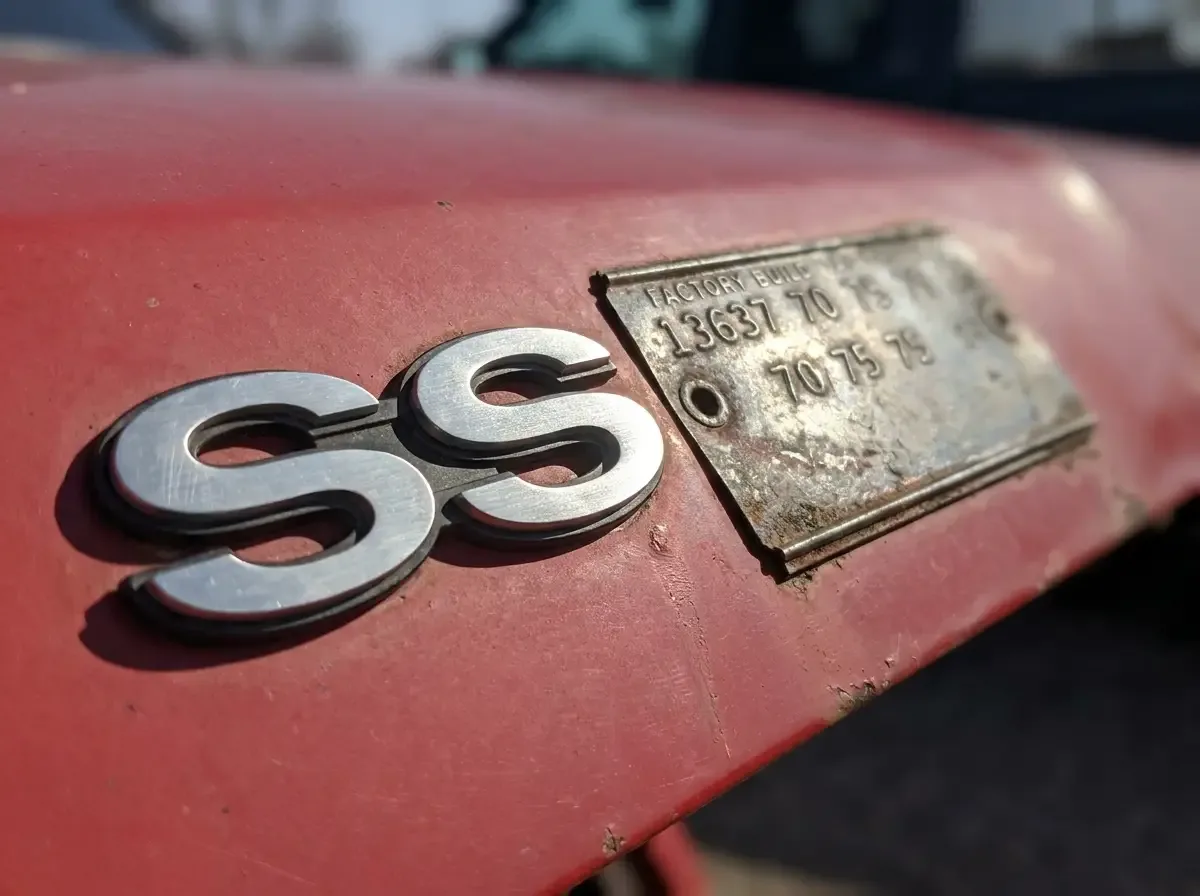
The cowl tag on these cars carries the body style code, the trim level, and the option content in a compressed format that takes some getting used to. It's worth learning to read one before you commit to a purchase decision, because badging is the easiest thing in the world to bolt on after the fact and the cheapest way for a seller to inflate a car's story. I've pulled apart enough of these to know that the tag and the paperwork underneath it tell you the truth a lot more reliably than the trunk lid script does.
This matters more with these cars than it does with a lot of muscle car families, because for that one year, 1969, the SS package genuinely could sit on top of either the mid-trim Malibu or the plain-Jane 300 Deluxe, and a plain-bodied 1969 SS car with the right drivetrain is exactly the kind of sleeper combination collectors have started chasing hard over the last several years, precisely because it looks unassuming from the curb.
Why this matters when you're actually buying
Get the trim hierarchy straight before you start negotiating. A Malibu with an aftermarket SS package added decades later is a fine car, sometimes a genuinely good driver, but it's not worth what a documented factory SS commands, and it shouldn't be priced like one. Conversely, don't dismiss a 1969 300 Deluxe-bodied SS as a lesser car just because it lacks Malibu trim. If the numbers on the tag back up the SS content, that plain-bodied car carries the same drivetrain and suspension as its flashier Malibu sibling, sometimes for meaningfully less money because buyers chase the badge instead of the documentation.
| Trim | Market position | SS-eligible |
|---|---|---|
| Chevelle 300 | Base, budget/fleet | No |
| 300 Deluxe | Base-plus | 1969 only, sleeper combination |
| Malibu | Volume trim | 1969-72 (RPO option); 1968 SS396 was its own series, not a Malibu option |
"I don't care how clean the SS badges look on the trunk lid. Show me the cowl tag first. The tag doesn't lie about what left the factory. The trunk lid script gets changed with a screwdriver and an afternoon."
Mike Sullivan
Once the trim ladder makes sense, the rest of the full Chevelle story gets a lot easier to follow, because so much of the confusion around these cars traces back to people flattening five model years into one rule, when SS was genuinely its own series in 1968 and became an option package layered onto Malibu, and briefly 300 Deluxe, from 1969 on. If you want to see how this all started, next: 1968 is where this second generation, and its trim structure, began. And if you're shopping rather than just reading, it's worth taking the time to compare Chevelle trims for sale with the tag information in hand rather than trusting the listing description alone.
Sources and notes
- Wikipedia, "Chevrolet Chevelle" (SS as standalone series in 1968 vs. RPO option package from 1969)
- ChevelleStuff.net, "1968 Chevelle SS396" (138 VIN prefix, standalone series details)
- ChevelleStuff.net, "1970 Chevelle's SS options (Malibu series)" (Z15/Z25 restricted to Malibu from 1970)
- ChevelleStuff.net, "1971 Chevelle's SS option (Malibu series)"
- Team Chevelle forum, "68 Chevelle SS or not SS???" (1968 SS396 series vs. Malibu, no 396 option on regular Malibu that year)
- SS396.com, "1968 Chevelle Parts and Restoration Information" (1968 SS396 series production and structure)
Related Reading
Have a
Chevrolet Chevelle
for Sale?
Reach thousands of serious classic car collectors across the US.
Sell It Here →
Are You a Classic Car Dealer?
List your full inventory and connect with targeted classic car buyers.
Join as a Dealer →

About the author
Mike Sullivan
Detroit-area muscle car enthusiast and restoration specialist with three decades of hands-on experience working on American iron.
Related Listings - Chevrolet Chevelle
More in History & Heritage
Comments
Be the first to comment on this article.