
Put a '64 and a '67 Chevelle next to each other and most people will call them the same car. Stand close and look at the sheet metal instead of the silhouette, and you'll see two different design philosophies wearing the same basic body. I've had both generations of first-gen Chevelle on the lift, and the difference in how the panels were drawn tells you something about where Chevrolet's stylists were headed before the whole thing got torn up for the 1968 redesign.
History & Heritage
6 min read
Styling Shift: '64-65 vs '66-67
A builder's look at how the Chevelle's sheet metal evolved from the flat '64-65 panels to the sculpted '66-67 restyle.
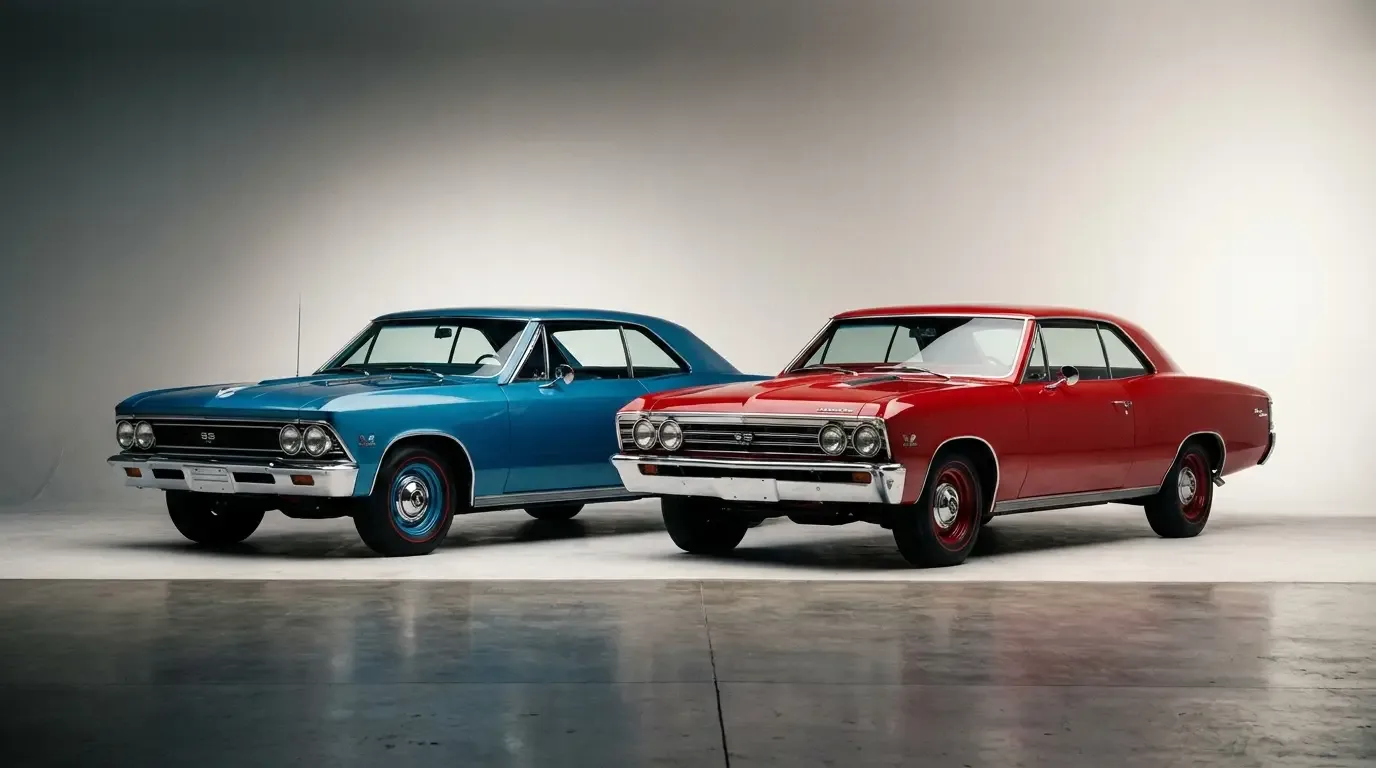
This isn't a restyle in the way 1968 was a restyle, new structure, new glass, a completely different stance. It's the same basic '64 shell carried through '67, but the surfacing changed enough in the middle of that run that the two halves of the first generation read differently in person, especially in three-quarter light where a fender line either catches a shadow or doesn't.
1964-65: clean, upright, conservative
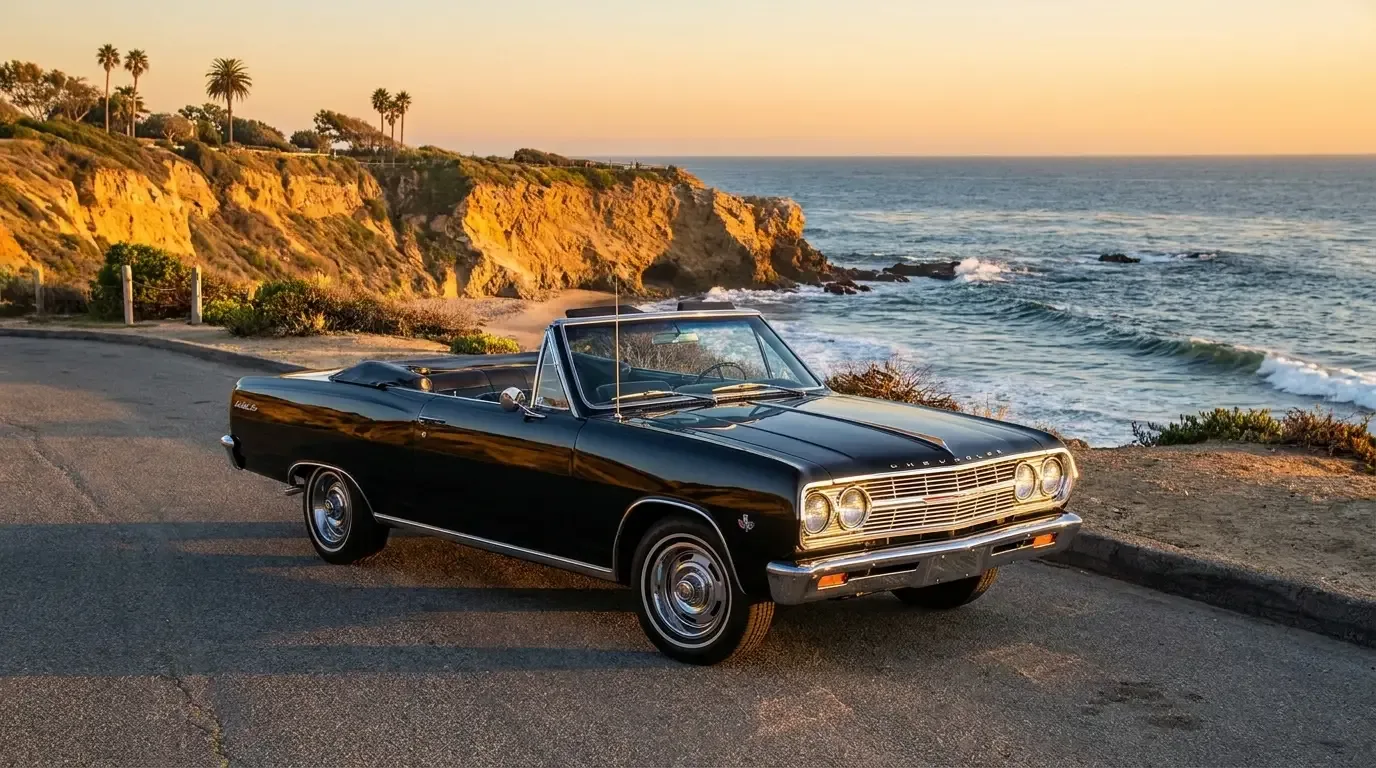
The original Chevelle body, the one covered in full over in how the Chevelle began, was drawn conservative on purpose. Chevrolet needed a mid-size car that wouldn't step on the full-size Impala's toes or embarrass the compact Chevy II, and the styling reflects that careful middle ground. Straight character lines, a simple horizontal grille, minimal sculpting on the doors. It's a well-proportioned shape, but it's not trying to show off.
The '65 carried the same basic panels with a mild grille and taillight update. If you're working on one of these cars, the thing to know is how little changed structurally between the two years. Doors, quarters, and the greenhouse are effectively shared, which is good news for anyone hunting parts or trying to source a donor panel.
1966-67: sculpted, aggressive, more confident
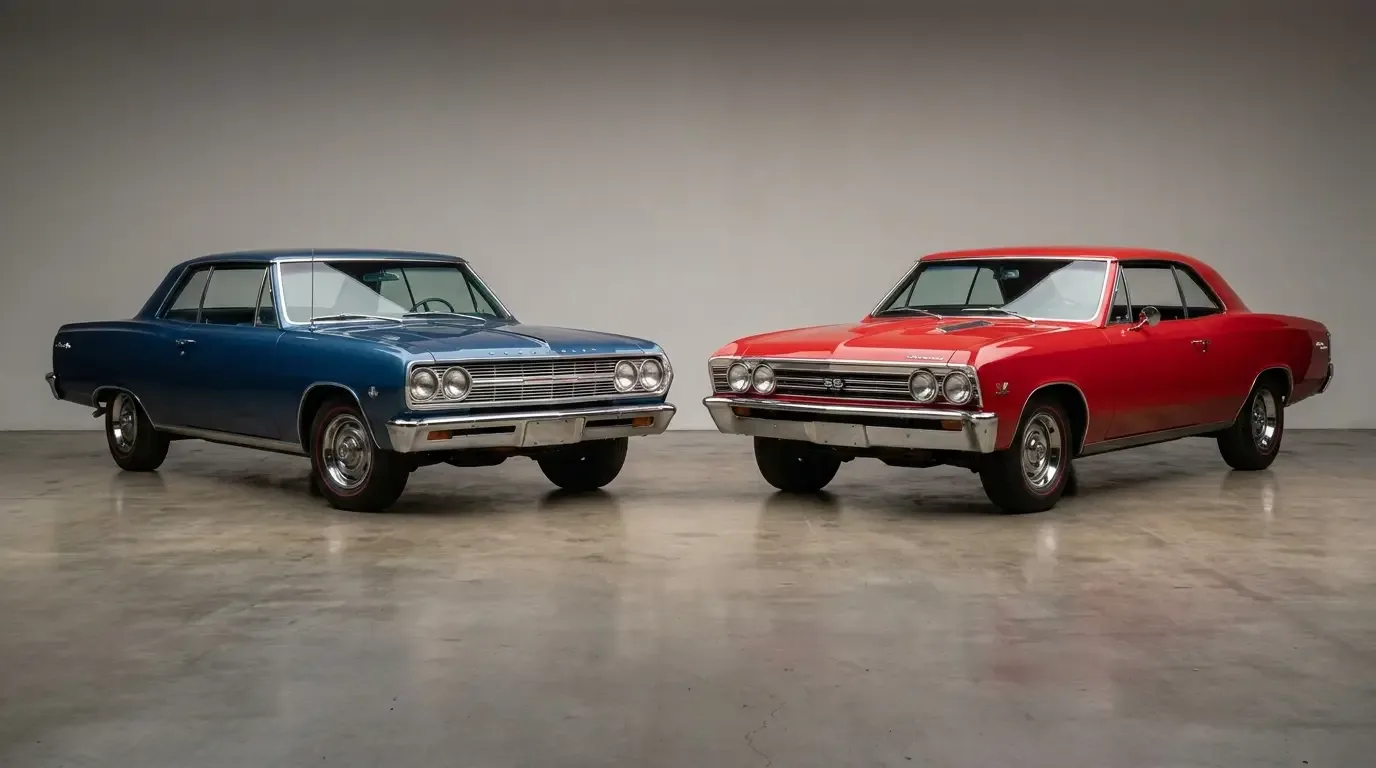
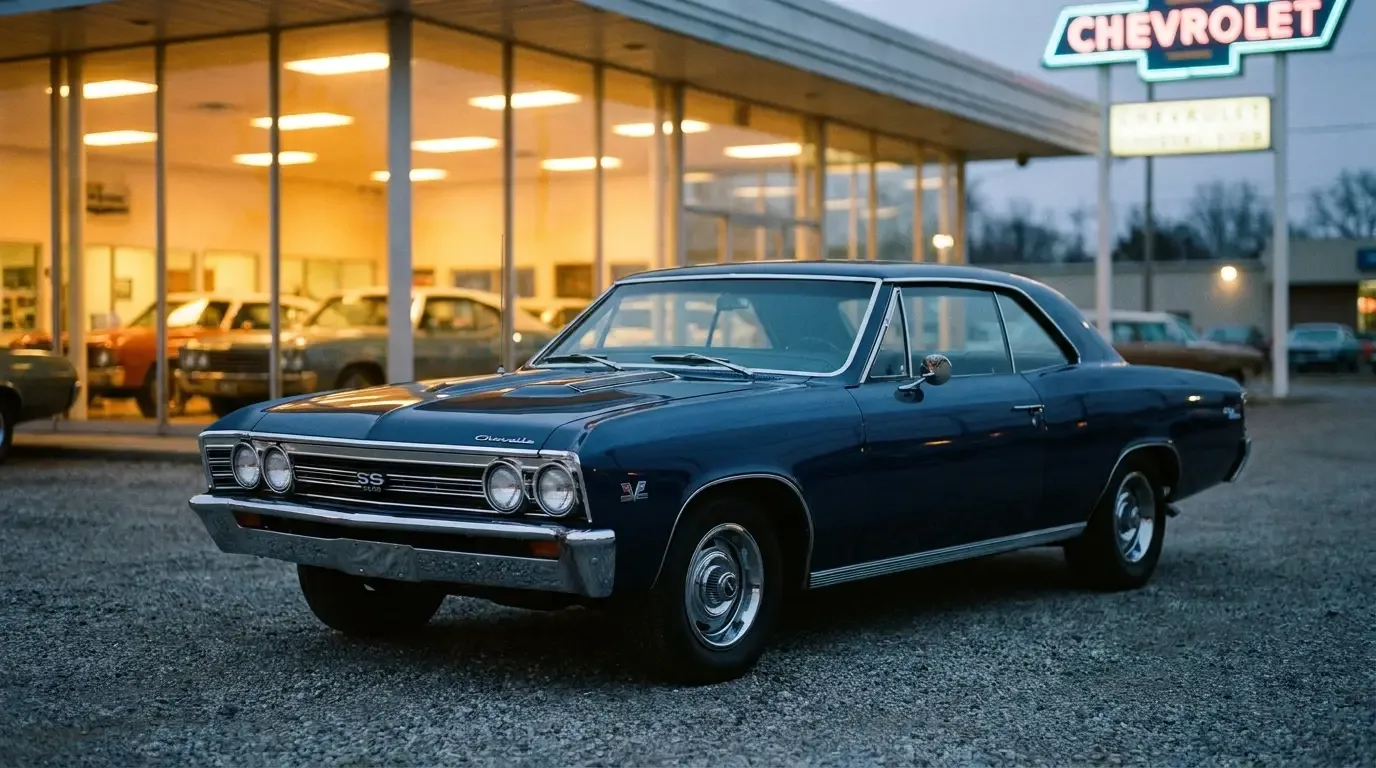
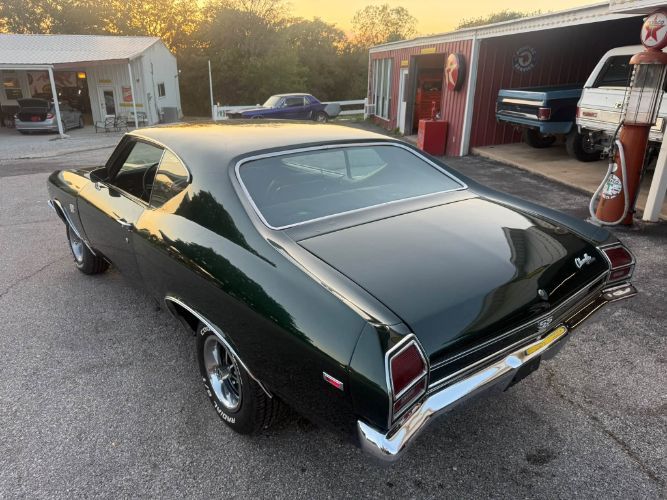
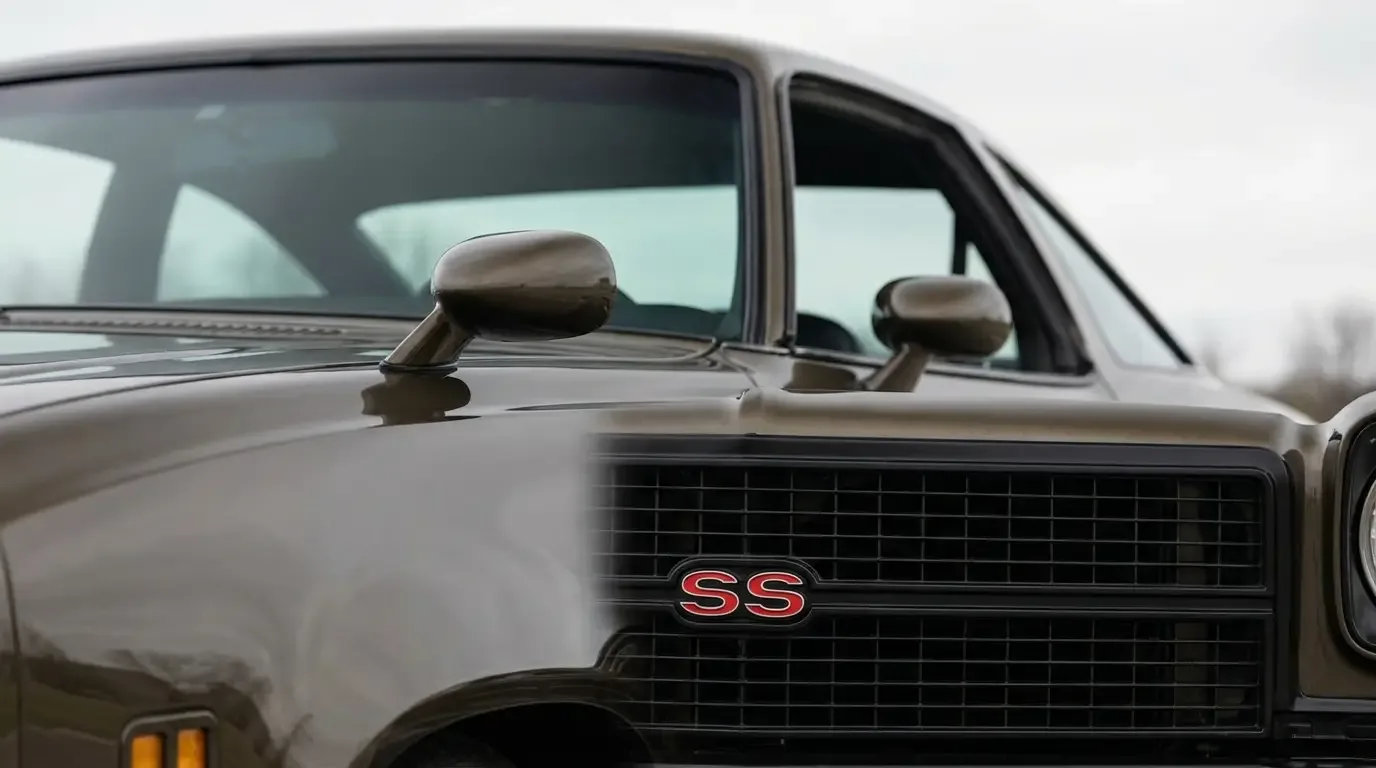
The 1966 restyle is where things get interesting from a bodywork standpoint. Chevrolet's stylists gave the Chevelle a more pronounced Coke-bottle shape through the rear quarters, a more aggressive front end, and a lot more surface sculpting overall. Where the '64-'65 doors are basically flat with a simple crease, the '66-'67 doors have real shape to them, a subtle concave that catches light differently depending on the angle. That's not an accident. That's a stylist saying the earlier car looked a little plain and deciding to fix it.
For 1967 specifically, the changes were smaller, a new grille texture, revised taillamp treatment, but the underlying '66 surfacing carried through unchanged. Anyone doing bodywork on a '66 or '67 needs to respect those compound curves. A flat patch panel that would disappear on a '64 fender will show as a dead spot on a '66, because the surrounding metal isn't flat to begin with.
| Detail | 1964-65 | 1966-67 |
|---|---|---|
| Body surfacing | Flat panels, straight character lines | Sculpted quarters, Coke-bottle hip |
| Front end | Simple horizontal grille | More aggressive, deeper grille opening |
| Doors | Minimal crease, flat surface | Concave sculpting through the middle |
| Structure shared with | Both years, same basic shell | Both years, updated skin over shared structure |
Why the surfacing shift matters for a builder
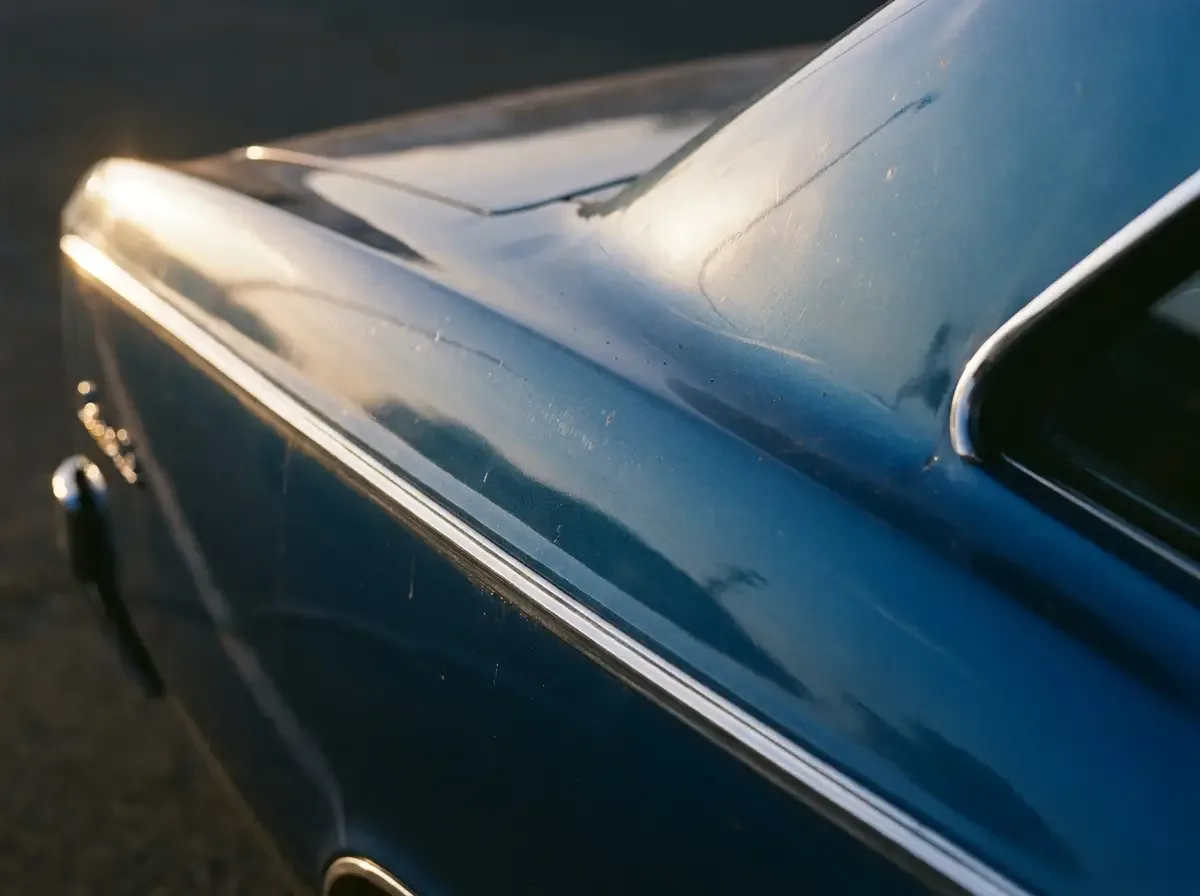
If you're building rather than restoring, this distinction changes how you approach a project. A '64-'65 body is a cleaner canvas for a custom build, less factory sculpting to fight or blend with anything you add. A '66-'67 body already has movement in it, so a subtle custom touch, shaving trim, smoothing a seam, reads differently because you're working with existing shape instead of a flat surface. Neither approach is wrong. They're just different starting points, and pretending they're the same car because they share a nameplate is how people end up frustrated three months into a build.
Paint reads differently on the two bodies too. Flat '64-'65 panels show a single-stage color evenly. The sculpted '66-'67 quarters catch light in a way that rewards a deeper color or a candy finish, because the extra shape gives the paint something to play against. That's not opinion dressed up as fact, that's just what happens when light hits a compound curve versus a flat one.
"People talk about the '66 restyle like it's a completely different car, and it's not, it's the same bones under new skin. But that skin makes a real difference once you've got your hands on the metal. A flat '64 fender and a sculpted '67 fender teach you two different lessons about bodywork, and you should know which lesson you're signing up for before you start cutting."
Jim Vasquez
Reading the whole arc
The styling shift between the two halves of the first generation isn't a footnote, it's a real design evolution that happened inside a single body generation, which is unusual. Most cars either stay static for their whole run or get a full redesign. The Chevelle did something in between, and understanding that helps explain why some collectors have a strong preference for one half of the run over the other. If you want the bigger picture beyond just the sheet metal, the full Chevelle story covers how the whole nameplate evolved from here. And if convertibles are more your interest than the coupe body lines discussed above, the first-generation convertible story is worth reading next.
What this means at a swap meet or a parts counter
The practical side of all this shows up the moment you start sourcing panels. Somebody hunting a quarter panel or a door skin needs to know which half of the generation they're dealing with before they buy anything, because a flat '64-'65 panel and a sculpted '66-'67 panel are not interchangeable no matter how close the part numbers might look in a catalog. I've seen guys get burned buying a panel off a listing photo without checking which body style it actually came off of, and then spending a weekend trying to make a flat door skin match a sculpted quarter that's already on the car.
Trim pieces follow the same rule. Grille inserts, taillight bezels, and side moldings all changed enough between the two eras that they're generally not cross-compatible, even though the mounting points on the underlying body are close enough to trick somebody who isn't paying attention. If you're restoring rather than building custom, get a good reference photo of your exact year before you order anything, and don't trust a seller's description of "fits '64-'67 Chevelle" without asking a follow-up question.
None of this is complicated once you know to look for it. It's just one more reason the two halves of the first generation deserve to be treated as related but distinct projects rather than one uniform car that happened to run for four years.
Sources and notes
- Wikipedia: Coke bottle styling
- TopSpeed: How the Chevy Chevelle Has Evolved Over the Decades, 1964 to 2004
- SS396.com: 1966 Chevelle Restoration Information
- Over-Drive Magazine: 1966 Chevrolet Mid-Size Cars Fact Sheet
- Chevrolet Chevelle history, Camaro Wiki
- Hagerty Marketplace: 1967 Chevrolet Chevelle SS 396
Related Reading
Have a
Chevrolet Chevelle
for Sale?
Reach thousands of serious classic car collectors across the US.
Sell It Here →
Are You a Classic Car Dealer?
List your full inventory and connect with targeted classic car buyers.
Join as a Dealer →
#Bodywork
#Chevelle styling
#first generation Chevelle
#Chevrolet Chevelle history
#1966 Chevelle restyle

About the author
Jim Vasquez
Southern California hot rod and custom car builder with roots in the traditional kustom kulture scene.
Related Listings - Chevrolet Chevelle
More in History & Heritage
Comments
Be the first to comment on this article.