
By the early 1990s the full-size, body-on-frame American luxury sedan was already an artifact of an older idea. Front-wheel drive had taken over most of the segment. Yet two cars held the line: the Cadillac Fleetwood and the Lincoln Town Car. Both rode on separate frames, both measured well over eighteen feet, and both carried the kind of soft, isolated ride that a generation of buyers still associated with arriving somewhere important. They were the last of the land yachts, and they left the stage a long way apart.
History & Heritage
6 min read
Fleetwood vs Town Car: The Last True Land Yachts
How the Cadillac Fleetwood and Lincoln Town Car became the last true American land yachts, why one died in 1996 and the other lasted to 2011.
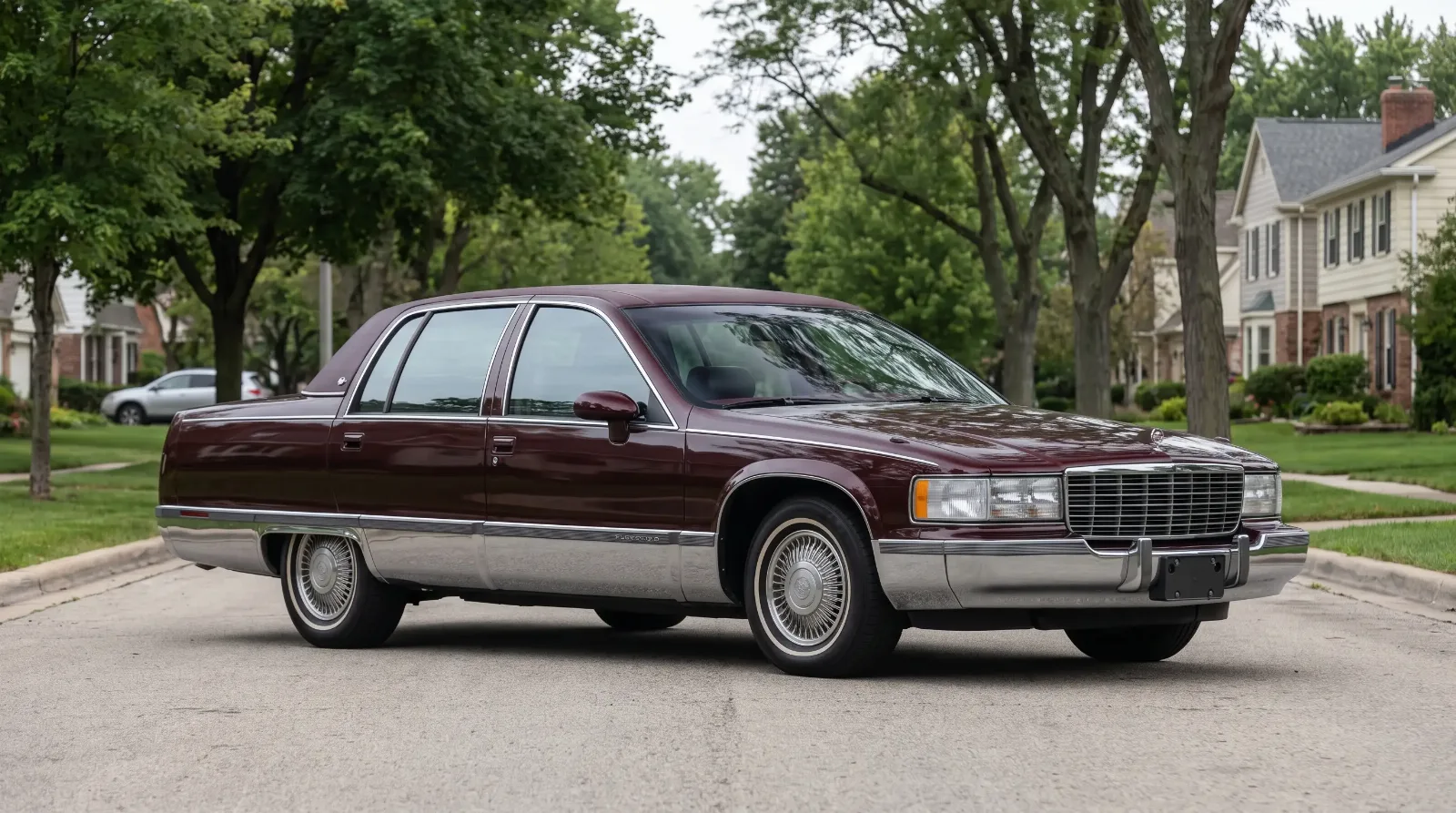
The Fleetwood name reached back to the coachbuilder Fleetwood Metal Body, absorbed by Cadillac in the 1920s, and for decades it signified the longest and most formal cars in the range. The Town Car name had a shorter pedigree but a clearer late-career mission. Understanding why one marque retired its flagship in 1996 while the other kept building nearly the same car into 2011 tells you a great deal about how differently these two companies read the same shrinking market. This piece is one chapter in the Cadillac-Lincoln rivalry.
Two different definitions of the flagship
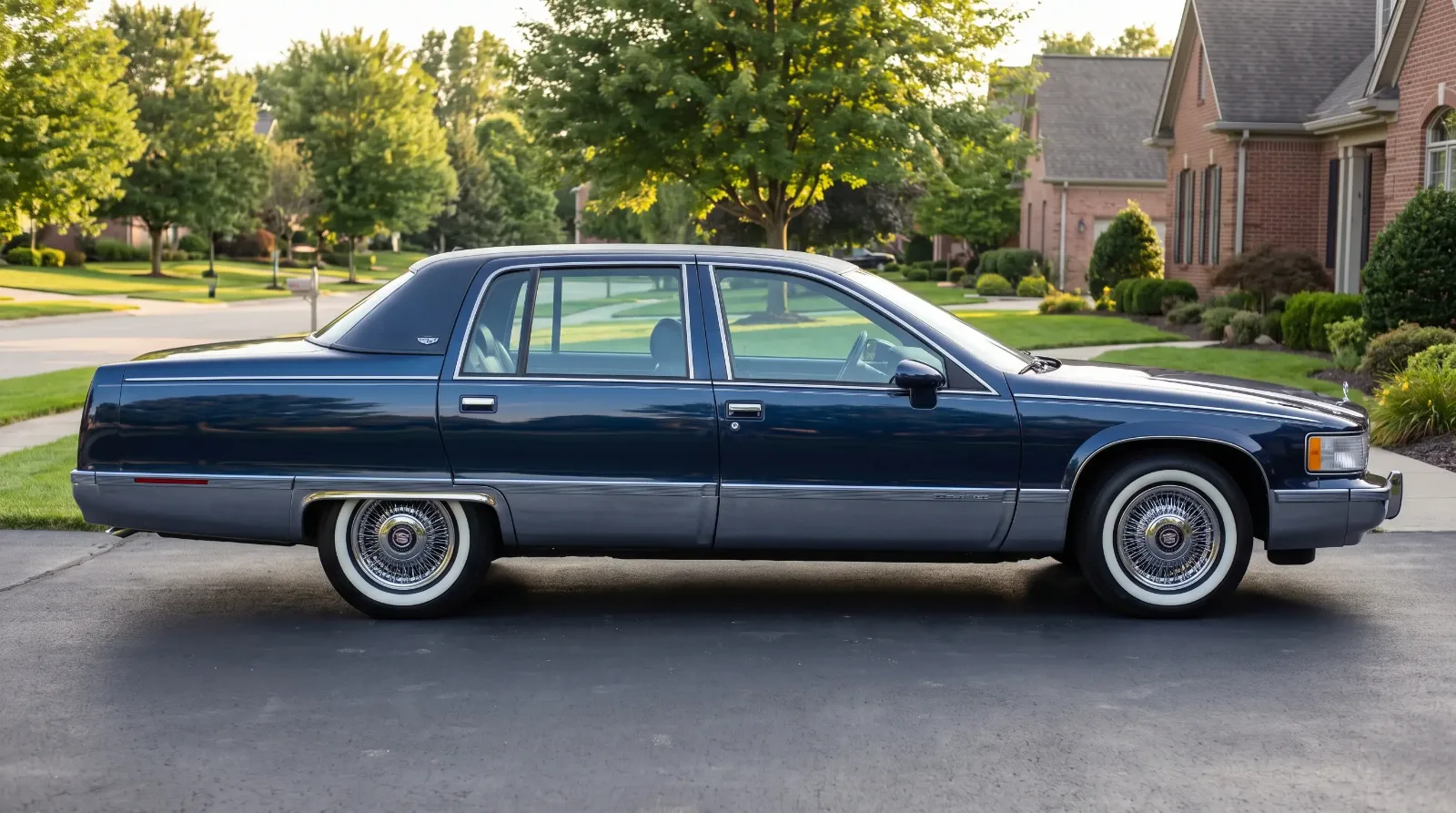
The Fleetwood name did a lot of work across Cadillac's postwar decades, sometimes as a trim, sometimes as the Fleetwood Brougham on the rear-drive D-body. The car most people mean by "the last Fleetwood" is the 1993 to 1996 sedan, a genuinely enormous machine built on the same rear-drive architecture that underpinned the Chevrolet Caprice. Cadillac stretched it, formalized it, and gave it a wheelbase and overall length that made it one of the longest passenger sedans the company ever sold.
The Town Car took a different path. From 1981 it lived on Ford's Panther platform, shared with the Crown Victoria and the Mercury Grand Marquis, and Lincoln kept refining that same basic car for three decades. The 1990 redesign gave it the rounded, aero-influenced body that most buyers picture, and the 1998 revision softened it further. It was never the technical flagship of the Lincoln range. It was the dependable, profitable heart of it.
How they drove and what powered them
Both cars were built to isolate, not to entertain. The 1994 to 1996 Fleetwood carried the 5.7-liter LT1 V8, the same family used in the Corvette but tuned for torque and quiet, producing roughly 260 horsepower. The 1993 car used an earlier 5.7-liter unit with markedly less output before the LT1 arrived. That engine gave the Fleetwood real highway pull, which mattered in a car weighing well over 4,000 pounds.
The Town Car relied on Ford's 4.6-liter modular V8, a single-overhead-cam design rated in the low-to-mid 200-horsepower range across its long run, with numbers shifting by model year. It made less power than the Fleetwood's LT1 but paired with the Panther chassis in a way that owners trusted for years of high-mileage service. Fleet operators and livery companies proved the point every day.
| Spec (approx.) | Cadillac Fleetwood (1994-1996) | Lincoln Town Car (1998-2002) |
|---|---|---|
| Layout | Front engine, rear drive, body-on-frame | Front engine, rear drive, body-on-frame |
| Engine | 5.7L LT1 V8 | 4.6L SOHC modular V8 |
| Power | ~260 hp | ~200-235 hp by year |
| Overall length | ~225 in | ~215-218 in |
| Final model year | 1996 | 2011 |
Why the Fleetwood died first
The Fleetwood left in 1996 for a reason that had nothing to do with how good the car was. General Motors needed the Arlington plant for the Tahoe, Yukon, and Suburban, and those trucks earned far more per unit than a big traditional sedan selling in modest numbers. Cadillac had also committed to front-wheel drive for its mainstream cars, so the rear-drive Fleetwood sat outside the brand's stated direction. When the factory changed jobs, the last true Cadillac land yacht simply had nowhere to be built.
There is a quieter point worth making here about originality and legacy. The 1996 cars are the ones collectors now single out, partly because they were the final year and partly because the LT1 gives them a usable turn of speed. A well-kept, low-owner example with documented service reads very differently from the many that spent long lives as airport cars. If you care about these as artifacts rather than transport, provenance is the whole conversation.
"The Fleetwood did not fail in the market. It was simply standing on ground the factory wanted for something else, and a low-volume flagship rarely wins that argument."
Sarah Whitfield
Why the Town Car kept going to 2011
Lincoln kept the Town Car alive because it kept selling to buyers who valued exactly what it was. Livery services, funeral fleets, and older private owners wanted a soft-riding, roomy, repairable rear-drive sedan, and the Panther platform delivered that at a cost Ford had long since paid off. The car soldiered on with detail updates rather than reinvention, and production finally ended in 2011 when the St. Thomas assembly plant in Ontario closed. That closure marked the real end of the full-size body-on-frame American luxury sedan.
The difference in endings shaped how each car is remembered. The Fleetwood reads as a flagship cut off mid-stride. The Town Car reads as a workhorse that outlasted its whole category. Both belong to the same vanished idea of luxury, and both are covered in the broader arc of the story of the classic luxury car.
Which one to seek today
These cars appeal to different buyers now. The 1996 Fleetwood is the rarer, faster, more formally styled choice, and clean examples have started to draw genuine collector attention rather than bargain-hunters. The Town Car is easier to find, easier to fix, and enormously well supported, which makes it the sensible entry into the land-yacht experience. Neither is a museum piece in the pre-war sense, but both are honest survivors of a design philosophy that no manufacturer will build again. If you want to see where this rivalry goes next, read next: Cadillac or Lincoln, or browse current classic luxury cars for sale.
Related Reading
Have a
Classic Car
for Sale?
Reach thousands of serious classic car collectors across the US.
Sell It Here →
Are You a Classic Car Dealer?
List your full inventory and connect with targeted classic car buyers.
Join as a Dealer →

About the author
Sarah Whitfield
Third-generation classic car collector specializing in pre-war American and European coachbuilt automobiles. Researcher and concours enthusiast.
More in History & Heritage
Comments
Be the first to comment on this article.