
Two guys at a cruise night, both leaning on the same argument I've heard a hundred times. One says his Camaro is a muscle car. The other says no, it's a pony car, and the muscle cars are the big ones parked over there. Both of them are a little right and a little wrong, and neither will budge. It's one of the oldest debates in the hobby, and the funny part is that the answer is actually pretty clean once you know where the terms came from.
History & Heritage
6 min read
Pony Cars vs Muscle Cars: The Real Distinction
A pony car is a body class, a muscle car is a formula. How the Mustang and GTO split the two categories, where they blur, and why it matters when buying.
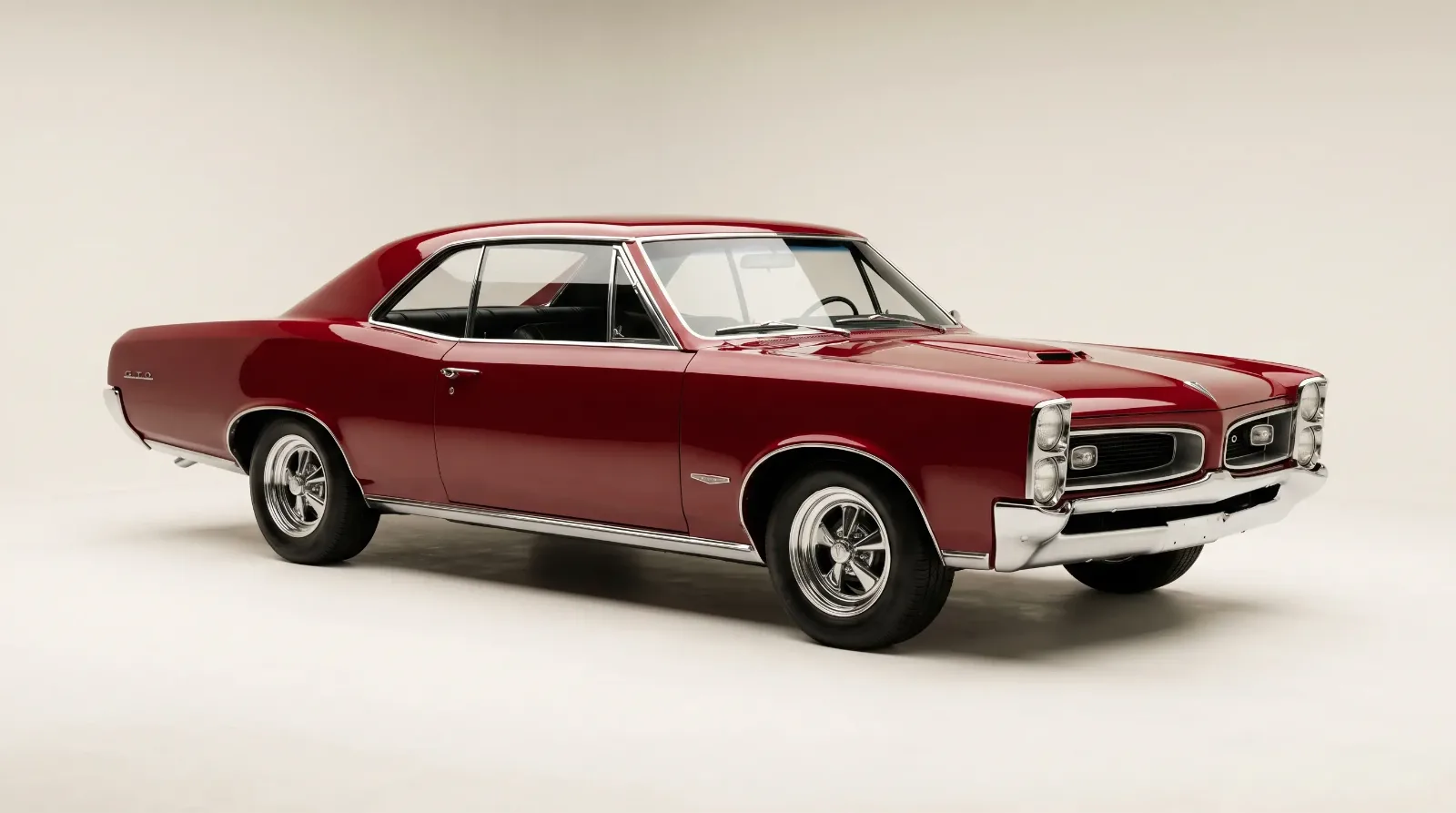
The confusion is understandable, because the two categories overlap in the middle and the marketing never cared about the difference. But there is a real distinction, it's rooted in how the cars were built and sold, and knowing it changes how you read a listing and what you should expect to pay. If you want the broad context first, see why it matters in the main history piece. Then let's settle the cruise-night argument.
The short answer
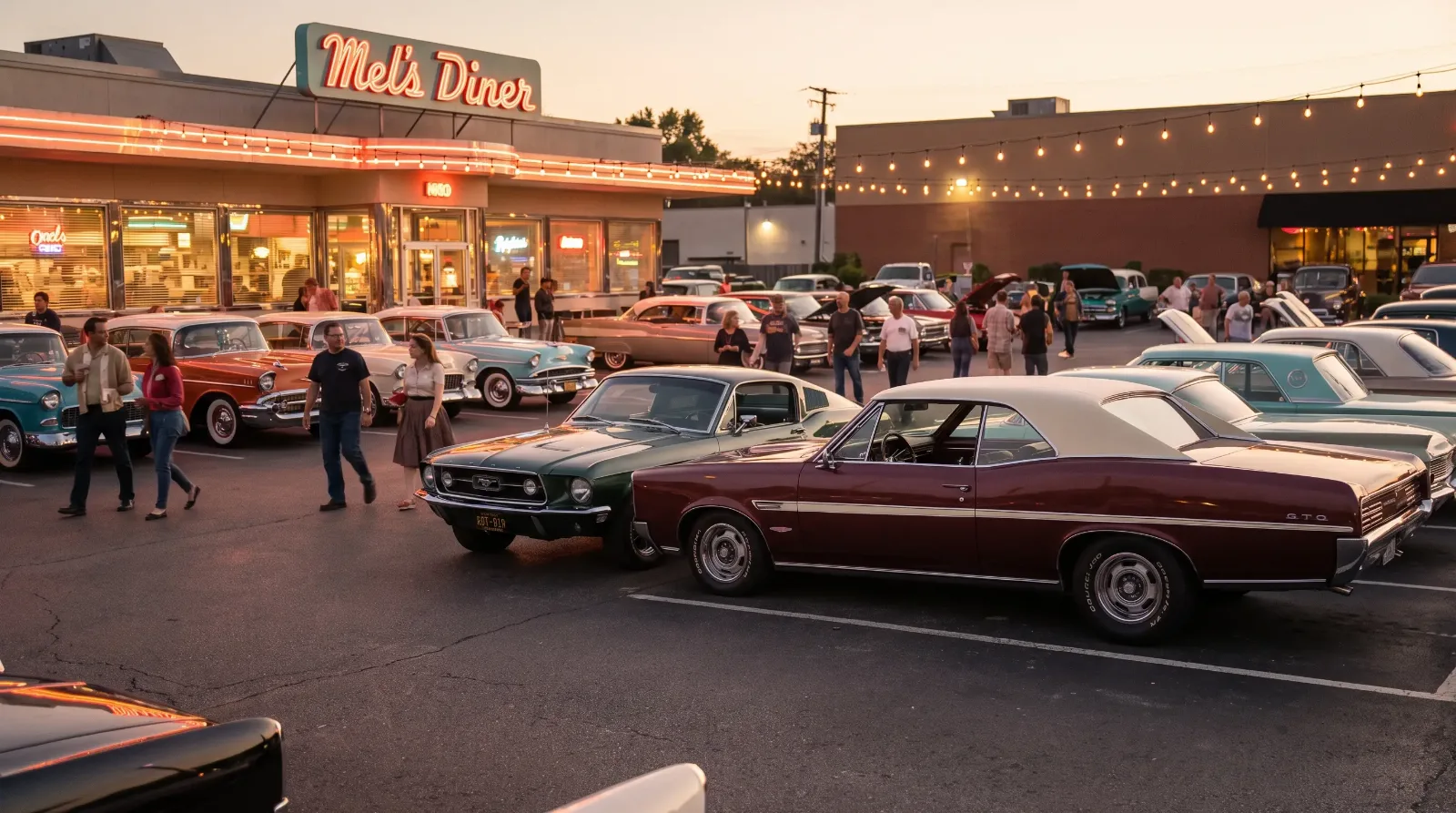
A pony car is a body class. A muscle car is a formula. That's the cleanest way I've found to put it. Pony car describes a specific kind of car: compact, sporty, long hood and short deck, priced for a young buyer. Muscle car describes what you do to a car: take a mid-size body and stuff the biggest engine you can into it. One term is about the shape and the size. The other is about the recipe.
That's why a car can be both, or one, or neither, and why the argument never dies. The categories were never designed to be exclusive. They grew up next to each other in the mid-1960s and got tangled almost immediately.
What makes a pony car
The pony car is named after the car that created the class, the Ford Mustang, which arrived in April 1964 and sold in numbers that stunned even Ford. The formula it set was specific. A compact platform, in the Mustang's case borrowed from the economy-minded Falcon, wrapped in a sporty body with a long hood and a short rear deck, a low price of entry, and a huge menu of options so a buyer could build anything from a mild six-cylinder secretary's car to something with real bite.
The rivals followed that template closely. Chevrolet answered with the Camaro for 1967, Pontiac with the Firebird the same year, and later came the Dodge Challenger and others, all chasing the same young buyer with the same long-hood, short-deck proportions. The point of a pony car was accessible sporty style. Speed was available, but it wasn't the entry ticket the way it was for a muscle car. For the full origin, read the full story on how the Mustang created the whole class.
What makes a muscle car
The muscle car formula is older in spirit and it's about the engine, not the styling. You take an intermediate, mid-size body, the kind of car a family would buy as a sensible sedan, and you order it with a big-block V8 that has no business being there. The result is cheap straight-line speed in a body big enough to seat the family. The 1964 Pontiac GTO is the car most people credit with defining it, a 389 dropped into the mid-size Tempest against corporate rules.
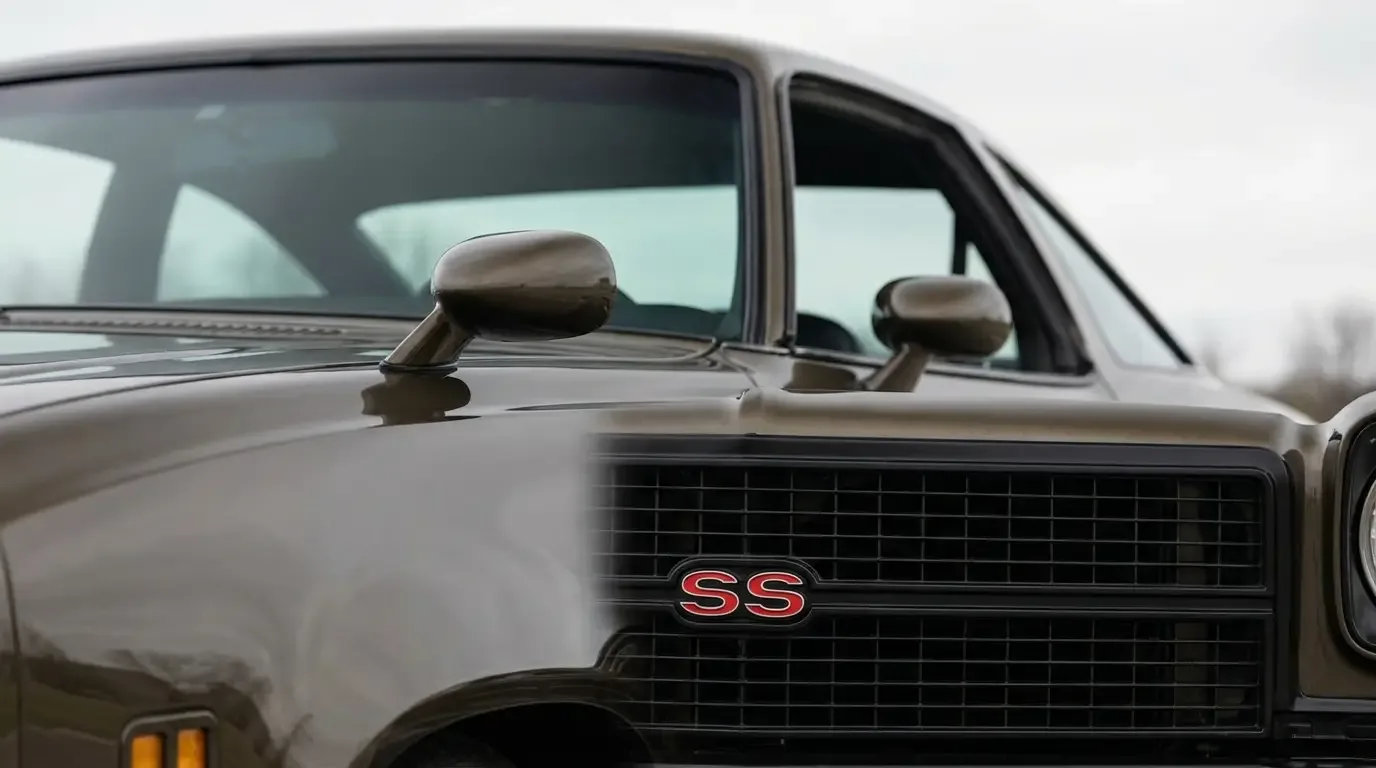
The key word is mid-size. A true muscle car of the classic era rides on an intermediate platform, GM's A-body being the textbook example, and it earns the name through displacement rather than shape. The Chevelle SS, the Oldsmobile 4-4-2, the Buick GS, the Plymouth Road Runner, these are muscle cars because of the formula, not because of any pony-car proportions. If you want to understand why that mid-size platform mattered so much, read the full story on how the A-body came to define the breed.
| Trait | Pony car | Muscle car |
|---|---|---|
| Defined by | body class and size | engine formula |
| Platform | compact, sporty | mid-size intermediate |
| Archetype | 1964 Ford Mustang | 1964 Pontiac GTO |
| Entry point | affordable style, six or V8 | big-block in a family body |
| Priority | looks and options | straight-line speed |
Where the two blur
Now the honest part, because this is where the cruise-night guys both have a point. The categories collided the moment the factories started shoving big engines into pony cars. When Ford built the Boss 429 Mustang, or Chevrolet quietly slipped 427 big-blocks into Camaros through the COPO and ZL1 back door, those cars are pony cars by body and muscle cars by formula. They're both at once.
So a base six-cylinder Mustang is a pony car and nothing more. A Boss 429 is a pony car that has fully adopted the muscle car recipe. And a Chevelle SS454 is a muscle car that was never a pony car, because it was never built on a compact sporty platform to begin with. The overlap is real, but it only runs one direction. A pony car can become a muscle car by formula. A mid-size muscle car doesn't become a pony car, because you can't shrink the body it was born on.
Why the distinction matters to a buyer
This isn't just trivia for winning arguments. When you're shopping, the two categories behave differently in the market and in the driveway. Pony cars, especially small-block and six-cylinder examples, are the more affordable and more usable entry into the hobby. They're lighter, easier to live with, and there are more of them. The mid-size muscle cars with genuine big-blocks are the heavyweights of the market, and they price accordingly.
"When somebody tells me they want a muscle car and points at a base Mustang, I don't correct them to be smug. I do it because they're about to overpay or underbuy. Know whether you want the pony car experience or the big-block experience, because they cost different money and they drive like different animals."
Patrick Walsh
Figure out which one you actually want before you start looking, and the whole search gets easier. If you want the lighter, more livable end, focus on the pony cars. If you want the full-throated classic american muscle cars experience with a big engine in a mid-size body, budget for it. Either way you can see classic muscle cars for sale to get a feel for where each category sits before you commit. Just don't let anyone at a cruise night talk you into paying muscle car money for a pony car badge.
Related Reading
Have a
Classic Car
for Sale?
Reach thousands of serious classic car collectors across the US.
Sell It Here →
Are You a Classic Car Dealer?
List your full inventory and connect with targeted classic car buyers.
Join as a Dealer →

About the author
Patrick Walsh
Automotive journalist covering classic car shows, events, and the enthusiast community across North America.
More in History & Heritage
Comments
Be the first to comment on this article.