
The 1960s compact cars were Detroit's answer to a question it had ignored for most of the 1950s: what about the buyer who wanted less car? For the 1960 model year, Ford, Chrysler and General Motors each launched a small domestic sedan within months of one another, the Falcon, the Valiant and the Corvair. The three took very different engineering paths. Sixty-six years later, they share one practical trait that matters to anyone shopping on a budget: they were built in large numbers, mostly as plain sedans, and most survivors still trade well below the muscle and pony cars that grew out of them.
Ownership & Lifestyle
6 min read
1960s Compacts: Falcon, Valiant, Corvair and the Cheap Way Into the Sixties
Falcon, Valiant and Corvair: the records behind the 1960s compact cars, why they stay cheap and which versions to buy in 2026.
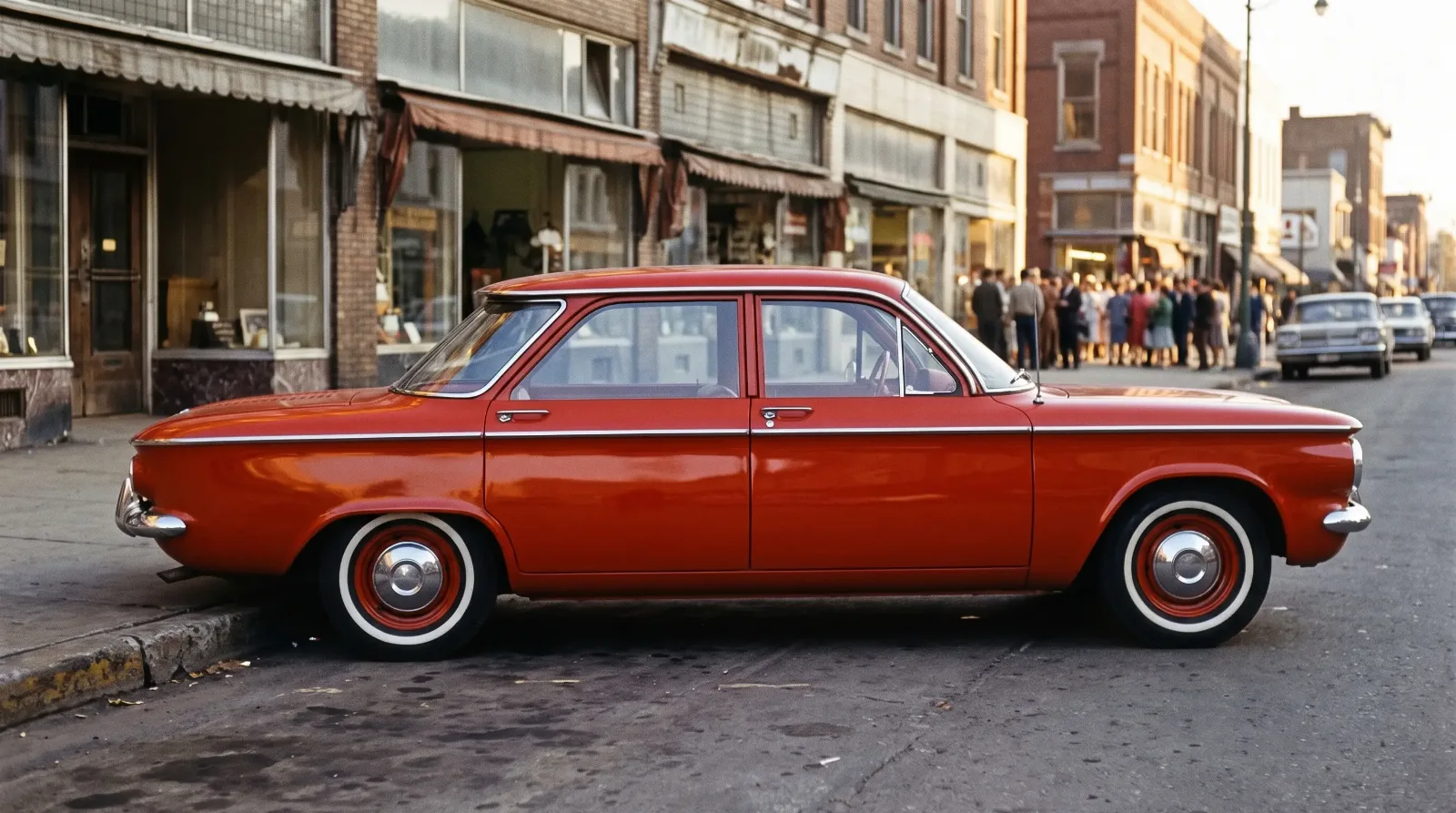
This is a look at the records behind those three cars, why their numbers keep prices down today, and which versions to look for. For the wider story of how cars from three decades held their value, read more here.
Why Detroit built 1960s compact cars
The pressure came from two directions. Imports, led by the Volkswagen Beetle, were selling in numbers Detroit could no longer dismiss, and American Motors had shown with the Rambler that a smaller domestic car could make money. The 1958 recession sharpened the point. Studebaker brought out the Lark for 1959, and by the fall of 1959 the Big Three had their own entries on dealer floors.
What they built tells you a good deal about each company. Ford went conventional and cheap. Chrysler went conventional and tough. General Motors went radical. Those choices still decide what a buyer gets for the money.
| Car | First model year | Original base engine | Layout |
|---|---|---|---|
| Ford Falcon | 1960 | 144 cu in inline six, 90 hp | Front engine, rear drive, unit body |
| Valiant (Plymouth from 1961) | 1960 | 170 cu in slant six, 101 hp | Front engine, rear drive, unit body |
| Chevrolet Corvair | 1960 | 140 cu in air-cooled flat six, 80 hp | Rear engine, rear drive, unit body |
Ford Falcon: the numbers that made it cheap then and now
The Falcon was the plainest of the three and, at first, by far the best seller. Ford sold 435,676 of them in the first model year, more than either rival. That volume is the key to its price today. A car built in those quantities, mostly as two-door and four-door sedans with the small six and a column shift, survives in large numbers, and parts supply has never dried up.
The first-generation car ran from 1960 to 1963, the second from 1964 to 1965, and the third, larger Falcon from 1966 to 1970. The Falcon also mattered for what came after it. Ford built the 1965 Mustang on Falcon running gear, which is why many suspension and brake parts interchange. A buyer who wants Mustang mechanicals at sedan money is, in effect, shopping for a Falcon.
The versions that carry a premium are the ones a collector would expect: the 1963 to 1965 Sprint with the 260 or 289 V8, the Futura convertible and the Ranchero, although the Ranchero belongs with trucks for most buyers. The four-door sedan with the six is the bargain, and it is honest about what it is.
Valiant: the engine that outlived the car
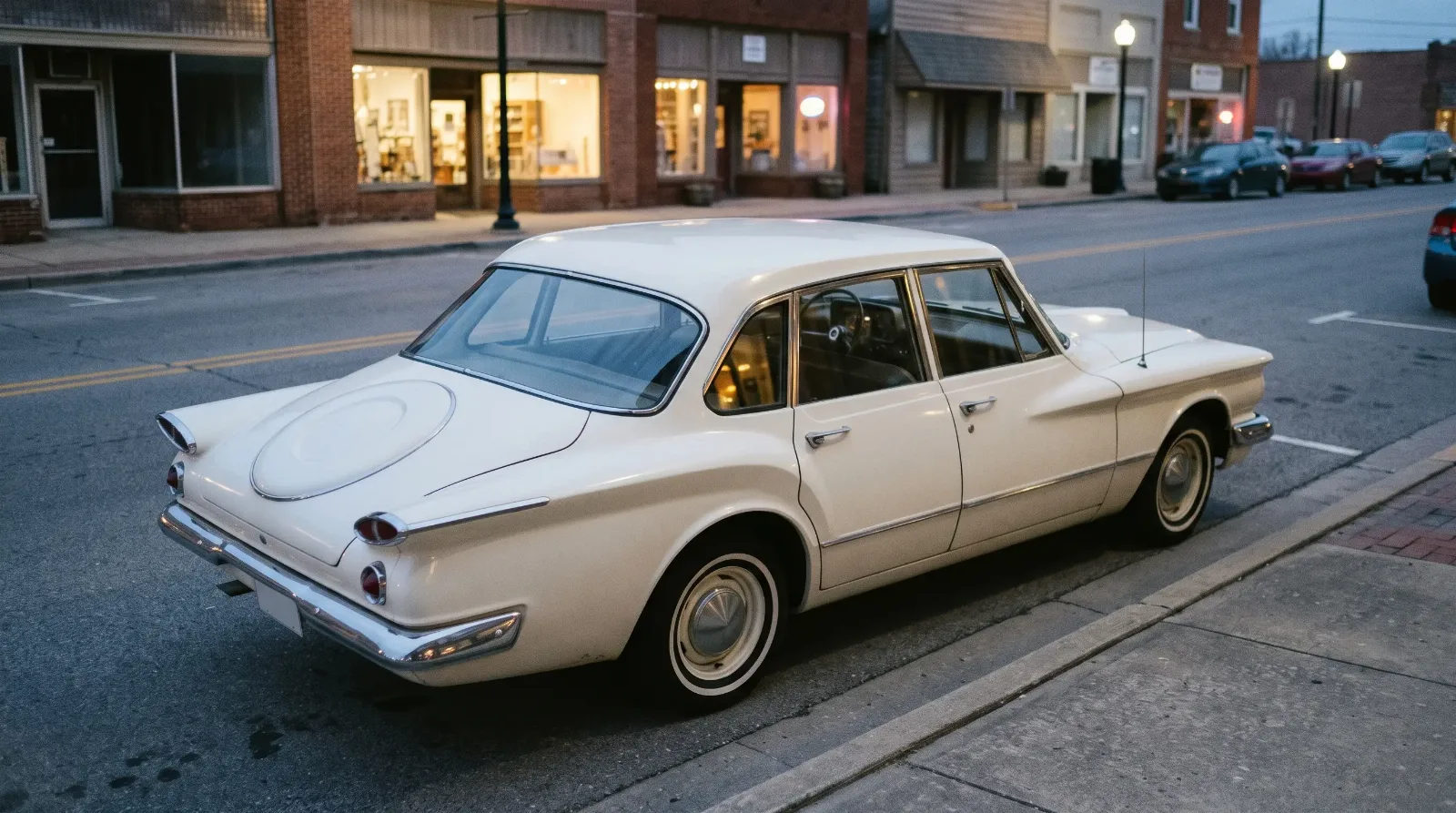
Chrysler sold the first Valiant as its own make for 1960, then badged it as a Plymouth from 1961. Its styling, with the false spare-tire shape on the decklid, divided people. Its engine did not. The slant six, canted to fit under a low hood, earned a reputation for durability that it still holds among owners.
That engine is the Valiant's main argument today. The 170 and the larger 225, which reached the Valiant during 1961, stayed in Chrysler production for decades, so rebuild parts are common and the engine is well understood by anyone who has worked on Mopars. Later Valiants, especially the 1967 to 1976 cars, are the most plentiful, and the Dodge Dart from the same platform widens the pool further.
Corvair: the myth, the record and the price
The Corvair is where the story needs a gentle correction. It is remembered mainly for Ralph Nader's 1965 book Unsafe at Any Speed, whose opening chapter criticized the swing-axle rear suspension of the 1960 to 1963 cars. That book did real damage to sales. What is mentioned less often is that a federal study published in 1972, carried out for the National Highway Traffic Safety Administration, found the 1960 to 1963 Corvair no more prone to loss of control than comparable cars of its time. And by the time the book came out, Chevrolet had already redesigned the car.
The second-generation Corvair, from 1965 to 1969, used a fully independent rear suspension, and its styling is still widely admired. Production ended in May 1969. The air-cooled flat six is a different animal from a Detroit inline six: it asks for attention to fan belts, oil leaks at the pushrod tubes and heater safety. A specialist parts network has kept the cars on the road, and a well-sorted late model is one of the more interesting ways to own a sixties car on a small budget.
"The Corvair is the only one of the three that people price on a reputation rather than a record. The record is better than the reputation, and that gap is where the bargain sits."
Tom Ramirez
What these compacts cost in 2026
Rough working ranges, and they should be treated as ranges rather than quotes. A running, driver-quality Falcon or Valiant four-door sedan with a six usually costs well under $10,000, and project cars sell for far less. Two-door hardtops and coupes cost more. Convertibles, V8 Sprints and the Valiant-based Barracuda sit higher again and fall outside a tight budget. Corvairs follow a similar pattern: plain sedans are the cheapest way in, and condition moves the price more than the badge.
Body style matters as much as model. The four-door sedan carries the lowest price in nearly every case, for reasons that go back a decade earlier, to the 1950s four-door sedans that taught collectors to chase two doors. When you start looking, the listings for 1960s cars under $5,000 are where these sedans tend to show up first.
The records point to a simple buying rule. Choose the compact whose engineering you want to live with: the Falcon for parts and Mustang interchange, the Valiant for the slant six, the Corvair for something different. Then buy the best body you can find, because on all three the steel costs more to fix than the engine.
Sources and notes
Related Reading
Have a
Classic Car
for Sale?
Reach thousands of serious classic car collectors across the US.
Sell It Here →
Selling a classic? Here's how: sell my classic car
Are You a Classic Car Dealer?
List your full inventory and connect with targeted classic car buyers.
Join as a Dealer →
#affordable classic cars
#Ford Falcon
#slant six
#1960s compact cars
#Chevrolet Corvair
#Plymouth Valiant

About the author
Tom Ramirez
Corvette researcher and historian based in Bowling Green, Kentucky. Two decades documenting Corvette production history from original factory records.
More in Ownership & Lifestyle
Comments
Be the first to comment on this article.