
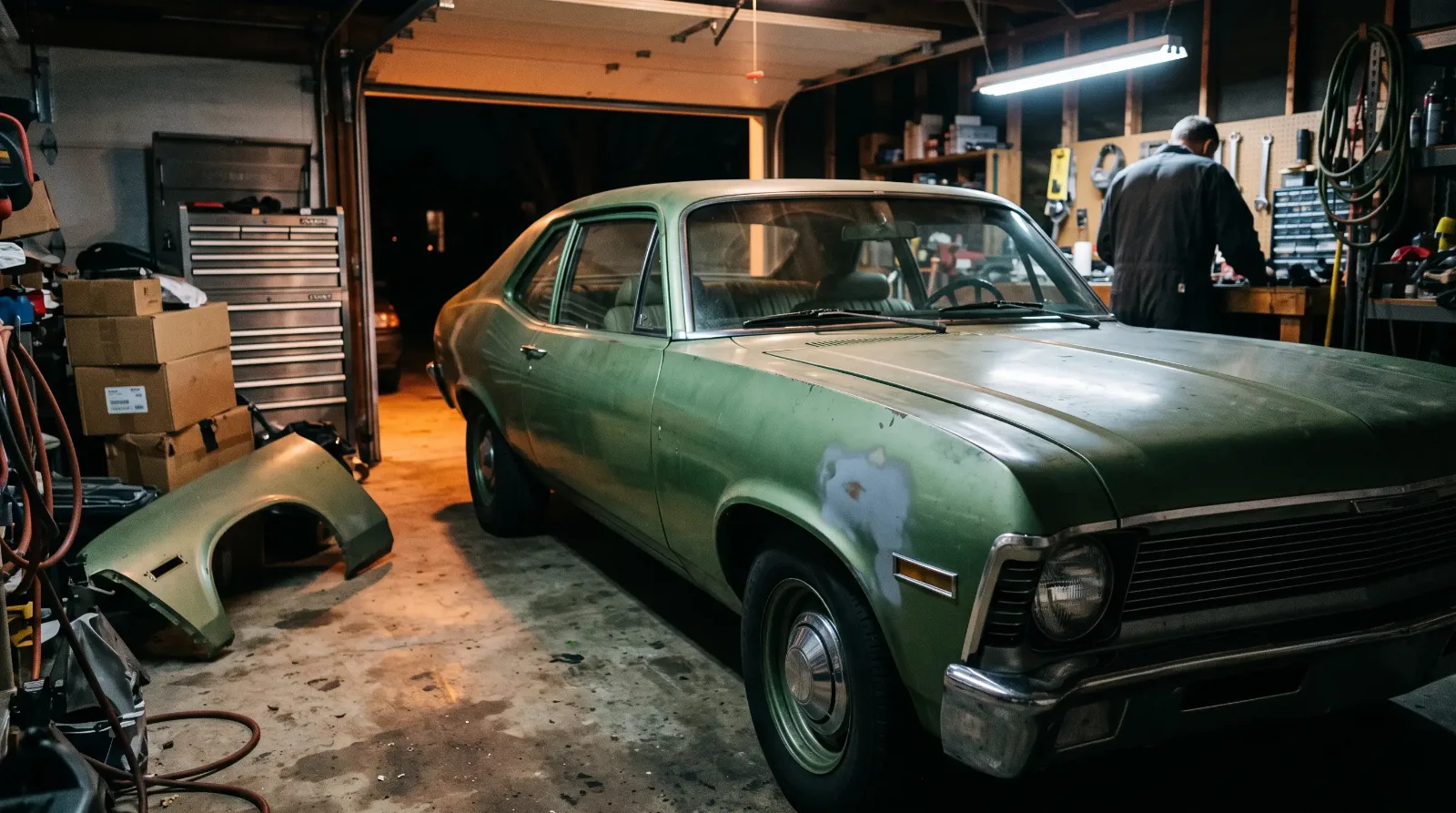
Barn find cars have a story built in, and the story is half of what the seller is charging you for. Somebody's uncle parked it in 1983. The doors were shut, the tires went flat and the swallows moved in. That is a good story. It may even be true. But "barn find" on a cheap listing is a description of where a car sat, not how it was kept, and the word "project" on the next listing over is not much more precise. The old guys who bought and sold these cars for a living had a simple habit: read the words, then go look at the car as if the words were never written.
Ownership & Lifestyle
7 min read
Barn Find or Project Car? What the Words Mean in a Cheap Listing
Barn find, project, ran when parked: what the words in a cheap classic car listing usually mean, and what long storage does to a car.
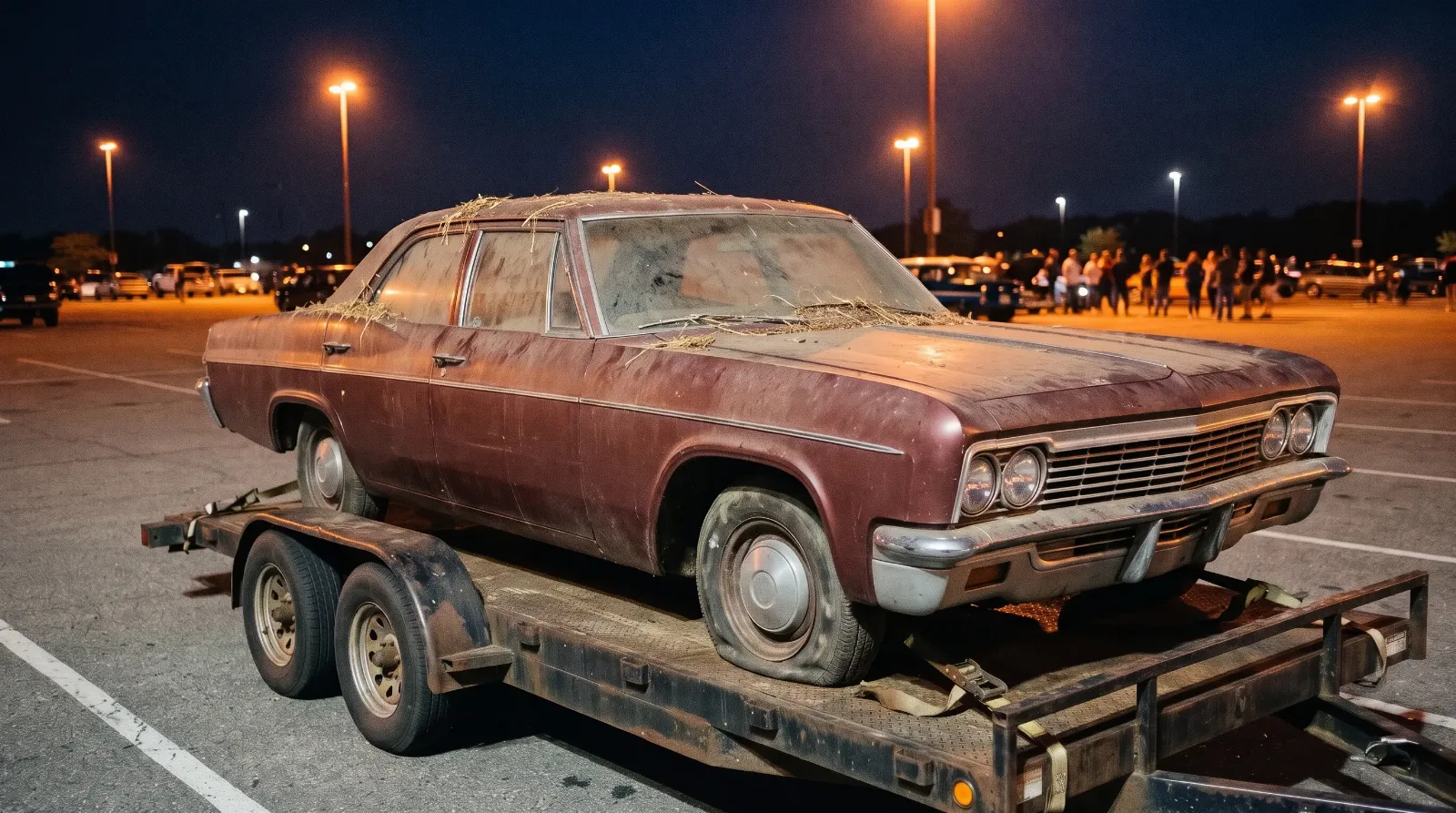
This piece is about what those words usually mean when the asking price sits under $10,000, and what to check before the story talks you into anything. If you have not settled on a type of build yet, read more here first.
What "barn find" actually promises
Strictly, a barn find is a car that has been in long storage and has not been touched since. No cleaning, no quick paint, no new battery to make it crank for the photos. The appeal is honesty. The dust is the evidence. You see the car the way the last owner left it.
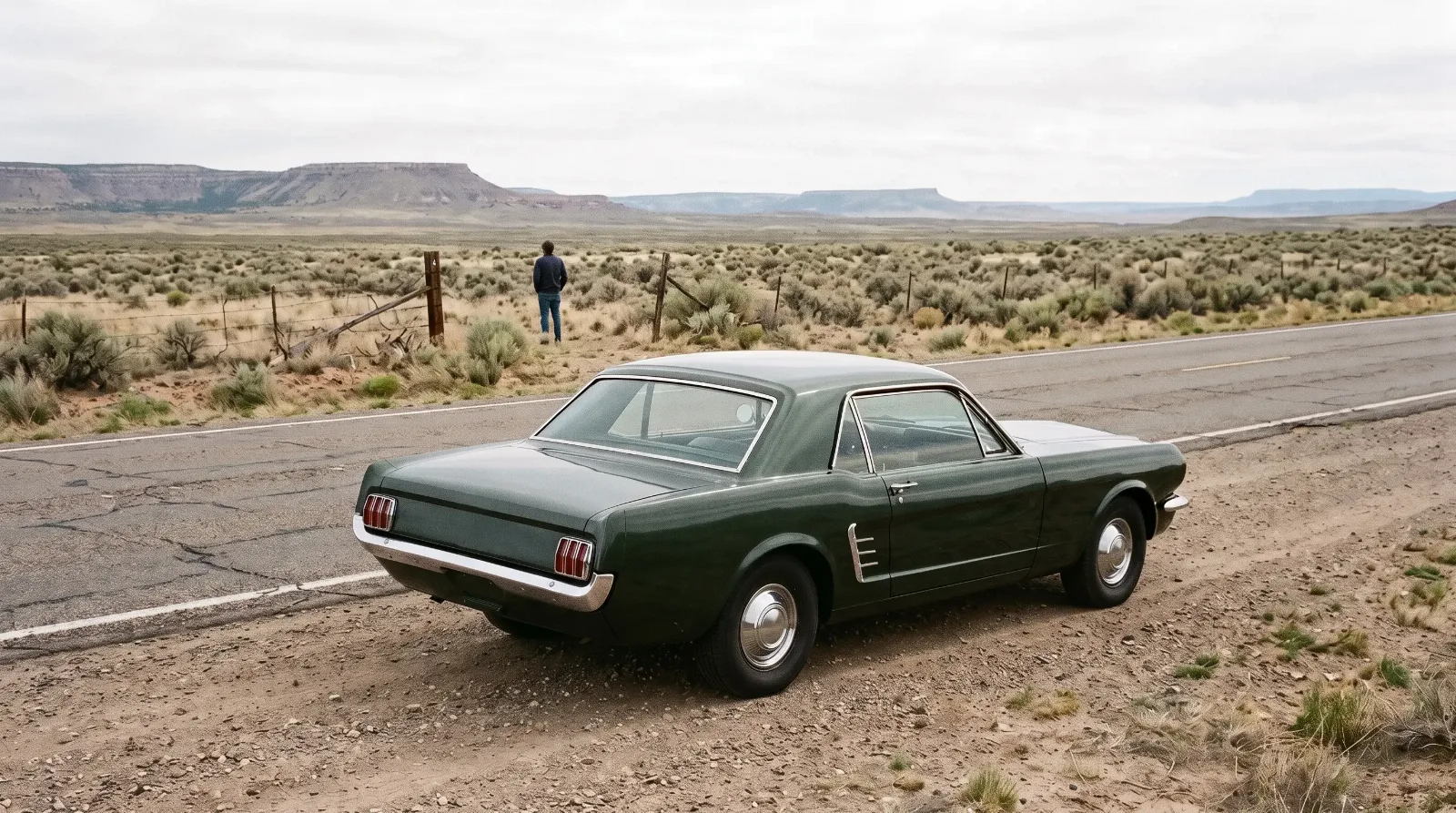
In practice, the term has stretched. Sellers use it for cars that sat in a carport, a shipping container, a field behind a shed and, once in a while, a heated garage with a cover on. Some of those are fine places to store a car. A field is not one of them. A barn with a dirt floor is not much better, because damp comes up from the ground and works on the floors and the frame from underneath.
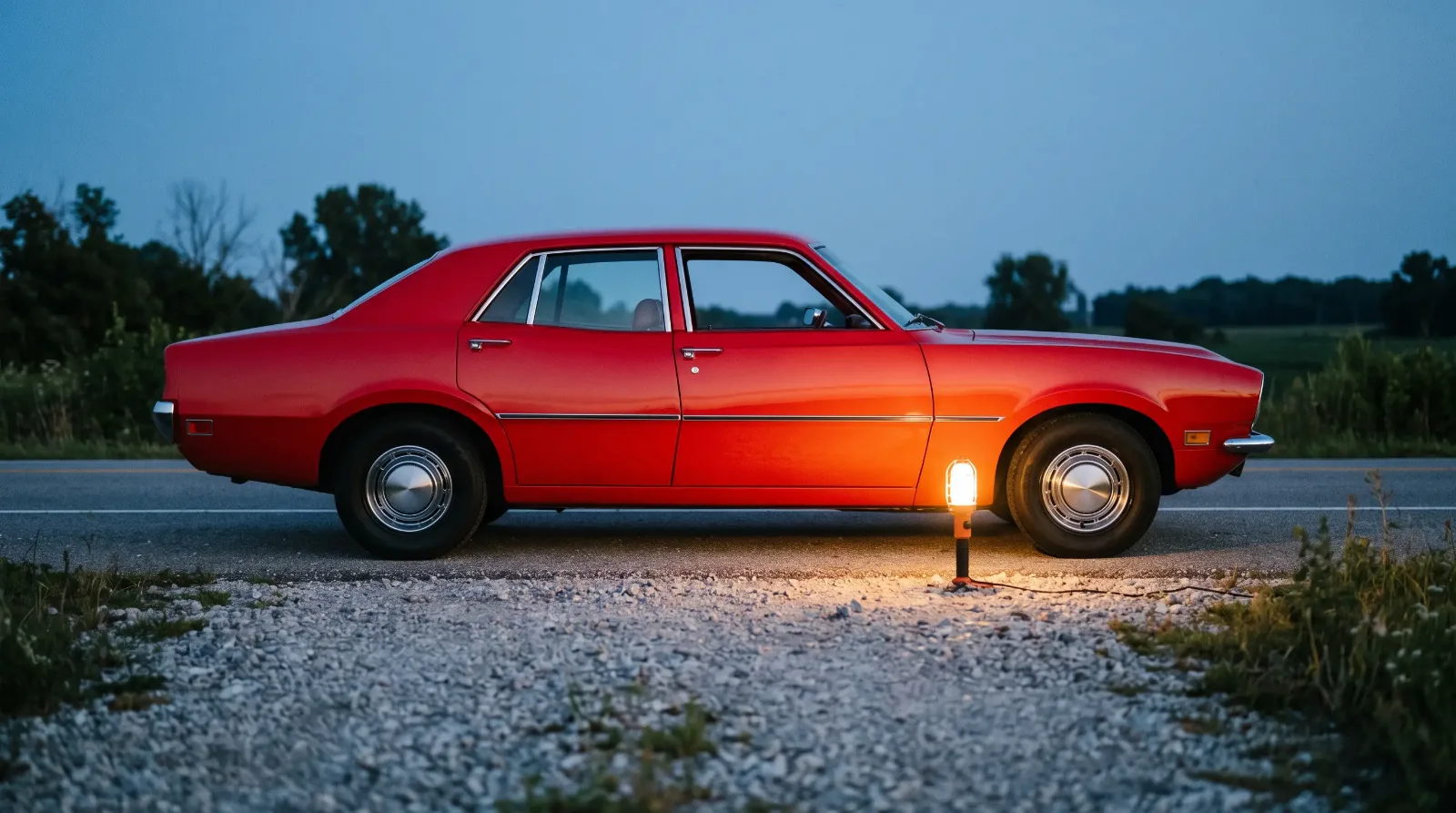
Here is the wry part. The more a barn find has been cleaned up for the sale, the less it is a barn find. A washed car with fresh tire shine and a battery from last week is a used car with a story attached. That is not a crime. It just means you should price it like a used car.
What "project car" usually means at this price
"Project" is a wider tent. It can mean a running, driving car that needs paint. It can mean a car that ran when parked. It can mean a shell, a pile of parts in the trunk and a bill of sale. The word alone tells you nothing, so the words around it carry the weight.
| Listing phrase | What it usually means | What to ask |
|---|---|---|
| Runs and drives | It started and moved for the seller recently | How far, and when? Will it do it while you watch? |
| Ran when parked | It ran at some point; nobody has tried since | How many years ago was it parked, and why? |
| Turns over | The starter spins the engine; it does not start | Is there compression? Spark? Fuel? |
| Engine is free | The engine is not seized; that is all | Was it turned by hand or with the starter? |
| Solid car | The seller thinks the rust is not bad | Photos of floors, rockers and frame from underneath |
| Easy restoration | Usually nothing; the phrase is decoration | Easy for whom, and what has already been done? |
| Barn find, untouched | Long storage, no recent work | Where was it stored, on what floor, and for how long? |
The most expensive phrase on that list is "ran when parked." It often means the car was parked because it stopped running, and the reason it stopped is still in there. The cheapest honest phrase is "runs and drives," provided the seller lets you hear it start cold.
"Ran when parked is the oldest line in the trade. The car always ran when it was parked. The question nobody asks is why it got parked."
Gary Nowak
Barn find cars and what long storage does to them
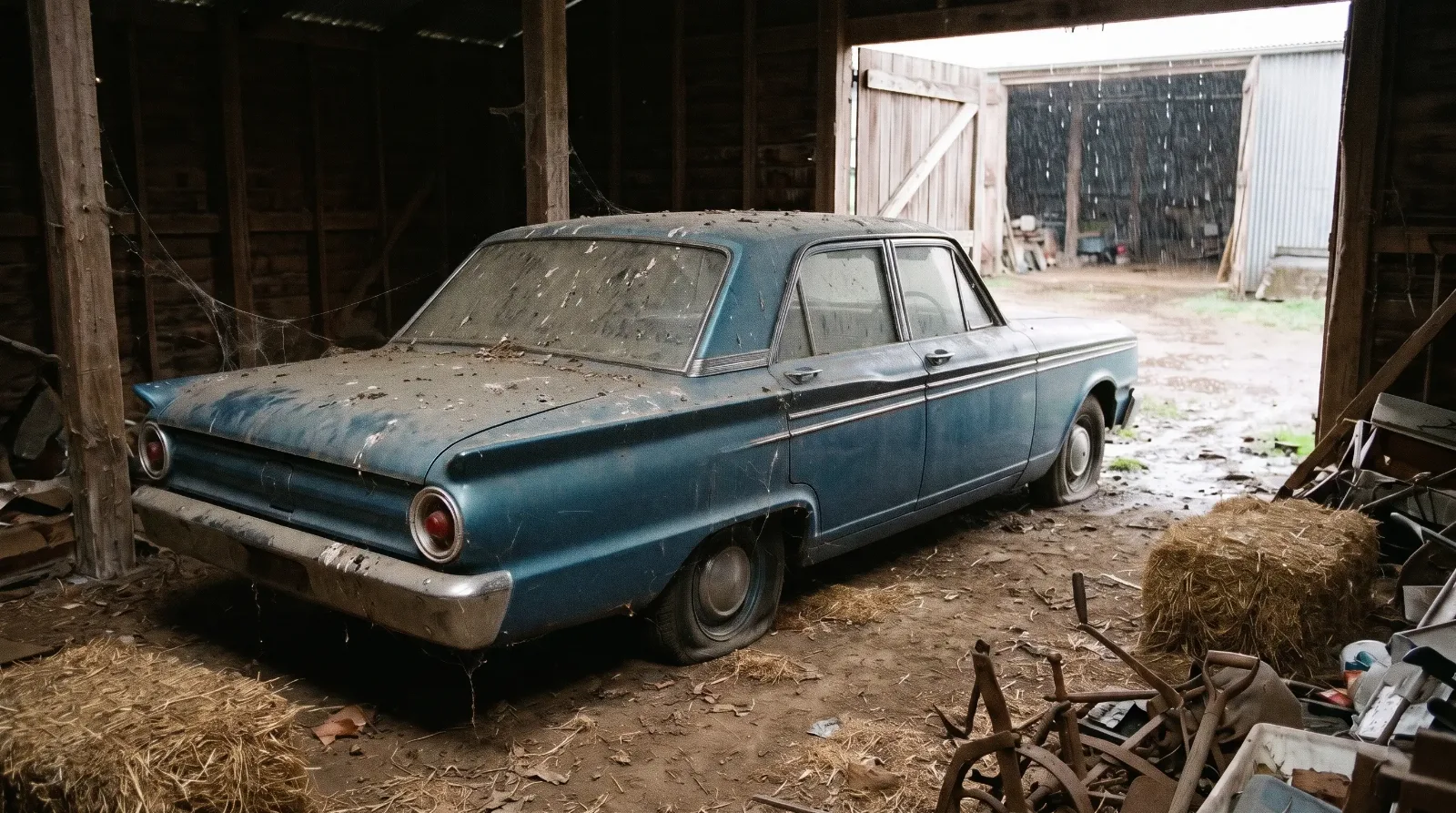
A car that sits is not resting. Things go on happening to it, just slowly. The old mechanics knew the list by heart, and it has not changed.
Fuel goes stale and leaves varnish in the carburetor, the fuel pump and the lines. Brake fluid absorbs water, so wheel cylinders and calipers corrode and seize. Tires flat-spot and dry out even when they still hold air. Rubber hoses, belts and seals harden and crack. Mice build nests in the air cleaner, the heater box and the seat springs, and they chew wiring. Then there is the engine: if moisture got into a cylinder, rings can rust to the bore, and the first person who tries to crank it with the starter can do real harm.
None of that means a barn find is a bad buy. It means the purchase price is only the entry fee. Plan on a complete fuel system, a full brake job, tires, hoses, belts and fluids before the car is safe to drive, whatever the paint looks like.
How to read the listing before you drive out
You can rule out most bad cars from your kitchen table. Start with the photos. A seller who shows the underside, the trunk floor with the mat pulled back and the engine bay from both sides is a seller who expects questions. A seller who shows four flattering angles of the paint is hoping you will not ask any.
Ask about the title before anything else. A car without a title in the seller's name can cost you more time and money than the rust. Then ask how long the car has been off the road, and whether anyone has tried to start it. Ask for a cold start video if it runs. Ask for a photo of the VIN tag next to the title.
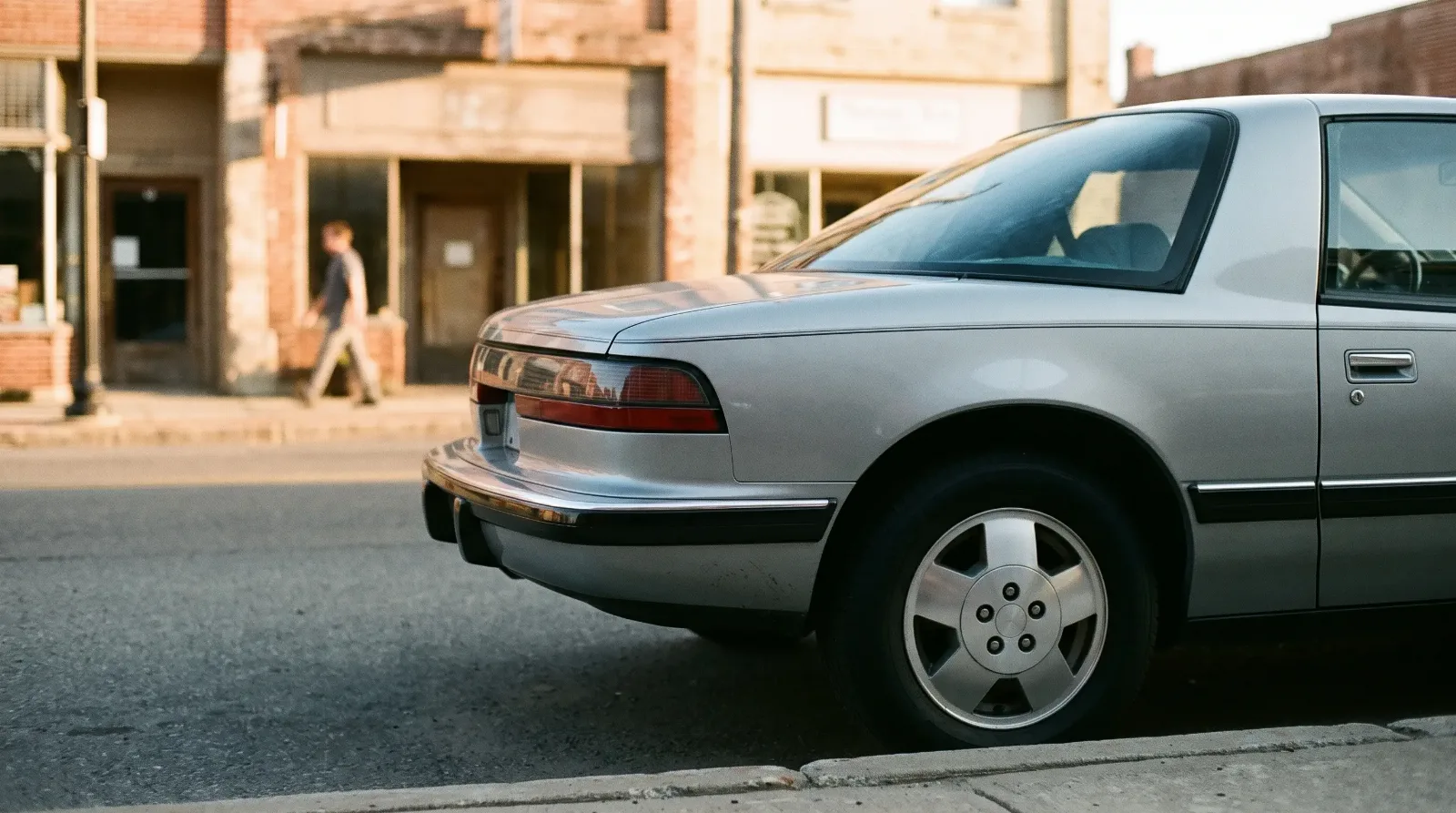
Pay attention to the platform, too. A tired car built on a common platform is a different proposition from the same car on a rare one, because the common one has replacement panels, rebuild kits and used parts everywhere. Start with platforms with deep parts catalogs and a rough car becomes a fixable car.
When the story is worth paying for
Sometimes it is. A genuine, untouched car with one or two owners, original paint and paperwork has value that a resprayed car does not. Collectors pay for originality, and a barn find that has never been messed with can be a better starting point than a car three amateurs have each had a go at. The dust, in that case, is doing its job.
But at the lower end of the market the story rarely adds much money on the resale side. A common sedan that sat for twenty years is still a common sedan, and it will sell like one once it is cleaned up. Pay for the car, not the legend. If you are setting out to buy a classic car on a budget, the honest project with a known history usually beats the romantic one with a mystery.
And if you do want the romance, go in with your eyes open, a trailer and a realistic list of what will need replacing. Browse the barn finds for sale, read the words carefully, then go see the car and believe what is in front of you.
Sources and notes
Related Reading
Have a
Classic Car
for Sale?
Reach thousands of serious classic car collectors across the US.
Sell It Here →
Selling a classic? Here's how: the best sites to sell a classic car
Are You a Classic Car Dealer?
List your full inventory and connect with targeted classic car buyers.
Join as a Dealer →
#project cars
#car storage
#affordable classic cars
#buying a classic car
#barn find cars
#classic car listings

About the author
Gary Nowak
Lifelong Midwest rodder who has been building and driving traditional pre-war hot rods since the 1970s.
More in Ownership & Lifestyle
Comments
Be the first to comment on this article.