
The cheapest way into the hobby in 2026 may not be a sixties car at all. Many 1980s classic cars now meet the 25-year threshold that many US states use for antique or historic registration (a few use 20 or 30 years), survive in large numbers and can still be bought for under $5,000 in running, if imperfect, condition. The reason is simple supply and demand: the decade built enormous volumes of ordinary cars, and the people who grew up with them are only now reaching the age and income at which collectors usually start buying. The engineering reason they are cheap is more interesting, and it decides which ones are worth your money.
Ownership & Lifestyle
7 min read
1980s Classics Under $5,000: The Next Affordable Generation
Why 1980s classic cars still sell under $5,000, what changed under the hood, what fails with age and five sensible cars to look for.
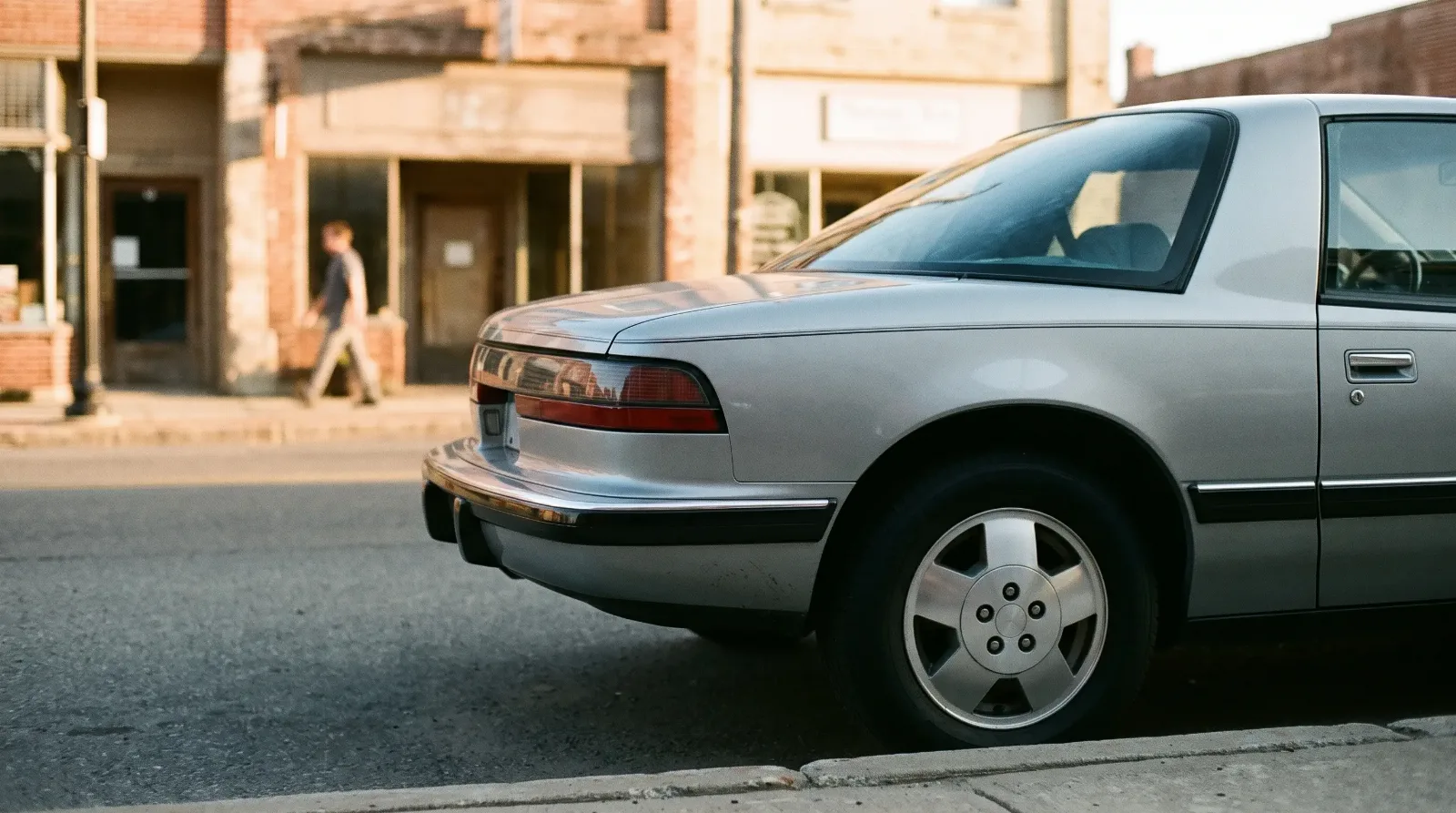
This article looks at the second question. The broader history of how earlier decades stayed affordable is covered in the full story. Here the focus is the machinery of the eighties: what changed under the hood, what fails with age and how to pick a car whose problems you can solve.
What makes 1980s classic cars different to own
The 1980s were a transition decade. Federal emissions and fuel economy rules tightened through the 1970s, and by the early eighties most manufacturers had moved to electronic engine management to meet them. Carburetors gave way to throttle-body injection, then to multi-port injection. A car from 1980 and one from 1989 can look alike from ten feet away and be fundamentally different machines underneath.
For an owner, that cuts two ways. Electronic fuel injection starts reliably in cold weather, idles smoothly and needs no seasonal adjustment, which is a real advantage over a carburetor. But the system depends on sensors, a wiring harness and a computer that are now decades old. A failing coolant temperature sensor can make an injected engine run rich and stumble in a way that looks like a carburetor problem but is not one.
The practical answer is documentation. Each manufacturer published diagnostic procedures for its system, and enthusiast groups have kept them in circulation. With a factory service manual and a multimeter, most sensor faults can be traced in an afternoon. Without them, an owner tends to replace parts by guesswork, which gets expensive.
Five candidates and their engineering tradeoffs
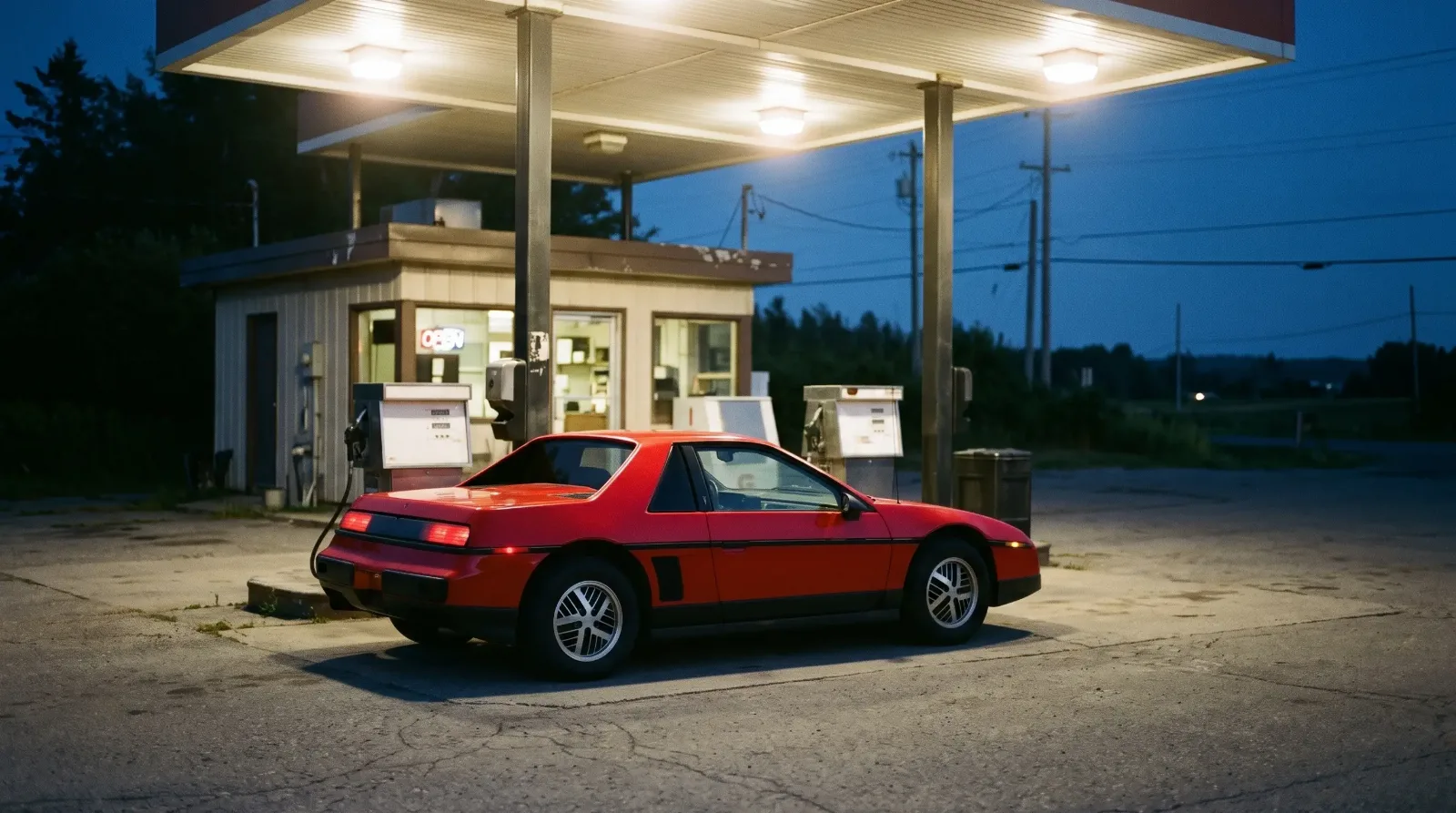
The list below favors cars that were built in volume, have a sound mechanical base and keep a parts supply, and it sticks to cars whose Hagerty #3 (good) value sat at or under $5,000 in October 2026. That filter has tightened. The base 1985 Firebird with the 305 V8 has moved to $5,600, a 1986 Sedan DeVille to $5,600 and a 5.0 Mustang hatchback to $11,500, so those are no longer bracket cars in good condition.
| Car | Years | Hagerty #3 value, Oct 2026 | Main thing to inspect |
|---|---|---|---|
| Pontiac Fiero, four-cylinder coupe | 1984 to 1988 | 1984 base $3,900, 1984 SE $4,500, 1986 base $4,700 | Fire recall completed on 1984 cars, oil level, coolant lines running forward to the radiator |
| Buick Reatta | 1988 to 1991 | 1988 coupe $3,500 | Touchscreen control center on early cars, anti-lock brake hydraulics |
| Subaru XT DL | 1985 to 1991 | 1986 DL $3,400 (GL-10 Turbo $5,500) | Timing belts on the flat-four, pop-up headlamp motors, CV boots |
| Cadillac Cimarron | 1982 to 1988 | 1985 sedan $4,000 | Rust and worn interior trim; mechanical parts are shared with the Chevrolet Cavalier |
| Volvo 240 (just over the line) | 1975 to 1993 | 1985 GL sedan $5,900; fair-condition cars sell for less | Brittle engine wiring and connectors on high-mileage cars, rear main seal |
Plain Fox-body Mustangs, third-generation Camaros and GM's G-body coupes can still surface below $5,000 as rough drivers, but no current Hagerty figure puts a good example inside the bracket, so treat them as stretch candidates rather than safe picks.
The Fiero deserves a word because its reputation runs ahead of its record. Early cars did have an engine fire problem, and in 1987 GM recalled about 125,000 of the 1984 cars, all of them four-cylinders, over connecting rod failures that could start engine compartment fires. A car with the recall work done and its cooling system in order is a sound mid-engine layout with a space-frame chassis and plastic body panels that cannot rust. The steel frame underneath can, so look at it closely.
What fails with age: rubber, plastic and wiring
Cars from the fifties and sixties were built mostly of steel, glass, chrome and natural fibers. Eighties cars added a great deal of plastic and synthetic material, and those materials age in predictable ways.
- Vacuum lines. Emissions systems from this era rely on networks of small rubber hoses. They harden and crack, causing vacuum leaks that upset idle and fuel mixture. Replace them as a set, following the routing label under the hood.
- Interior plastics. Dashboards crack under sun, and door panel clips turn brittle. Reproduction parts exist for popular models but not for every car.
- Headliners. Foam-backed headliner material breaks down and the fabric sags. The fix is a recover job, cheap but messy.
- Wiring. Some harnesses of the period used insulation that degrades with heat. Check for brittle or cracking insulation near the engine before trusting the car on a long drive.
None of these is a major job on its own. Together they explain why an eighties car at $3,000 can need another $2,000 before it is pleasant to drive every day. Budget for it at the start rather than discover it one part at a time.
"Treat an eighties car as a system rather than a collection of parts. Fix the vacuum lines, the grounds and the sensors first, then judge the engine. Most of the cheap ones are not broken. They are just slightly out of calibration in five places at once."
Emily Chen
How the eighties compare with older budget cars
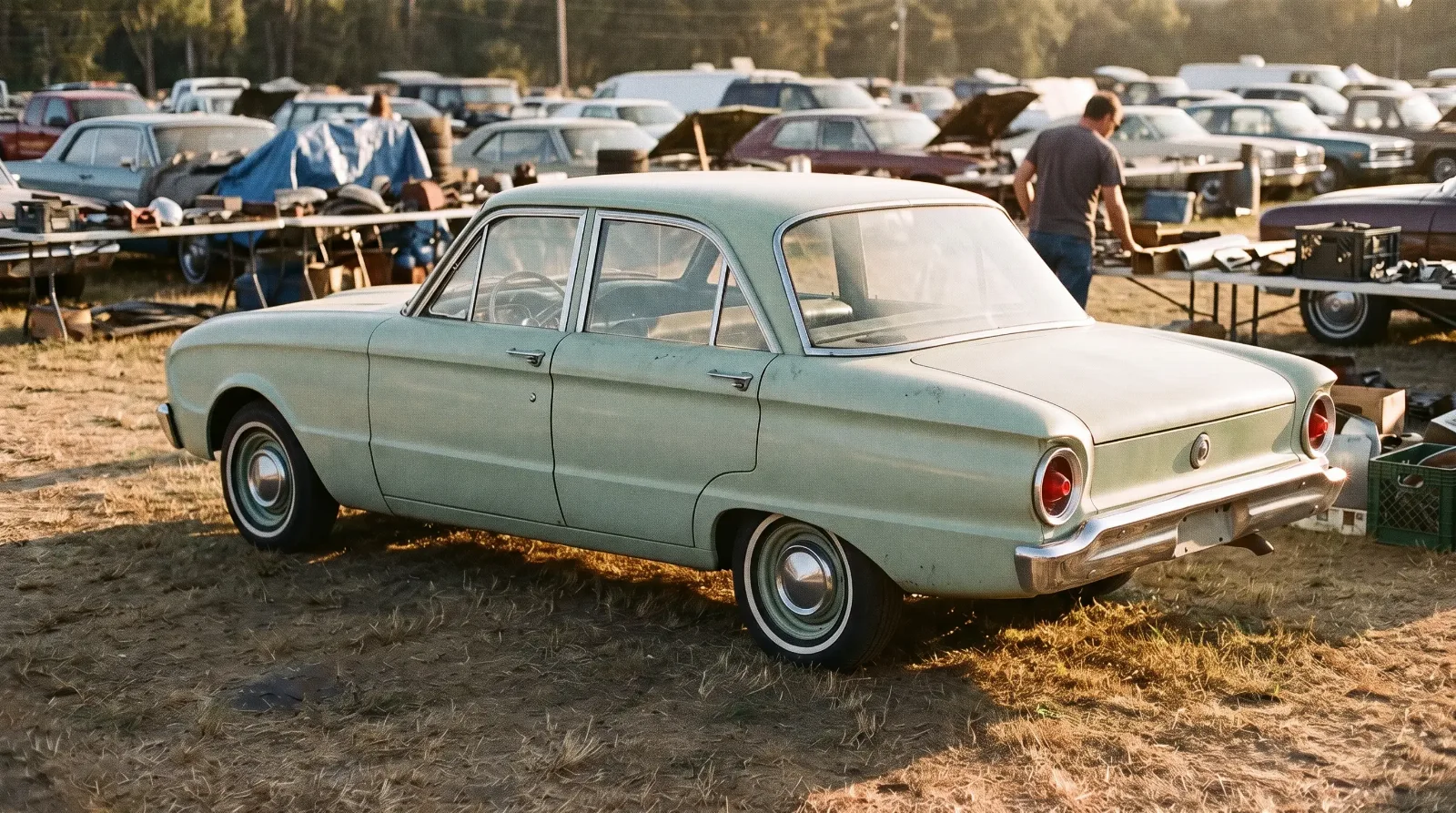
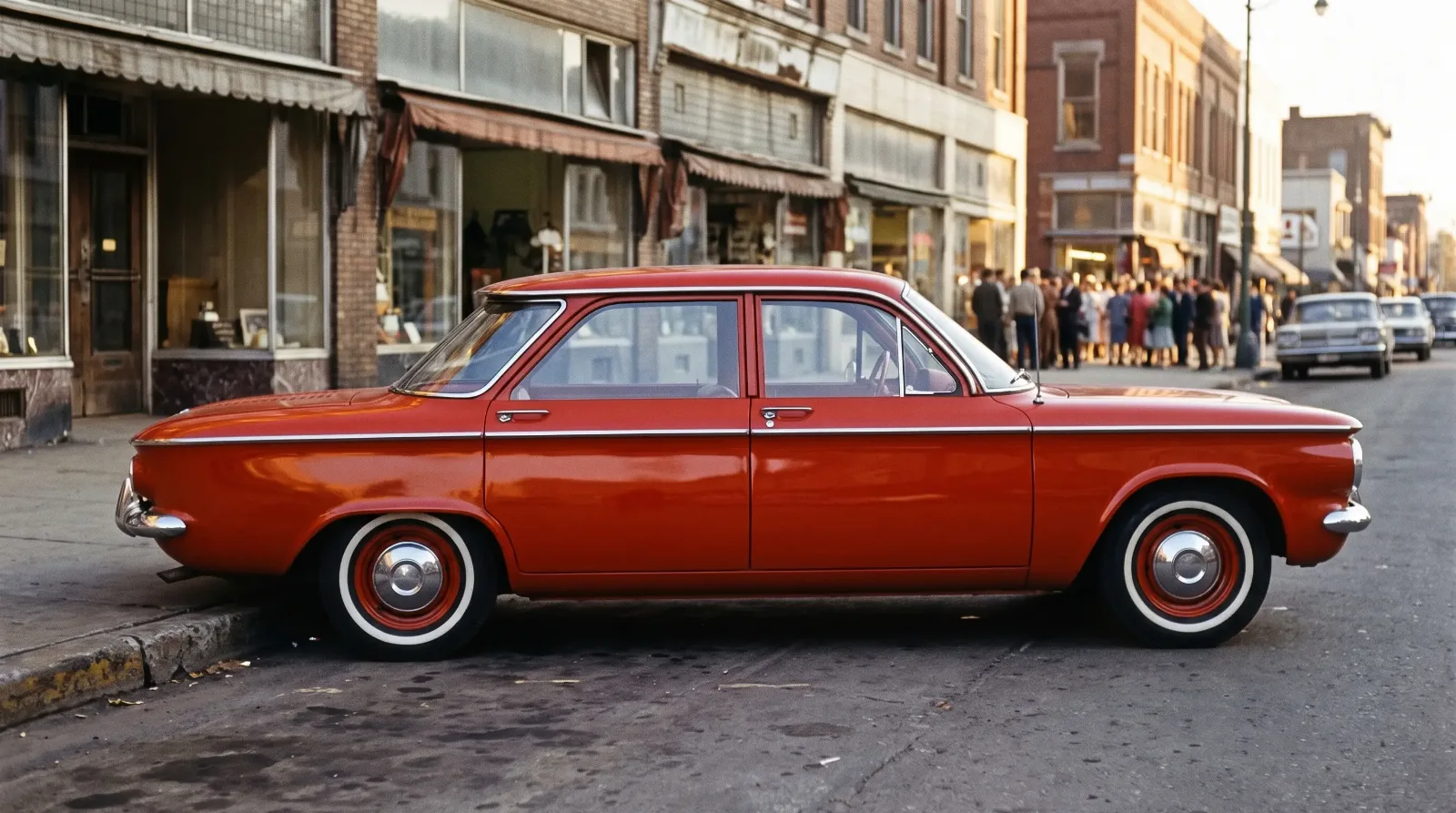
The trade is straightforward. An older car, such as the sixties compacts, is mechanically simpler, easier to diagnose by ear and more widely recognized as a classic. An eighties car is usually more comfortable, safer in a crash, better on fuel and easier to drive in modern traffic, with power steering, disc front brakes and, often, air conditioning that once worked and can be made to work again.
The eighties also have a market argument. Values for well-kept cars of the decade have been climbing as a new generation of buyers arrives, while many sixties and seventies cars have settled. Nobody can promise appreciation, and a cheap eighties car bought as an investment is a poor bet. Bought as a car to drive and maintain, it is a sound one. If you want to see what is out there right now, the listings of 1980s cars for sale under $5,000 are a good way to calibrate prices before you go and look at one in person.
The rule for this decade is to buy the best-documented example of a common car rather than the rarest one you can afford. Common cars have parts, forums and service manuals. Rare eighties cars often have none of those, and electronics without documentation is the most expensive kind of problem to own.
Sources and notes
- NHTSA campaign 87V181000: 1984 Pontiac Fiero engine fire recall
- Wikipedia: Pontiac Fiero, production years and space frame
- Hagerty: 8 '80s classics you can buy for $5,000 or less (values rechecked October 2026)
- Wikipedia: Volvo 200 Series
- California Air Resources Board: OBD II systems fact sheet
- Nationwide: antique license plates and the 25-year rule
Related Reading
Have a
Classic Car
for Sale?
Reach thousands of serious classic car collectors across the US.
Sell It Here →
Selling a classic? Here's how: sell my classic car
Are You a Classic Car Dealer?
List your full inventory and connect with targeted classic car buyers.
Join as a Dealer →
#affordable classic cars
#Pontiac Fiero
#Volvo 240
#1980s classic cars
#cheap classic cars
#Buick Reatta

About the author
Emily Chen
Bay Area engineer with a deep focus on vintage Japanese and European performance cars. Approaches classic car research and restoration with an analytical eye.
More in Ownership & Lifestyle
Comments
Be the first to comment on this article.