
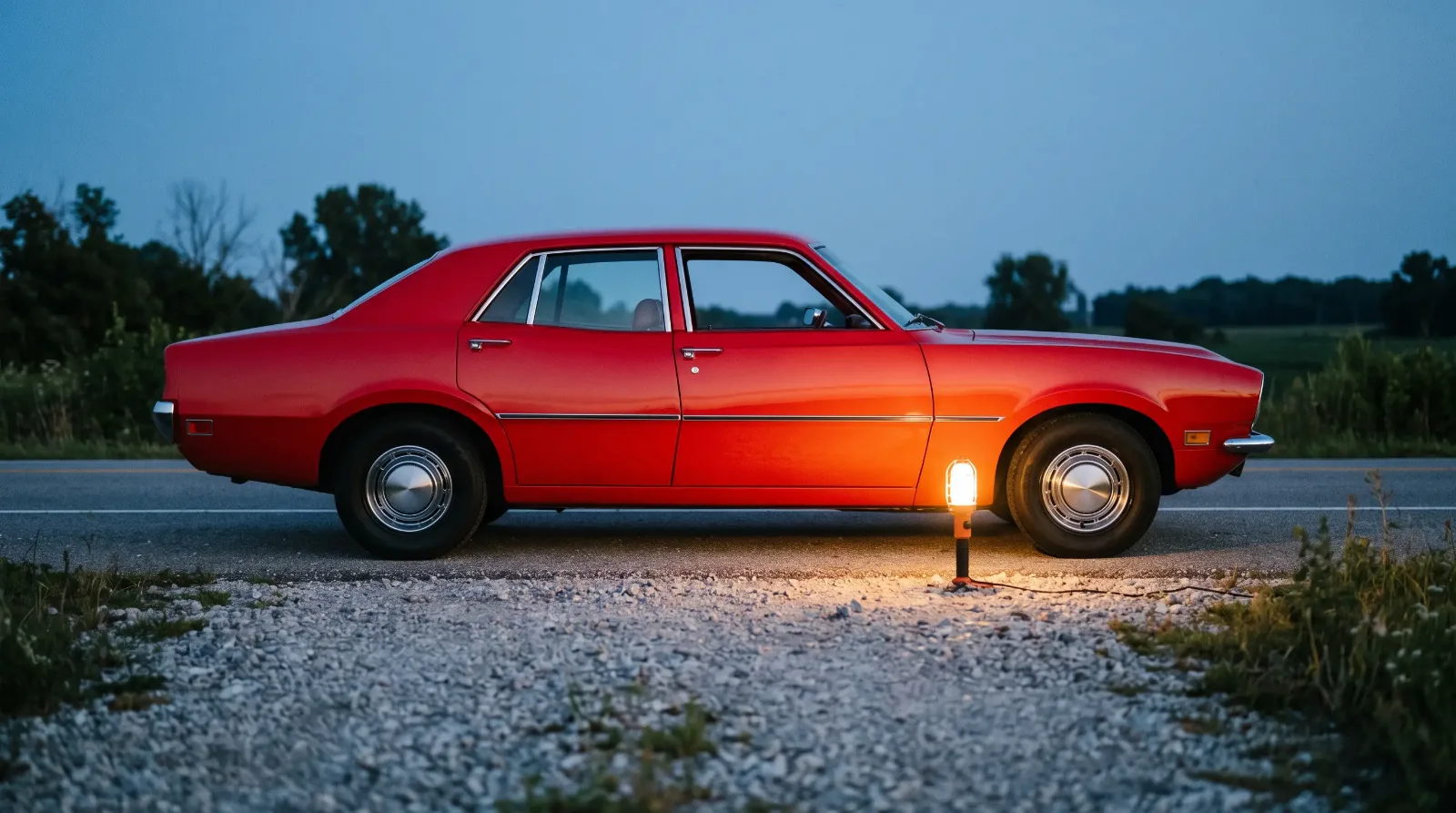
Park a 1950s four-door sedan beside the two-door hardtop of the same year and the same make, and most of what you see is identical: the grille, the trim, the dashboard, the engine and the chassis beneath them. The difference is a pair of doors, a center pillar and a roofline. Yet at auction, the two-door routinely brings a multiple of the sedan's price. That gap is one of the most reliable patterns in the collector market, and it is the reason a buyer with a modest budget can still own a genuine fifties car from Detroit's most celebrated decade of styling.
Ownership & Lifestyle
7 min read
Why 1950s Four-Door Sedans Sell for a Fraction of the Hardtops and Convertibles
Why a 1950s four door sedan costs a fraction of the two-door hardtop: production, survival, restoration math and what to inspect.
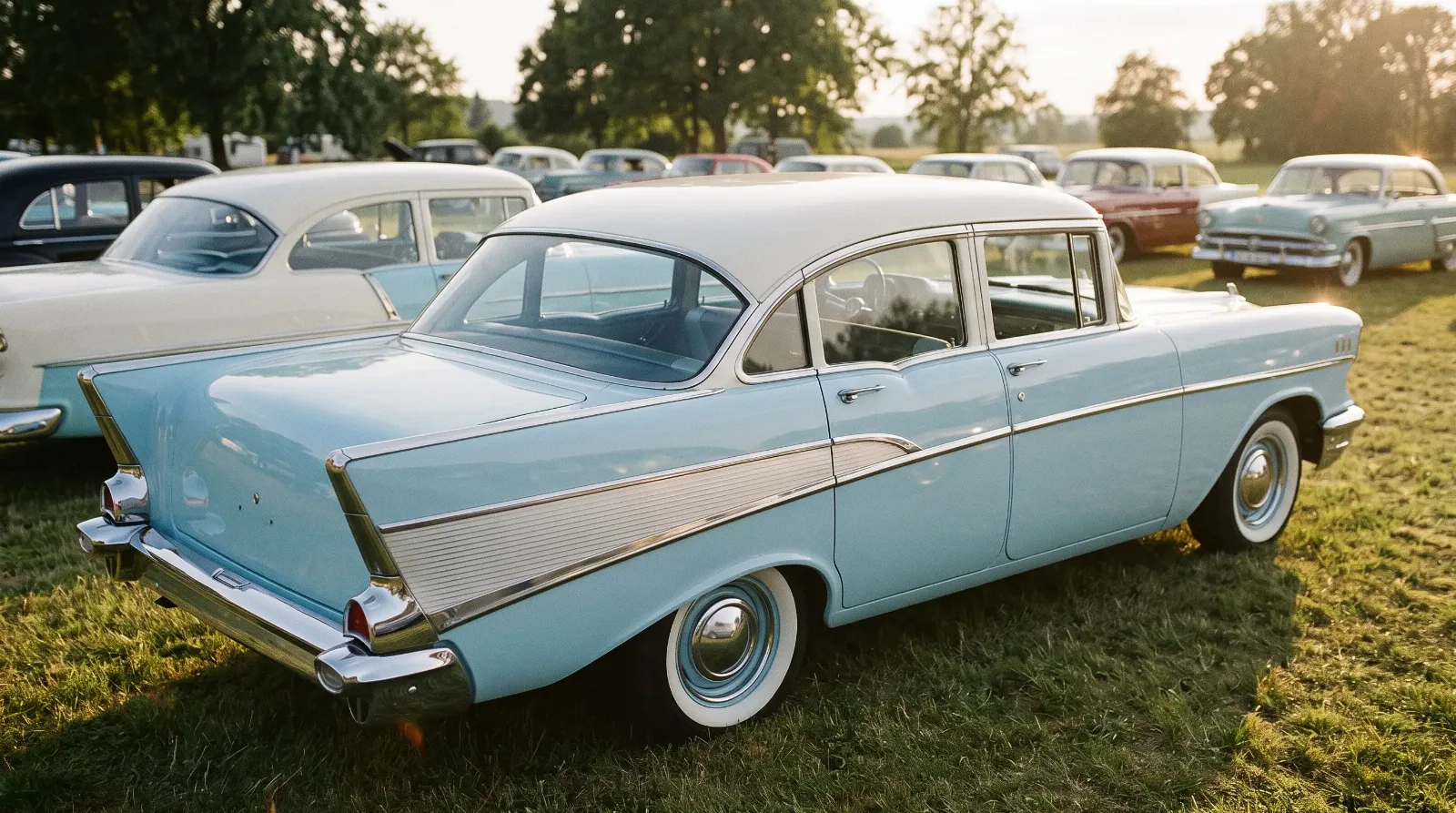
The explanation is not simply fashion. It is written into how these cars were designed, sold, used and, later, collected. Understanding it helps a buyer decide whether the sedan is a compromise or, for the right owner, the more interesting artifact. It also fits a pattern that runs through affordable cars from the fifties to the seventies: the body style the public overlooked is the one that stays within reach.
What separated the body styles in the showroom
A typical full-size line of the mid-1950s was offered in a ladder of body styles, each with its own price and character. At the bottom sat the two-door and four-door sedans, sold to families and fleets. Above them came the two-door hardtop, the station wagon and, at the top, the convertible. The hardtop was the styling statement of the decade: no B-pillar, the side glass rolled down to leave an open sweep from windshield to rear window, a roof that looked like a convertible top made of steel.
The four-door sedan was engineered differently. Its fixed center pillar carried the front door's latch and the rear door's hinges, and its roofline was drawn taller at the back to give rear passengers headroom. On the drawing board, that was good packaging. To a collector's eye decades later, it was a heavier, more upright silhouette that lacked the hardtop's long, low line.
The four-door hardtop complicated the picture from the 1955 model year, when General Motors introduced pillarless four-doors as the Buick Century and Special Riviera and the Oldsmobile 88 and 98 Holiday sedans, and by 1956 every major American maker offered one somewhere in its range. These cars sit only a little above the pillared sedan in value today and well below the two-door hardtop, which tells you how much of the premium is attached to the two-door, pillarless roof itself.
Production numbers and the 1950s four-door sedan
Price follows scarcity, and the four-door sedan was rarely scarce. Families bought them in great numbers. The 1957 Chevrolet Bel Air is the standard example: Chevrolet built 254,331 Bel Air four-door sedans against 166,426 two-door Sport Coupe hardtops and just 47,562 convertibles. Add the 137,672 four-door Sport Sedan hardtops and the four-door bodies made up well over half of all Bel Airs that year.
| Body style (typical mid-1950s full-size line) | Original buyer | Typical value today, relative to the four-door sedan |
|---|---|---|
| Four-door sedan | Families, fleets | Baseline |
| Two-door sedan | Budget buyers, later hot rodders | Varies by make: well above on a 1957 Bel Air, close on a 1959 Biscayne, below on a 1957 Plymouth Belvedere |
| Four-door hardtop | Style-minded families | Slightly higher |
| Two-door hardtop | Younger and style-minded buyers | Often about twice as much |
| Convertible | Top of the line | Highest, often about three times as much |
The 1957 Bel Air shows the gap in real money. Hagerty's price guide for October 2026 puts a #3 (good) Bel Air four-door sedan with the 265 V8 at $16,900 and the four-door Sport Sedan hardtop at $19,500, against $34,000 for the two-door Sport Coupe and $50,400 for the convertible. The sedan is worth about half the hardtop and a third of the convertible. Ford shows the same pattern: a 1956 Fairlane Town Sedan is $7,100, a Crown Victoria $16,200 and a Sunliner convertible $19,500.
The rule has a limit worth knowing. Against a pillared two-door sedan of the same series, the four-door's discount can be small or even reversed. Hagerty has a 1959 Biscayne four-door at $9,900 against $11,300 for the two-door, and a six-cylinder 1957 Plymouth Belvedere four-door at $16,600, above the $10,900 Club Sedan. The steep discount is against the hardtops and convertibles, not against every car with two doors.
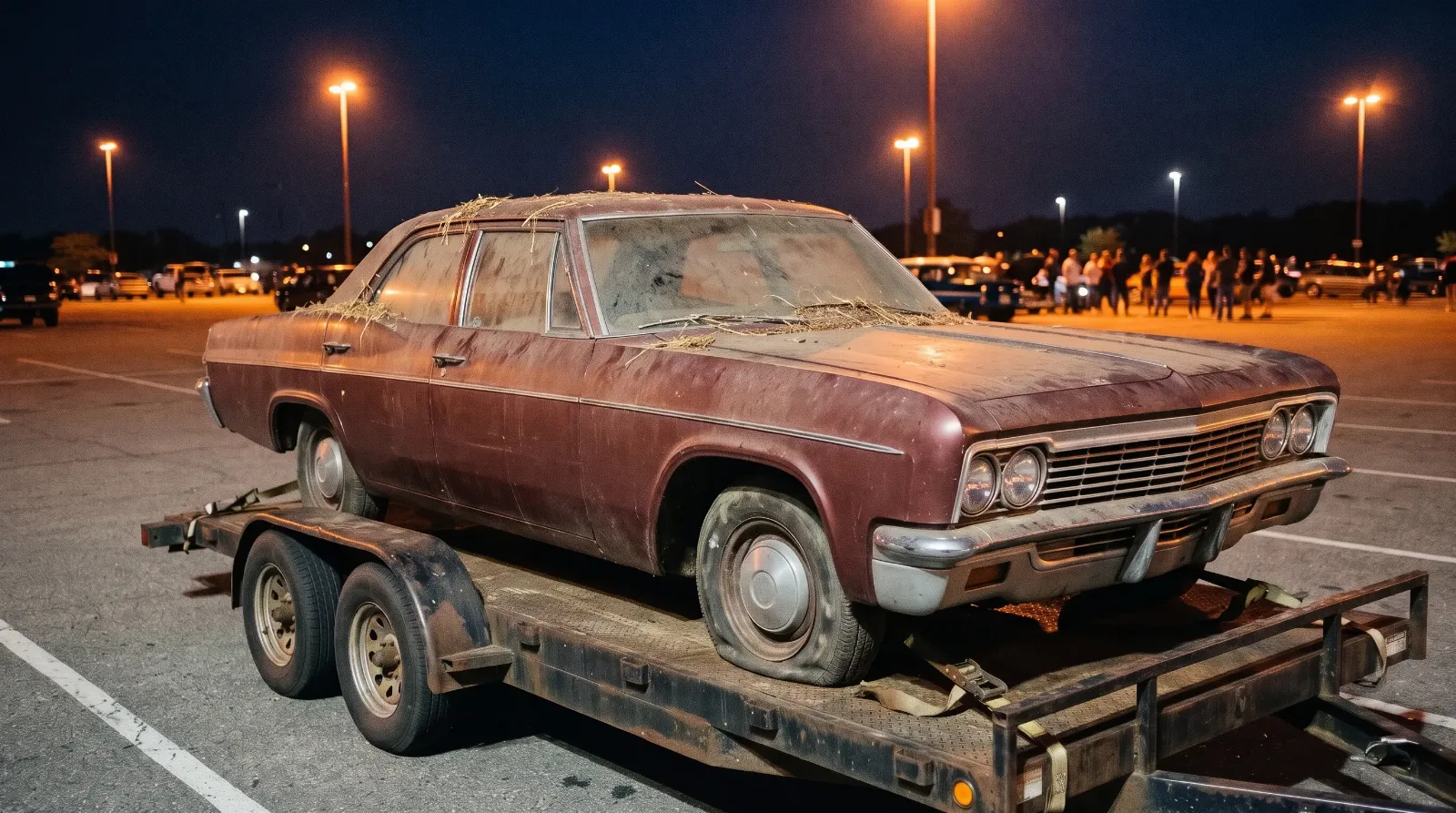
Production is only half the arithmetic. The other half is survival, and here the pattern turns. Two-door cars were the ones raced, modified and cut up by hot rodders from the late 1950s onward. Four-door sedans more often stayed in family use until they wore out. Today a well-preserved, unmodified sedan can be a better record of how a car left the factory than many two-doors, which have been restored more than once and, in some cases, rebuilt from donor parts.
Why collectors pay for the second pair of doors less
Several forces push in the same direction. The first is the image of the era itself. The fifties car of popular memory, in films and on magazine covers, is a two-door hardtop or a convertible. Collectors buy the picture in their heads.
The second is restoration economics, which are harsh on the sedan. A full restoration of a four-door costs nearly as much as one of a two-door: the same engine, the same chrome, the same paint, plus two more doors to fit, align and trim. When the finished car is worth a fraction of the hardtop or the convertible, the numbers rarely work, so sedans are often left original, sold as drivers or stripped for parts to keep two-doors on the road. That last habit quietly reduces the supply of good sedans while keeping their prices low.
The third is demand from people who want to modify. A two-door body has long been the preferred base for custom and performance builds, which adds a second group of buyers competing for the same cars. The four-door draws fewer of them.
"A sedan with its original paint, its dealer badge and its owner's manual in the glovebox tells you more about 1956 than a two-door that has been taken apart three times. The market prices the silhouette. I would rather study the record."
Sarah Whitfield
Buying a fifties sedan on a budget in 2026
A driver-quality four-door sedan from a volume make of the early and mid-1950s, with a six-cylinder engine or a small V8, can still be found from about $5,000 to the low teens. Hagerty's valuation team puts a fair-condition 1950 Plymouth Deluxe four-door near $4,000, while a two-door hardtop of a popular make in similar condition usually costs well beyond that. For a buyer, that changes what the money can do. The saving can go into brakes, tires, wiring and a sound cooling system, which matter more on the road than the number of doors.
Originality is where a sedan earns its keep, so the inspection should be thorough. Look at the data plate or the cowl tag and compare its paint and trim codes with what is on the car. Check the rear door bottoms and the lower B-pillar for rust, since water collects there. Confirm that interior trim pieces for the rear doors are present, because they are specific to the four-door body and harder to find than shared parts. A sedan that keeps its original upholstery, chrome and hubcaps is more valuable to a careful owner than one that has been half converted into something else.
The four-door sits in good company. Buyers who want something newer can look at the 1980s classics under $5,000, which follow a similar logic of plentiful supply and modest demand, and anyone setting a first budget should start with the whole budget picture before choosing a decade.
The sedan will never have the hardtop's open sweep of glass. What it has is the same design language, the same engineering and, often, a more honest history, for a price that leaves room to keep it properly. For an owner who values the artifact over the silhouette, that is not a consolation prize.
Sources and notes
- Conceptcarz: 1957 Chevrolet Bel Air production by body style
- Hagerty Valuation Tools: 1957 Chevrolet Bel Air four-door sedan (October 2026)
- Wikipedia: Hardtop, including the 1955 GM four-door hardtops
- Wikipedia: 1957 Chevrolet
- Motorious: the cheapest way into classic car collecting (Hagerty values for the 1950 Plymouth Deluxe)
- Hagerty Valuation Tools: 1957 Plymouth Belvedere by body style (October 2026)
Related Reading
Have a
Classic Car
for Sale?
Reach thousands of serious classic car collectors across the US.
Sell It Here →
Selling a classic? Here's how: sell my classic car
Are You a Classic Car Dealer?
List your full inventory and connect with targeted classic car buyers.
Join as a Dealer →
#1950s cars
#affordable classic cars
#classic car values
#1957 Chevrolet
#1950s four door sedan
#hardtop vs sedan

About the author
Sarah Whitfield
Third-generation classic car collector specializing in pre-war American and European coachbuilt automobiles. Researcher and concours enthusiast.
More in Ownership & Lifestyle
Comments
Be the first to comment on this article.