
The seller hands over two keys on a ring that has outlived three owners, and one of them no longer fits anything. That is how most people meet their first classic car: in a driveway at dusk, with a folder of receipts under one arm and a heartbeat that will not settle. Then comes the drive home. The windows are down because they have to be. Every gauge is a question. Somewhere around the second stoplight the new owner realizes the car has opinions, and the next twelve months will be spent learning them.
Ownership & Lifestyle
7 min read
The First Drive Home: What New Owners Learn in Their First Year
What the first year with a first classic car really teaches: the noises, the costs, the winter storage and the people who show up.
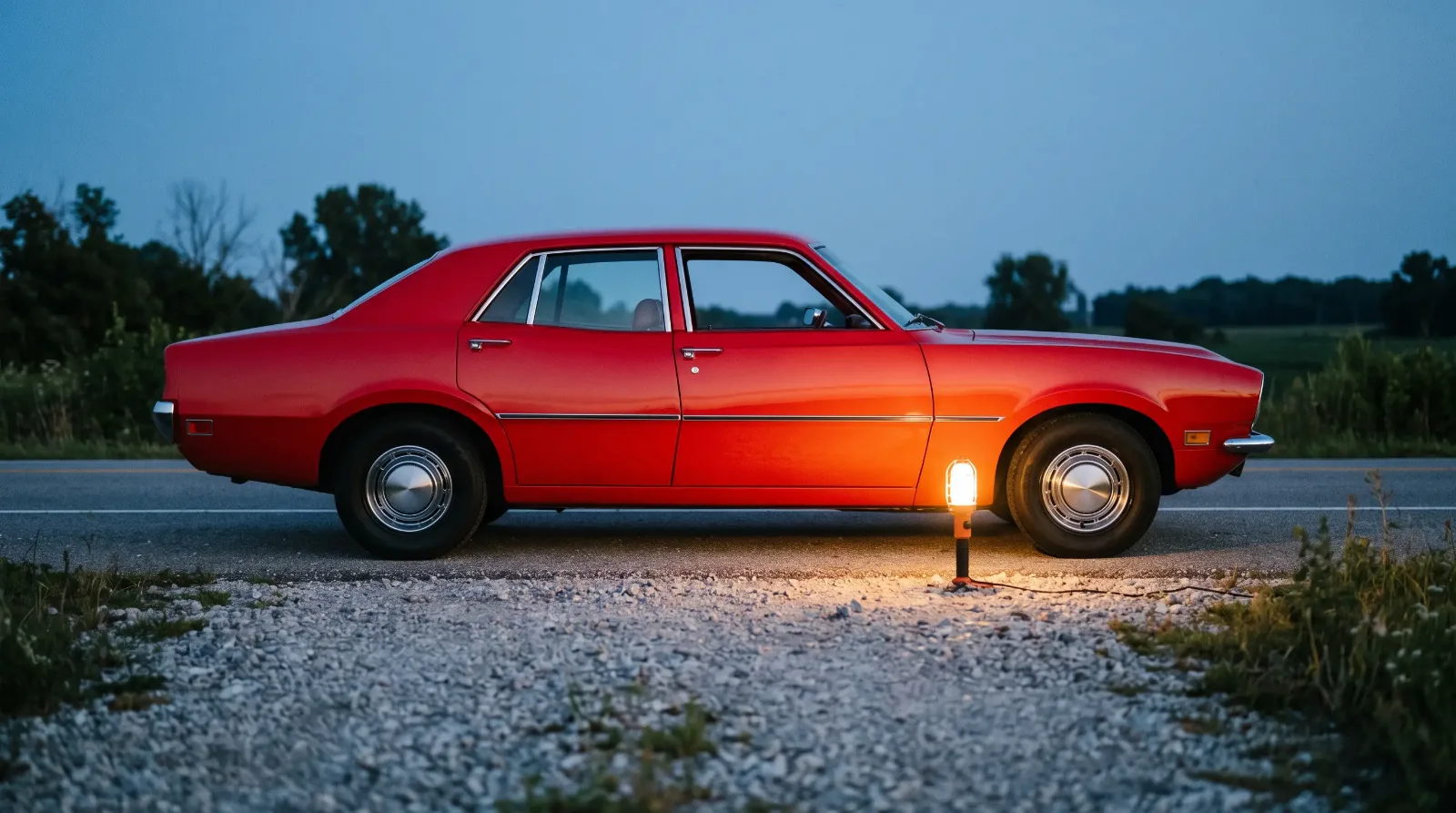
This piece is about that year. Not which car to buy (that is the full story, told elsewhere) but what happens after the money changes hands and the car becomes yours: the habits it teaches, the small surprises, the people who show up.
The first week: learning to listen
A modern car speaks through a dashboard of warnings. An old one speaks through the seat, the steering wheel and the soles of your feet. In the first week, new owners tend to drive with the radio off. They notice the tick of a lifter that quiets once the oil warms. They notice the brakes pull a little left when cold. They notice the smell of a rich mixture on a damp morning and the way it clears after a mile.
None of this is a crisis. Most of it is a vocabulary. The owners who do well in year one are the ones who write it down: a small notebook in the glovebox, a line for every drive, the date, the weather, what the car did. By the end of the month that notebook reads like a medical chart, and it turns a vague worry ("it sounds funny") into something a mechanic can use ("it hesitates off idle when the engine is cold, only below fifty degrees").
The other first-week lesson is slower and harder: the car is not a modern car, and it will never become one. Drum brakes ask for more room. Bias-ply or older radial tires ask for gentler corners. A carburetor asks for a minute of warm-up before it gives its best. People who accept this early start to enjoy it. People who fight it spend the year frustrated.
What a first classic car teaches about money
Almost every new owner arrives with a number in mind, and almost every one of them is wrong in the same direction. The purchase price turns out to be the down payment on a relationship. Fluids, filters, a set of tires that are dated older than they look, a battery that dies the first cold night, a brake hose that weeps: the list in the first six months is rarely dramatic, but it is long.
The useful habit is to keep the receipts in the same folder the seller gave you. That folder is the car's memory, and it becomes part of its value. It also tells you, plainly, what the car costs to keep. If you want the numbers laid out by category, there is a breakdown of the yearly cost of ownership that is worth reading before the first winter, not after.
"Nobody I have met regrets the first year with an old car. They regret the first month, when they expected it to behave like the one in the garage next to it. By spring, they have stopped expecting and started listening."
Nora Beckett
The people who arrive with the car
This is the part no buyer's guide prepares you for. An old car in a parking lot is an open invitation. A man in a hardware store apron will tell you his father had the same model in a different color. A teenager will ask whether it is electric. At the gas station, someone will stand at a respectful distance and wait for you to finish pumping before asking what year it is.
Most first-year owners say these conversations become the point. The car turns errands into small events. A Saturday trip for bread takes an hour because three people wanted to talk about their uncle's Buick.
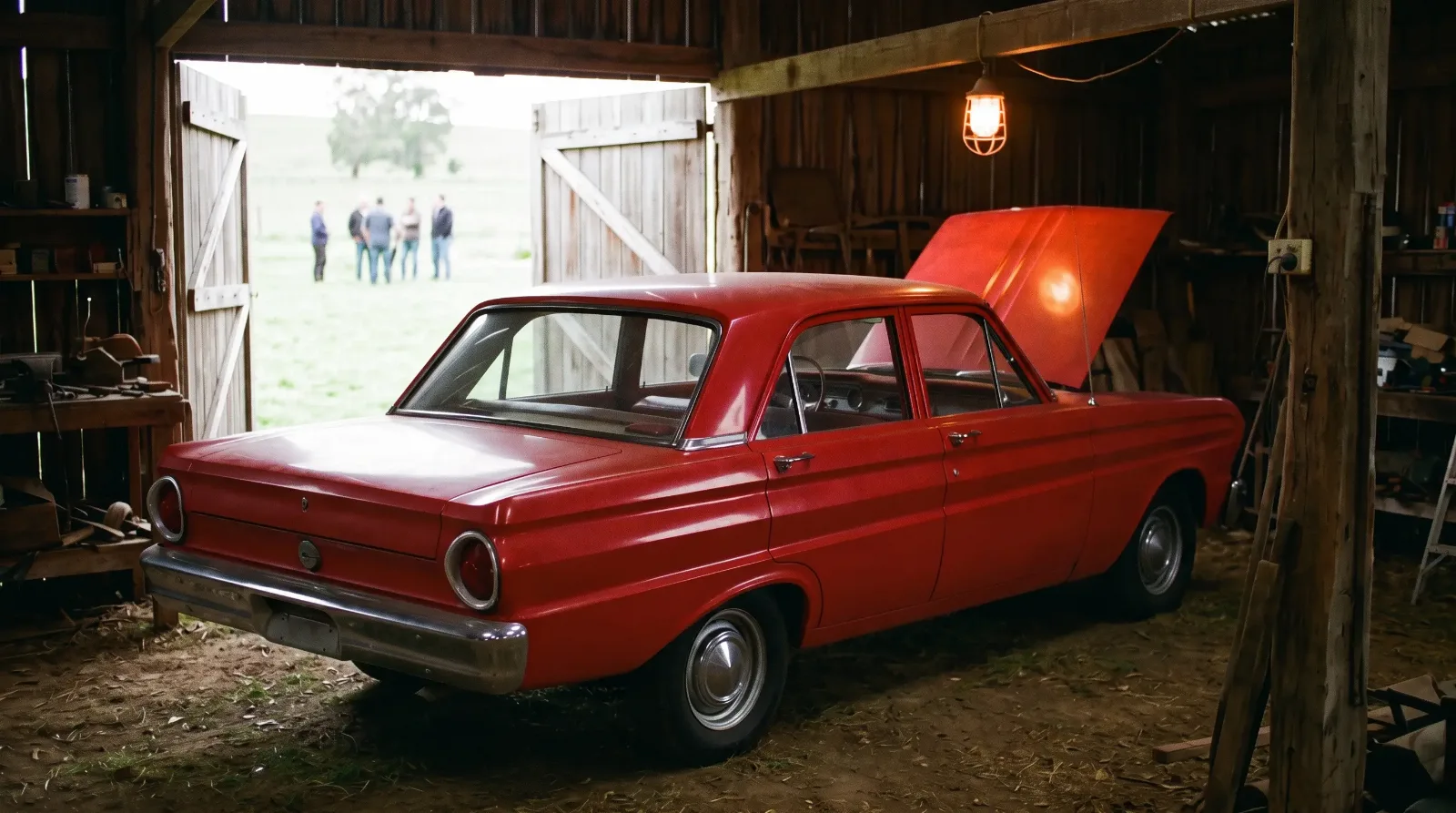
The more practical people arrive too. The parts counter clerk who knows which gasket set actually fits. The retired mechanic down the street who still owns a timing light and will lend it if you return it clean. The local club, which meets on the first Sunday of the month in a diner lot, where someone always has the part you need in a coffee can in his trunk. Finding these people is the single best thing a new owner can do in year one. They know the car's habits better than any manual.
The seasons: storage, cold starts and the first winter
Autumn brings the first real decision. In much of the country, an older car with no rust protection should not see salted roads, and many owners park theirs from late November until the street sweepers have been through in March. Storage done badly is harder on a car than driving it.
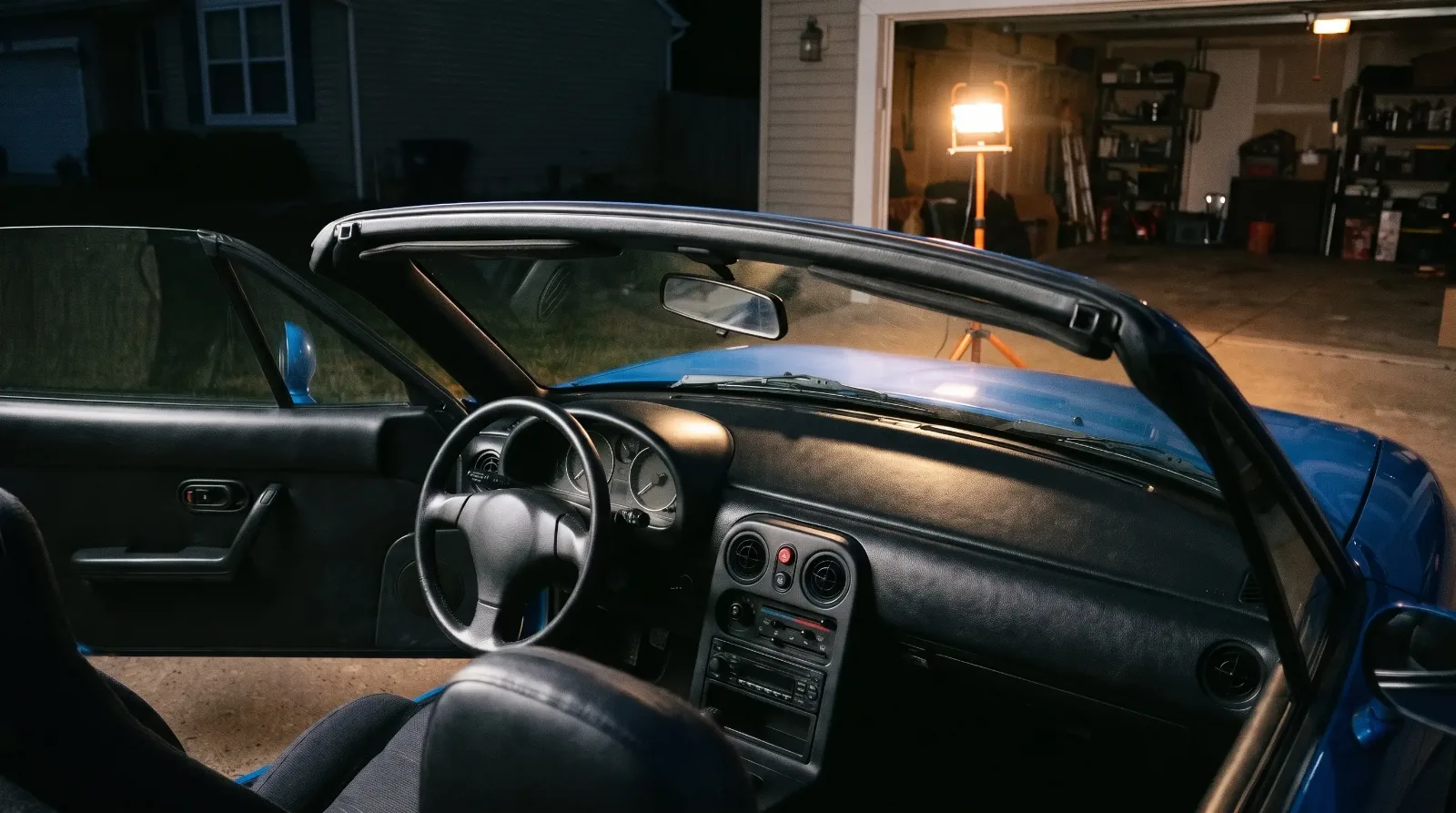
Spring is the reward. The first start after storage is its own small ritual: check the oil, check under the car for drips, crank it with patience, let it idle until the choke opens. That first drive in April, with the windows down again, tends to be the moment owners describe when asked why they bought the thing. It feels like getting the car back.
By month twelve: the owner you become
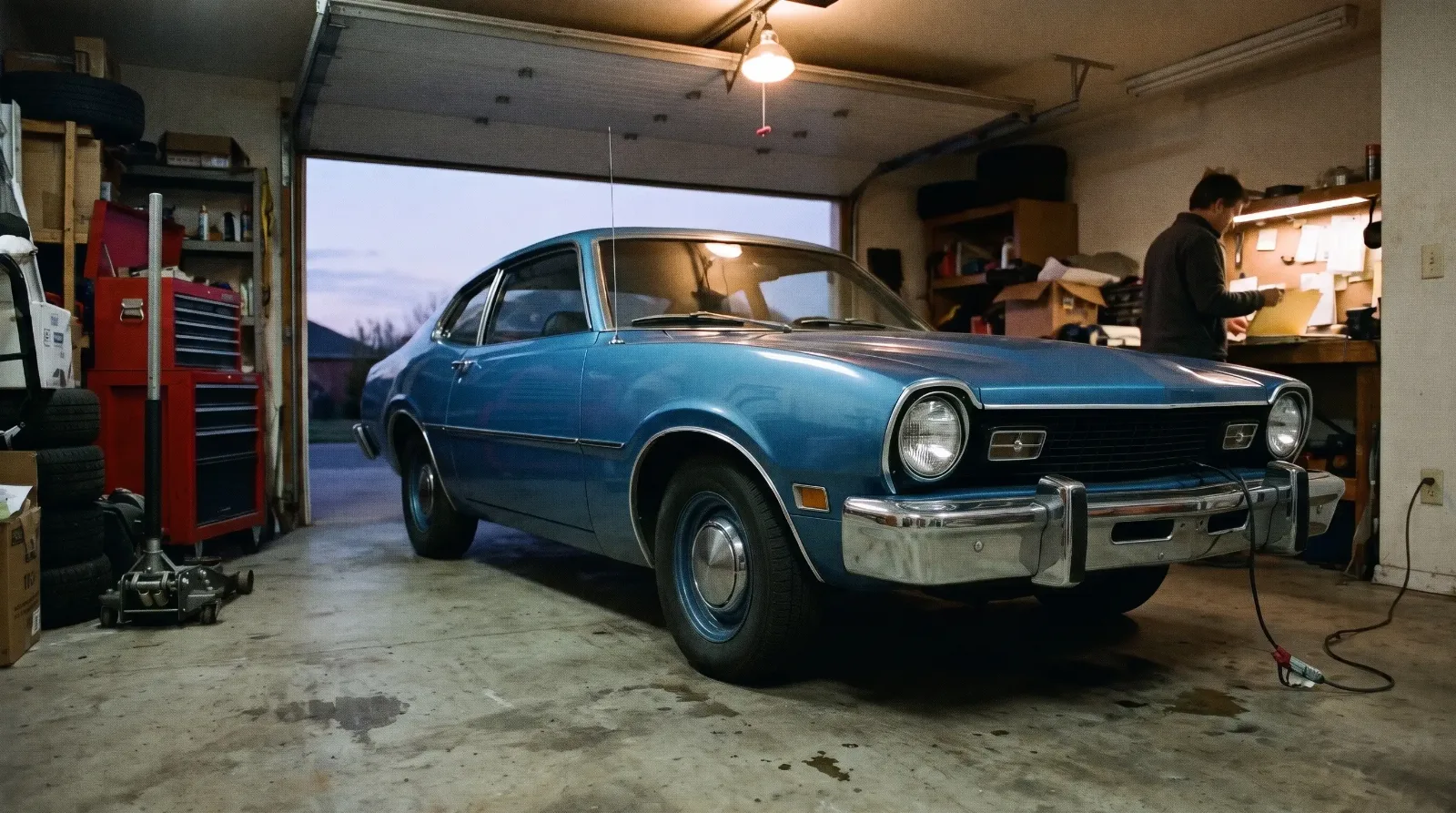
The change is easy to see from the outside. At the start of the year, the new owner checked the temperature gauge every thirty seconds. By the end, they can tell from the sound of the fan whether the engine is running warm. They carry a small kit in the trunk: a few wrenches, a spare fan belt, a quart of oil, a roll of wire, a flashlight. They have learned which noises matter and which are just the car being itself.
They have also learned what kind of owner they are. Some discover they love the wrenching and start planning bigger jobs for next winter. Some discover they love the driving and want to pay someone else to keep it right. Some discover they love the cars-and-coffee mornings more than either. All three are fine. The first year is how you find out.
A few things almost every first-year owner says, when asked what they would tell themselves on day one:
- Have the brakes and tires checked before you drive it far, no matter what the seller says.
- Budget for the small stuff, because there is a lot of it.
- Find the local club in the first month, not the tenth.
- Drive it often. Cars that sit get worse; cars that run tend to stay honest.
And one more, which they usually say quietly: keep the extra key that fits nothing. It came with the car. Someone, once, knew what it opened. In a way, that is the whole hobby. You are not just driving an old car. You are the latest name in a long line of people who looked after it, and the first year is when you learn to take that seriously.
Sources and notes
- EPA: EPA takes final step in phaseout of leaded gasoline (1996)
- Federal Register, February 2, 1996: prohibition on gasoline containing lead
- Hagerty: Should I winterize my classic car?
- Hagerty UK: Top 10 tips for storing your classic car over winter
- Hagerty UK: Expert tips for storing your car over winter
Related Reading
Have a
Classic Car
for Sale?
Reach thousands of serious classic car collectors across the US.
Sell It Here →
Selling a classic? Here's how: where to sell your classic car online
Are You a Classic Car Dealer?
List your full inventory and connect with targeted classic car buyers.
Join as a Dealer →

About the author
Nora Beckett
Automotive features writer and photographer who tells the human stories behind the cars, from show fields to cross-country road trips.
More in Ownership & Lifestyle
Comments
Be the first to comment on this article.