
Most cheap vintage cars are cheap for a reason you can find in the factory records. They were built in huge numbers, they were sold as four-door family transport with the base engine, and nobody thought to save them. That combination keeps prices low decades later, and it is also why these cars are still around to buy. If you have already read up on what $5,000 to $10,000 buys in 2026, this piece narrows the question: which cars from the 1950s, 1960s and 1970s held on to that low price, and what in their history explains it.
Ownership & Lifestyle
10 min read
1950s, 1960s and 1970s Cars That Stayed Affordable
Which cheap vintage cars from the 1950s, 1960s and 1970s kept low prices, and what the factory production records say about why.
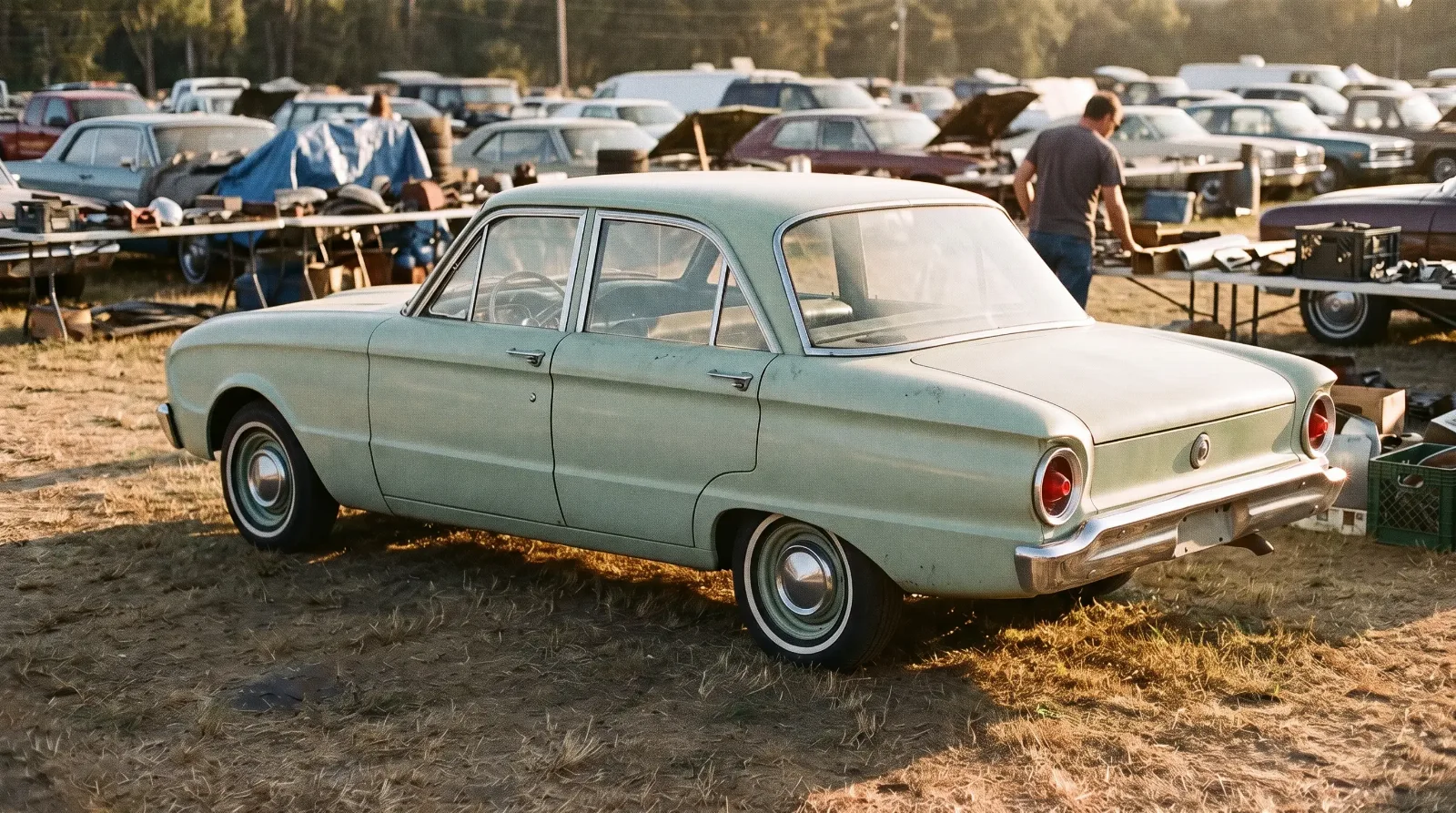
The short answer is production volume plus body style. A two-door hardtop with the top engine option from the same year can cost three or four times as much as the sedan parked next to it. The sedan shares the same frame, the same dashboard and often the same assembly line. The difference is what collectors chose to chase.
Why some cheap vintage cars never got expensive
Collector prices follow scarcity and desirability, and the factory decided most of the scarcity long before anyone called these cars classics. Three patterns show up again and again in the records.
The first is volume. A model that sold in the hundreds of thousands per year left a deep supply of survivors, donor cars and reproduction parts. The second is the body style. Through the 1950s, 1960s and 1970s, American buyers bought far more four-door sedans than convertibles or hardtops, and the sedans were driven hard, used up and rarely restored. Plenty still exist, and few people compete for them. The third is the drivetrain. Base six-cylinder engines and small V8s were fitted to the majority of cars, so a six-cylinder car is the normal car, not the rare one.
Put those together and you get a car that is common, unglamorous in the collector sense, and well supported by parts suppliers. That is the profile of a car that stays affordable. It is also the profile of a car that is easy to own, which is the part the price guides leave out.
"The build sheet tells you more about a car's price than the auction catalog does. Count how many were made in that body with that engine, and you usually know what it will cost before you see it."
Tom Ramirez
The 1950s: the four-door sedans nobody saved
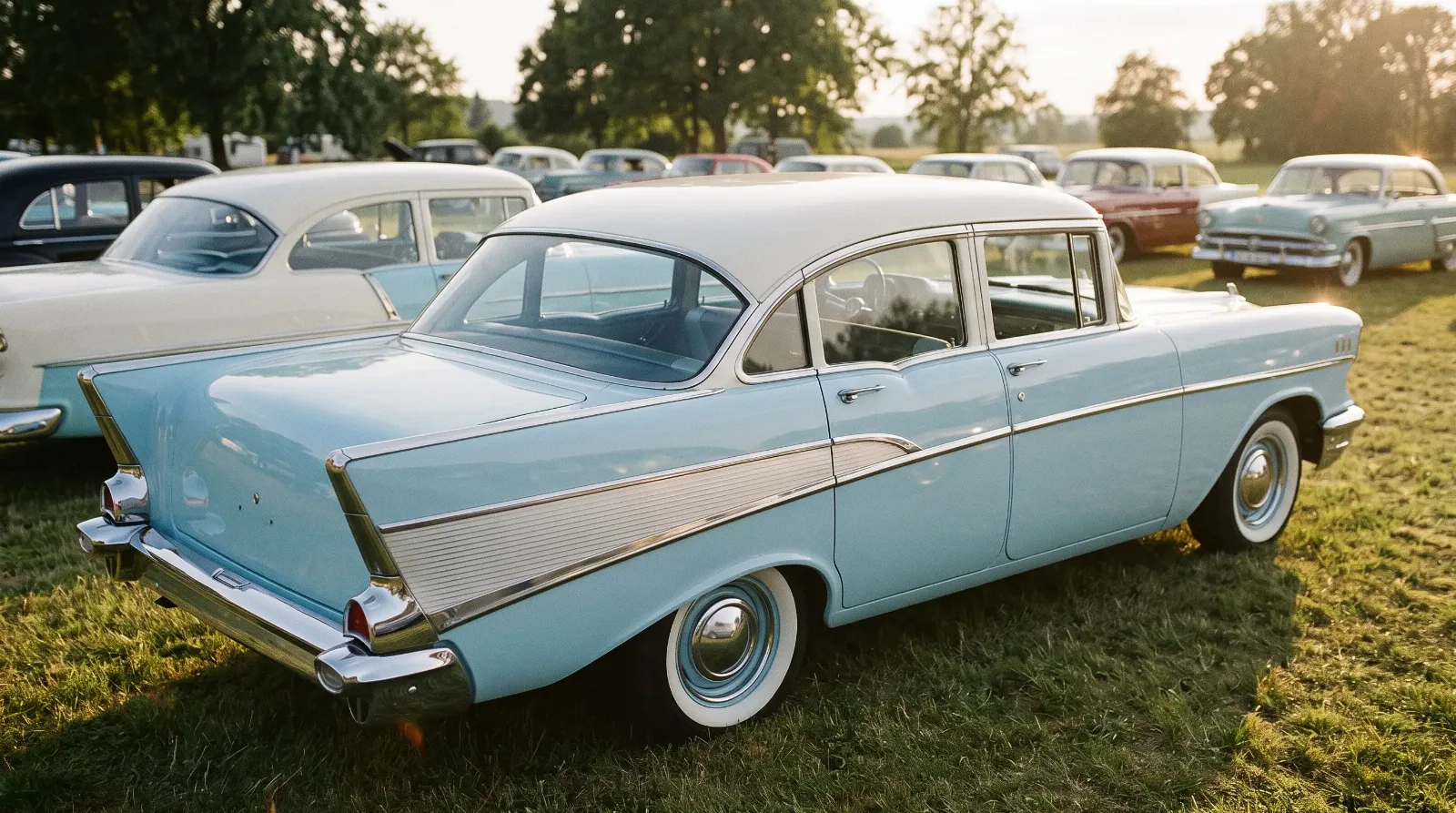
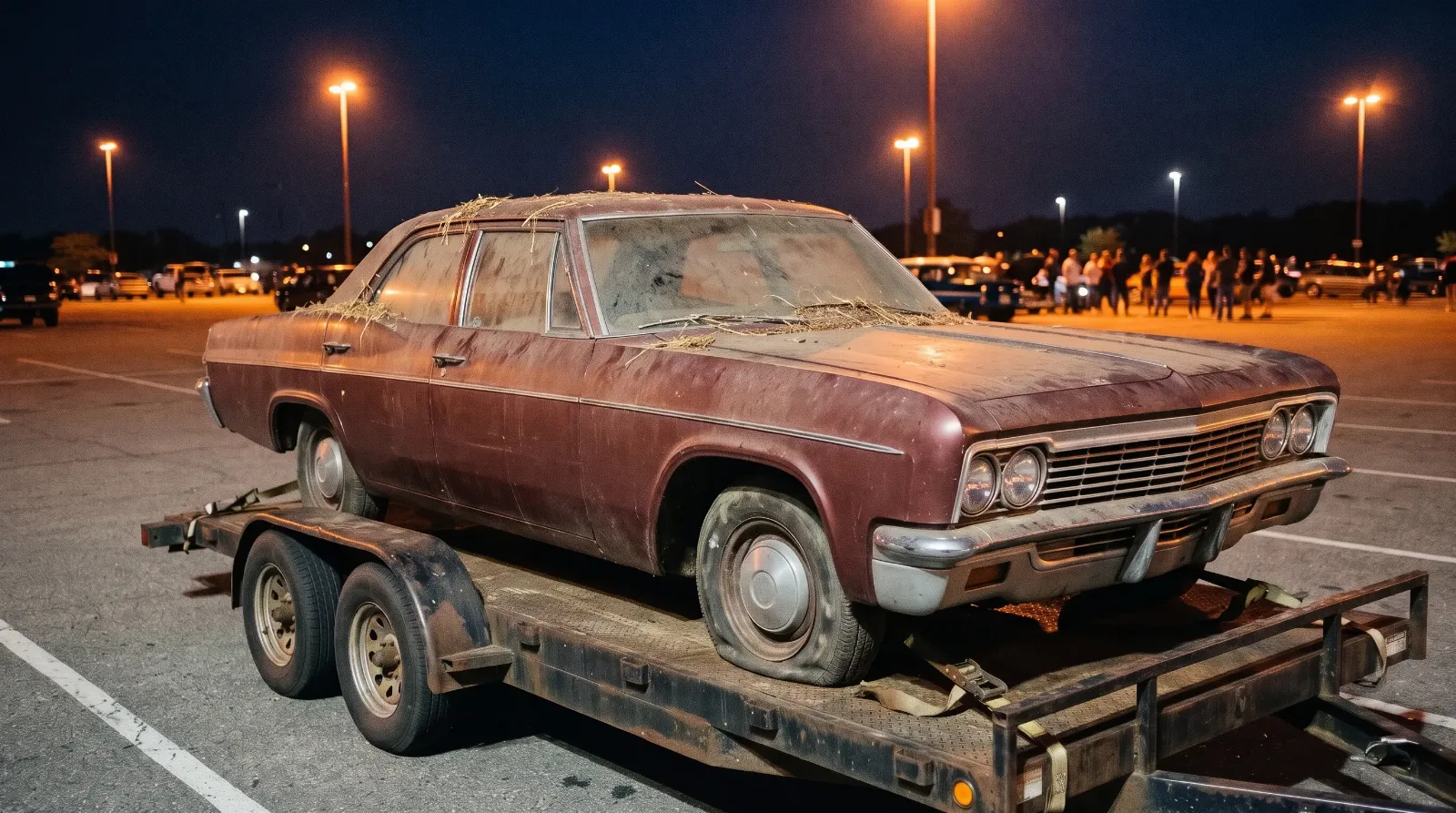
The 1950s are the hardest decade to buy cheaply, and the reason is simple: most surviving cars from that era are already the ones someone loved enough to keep. A 1955 to 1957 Chevrolet Bel Air hardtop or convertible sits far outside a five-figure budget in good condition. The same years in the lower trims, the One-Fifty and Two-Ten, and especially as four-door sedans, are a different market. Chevrolet built more than 1.7 million cars for the 1955 model year, 1,704,667 by the most widely quoted count, and a large share of them were plain sedans with the inline six.
Ford's Customline and Mainline sedans, Plymouth's Plaza and Savoy, and the Dodge and Pontiac sedans of the mid 1950s follow the same pattern. Rough but honest running sedans sell for a fraction of what the hardtops bring, but this is the one decade where the cheap end is thin: tidy and modified 1955 Two-Ten sedans have crossed the block at $28,000 to $64,000 in Hagerty's sales records, and rust repair on a car this old can erase any savings quickly.
The other 1950s path is the independents. The Rambler and the Studebaker Lark, introduced for 1959, were compact, practical cars from companies that no longer exist. Orphan makes tend to sell for less than the Big Three equivalents because the buyer pool is smaller, but parts support is thinner too, and trim pieces can take months to locate. A 1950s sedan from an independent maker is cheap to buy and slow to finish. That trade is worth knowing before you commit.
The 1960s: compacts built by the million
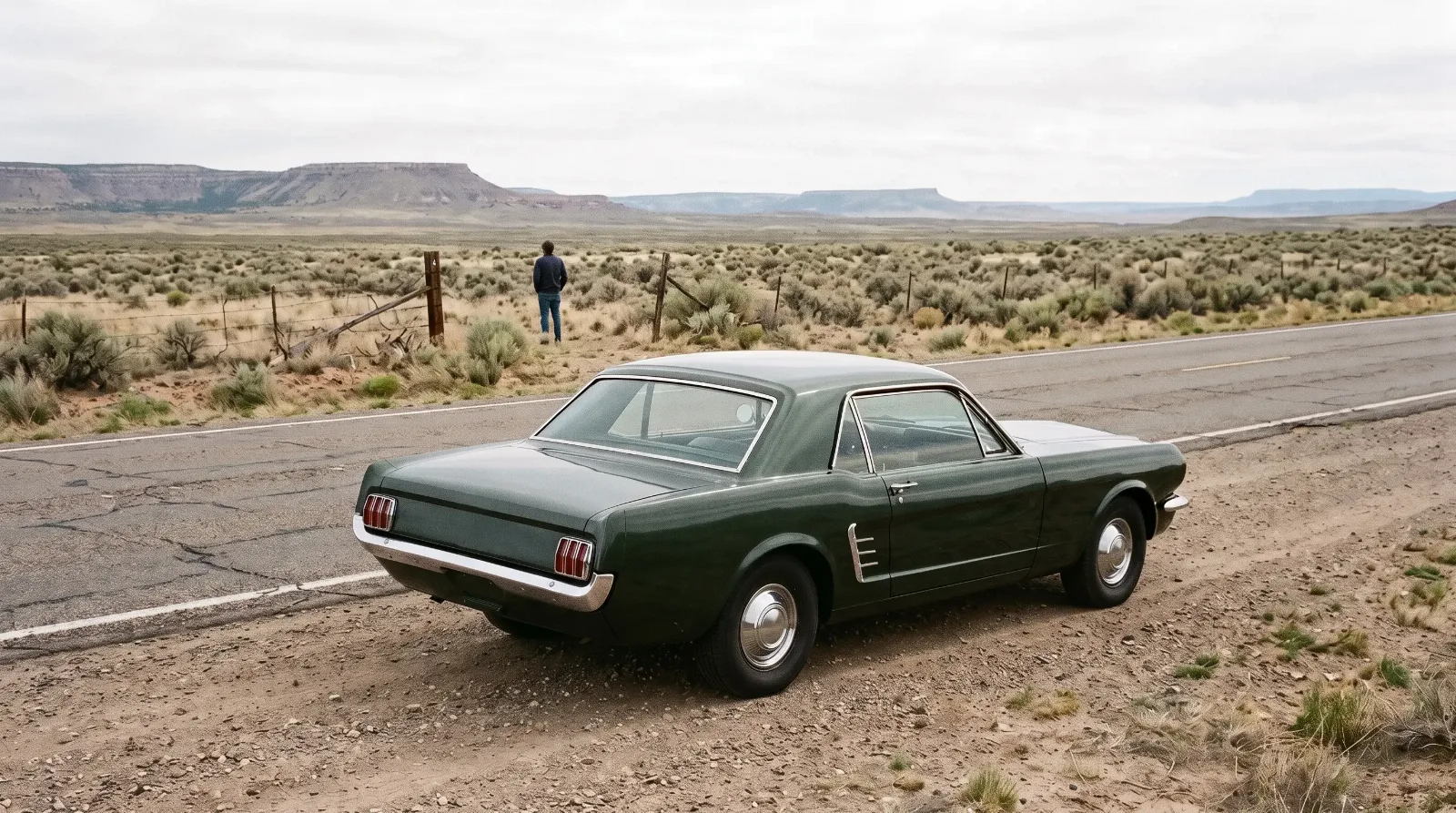
The 1960s produced the deepest pool of affordable classics, because Detroit answered the import threat with compact cars and sold them in enormous numbers. The Ford Falcon arrived for the 1960 model year with a 144 cubic inch six and sold 435,676 units in its first year. Chrysler launched the Valiant the same year (it wore Plymouth badges from 1961) with the new slant six, a 170 cubic inch engine in the compact and a 225 cubic inch version for the bigger Plymouths and Dodges, and the Dodge Dart moved onto the compact platform soon after. Chevrolet followed with the Chevy II for 1962.
Those are the cars that still fill the affordable end of the market. A four-door Falcon, Valiant, Dart or Chevy II with a six-cylinder engine is mechanically simple, parts are plentiful, and the price stays low because the V8 two-door versions absorb most of the collector attention. If you want the performance side of the same decade, the cheapest muscle cars are covered separately; the cars here are the ones that were never meant to be fast.
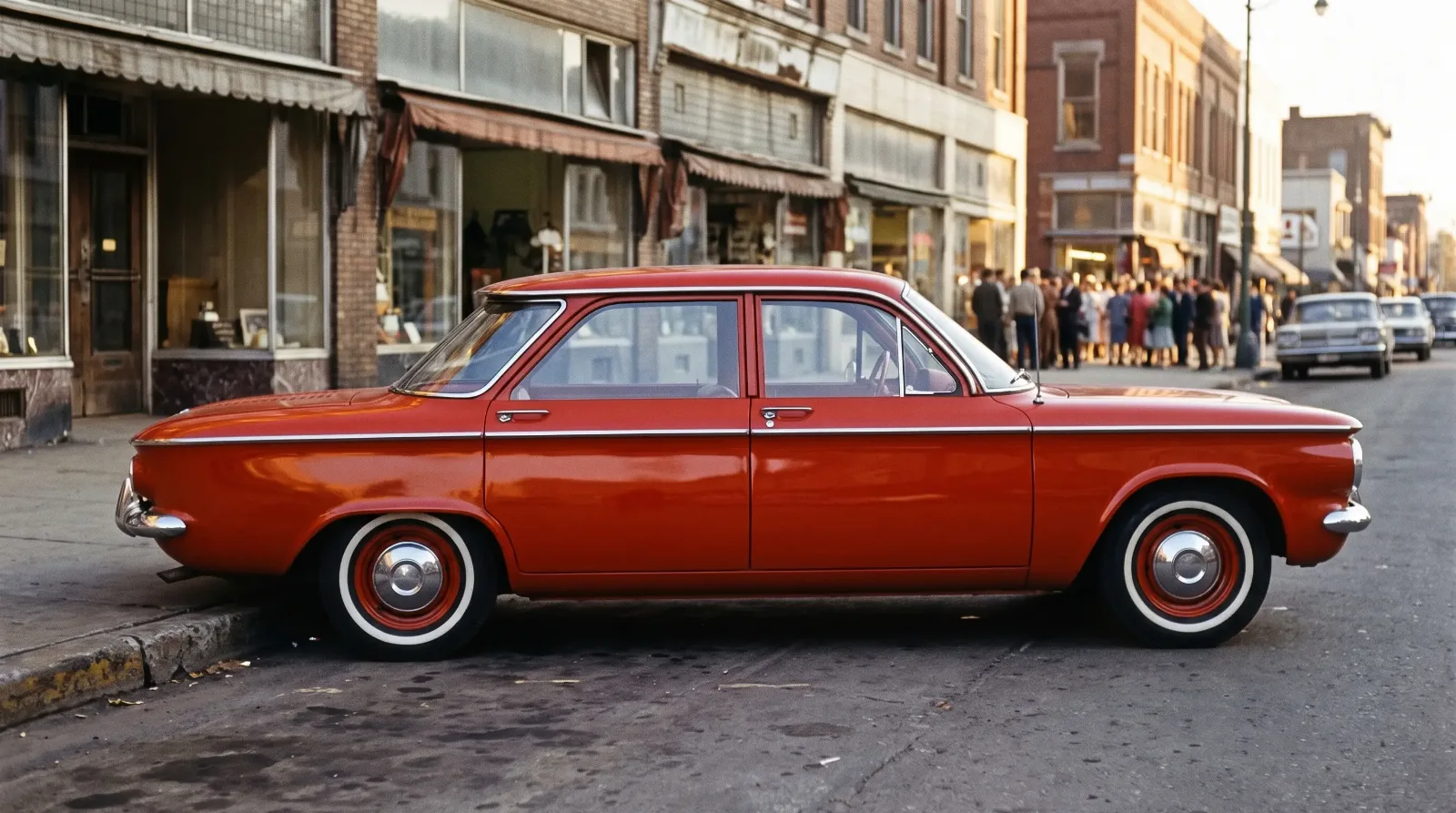
The Chevrolet Corvair is the odd case. Built from 1960 to 1969 with a rear-mounted, air-cooled flat six, it sold close to 1.8 million units over its run, 1,786,243 by the Corvair club's count. Its reputation never recovered from Ralph Nader's 1965 book, Unsafe at Any Speed, which opened with a chapter on the early cars. The record is more complicated than the myth: Chevrolet added a transverse rear leaf spring to tame the swing axles for 1964, then gave the 1965 cars a fully independent rear suspension. The lingering reputation, plus an unusual drivetrain that many mechanics will not touch, keeps Corvair prices low. For a buyer comfortable with air-cooled engines, that is an opportunity.
Full-size 1960s sedans belong on the list as well. Four-door Impalas, Galaxies, Bonnevilles and Chrysler Newports were built in huge numbers. Their size works against them in garages and at the gas pump, and that is exactly why they stay cheap.
The 1970s: the decade collectors skipped
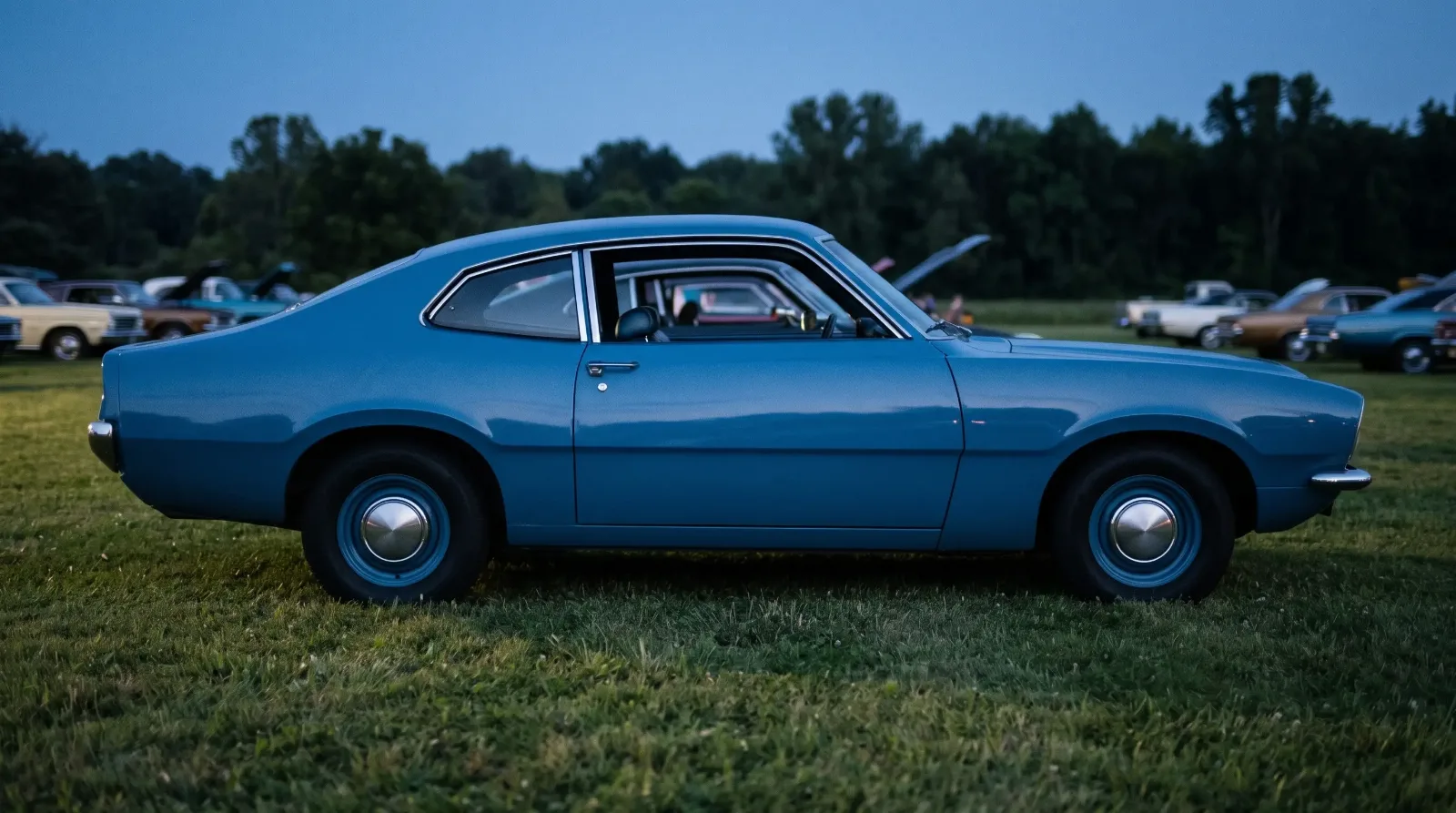
The 1970s carry the lowest prices of the three decades, and some of that reputation is earned. Emissions rules, heavier bumpers and lower compression took real power out of many engines. Some of the apparent drop is bookkeeping, though, and it is worth correcting. For 1972, the industry moved from SAE gross to SAE net horsepower ratings, which measured the engine with its accessories and exhaust installed. A 1972 engine rated well below its 1971 twin was often the same engine on a different test. Buyers who read the brochure numbers at face value still undervalue early 1970s cars.
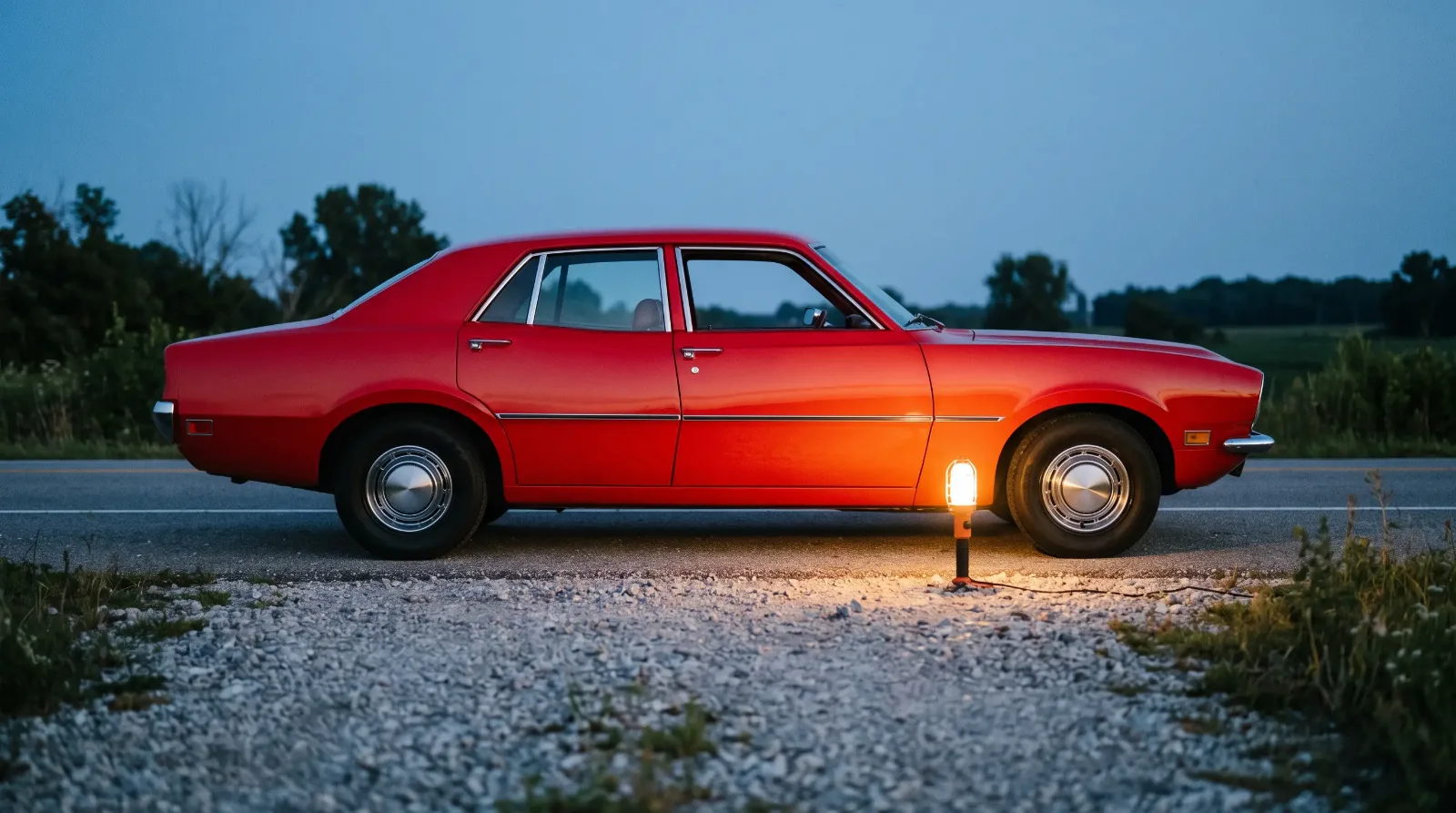
The Ford Maverick, built from 1970 to 1977, sold about 579,000 units in its first model year, helped by an unusually long model year that started early. AMC's Hornet ran over the same 1970 to 1977 span, and the Plymouth Duster and Valiant and the Dodge Dart carried the slant six through most of the decade. All of them are plentiful, simple and inexpensive.
The other 1970s bargain is the personal luxury coupe. The Chevrolet Monte Carlo, the Oldsmobile Cutlass Supreme and the Ford LTD sold in large numbers. The Cutlass was the best-selling car line in America for 1976, with close to half a million sold across all body styles. High volume, soft styling and a buyer base that has aged out of the hobby keep plain small-block examples near the bottom of the collector market, well below the earlier muscle-era versions of the same nameplates. Catalytic converters arrived on most American cars for 1975, so cars built after that date need more care with smog-era hardware and fuel requirements.
Comparing cheap vintage cars by decade
The table sets the main candidates side by side. The price column is a rough position for driver-quality examples, not show cars; for a real number, check a current valuation guide by year, body and condition.
| Car | Years built | Base engine | Why it stayed affordable | Where it sits on price |
|---|---|---|---|---|
| Chevrolet One-Fifty / Two-Ten sedan | 1955 to 1957 | Inline six | Four-door body, base trim, high volume | Highest of the group; clean cars run well above $10,000 |
| Studebaker Lark | 1959 to 1966 (Lark name dropped after 1964) | Inline six | Orphan make, small buyer pool | Low; parts hunting is the real cost |
| Ford Falcon sedan | 1960 to 1970 | 144 cu in six | Very high volume, shared Mustang parts | Low; plain sedans have sold around $8,000 to $10,000 |
| Plymouth Valiant / Dodge Dart | 1960 to 1976 | Slant six | Durable, common, four-door heavy | Low |
| Chevrolet Corvair | 1960 to 1969 | Air-cooled flat six | Reputation, unusual drivetrain | Low; Hagerty lists a good 1963 500 coupe at $5,500 |
| Ford Maverick | 1970 to 1977 | Inline six | Late build years, high volume | Lowest; running cars can be very cheap |
| Oldsmobile Cutlass Supreme / Monte Carlo | 1970s | Small V8 | Huge production, aging buyer base | Low for plain small-block coupes |
The pattern holds across the rows. The cheaper the car, the more of them the factory built in that exact configuration. The exceptions, like the Lark and the Corvair, are cheap for reasons other than volume, and those reasons affect ownership too.
Reading the records before you buy
A cheap car is only a good buy if it is the car the seller says it is. On an affordable classic, the documentation rarely matters for value the way it does on a rare muscle car, but it still tells you whether the engine, transmission and options are original or swapped, and that affects both price and parts.
Before the 1981 model year, there was no standard 17-character VIN, so every maker coded its cars differently. GM cars carry a cowl tag from Fisher Body with body style, paint and trim codes. Ford used a door data plate. Chrysler products often have a fender tag listing the options. Decode those before you negotiate. A Falcon sold as a V8 car that decodes as a six-cylinder car with a later swap is not a scam, but it should not carry a V8 price.
The records also help you separate common from rare. If a seller calls a plain sedan "one of a few left," the production figures usually say otherwise, and that is a fair point to raise. The point works the other way as well: a car built in large numbers has a known price range, and a known price range means you can walk away from an inflated ask without worrying that another one will not turn up.
Which decade suits a tight budget
For the lowest entry price, the 1970s win. Maverick, Dart, Valiant and Hornet sedans and the big personal luxury coupes still trade at the bottom of the market, and they are new enough that rust and parts are manageable. For the best balance of character and supply, the 1960s compacts are the strongest choice: simple, everywhere, and supported by catalogs full of new parts. The 1950s remain possible on a budget, but only in sedan form, and a buyer should expect to spend on body and chrome.
Whichever decade you choose, start with the volume cars and the four-door bodies, decode the tags and set your price from the production records instead of the sales pitch. If the budget is tighter still, browsing old cars for sale under $5,000 will show how many of these sedans and compacts still change hands at the very bottom of the market.
Sources and notes
- Chevrolet Corvair, model history and suspension changes (Wikipedia)
- 1960 Ford Falcon review and first-year sales (Auto123)
- Lee Iacocca's simple machine: the 1970 Ford Maverick (Mac's Motor City Garage)
- USA 1976: Oldsmobile Cutlass is America's favourite (Best Selling Cars Blog)
- Studebaker Lark, production 1959 to 1966 (Wikipedia)
- 1972 Chevelle engine options and the switch to net ratings (Chevy Hardcore)
Related Reading
Article
Affordable Classic Cars: What $5,000 to $10,000 Really Buys in 2026
Article
The Cheapest Muscle Cars You Can Still Buy
Article
Good Cheap Classic Cars for a First-Time Owner
Article
1960s Compacts: Falcon, Valiant, Corvair and the Cheap Way Into the Sixties
Article
Why 1950s Four-Door Sedans Sell for a Fraction of the Hardtops and Convertibles
Article
1980s Classics Under $5,000: The Next Affordable Generation
External
/classic-cars-for-sale-under-5000
Have a
Classic Car
for Sale?
Reach thousands of serious classic car collectors across the US.
Sell It Here →
Selling a classic? Here's how: where to sell your classic car online
Are You a Classic Car Dealer?
List your full inventory and connect with targeted classic car buyers.
Join as a Dealer →
#affordable classic cars
#Ford Falcon
#cheap vintage cars
#1960s compact cars
#1970s classic cars
#1950s sedans
#Chevrolet Corvair

About the author
Tom Ramirez
Corvette researcher and historian based in Bowling Green, Kentucky. Two decades documenting Corvette production history from original factory records.
More in Ownership & Lifestyle
Comments
Be the first to comment on this article.