
Every club I know has the same treasurer's report. One good Saturday in June carries the year, and if it rains, the checkbook spends the winter looking thin. The old guys who started most of these clubs understood that one show is a single point of failure, and the better car club fundraising ideas they left us are the small, boring ones that run in the other eleven months. This piece is about those. The show itself, with its entry fees, raffles and poker runs, is covered in planning a benefit car show, so we will leave that alone.
Ownership & Lifestyle
8 min read
Car Club Fundraising Ideas Beyond the Annual Show
Swap meets, tours, morning meets and newsletter referral links: car club fundraising ideas that run in the eleven months without a show.
Start with what a club already has: members who trade cars and parts among themselves, a newsletter people actually open, and a calendar of gatherings. Each of those can bring in a little money without turning the club into a business. If you are still setting up officers and dues, read our car club guide first and come back.
Why dues are the base, not the whole plan
Dues pay the light bill. They rarely pay for a banquet, a donation or a new club trailer. The numbers on the books are modest: the Antique Automobile Club of America charges $45 a year nationally, and one Buick Club of America chapter lists family dues of $20 per calendar year, on top of national. Nobody gets rich at $20 a family, and nobody should try.
There is a reason dues stay at the center, beyond tradition. A club organized as a 501(c)(7) social club is supposed to be supported by its members' dues, fees and assessments. The IRS lets such a club take up to 35% of gross receipts from nonmember sources, and no more than 15% from the public using club facilities or services. Go over and the club does not lose its exemption automatically, but the IRS looks at all the facts and circumstances. So every idea below should be sized to sit on top of dues, not replace them.
Swap meets and flea markets
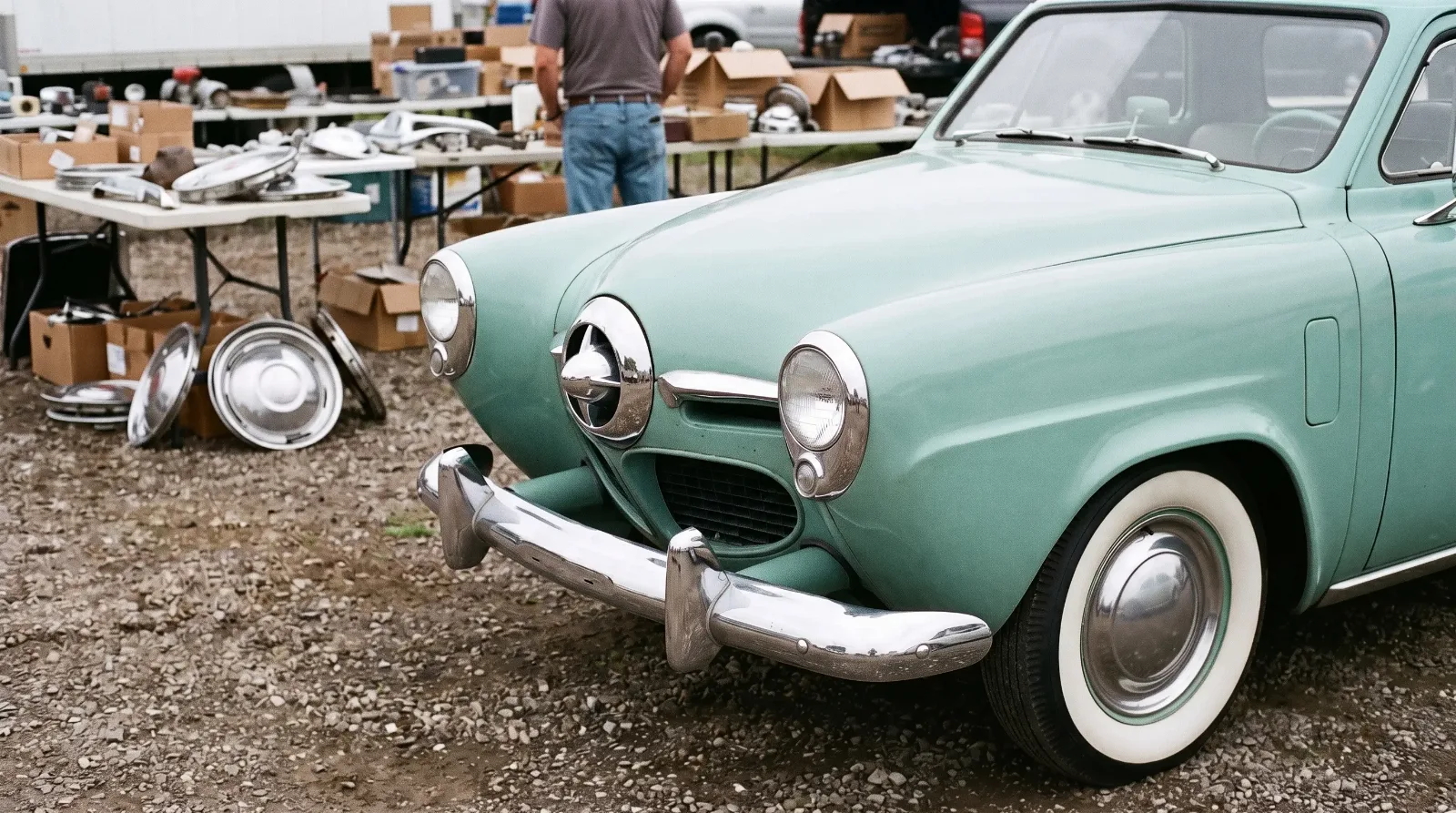
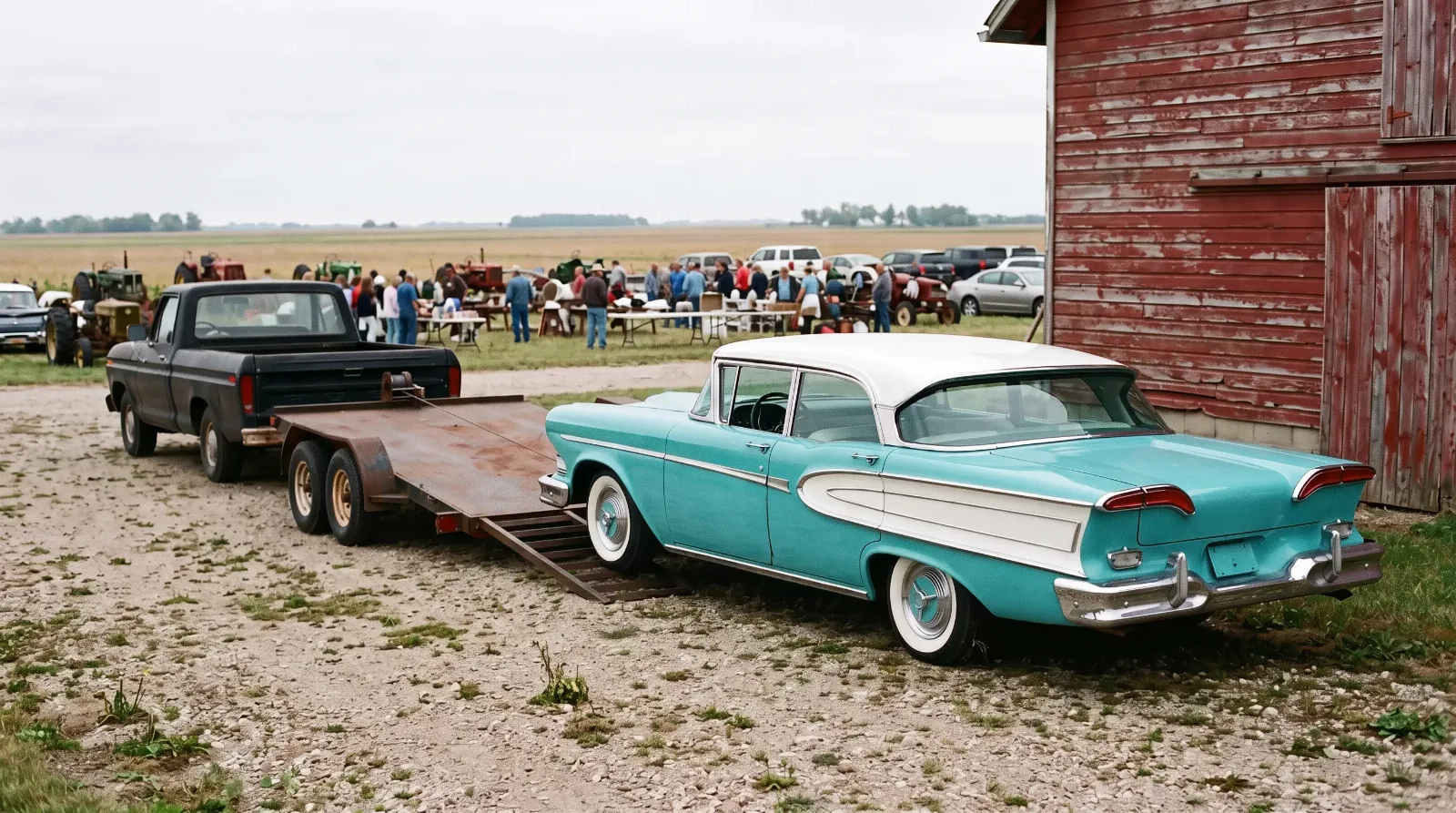
The swap meet is the oldest fundraiser in the hobby, and it still works because it asks members to do what they already do: haul out parts they are tired of tripping over. A club rents a lot or a fairground, sells vendor spaces and charges a gate.
Smaller events charge less. A Maryland car flea market on August 8, 2026 listed $25 for a pre-registered vendor and $30 on site, with car-for-sale spaces at $20 and $30. What nobody publishes is the net. We could not find a single club that reported its swap meet profit after the fairground rent and the porta-johns, so do your own break-even math before you book the field.
Check the insurance before you sell the first space. Some club liability policies name flea markets among covered activities (the Model A Ford Club of America's chapter coverage lists flea markets, tours, picnics, banquets and parades), but not every policy does, and coverage terms vary by carrier and state. Ask the insurer in writing.
Tours, drives and small paid gatherings
A tour costs the club almost nothing to run and gives members a reason to drive the cars, which is the point of owning them. The money comes from small add-ons: a lunch stop where the club keeps the difference on a fixed per-head price, a modest registration fee to cover dash plaques, a banquet at the end of the season. None of this needs a field, a permit for 600 cars or a trophy budget.
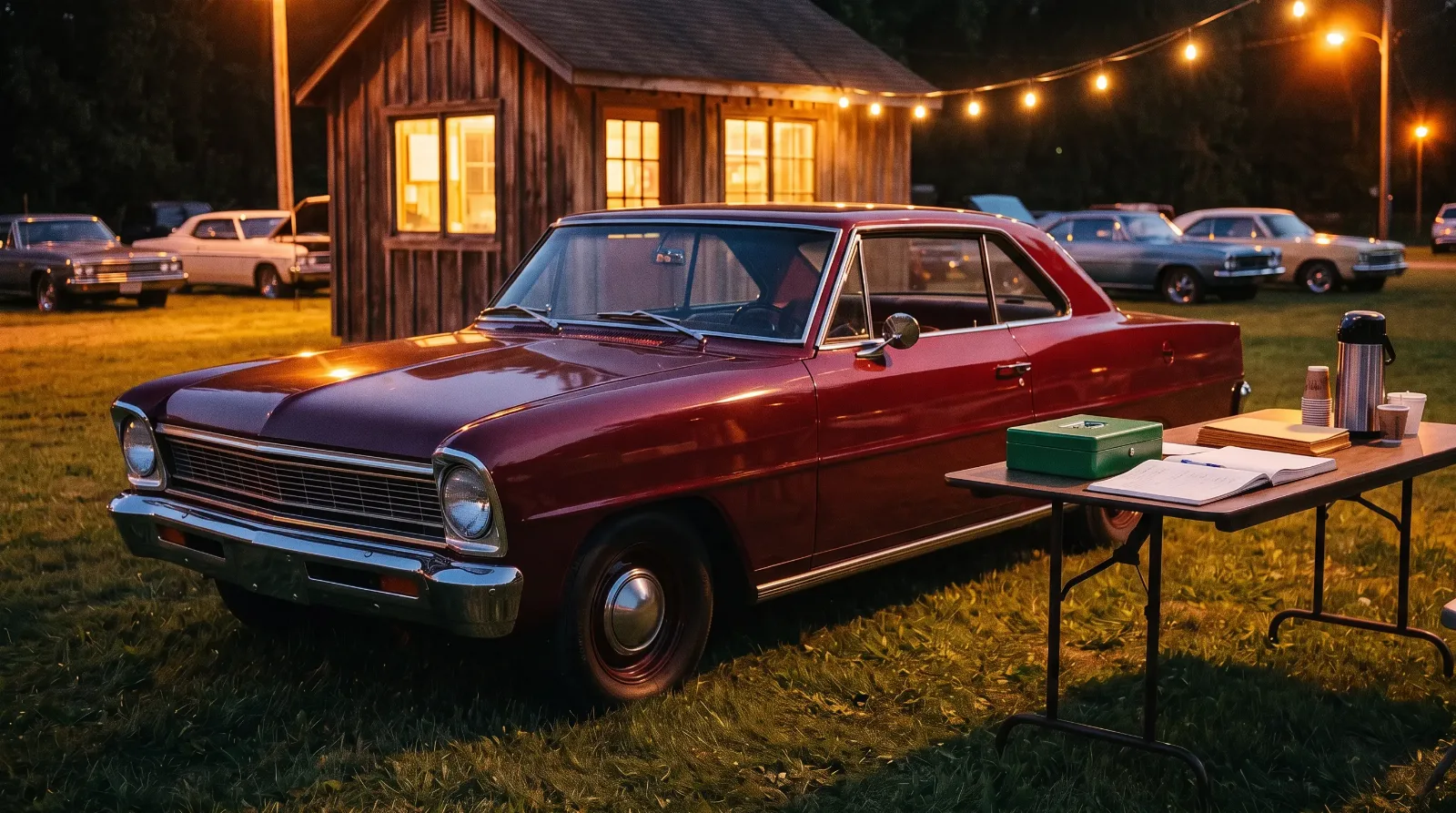
The morning meet is the lightest format of all. Hagerty's HDC Days event in South Bend ran two hours, 8:00 to 10:00 on a Saturday, with coffee, doughnuts and local cars. A club can run the same thing in a bank parking lot and pass a coffee can. It will not fund a scholarship. It will keep members showing up between shows, and members who show up renew.
Some clubs simply hold a second, smaller show. The Mahoning Valley Corvette Club in Ohio donated $12,950 from its June 2025 show, then ran a separate July show at the Packard Museum that added $5,492 to its charitable giving fund. If you go that way, the groundwork is the same as starting the show from nothing, only smaller.
| Idea | Where the money comes from | What to check first |
|---|---|---|
| Swap meet or flea market | Vendor spaces, tables, gate | Venue rent, whether your policy names flea markets |
| Tour or club drive | Registration, lunch margin, banquet | Insurance for tours, who handles reservations |
| Morning meet | Donations, coffee sales | Property owner's permission |
| Second, smaller show | Entry fees, sponsors | Same permits and insurance as the main show |
| Referral links in the newsletter | Commission on what members buy | FTC disclosure, 501(c)(7) nonmember income limits |
Referral income from the newsletter and the buy-sell talk
This is the newest of the car club fundraising ideas, and the one the old guys would squint at. But think about what a club newsletter already is: a list of members who buy and sell cars among themselves, plus a classifieds column. Several companies now pay clubs for that attention. For a wider look at who pays what, see the overview.
Insurers came first. Hagerty has been the SCCA's official insurance provider since 2019, with a member discount and event sponsorship attached. In the UK, Hagerty launched a car club partner programme on October 31, 2022 that pays clubs an introducer commission on members who insure; it does not publish the rate. We found no public US club commission scheme from Hagerty.
Marketplaces are the other route. ClassicCars.com runs an affiliate program on Awin paying 5% on listings purchased with a 30-day cookie, as read on October 19, 2026. Our partner program names marque clubs, regional clubs and forums as the people it was built for, and a club newsletter as a place to put the link. It pays 25% of every listing package a referred member buys. For example, a member who buys the $99 Featured package through the club's link earns the club $24.75 (price as shown on October 19, 2026). Commissions are confirmed 30 days after the sale, and the club can request a PayPal payout once its confirmed balance reaches $50.
"A club that tells its members where to list a car has been doing referral work for fifty years. The only new part is that somebody now offers to pay the treasury for it. Fine. Just say so in the newsletter, plain as the dues notice."
Gary Nowak
That last point is a rule, not manners. When the club shares a link it earns from, the FTC expects a clear disclosure right next to the link, in words like "the club earns a commission if you buy through this link." A note on the website's About page does not count. And because the newsletter is email, promotional messages must carry a postal address and a working opt-out under CAN-SPAM.
Keeping car club fundraising ideas inside the tax lines
Three rules catch clubs more than any others. First, dues paid to a social club are not deductible for the member, and a 501(c)(7) club is not a qualified organization for charitable deductions, so do not print "tax-deductible" on anything. Second, raffle tickets are never deductible for the buyer, even when the proceeds go to charity. Third, referral commissions, vendor fees from outsiders and gate money from the public may count toward that 35% nonmember limit; the IRS does not say plainly how commissions are classed, so ask before the money gets large.
These rules vary by state and by how your club is organized. Confirm the details with an accountant who knows exempt organizations, and with your state's gaming regulator before anyone sells a raffle ticket. This is not legal advice.
None of this replaces the annual show. It just means the show stops carrying the year alone. Pick two ideas, run them small, write down what each one netted, and keep the one that worked. If the newsletter already runs a classifieds column, the easiest place to start is a referral link on the flyer and in the next issue, with the disclosure printed right beside it.
Sources and notes
- IRS: social clubs under 501(c)(7), including the 35% and 15% nonmember income limits
- IRS Publication 526: social club dues and raffle tickets are not deductible (2025 tax year edition)
- Chicagoland MG Club swap meet and autojumble, March 15, 2026: vendor and gate prices
- Model A Ford Club of America chapter insurance: covered club activities
- Hagerty UK car club partner programme launch, October 31, 2022
- Classic Cars Arena partner program terms and listing prices (read October 19, 2026); FTC Endorsement Guides FAQ for the disclosure wording
Related Reading
Have a
Classic Car
for Sale?
Reach thousands of serious classic car collectors across the US.
Sell It Here →
Selling a classic? Here's how: where to sell your classic car online
Are You a Classic Car Dealer?
List your full inventory and connect with targeted classic car buyers.
Join as a Dealer →

About the author
Gary Nowak
Lifelong Midwest rodder who has been building and driving traditional pre-war hot rods since the 1970s.
More in Ownership & Lifestyle
Comments
Be the first to comment on this article.