
Every small show has the same moment at about a quarter to three. The trophies are lined up on a folding table, the crowd has drifted toward the awards, and somebody who parked in row four wants to know why his car was in the same class as a truck. Nobody remembers who decided the classes. Nobody kept the score sheets. Car show judging rarely goes wrong on the day; it goes wrong in the weeks before, when the classes, the sheet and the trophy count were never written down. The fix is dull, and it works: decide the rules early, put them on paper, and keep the paper.
Ownership & Lifestyle
8 min read
Car Show Judging Classes, Score Sheets and Trophies
How to set car show classes, choose a judging method, build a score sheet modeled on AACA's points system, and plan trophies that hold up.
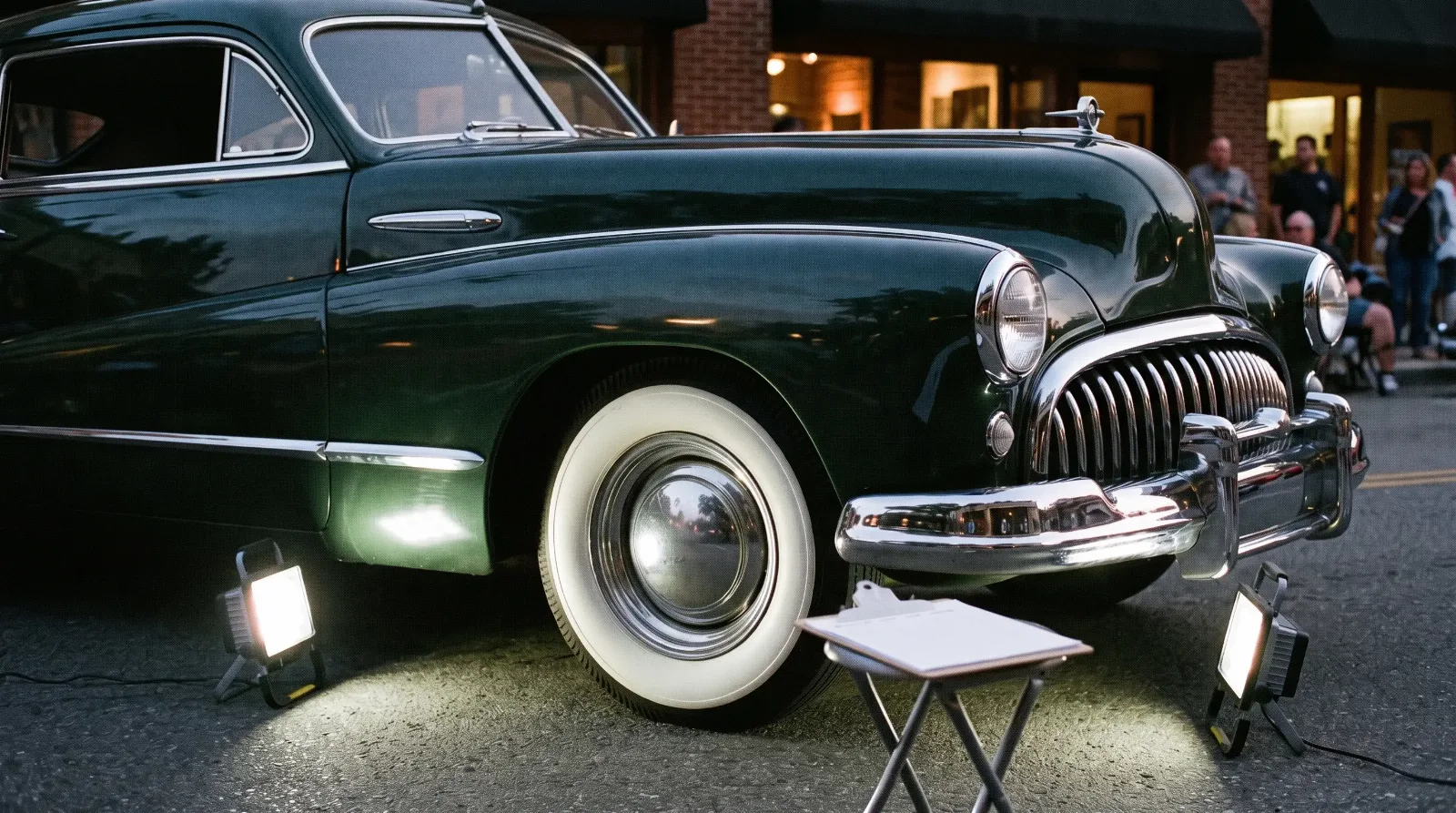
This guide covers the three decisions an organizer makes about awards (the classes, the judging method and the trophies) and the records that settle arguments afterward. It sits under the wider guide to putting on a show that raises money, so it leaves entry fees and permits to that piece.
Pick the classes before you buy a single trophy
A class is a promise to the entrant: your car will be compared with cars like it. Most local shows build classes from two ingredients, year ranges and make or body groups, and give first, second and third in each.
A 2018 newspaper report on the Northern Neck AACA region's 25th show in Virginia gives a typical mix: classes by year (1949 to 1954, 1955 to 1965, 1966 to 1970), plus trucks, Mustangs, sport muscle, Corvettes (1953 to 1993), foreign cars and a top custom car or truck, with trophies and plaques for first, second and third in each class. Special awards sat on top: Mayor's Choice, Oldest Car, Top Sponsor's, Top Rat Rod, and Best of Show for both Modified/Custom and Antique.
Classes are optional. The county-run Rockburn Open Car Show in Maryland (August 8, 2026) had no formal classes at all, only a set of awards: Best American, Best Corvette, Best of Trucks, Best of Import, People's Choice and Best of Show, plus two named awards. For a first-year show with an unknown turnout, that is often the honest choice. Twelve classes and nine entries is how you end up handing a first-place trophy to the only car in its class.
Two rules make any class list easier to defend. Publish it with the registration form, so entrants know where they stand before they pay. And keep a short "open" or "other" class for the car nobody planned for, because there is always one.
Three ways to run car show judging
There are three methods in common use, and a show can mix them: a People's Choice ballot for the crowd, a judge's pick for the special awards, and points for the classes.
| Method | How it works | Suits | Paperwork to keep |
|---|---|---|---|
| People's Choice | Spectators or entrants vote on a ballot; most votes wins | Any show, large or small | Ballots and the tally sheet |
| Judge's pick | A named judge, or a small panel, chooses winners by category | Small shows and special awards such as Mayor's Choice | Who judged, which car won what |
| Points-based | Judges score each car on a printed sheet; highest score in class wins | Shows with real classes and contested awards | Every score sheet, signed |
An older Jalopnik how-to for first-time organizers kept it simple: choose a judge and the categories, for example best import against best domestic, or best antique against best late model. That is a judge's pick, and for a show of fifty cars it is enough. Points start to matter when the classes are full and the entrants have done this before.
Building a score sheet that holds up
One of the best-documented points systems in the US hobby is the Antique Automobile Club of America's, and its published rules are a good model even for a show that will never use them in full. Under AACA's 2026 Official Judging Guidelines for its national meets, every car starts with 400 points, and judges deduct according to AACA standards. The final score is 400 minus the deductions from four columns: exterior, interior, chassis and engine. Cars must be 25 years old or older.
The award lines are fixed in advance. A First Junior goes to the top score in class at or above 365, plus every car within 10 points of it and also at or above 365; Second Junior needs 330 and Third Junior 295. A Senior award needs 375. The first time a car scores 350 or more, it receives the Preservation Award plaque.
Other clubs use the same idea with different numbers. The National Corvette Restorers Society's scoring summary for 1984 to 1986 Corvettes (form dated June 2013) converts a raw score out of 4,510 into a percentage and sets the flight awards at 94 for Top Flight, 85 for Second and 75 for Third. The form carries a line for the judging chairman's signature. In both systems the award lines are printed before anyone lifts a hood.
The structure of the judging team matters as much as the numbers. AACA sends a Team Captain plus at least four judges, one for each area, and never fewer than three judges plus the Captain. Family members cannot sit on the same class team. Only the Captain talks to the owner.
A local show does not need 400 points or four-judge teams. It can borrow the ideas that make the system fair:
- Score by area, so one judge's taste in paint does not decide the whole car.
- Write the award thresholds or tie rules down before the show, not at the trophy table.
- Keep judges off any class where a relative or their own car is entered.
- Have one person speak for the judges, so an owner hears one answer, not three.
"I have watched more friendships end over a third-place plaque than over any car sale. The argument always runs the same way, and it always stops the same way: when somebody produces the score sheet with a judge's name on it. If you cannot find the sheet, you do not have a result. You have an opinion with a trophy attached."
Wayne Coburn
Trophies: how many, and how to hand them out
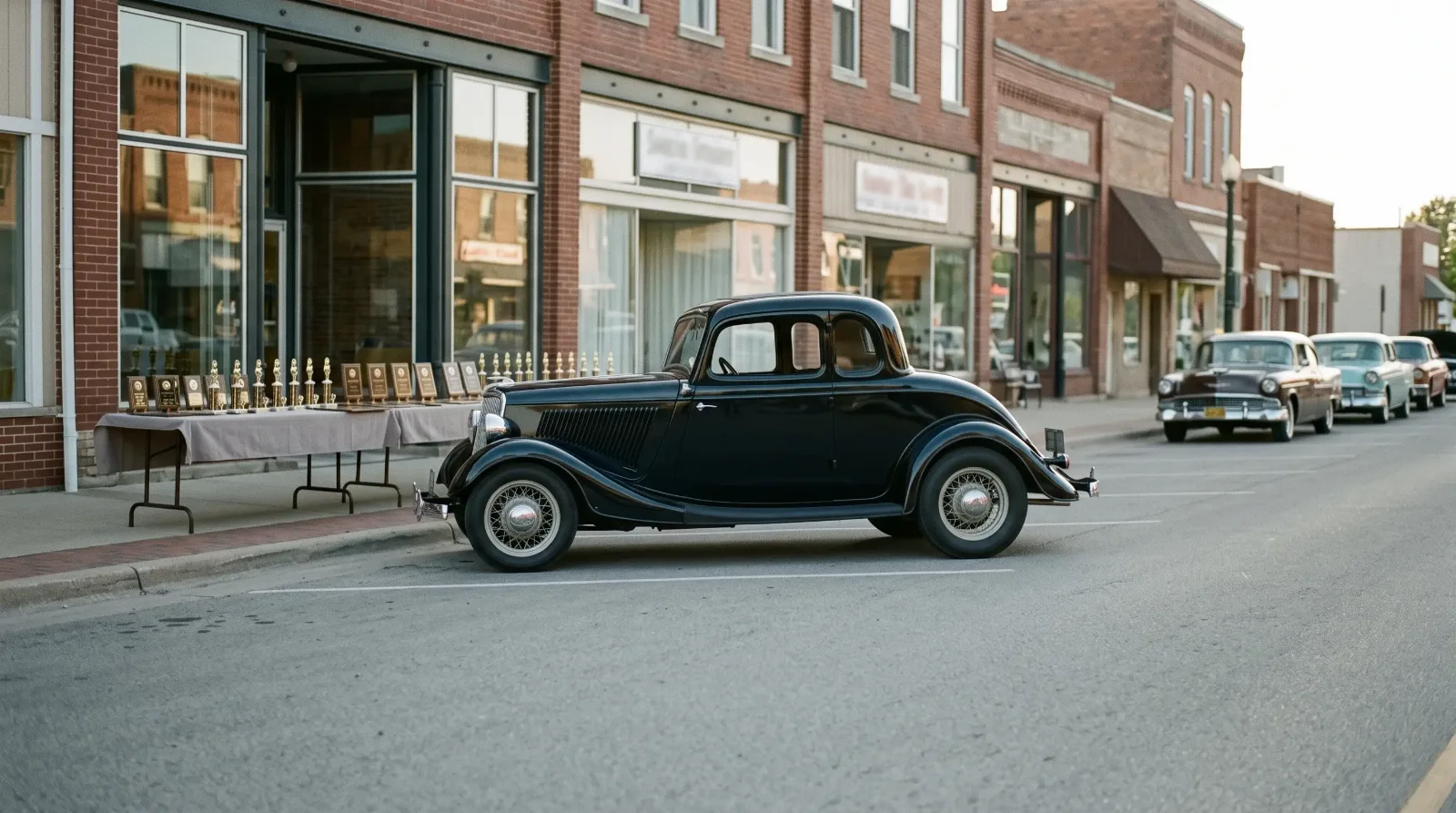
Trophy budgets swell because every class wants three places. Two older how-to articles, from SEMA and Jalopnik (2010 and 2013), cover the basics. SEMA suggests 3 to 5 large trophies, for awards such as Best of Show, plus a larger number of smaller ones, and ordering early. The Jalopnik piece adds the practical part: present trophies at one central point, with a megaphone, and announce the time in advance so people stay.
Trophies are also one of the easiest things to sell to a sponsor. Organizers name trophy and dash-plaque sponsorship as pitch items, and the R.E. Olds Car Capital Auto Show in Michigan put the top award in its top tier: for its July 18, 2026 show, a $10,000 Title sponsor got a tent by the awards table, a chance to speak at the awards and its name engraved on the Best in Show awards. A local business may pay for one class's trophies in exchange for its name on them. The approach to that conversation is covered under finding sponsors.
One caution on wording. If a trophy carries a sponsor's name, put the sponsor on the trophy and keep the judges independent of it. A sponsor's award decided by the sponsor is fine, as long as the program says so.
The paperwork that settles arguments
Most disputes after a show are about one of three things: which class a car was in, how the votes were counted, or who judged. Every one of them is answered by a piece of paper that should already exist.
A show that runs well for a few years starts to attract entrants who care about results, and that is when the records earn their keep. If the show is still at the planning stage, the questions of date, venue and size come first, and the longer answer is in the guide to starting one. The classes, the sheet and the trophy table come after that. They are the part people remember, and the part they will argue about, so write them down.
Sources and notes
- AACA: 2026 Official Judging Guidelines (scoring, award thresholds, judging teams)
- NCRS: 1984 to 1986 scoring summary sheet (June 2013 form, read October 19, 2026)
- Howard County, Maryland: Rockburn Open Car Show, August 8, 2026 (awards list)
- R.E. Olds Transportation Museum: 2026 Car Capital Auto Show sponsor flyer (tiers as of the July 18, 2026 show)
- SEMA eNews (2010): key tips for producing a successful car show
- Jalopnik (2013): how to organize a car show
Related Reading
Have a
Classic Car
for Sale?
Reach thousands of serious classic car collectors across the US.
Sell It Here →
Selling a classic? Here's how: where to sell your classic car online
Are You a Classic Car Dealer?
List your full inventory and connect with targeted classic car buyers.
Join as a Dealer →

About the author
Wayne Coburn
Longtime Corvette owner, judge and club figure who knows the cars, the records and the people behind them.
More in Ownership & Lifestyle
Comments
Be the first to comment on this article.