
A good car walkaround video does one job: it lets a viewer who will never stand next to the car judge it as if they had. That means panel gaps, the shine on the chrome, the way the hood sits, the sound at idle. Most walkarounds fail because the person holding the camera films the car like a fan instead of like the guy who built it. Shoot it the way a builder looks at a car, in a fixed order, close enough to see the work, and you get a video that sells the car, earns its views and holds up when somebody pauses on the door jamb. If you want the money side of running a channel, the full guide covers it. This piece stays on the shoot itself.
Ownership & Lifestyle
8 min read
Filming a Classic Car Walkaround Video
How to film a classic car walkaround video in a fixed order, with clean engine sound, honest detail shots and YouTube's own upload settings.
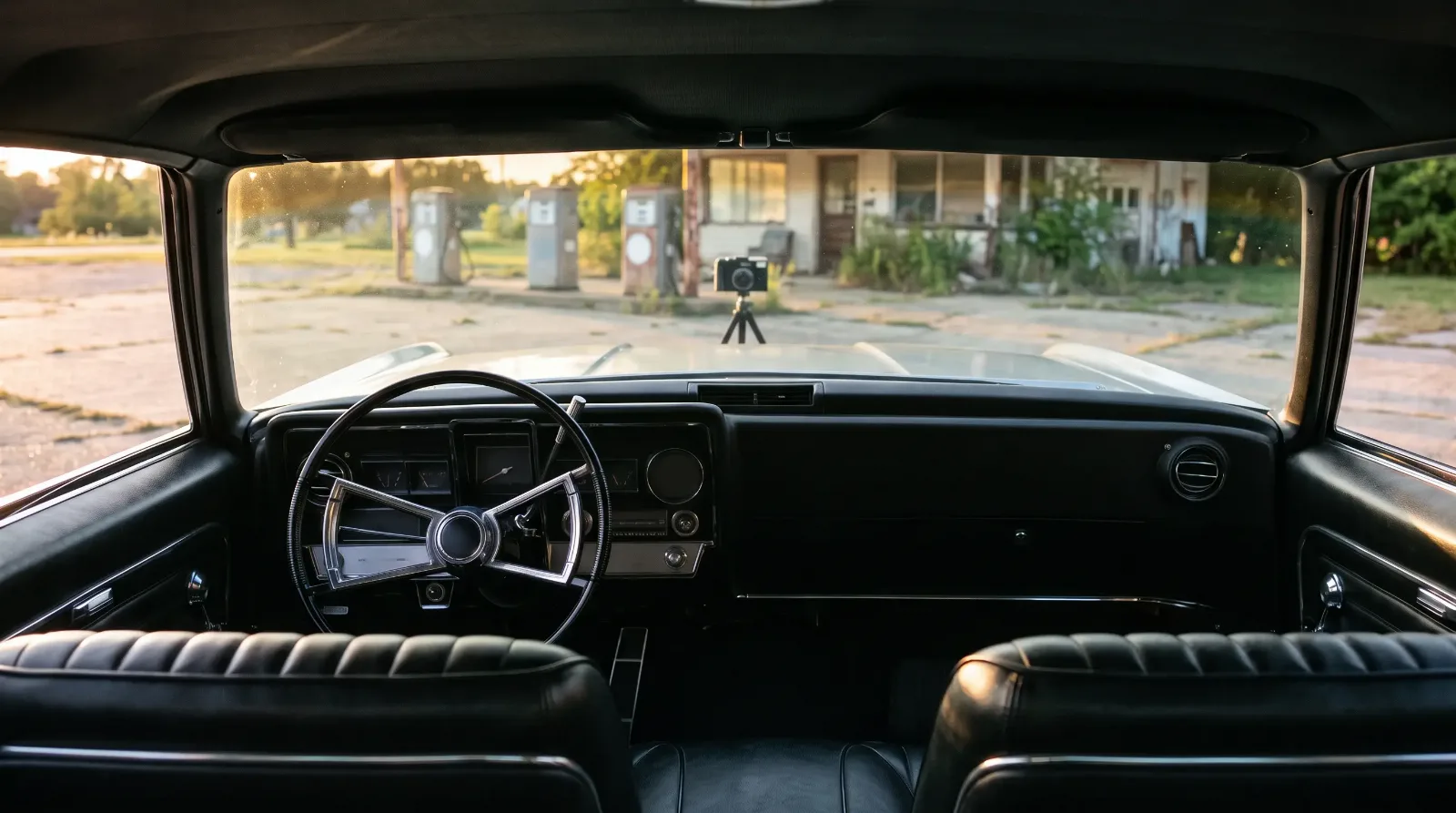
Plan the car walkaround video before the camera comes out
Walk the car once with nothing in your hands. Look for what a buyer or a judge would look for: the stance, whether the trim lines up from the front fender to the quarter, which details are correct for the year and which are later swaps. Write those down. They become your shot list and your talking points.
Then decide what the video is for. A for-sale walkaround is evidence. It shows the flaws as clearly as the good parts, because a buyer who finds a rust bubble after the sale that you skipped on camera will not trust your next car. A feature walkaround on a channel can be looser and talk about design, but it still needs the same complete loop around the car. Stills and video work together here: the photo shot list for a sale covers the frames a listing needs, and the video should hit the same areas in motion.
Pick the location for the car, not for you. A plain wall or an open lot with nothing behind the roofline beats a busy show field. Clean the car, then clean it again, because a camera finds dust on black paint that your eye skipped. Park it with the front wheels turned slightly so the face of the wheel shows on the front three-quarter shot.
The shooting order that covers the whole car
Use the same order every time. Viewers learn it, and you stop missing things.
- Front three-quarter, wide. The establishing shot. Hold it for a few seconds so the viewer reads the whole shape.
- Straight front, then down the driver side. Walk slowly at roughly door-handle height. Pause on the panel gaps at the hood, door and trunk.
- Rear three-quarter, straight rear, passenger side. Same pace, same height, back to where you started.
- Details. Badges, wheels and tires, glass etching, the trim tag or data plate and the VIN plate if the owner agrees to show it.
- Interior. Dash, gauges, seats front and rear, headliner, door cards, carpet, the trunk with the mat lifted.
- Engine bay. Wide first, then the details a knowledgeable viewer checks: what is original, what was replaced, what was dressed up.
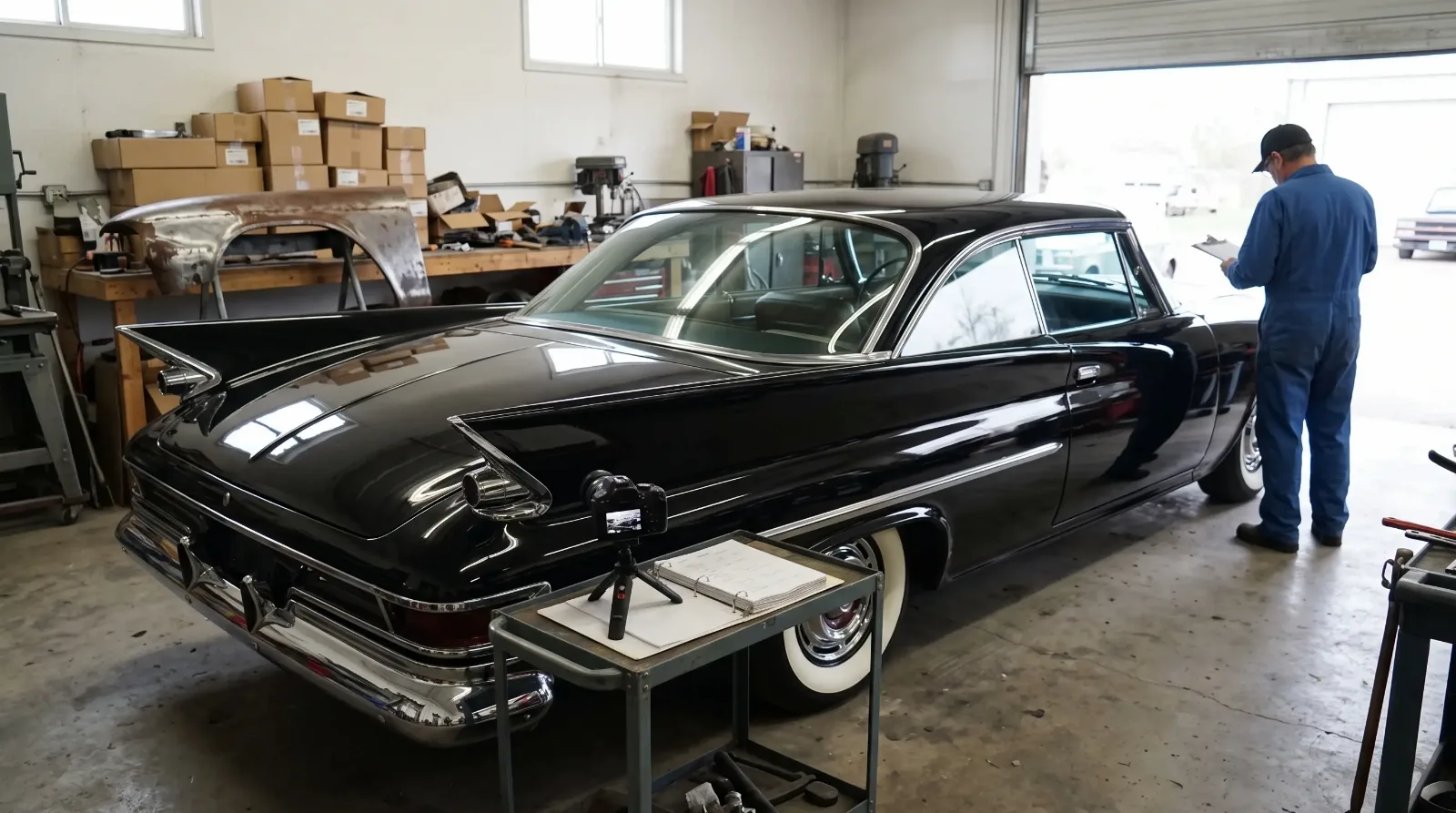
- Underside. Floors, frame rails, exhaust. Use a light and get low. Skip this and every serious buyer will ask for it.
- Cold start and running. Start it on camera from cold, let it idle, then a slow drive past and away.
Do the loop in one direction and keep the camera moving smoothly.
"Film the car the way the builder would check it. If the gaps are right, show them close. If a part is a later swap, say so before the comments do. Honest footage of a correct car beats a slick edit of a poseur every time."
Jim Vasquez
Light, sound and the gear that matters
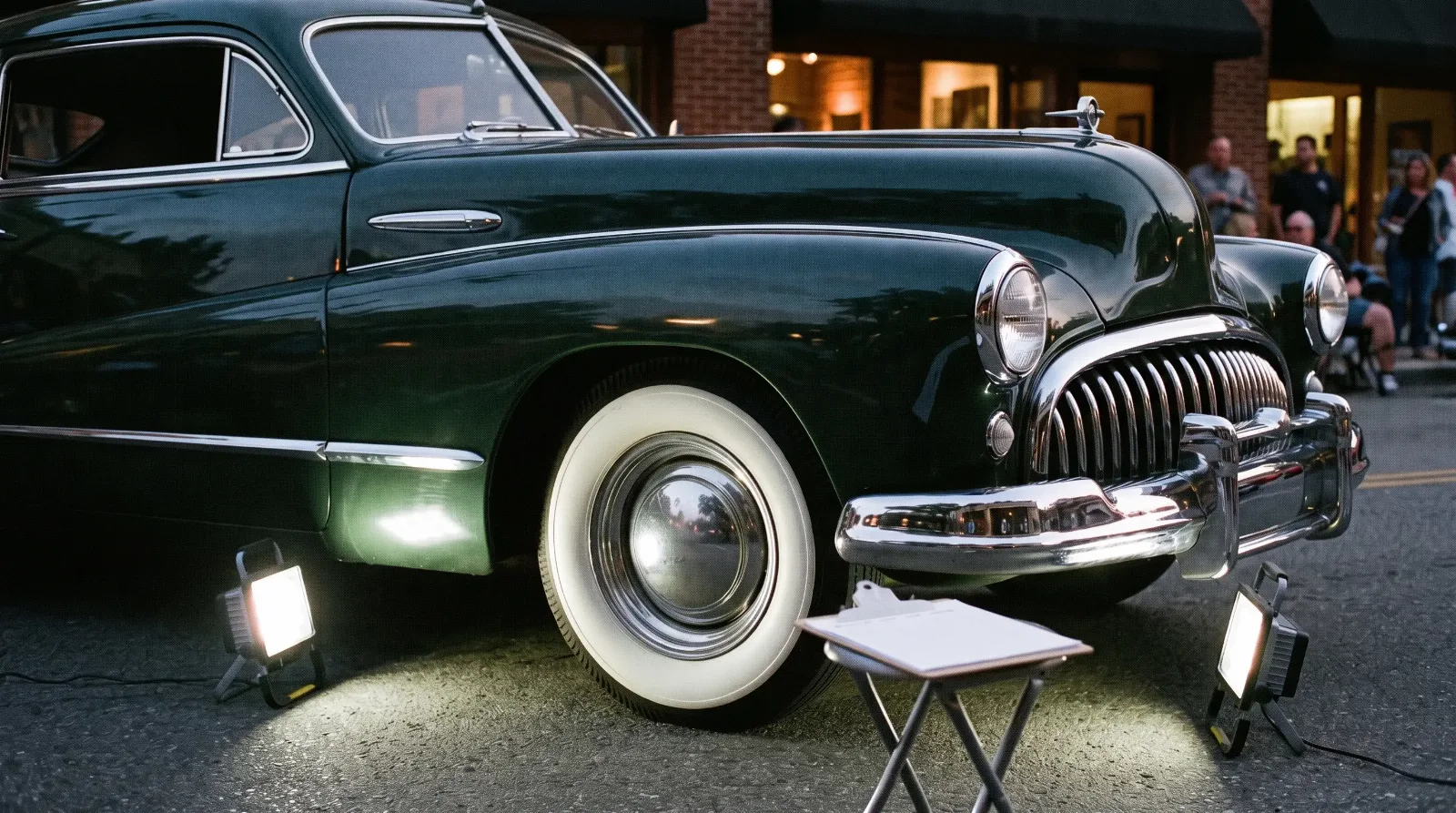
Light decides more than the camera does. Overcast daylight is the easiest: soft, even, no hard reflections on the body sides. Bright midday sun puts the whole sky in the paint and turns chrome into white blobs. Early and late light flatters the car, but it moves fast, so shoot the exterior first and leave the interior and engine bay, where you will add your own lighting, for later. A polarizing filter on the lens cuts reflections off glass and paint and is the single cheapest upgrade for this kind of work.
Sound is where most walkarounds fall down. A phone or camera microphone picks up wind, footsteps and you breathing. Use a separate microphone on your collar for the talking and a second one near the tailpipe or under the hood for the engine. The cold start and idle are what the viewer came to hear, so record them clean and do not bury them.
Music is the trap. Do not drop popular songs on the edit or film with a radio playing in the background. On YouTube, a Short can run up to 3 minutes, and for a 1 to 3 minute Short an active Content ID claim blocks the video no matter what the music owner's policy is. On a longer video the claimed video usually stays up with the claim attached.
Gear beyond that is simple: a gimbal or a steady walking technique for the loop, a tripod for the details, a small LED panel for the interior and underside. Spend on audio before you spend on a second camera.
That matters if you want an aerial pass over the car on the road. The certificate requires being at least 16, reading and speaking English, and passing the initial aeronautical knowledge exam at an FAA-approved testing center, with free online recurrent training every 24 calendar months. You book and pay for the exam through PSI, the FAA's testing vendor, which lists $175 for an airman knowledge test as of October 2026. Rules vary by location and airspace, so confirm with the FAA before you fly.
Editing and uploading without losing quality
Keep the edit close to the order you shot it in. The viewer should always know where on the car they are. Cut out dead walking, keep the pauses on detail. Put the cold start in full. Add short on-screen labels for anything a viewer might question: "replacement grille", "original paint on the door jambs", "new carpet". A walkaround that labels its own flaws earns more trust than one that hides them.
Upload settings are published by YouTube, so there is no reason to guess:
| Setting | YouTube recommendation |
|---|---|
| Container and video codec | MP4, H.264 High Profile, progressive |
| Audio | AAC-LC at 48 kHz, stereo recommended at 384 kbps |
| Frame rate | Upload in the frame rate you recorded |
| 1080p bitrate (SDR) | 8 Mbps at 24, 25 or 30 fps; 12 Mbps at 48, 50 or 60 fps |
| 1440p bitrate (SDR) | 16 Mbps standard frame rate; 24 Mbps high frame rate |
| 4K bitrate (SDR) | 35 to 45 Mbps standard; 53 to 68 Mbps high frame rate |
| Aspect ratio | 16:9 standard; vertical and square also supported |
Shoot a horizontal master and cut a vertical version from it for Shorts. Plan the vertical cut while filming: keep the car centered on the detail shots so the crop still works. If the walkaround lives on your own site as well, write the post around it with the specs and the story; the details of running a blog are in a separate guide.
When the walkaround carries a link
Walkarounds pull traffic to whatever is in the description: the listing, the parts you used, a sponsor. If any of those links pays you, the FTC expects the disclosure to sit with the endorsement. In a video that means in the video itself, said out loud and shown on screen, not only in the description or on an About page. Words like "ad", "advertisement" or "sponsored" are generally acceptable; shortcuts like "sp", "spon" or "collab" are not. Repeat it during live streams. This is general guidance, not legal advice, so check the FTC's current pages if your setup is unusual.
Whether you take a flat sponsor fee or paid links depends on the channel and the audience; the tradeoffs of sponsorships versus affiliate links get their own piece. Either way, the footage is the asset. Shoot the whole car, show the flaws, keep the engine loud and the music out, and the video keeps working long after the car has gone to its next owner.
Sources and notes
- YouTube Help: recommended upload encoding settings
- YouTube Help: learn about copyright claims (Shorts and Content ID)
- FAA: become a certificated remote pilot under Part 107
- PSI FAA testing portal: airman knowledge test fee ($175, checked October 19, 2026)
- FTC: Disclosures 101 for social media influencers
Related Reading
Have a
Classic Car
for Sale?
Reach thousands of serious classic car collectors across the US.
Sell It Here →
Selling a classic? Here's how: compare the places to sell classic cars
Are You a Classic Car Dealer?
List your full inventory and connect with targeted classic car buyers.
Join as a Dealer →
#car walkaround video
#FTC disclosure
#car creators
#car youtube channel
#classic car video
#video production

About the author
Jim Vasquez
Southern California hot rod and custom car builder with roots in the traditional kustom kulture scene.
More in Ownership & Lifestyle
Comments
Be the first to comment on this article.