
The factory build sheet only tells you what left the assembly line. It doesn't tell you what happened after the car reached the dealership, and for a small number of Chevelles that went through Baldwin Chevrolet on Long Island, what happened after delivery is the whole story. The partnership between that dealership and Motion Performance produced some of the most aggressive Chevrolet street cars of the era, built outside the factory system entirely.
Market & Values
7 min read
Baldwin-Motion Chevelles: The Dealer-Tuner Legend
Baldwin Chevrolet and Motion Performance built some of the wildest street Chevelles of the era. What genuine Phase III documentation looks like today.
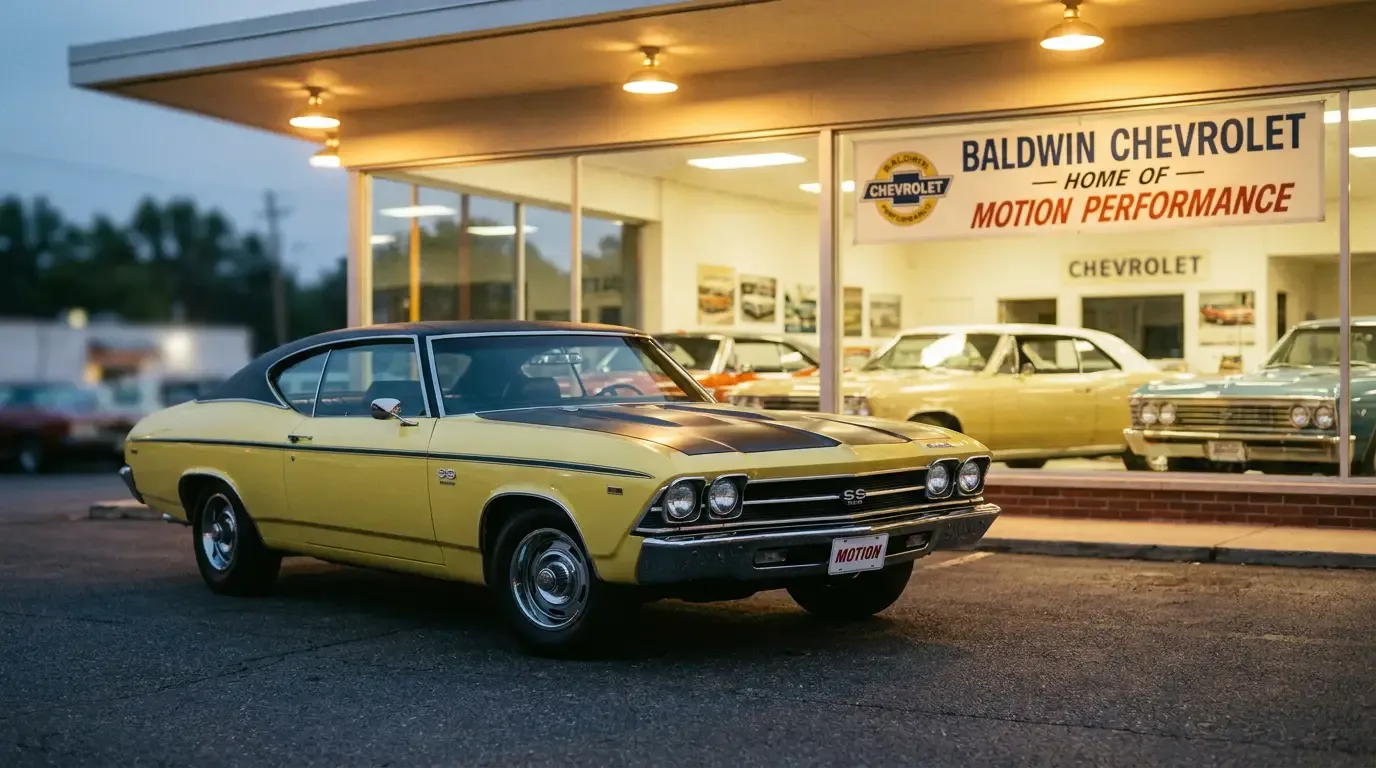
I don't take dealer-tuner claims at face value any more than I'd take a factory claim at face value without the paperwork behind it. This one holds up.
How the partnership actually worked
Joel Rosen opened his shop in Brooklyn in the late 1950s, and in 1963 he installed a Clayton chassis dynamometer, the piece of equipment that turned a general repair garage into a tuning operation that could actually measure what it built. In 1967, Rosen and Marty Schorr, an editor at Hi-Performance Cars magazine, formalized the arrangement into the Baldwin-Motion brand, pairing Rosen's relocated shop on Long Island with Baldwin Chevrolet's dealership license to sell brand-new, factory-warrantied cars modified before delivery. The partnership started on 427-based big blocks and carried the same formula forward to the 454 once Chevrolet made that displacement available. Baldwin Chevrolet, based in Baldwin, New York, partnered with Motion Performance, the speed shop Rosen built around that dyno, to build performance cars that went well beyond what a factory order form could produce. The arrangement worked like this: a customer ordered a base car through Baldwin Chevrolet, and Motion Performance handled the engine work, suspension modifications, and other upgrades before delivery. This wasn't a dealership slapping decals on a stock car. The engine swaps and internal work were done by Motion's own shop, and the paper trail for a genuine car runs through both the dealership invoice and Motion's own build documentation where it survives.
Motion built this program across several Chevrolet models, and the Chevelle was one of the platforms that received the full treatment, most notably under the Phase III designation that Motion applied to its top-tier performance builds.
What a Phase III Chevelle actually got
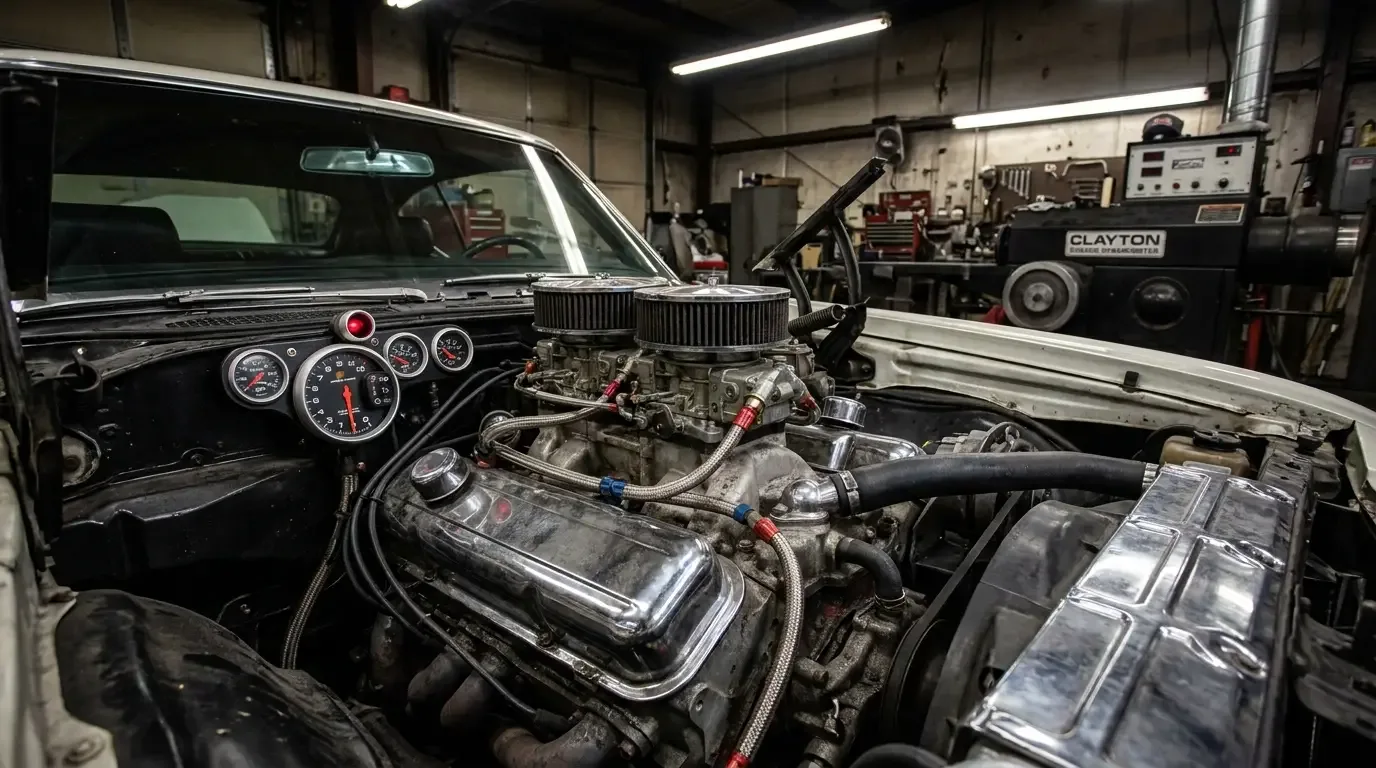
A Phase III build wasn't a mild dress-up package. Motion's shop work on these cars typically centered on the 427 cubic inch big block, built beyond factory specification with upgraded internals, and paired with chassis and suspension changes intended to put that power to the ground on the street, not just on paper. Motion advertised Phase III big blocks at 500 horsepower and up, well above what Chevrolet's own factory-built big blocks were rated at, and backed that claim with a written, money-back quarter-mile guarantee: 11.50 seconds at 120 mph on an NHRA or AHRA-sanctioned strip with an approved driver, or Rosen refunded the customer. That guarantee is a genuine period document worth asking for, but the horsepower figure behind it was still a shop-advertised number, not an independently dyno-certified rating in the way a factory RPO code is, and exact output varied by the specific combination a customer ordered.
The point of the program wasn't a single fixed spec. Motion built cars to a customer's order within the Phase III framework, which means two genuine Phase III Chevelles from the same year can differ from each other in meaningful ways. That variability is exactly why documentation on an individual car matters more than a general description of what the program offered.
Why so few survive with documentation intact
The total number of Chevelles that went through the Baldwin-Motion program is small, and I want to be direct about this rather than repeat a number I can't stand behind: Motion never kept a public master tally, and no factory-style production record exists to check against. Enthusiast and registry counts that have tried to reconstruct the number from surviving cars, period magazine features, and owner records land somewhere in the range of 15 to 50 genuine Motion-built Chevelles across the program's run, with some model years down to a single known car. What's clear from surviving dealership and shop documentation is that this was a low-volume, order-specific operation, not a mass-production line, and that scarcity is part of what makes genuine examples significant today.
The bigger challenge four and five decades later is that a car built outside the factory system doesn't carry the same kind of standardized documentation a COPO or RPO-coded factory car does. There's no tank sticker for a dealer-installed Motion engine. Authentication for these cars depends on surviving Motion Performance paperwork, period photography, magazine coverage from the era, which was substantial since Motion advertised heavily in the era's performance magazines, and continuity of ownership records. Where that documentation exists, it settles most questions. Where it doesn't, a car claiming Baldwin-Motion heritage is making a claim the current owner needs to be able to support with something more than a story.
| What to verify | Why it matters |
|---|---|
| Motion Performance shop invoice or build record | Confirms the car actually went through Motion's shop, not just a decal application |
| Baldwin Chevrolet dealership paperwork | Establishes the car's original point of sale and order chain |
| Period magazine coverage or photography | Motion advertised and featured builds regularly; a documented feature car has an independent record |
| Continuity of ownership | Gaps in ownership history make later re-creation claims harder to rule out |
None of this diminishes what the program represents. Motion Performance and Baldwin Chevrolet built cars the factory wasn't going to build, at a time when the factory's own performance offerings, strong as they were, still operated within corporate and insurance constraints that a dealer-tuner operation didn't have to observe. That's a real and specific piece of Chevrolet performance history, distinct from anything covered in the rare Chevelle story, and it deserves to be evaluated on its own documentation standard rather than folded into general muscle car nostalgia.
"A Motion-built car isn't verified by what it looks like. It's verified by what paperwork survives, the same as any factory car. The difference is the paperwork lives in different places, a dealership invoice, a shop record, a magazine feature, and you have to know to go looking for all three before you take a Baldwin-Motion claim at face value."
Tom Ramirez
What this means for buyers today
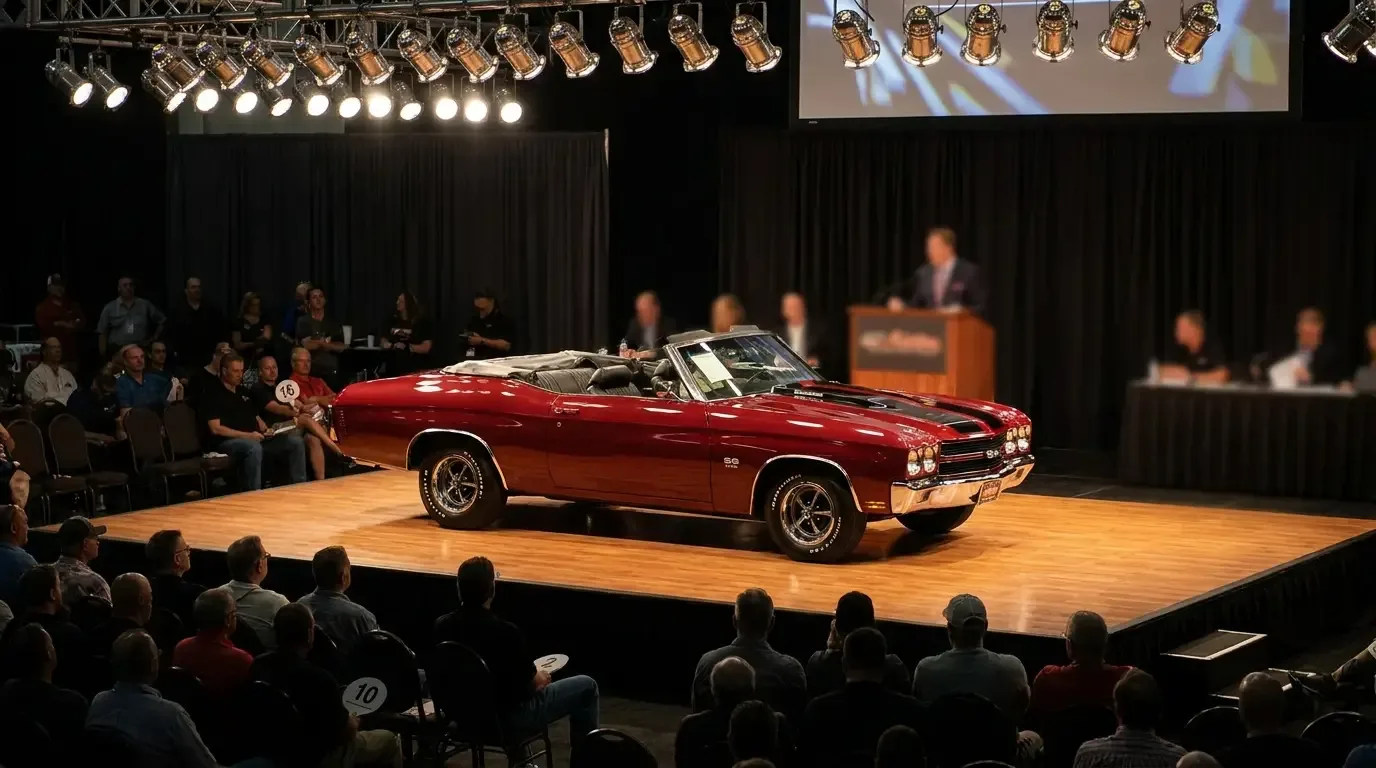
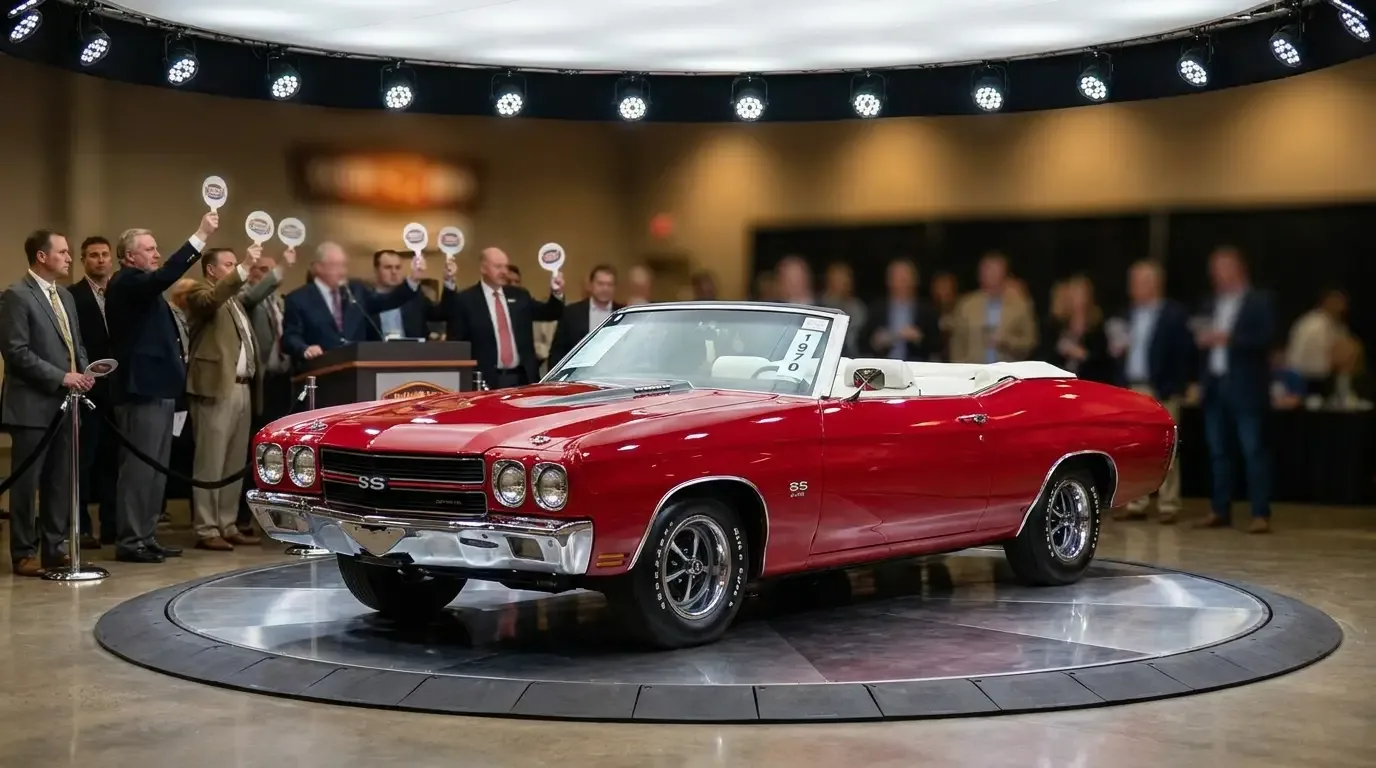
If you're considering a Chevelle represented as a genuine Baldwin-Motion build, ask specifically for surviving shop or dealership paperwork before you weigh the asking price. Cross-reference any claimed period magazine feature independently rather than accepting a photocopy at face value. Where the documentation holds up, you're looking at a genuinely significant piece of dealer-tuner history. Where it doesn't, treat the car as what the visible facts support, likely a well-built Chevelle with an unverified story, and price it accordingly. You can view Chevelle listings to see how documented performance history affects asking prices across the current market, and continue to next: Genuine Survivor Chevelles to see how originality standards apply on the factory-stock side of the same collector world.
Sources and notes
- Baldwin-Motion: Supercars.net
- Joel Rosen of Motion Performance Passes: ClassicCars.com Journal
- The Greats of Chevrolet: Joel "Mr. Motion" Rosen: Chevy Hardcore
- Baldwin-Motion History: Conceptcarz
- 1969 Baldwin-Motion SS427 Phase III Chevelle: Conceptcarz
- Baldwin Motion Chevelles... How Many???: Team Chevelle forum
Related Reading
Have a
Chevrolet Chevelle
for Sale?
Reach thousands of serious classic car collectors across the US.
Sell It Here →
Are You a Classic Car Dealer?
List your full inventory and connect with targeted classic car buyers.
Join as a Dealer →

About the author
Tom Ramirez
Corvette researcher and historian based in Bowling Green, Kentucky. Two decades documenting Corvette production history from original factory records.
Related Listings - Chevrolet Chevelle
Comments (1)
T
Tony Marchetti
2 months ago
The documentation point can't be overstated. I've seen beautiful cars pass at auction because the seller couldn't back up what they were claiming.