
Every collector muscle car segment has one configuration that functions as the ceiling, the car everything else in the model line gets measured against. For the Chevelle, that's the 1970 SS454 with the LS6 engine, and specifically the convertible version of it. Hardtops are rare enough. Convertibles are the kind of car that comes up for sale once or twice a year, and when they do, the room pays attention.
Market & Values
7 min read
The 1970 Chevelle SS454 LS6 Convertible Story
Only a handful of 1970 Chevelle SS454 LS6 convertibles were built. Here's why this rare drop-top commands serious money at auction today.
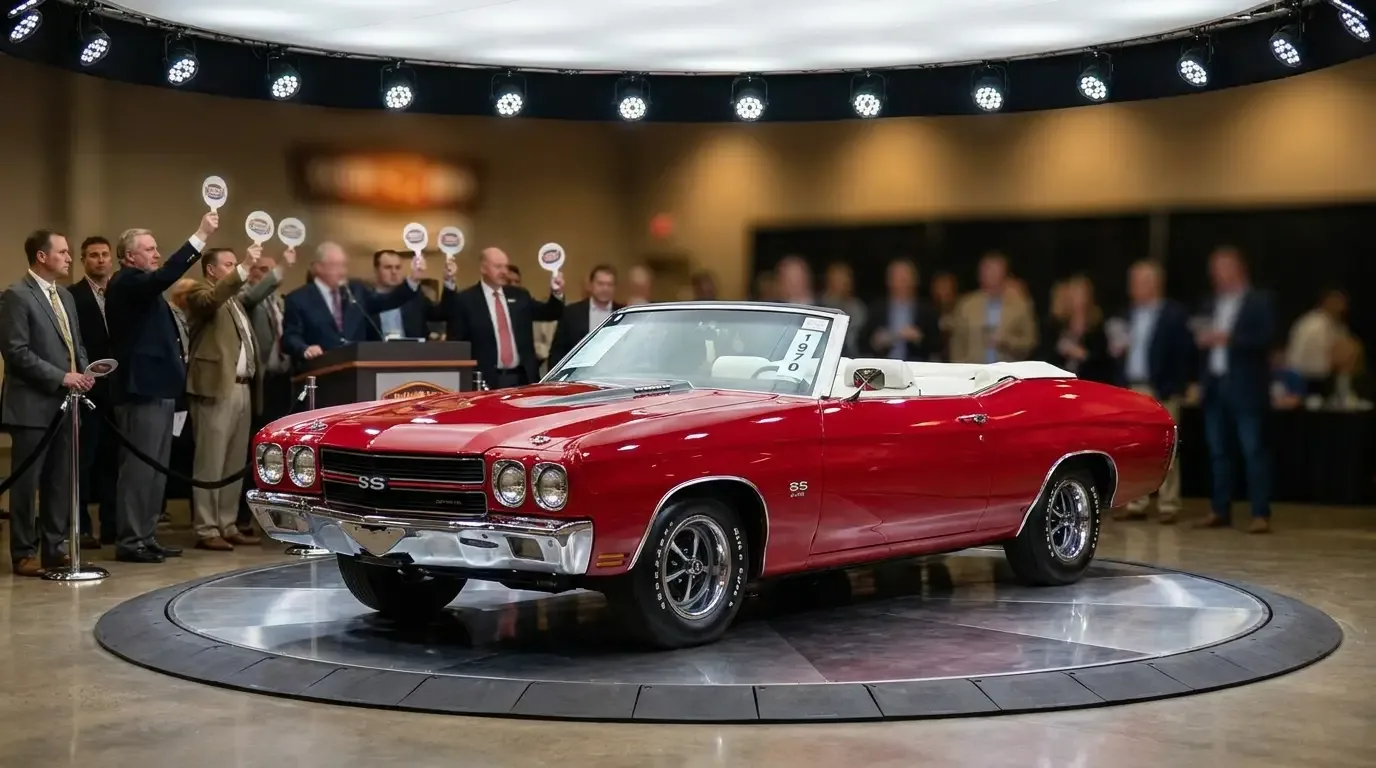
I've tracked this segment through a full cycle of hot demand, a cooling correction, and renewed interest, and the LS6 convertible has behaved differently than almost anything else in the muscle car market through all three phases.
What the LS6 actually was
For 1970, Chevrolet opened the 454 cubic inch big block to the Chevelle SS for the first time, offered in two states of tune. The LS5 came in at 360 horsepower SAE gross, a strong number on its own. The LS6 was the solid-lifter version, rated at 450 horsepower and 500 lb-ft of torque from the factory, numbers that made it one of the highest factory horsepower ratings of the entire muscle car era. It came with a forged crank, forged rods, an aluminum intake, and a Holley carburetor sized for the application, not a warmed-over base engine with a badge.
The LS6 was available across the SS454 lineup, in the SS coupe, the hardtop, and the convertible, but production leaned heavily toward hardtops. Convertible take rates on the top engine option were always thin in this era, and 1970 was no exception.
Why the convertible count is so small
Chevrolet built 4,475 LS6 engines for the Chevelle line in 1970, but that total covers every body style, hardtop, coupe, and convertible together, and factory paperwork breaking that number down by body style hasn't survived. What has survived is registry work: the LS6 Showcase & Registry and similar tracking efforts put the number of authenticated surviving LS6 convertibles at roughly 19 to 26 cars, depending on how strictly "authenticated" is applied. Figures as high as 95 built or even a few hundred surviving get repeated online, but those numbers don't hold up against the registry's car-by-car accounting, and I treat them as market myth rather than documented fact. That's a population small enough that most serious collectors in this segment can name specific surviving cars, not just a production total. Compare that to the SS454 hardtop, built in the thousands, and the scarcity math becomes obvious fast.
Part of the reason is straightforward: a convertible buyer in 1970 ordering the loudest, stiffest-riding engine in the catalog was a specific kind of customer, and there weren't many of them relative to hardtop buyers who wanted the same performance without the extra cost and cowl shake that came with a drop-top big block. The convertible body also added weight and cost on top of an already expensive option package, which narrowed the buyer pool further.
What the auction record shows
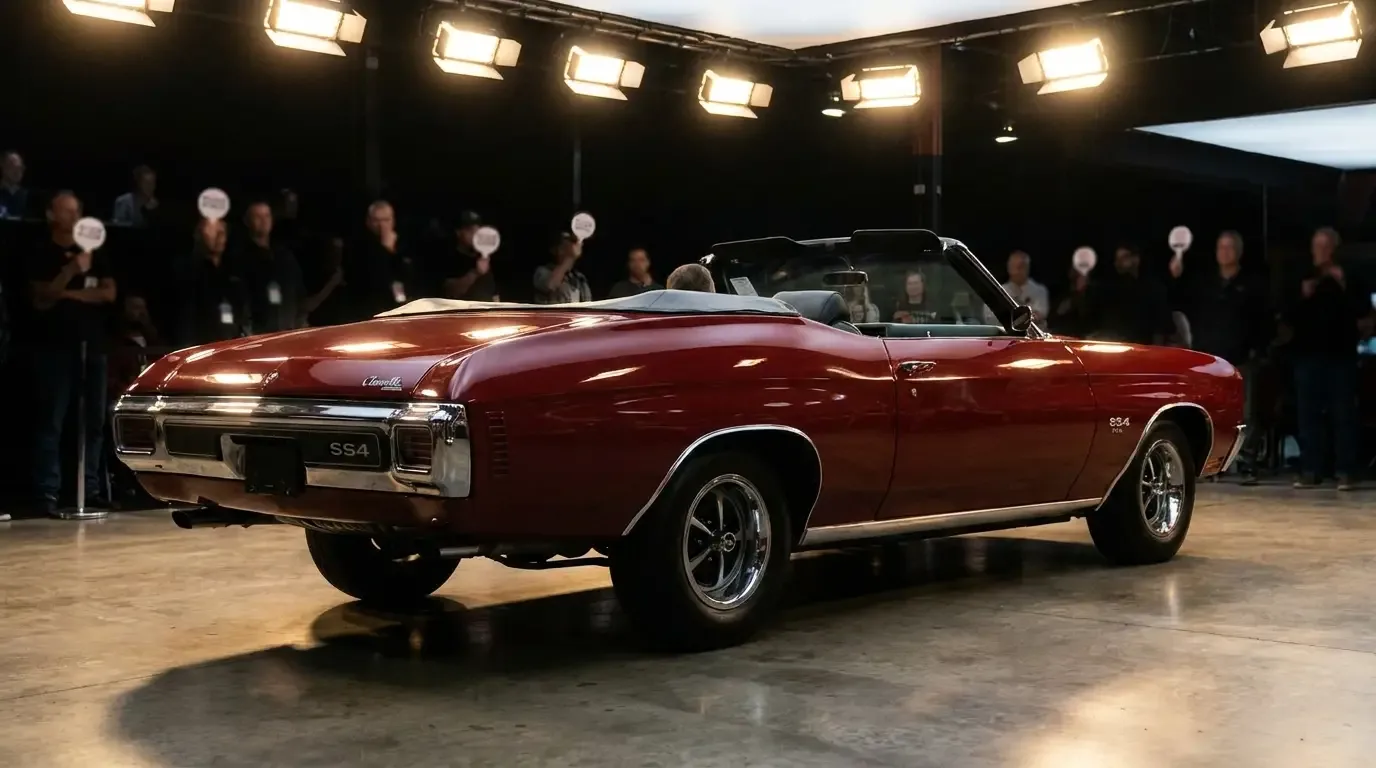
Documented LS6 convertibles rarely trade outside major auction houses at this point, and when one does surface at Mecum, Barrett-Jackson, or a comparable venue, it tends to draw serious pre-sale attention. The ceiling keeps moving: a numbers-matching, M22 four-speed LS6 convertible set the current Chevelle auction record at $770,000 including fees at Mecum Kissimmee, breaking a $600,000 result from a white LS6 convertible in May 2024. Go back further and the picture gets more volatile, one LS6 convertible with exceptional documented racing history brought $1,242,000 at Barrett-Jackson Scottsdale in 2006, then resold for just $264,000 three years later during the market correction, a reminder that even fully documented cars aren't immune to broader swings. Cars with incomplete build sheet verification or replacement drivetrains trade well below that top tier. The gap between a fully documented car and one with an asterisk on the engine or trim tag is one of the widest I track in the muscle car segment, wider than it is on the hardtop.
That gap exists because the population is so small that every buyer doing real diligence knows exactly how many genuine cars are supposed to exist, and any convertible without airtight cowl tag, protect-o-plate, and build sheet correlation gets priced as a driver-quality car regardless of how it looks in photos.
| Configuration | Approx. horsepower | Relative rarity |
|---|---|---|
| SS454 hardtop, LS5 | 360 hp | Common within the SS454 line |
| SS454 coupe, LS6 | 450 hp | Rare, most desirable coupe configuration |
| SS454 convertible, LS6 | 450 hp | Extremely rare, roughly 19-26 authenticated survivors known |
What keeps this car interesting from an investment standpoint isn't just the horsepower number, it's the intersection of scarcity, documentation difficulty, and genuine period desirability. That combination doesn't show up often, and when it does, the cars that check every box tend to hold value through market corrections better than cars that only check one or two. Buyers who want to get into this end of the market and are ready to move can shop 1970 SS454 listings and start comparing documentation quality directly against asking price, which is exactly how this segment should be evaluated.
"The LS6 convertible market doesn't behave like the rest of the muscle car segment. Supply is basically fixed, everyone serious about it knows roughly how many genuine cars exist, and documentation quality moves price more than condition alone does. That's a different kind of market than most people are used to shopping in."
David Mercer
Identifying a genuine car
Because the population is so small, verification on an LS6 convertible has to go deeper than a casual VIN check. The cowl tag needs to correlate with the trim and engine codes stamped there at the factory, and the engine block casting number and date code need to be consistent with a 454 built in the correct window for that specific car's assembly date. A protect-o-plate, when it survives with the car, adds another independent data point that either lines up with everything else or doesn't. None of these checks alone is conclusive. Together, they either build a consistent picture or they don't, and a serious buyer walks away from any inconsistency rather than accepting an explanation for it.
The convertible top mechanism and frame also matter more here than on a hardtop, since a car that's been re-topped or had its convertible frame swapped from a donor car complicates the originality picture even when the drivetrain checks out cleanly. I've seen deals stall over exactly this kind of detail, a numbers-matching engine paired with a convertible top assembly that doesn't trace back to the same car. It's a smaller issue than a replacement block, but in a market this thin, buyers treat every inconsistency as a reason to negotiate or walk.
The buy call
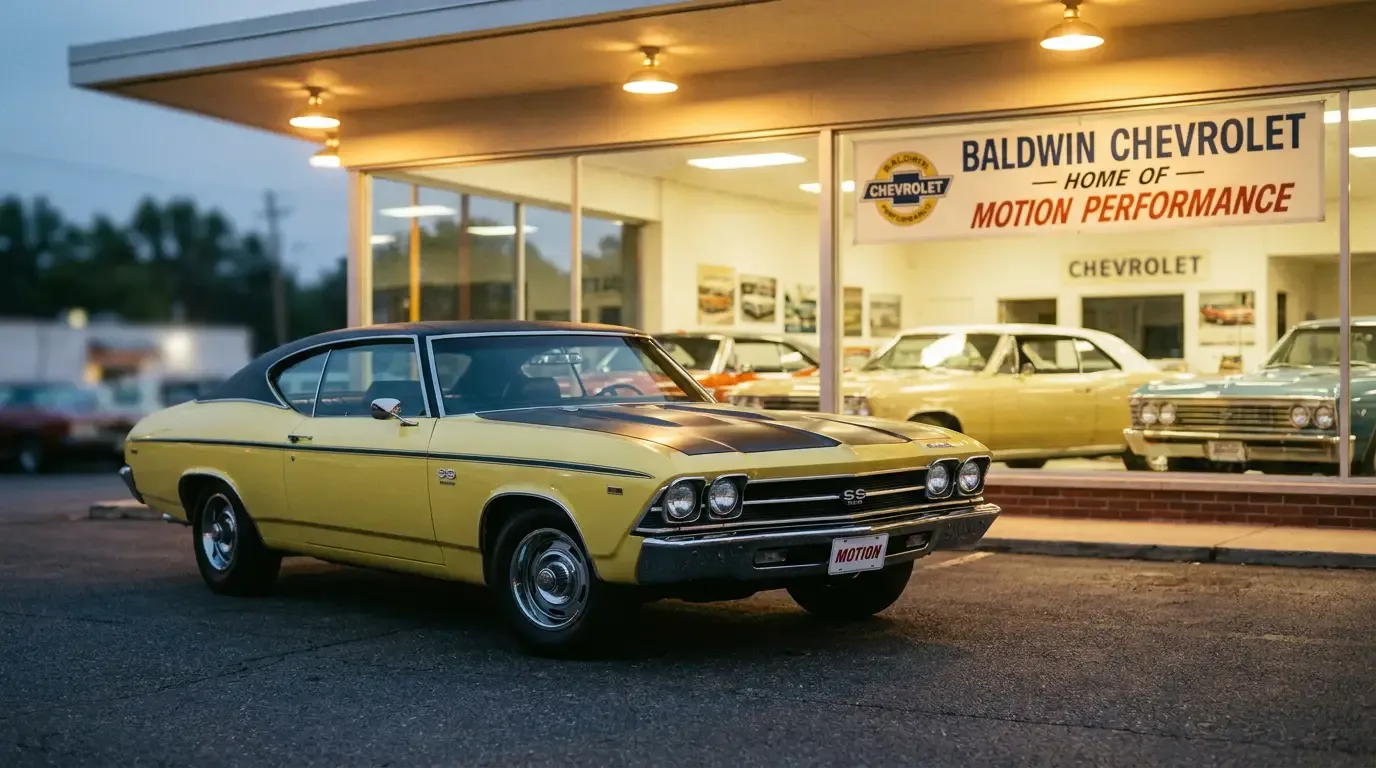
If you're shopping this segment, prioritize documentation over cosmetic presentation every time. A driver-quality LS6 convertible with a verified cowl tag, matching engine block casting numbers, and a traceable ownership history is a better long-term hold than a beautifully restored car with a replacement engine and a gap in the paper trail. The population is too small and too well tracked by serious collectors for undocumented cars to close that value gap over time. For the broader context on why this segment commands the attention it does, read the collectible Chevelle story, and when you're ready to see where the dealer-tuner side of the market picks up the thread, continue to next: Baldwin-Motion Chevelles.
Sources and notes
- 1970 LS-5 horsepower: Team Chevelle forum
- 1970 Chevrolet Chevelle SS 454 Sport Coupe 450-hp Specs: Automobile Catalog
- How many LS6 Convertibles?: Team Chevelle forum
- History And Mystery Of The Rarest Chevy Chevelle In Existence: TopSpeed
- 1970 Chevelle LS6 Convertible Sets New Auction Record at Mecum Kissimmee: Yahoo Autos
- This Chevy Muscle Car Lost Its Owner A Million Dollars: Jalopnik
Related Reading
Have a
Chevrolet Chevelle
for Sale?
Reach thousands of serious classic car collectors across the US.
Sell It Here →
Are You a Classic Car Dealer?
List your full inventory and connect with targeted classic car buyers.
Join as a Dealer →

About the author
David Mercer
Classic car market analyst with two decades of experience tracking collector car valuations, auction results, and investment trends.
Related Listings - Chevrolet Chevelle

Comments
Be the first to comment on this article.