
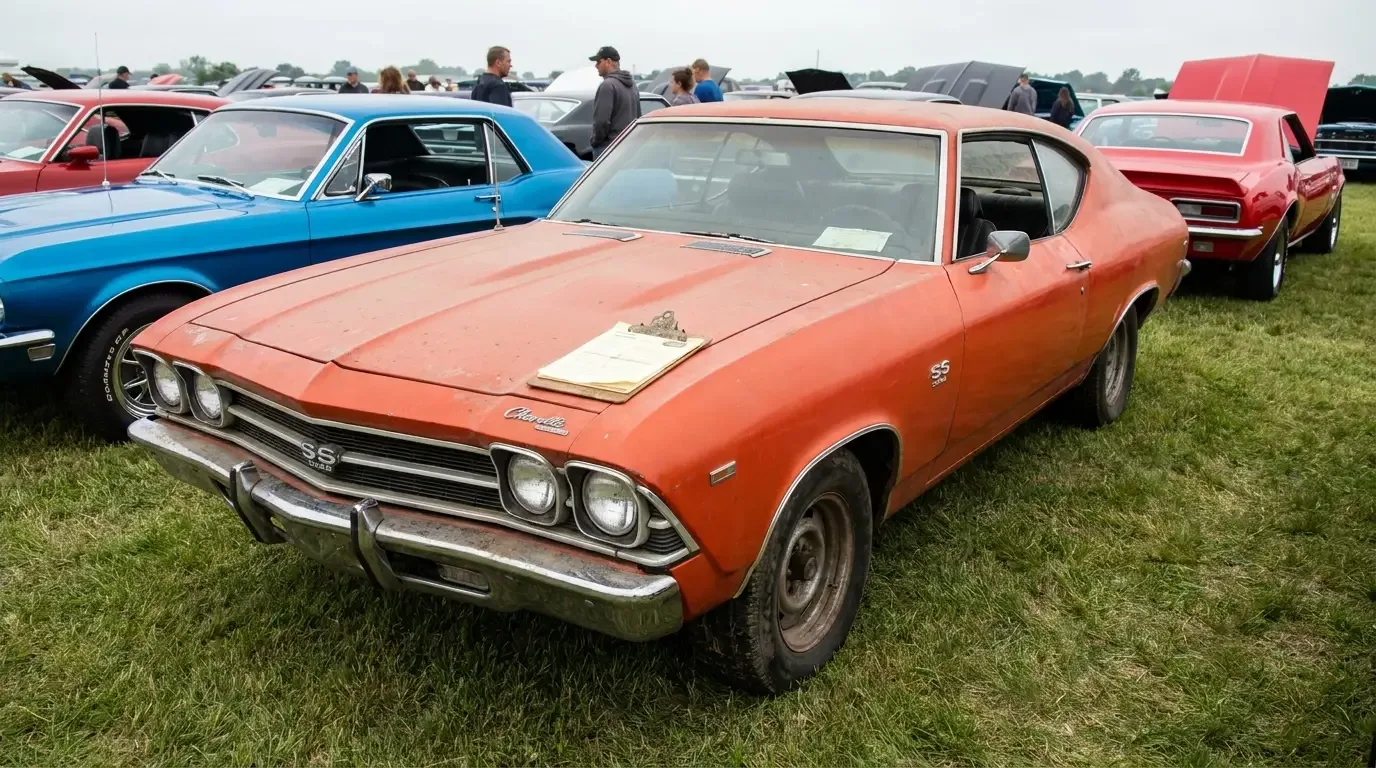
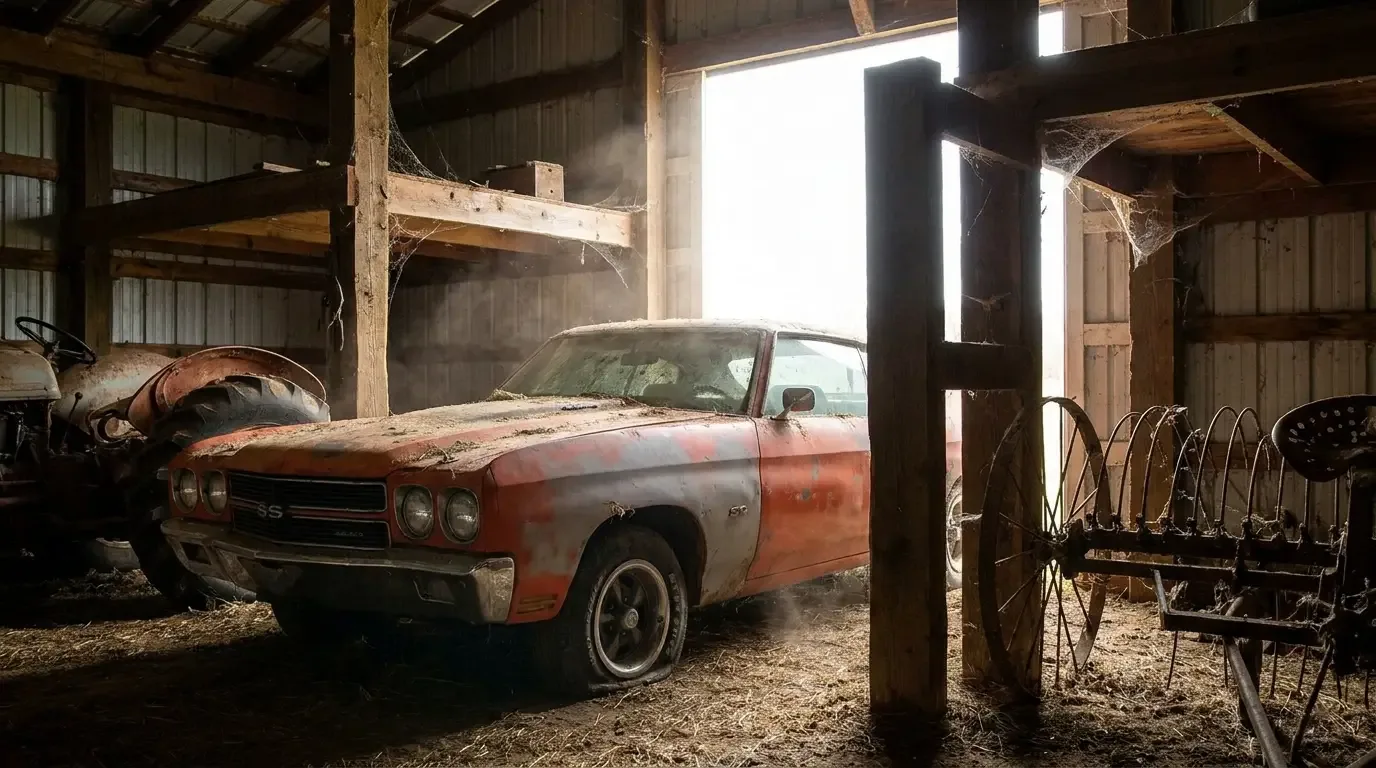
The owner had parked his Chevelle in a pole barn outside Springfield in 1988 and, aside from starting it twice a year and driving it to the gas station and back, mostly left it alone. When his grandson finally talked him into bringing it to a show last summer, the judges walked past the freshly restored SS396 next to it and spent twenty minutes with the dusty original. The paint had gone chalky in places. The seat vinyl had a crack near the driver's bolster. Nobody cared. That car had never been apart, and in this hobby, that fact carries more weight than a flawless paint job ever will.
Market & Values
7 min read
Genuine Survivor Chevelles: What Makes Them Different
A real survivor Chevelle has never been disassembled or restored. Here's what judges and buyers actually check, and why originality commands a premium.
That's the whole idea behind a survivor car, and it's worth understanding clearly, because the word gets used loosely at swap meets and in listings by people who don't quite mean it.
What "survivor" actually means
A survivor Chevelle is one that has never been disassembled and restored. The paint might be original factory finish, faded and thin in spots, or it might be a single quality repaint done decades ago while the car was still in daily use, but the sheet metal, the interior, the drivetrain, and the underbody have never been pulled apart and put back together by a restorer. That's the line that separates a survivor from a restored car, and it's a much stricter standard than most people assume when they first hear the word.
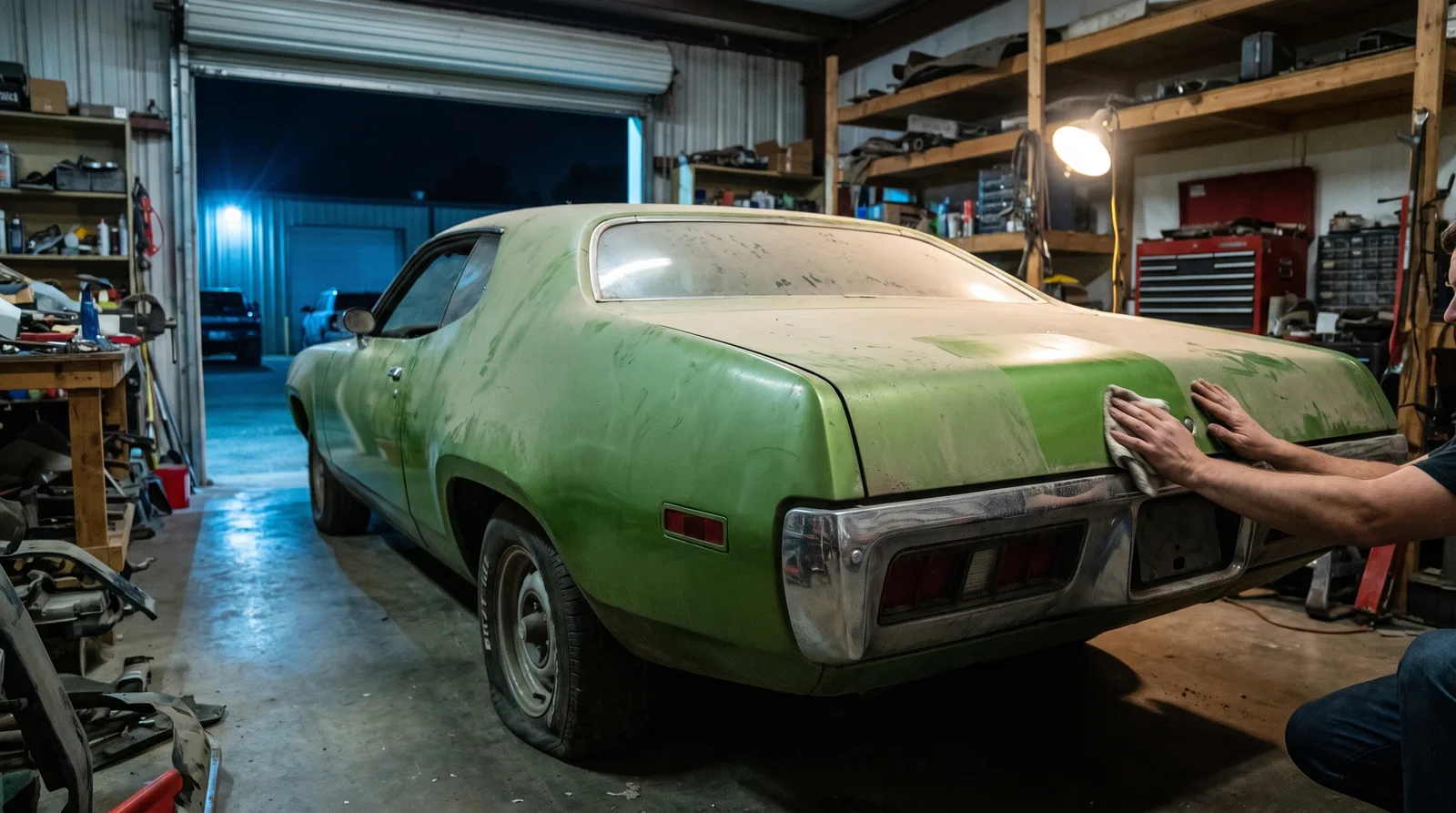
This isn't the same thing as a barn find, either, though the categories overlap. A barn find describes how a car was discovered, often neglected and sitting for years. A survivor describes the car's structural and mechanical history, whether it has ever been taken apart. A barn find can become a survivor once it's cleaned up and verified as unmolested. A survivor doesn't have to have been hidden away at all. Some of the best examples were simply driven gently and stored properly by one careful owner for fifty years.
What judges and buyers actually look for
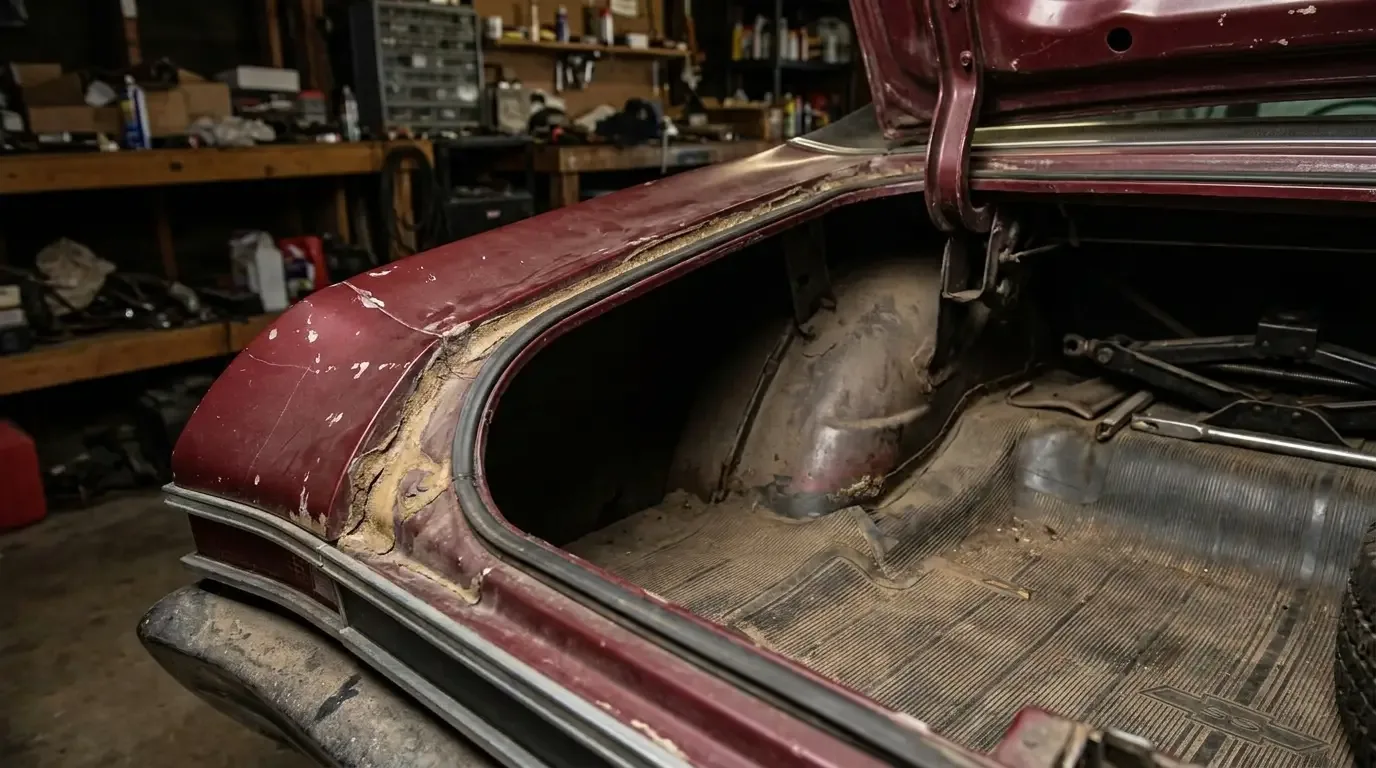
When someone with real experience evaluates a claimed survivor Chevelle, they're checking specific things, not just admiring the patina. They look underneath for original body seam sealer that's never been disturbed, factory overspray in places a restorer would never think to replicate, original fasteners with factory markings still intact, and interior components that show honest wear consistent with the car's mileage rather than uniform newness. They check for evidence of prior bodywork, filler, or repainted panels that don't match the rest of the car's finish and texture.
Bloomington Gold's Survivor certification, built originally around Corvettes and later influencing how the wider hobby evaluates unrestored cars, set a template other events and clubs have leaned on: originality is verified in detail, not assumed from a good story. A Chevelle presented for survivor judging goes through that same level of scrutiny, and cars that haven't actually stayed original don't hold up under it.
| What survivor judges check | What it tells them |
|---|---|
| Original body seam sealer and factory overspray | Confirms the body has never been separated or repainted in full |
| Factory-marked fasteners | Shows the car hasn't been reassembled with generic replacement hardware |
| Interior wear pattern | Honest aging should match the car's documented mileage and use |
| Underbody and trunk condition | Areas a restorer rarely bothers replicating exactly, so originality shows clearly |
Documenting a survivor before you sell it
If you own an unrestored Chevelle and you're thinking about selling it down the road, the single best thing you can do right now is document its condition while it's still unquestionably original. Photograph the seam sealer, the underbody, the trunk, the door jambs, and any factory markings before anything changes. Keep every piece of paper that came with the car, old registrations, service receipts, even a faded parts store invoice from thirty years ago. None of that looks like much on its own, but together it builds the kind of continuous record that lets a future buyer trust the car without having to take your word for it.
This matters because the survivor claim only has value as long as it can be verified. An owner who can produce a folder of decades-old paperwork alongside the car is selling something fundamentally different than an owner who's simply telling a good story about a barn find. The paperwork is what turns "I believe this is original" into "here's the proof this is original," and that difference shows up directly in what the car brings at sale.
There's a reason this matters beyond the judging tent. A genuine survivor is a physical record of exactly how the factory built the car, right down to the assembly line details a restoration, however careful, can only approximate. Once a car gets disassembled, some of that original evidence disappears no matter how good the shop doing the work is. A survivor can never be recreated after the fact. You either kept the original one intact, or you didn't, and that's part of why the segment tied to Chevelle's collector world treats these cars with a level of respect that goes beyond their cosmetic condition.
"Every restored car in the world is trying to look like something. A real survivor doesn't have to try. It just is what it's always been, and once you've spent time around enough of them, you start to see that honesty in a way a fresh paint job can't fake."
Patrick Walsh
Why originality commands a premium
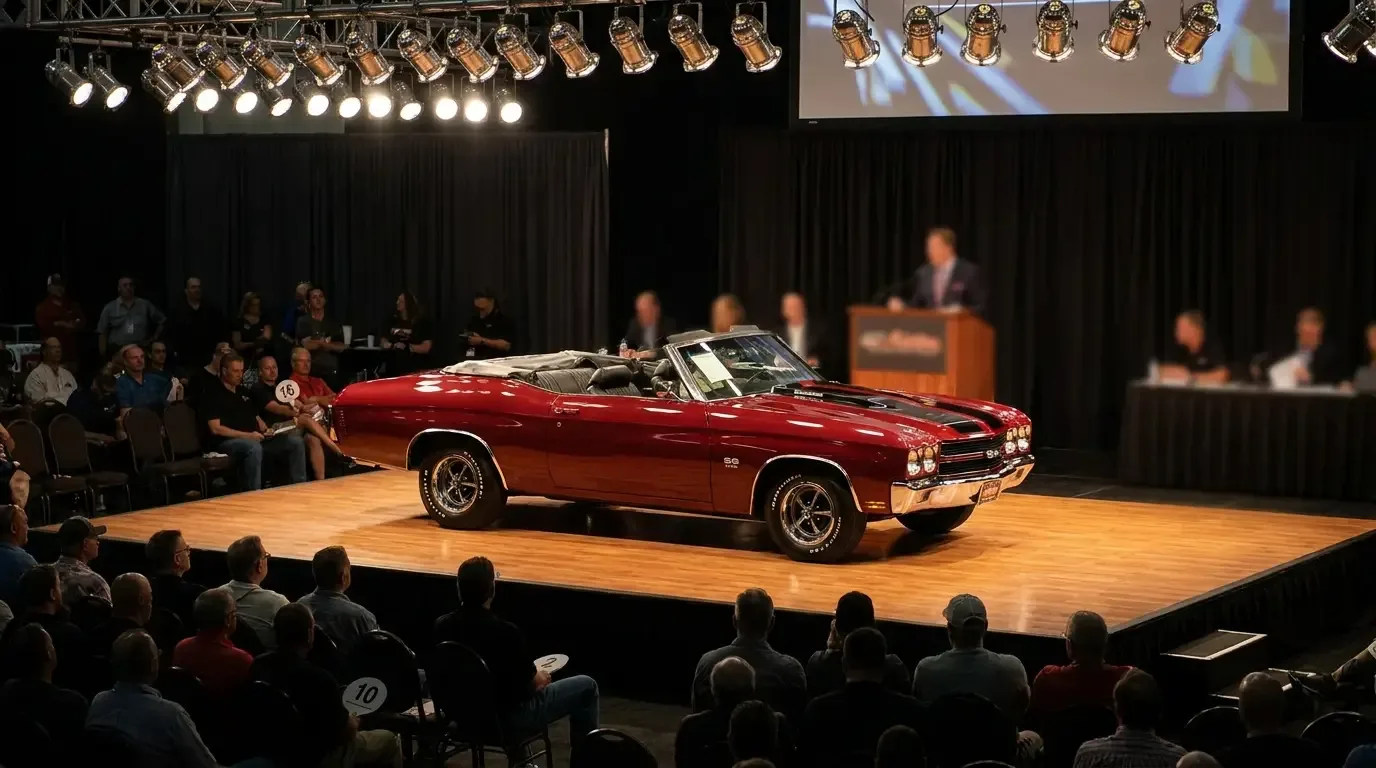
The market has caught up to what serious collectors have believed for years. A documented, unrestored survivor Chevelle in solid condition routinely brings more money than a comparable restored car, sometimes by a meaningful margin, because the survivor is irreplaceable in a way a restoration never can be. Once a car is restored, an equally skilled shop could theoretically produce another one that looks the same. Nobody can go back and un-restore a car to create a second genuine survivor. That scarcity, real and permanent, is what buyers are paying for.
None of that means these cars are perfect showpieces. A true survivor often shows honest flaws, faded trim, worn carpet, a dent nobody ever fixed, and that's part of the appeal rather than a defect to be explained away. If you understand the classic Chevelle story, you understand why a car that's simply been left alone, cared for but untouched, tells that story more honestly than one that's been rebuilt to a standard the factory never quite achieved.
For buyers who want a piece of that unbroken history, patience matters more than budget. Genuine survivors don't come up often, and when they do, word travels fast in club circles before a car ever reaches a public listing. Keep an eye on shop unrestored Chevelles as a starting point, and be ready to ask the right questions the moment one surfaces. Continue to next: Barn-Find Chevelle Stories That Shocked Collectors for a look at how some of these cars get discovered in the first place.
Sources and notes
- Bloomington Gold's 50th Corvette Show: Vette Vues Magazine
- Gold Certified judging overview: Bloomington Gold
- Bloomington Gold Survivor Judging Questions: Corvette Forum
- How to Verify Original Paint On A Car: New Old Cars
- The Qualities of a "Survivor" Car: Chicago Car Club
- How to Tell Original (Survivor) Paint: Corvette Forum
Related Reading
Have a
Chevrolet Chevelle
for Sale?
Reach thousands of serious classic car collectors across the US.
Sell It Here →
Are You a Classic Car Dealer?
List your full inventory and connect with targeted classic car buyers.
Join as a Dealer →
#bloomington-gold
#survivor Chevelle
#unrestored classic cars
#original paint Chevelle
#Chevelle collecting

About the author
Patrick Walsh
Automotive journalist covering classic car shows, events, and the enthusiast community across North America.
Related Listings - Chevrolet Chevelle
Comments
Be the first to comment on this article.