
Type a VIN into a free valuation site and you expect a number back. With a modern car you usually get one. With a 1968 coupe you get an error message, a polite "vehicle not found," or worse, a confident figure that belongs to some other car. That isn't a bug in your search. It is what happens when a tool built around one data standard meets a car built before the standard existed.
Market & Values
8 min read
Classic Car Value by VIN: What It Can and Can't Tell You
Why VIN value tools fail on pre-1981 cars, what a classic VIN really encodes, and how to turn it into factory records that support your price.
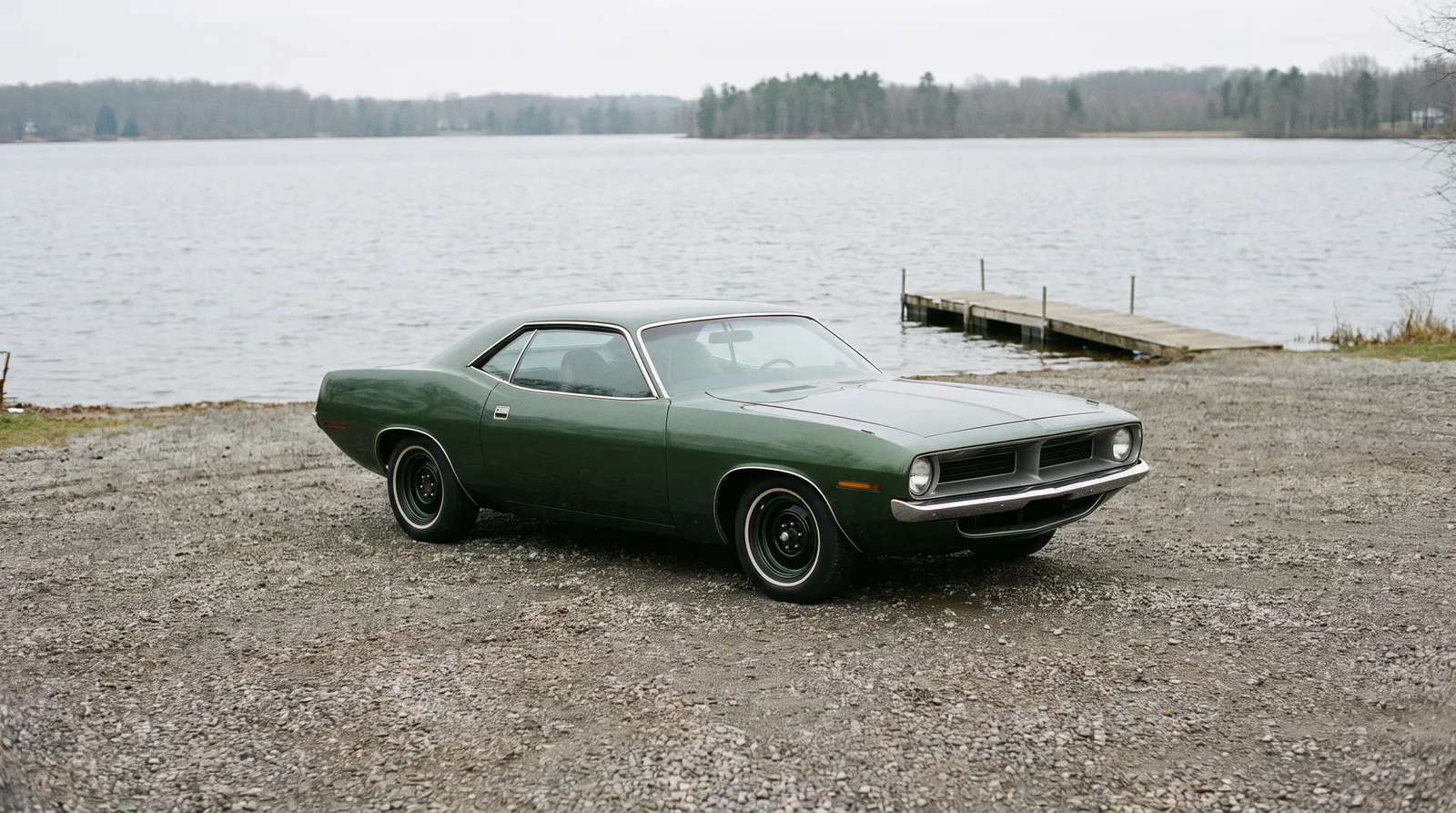
Classic car value by VIN is a real thing, just not in the way most sellers hope. The VIN on an older car is an identity record, not a price tag. Read correctly, it confirms what the car is, which is the foundation every value rests on. Read with the wrong expectations, it gives you false confidence before a buyer, who has done their own decoding, takes it away. Here is how to use it as a seller.
What a pre-1981 VIN actually is
The 17-character VIN that every modern car carries became mandatory in the United States for the 1981 model year, under the federal VIN rule now found in 49 CFR Part 565. Before that, each manufacturer ran its own numbering system, and many changed formats every few years. Lengths vary. Some early cars carry only a serial number. Positions that hold the engine code on one brand hold the body style on another.
The practical consequence is that almost every automated tool, from free decoders to history reports to dealer appraisal software, expects the 17-character format and its built-in check digit. NHTSA's own public decoder, vPIC, works with 1981 and later VINs and returns an error for earlier model years. Feed it a ten- or thirteen-character number from a 1960s car and it has nothing to parse.
So for a classic, decoding is manual work. You need the manufacturer's format for that specific model year, which marque clubs, registries and factory reference books publish, and you need to read the number character by character. It is tedious. It is also where the useful information lives.
What a classic VIN can tell you
Depending on the maker and the year, a pre-1981 VIN typically encodes the division or make, the model year, the assembly plant and a sequential production number. Many also encode the series and body style, and some encode the engine. That last one matters most for value.
A few examples show how much the format varies. On 1965 to 1973 Ford products, the fifth character is the engine code, so a Mustang VIN can show whether the car left the factory with, say, the high-performance 289, coded K. Chrysler cars of 1968 to 1974 also carry an engine code in the fifth position (a 1968 or 1969 Hemi car is coded J, a 1970 or 1971 Hemi R), which is why buyers of a Hemi car check that character before anything else. Chevrolet VINs of the same era did not record the specific engine, only six-cylinder or V8 through the series code, but from 1966 to 1968 the SS 396 was its own Chevelle series, so a VIN beginning 138 points to a genuine SS 396. Pontiac did something similar once the GTO became its own series for 1966: its VINs begin 242.
| Question a buyer asks | Can the VIN answer it? | Where the answer usually lives |
|---|---|---|
| Is this the model and year claimed? | Yes, once decoded correctly | VIN plate, title, marque reference |
| Which plant built it? | Usually | VIN plate |
| Did it leave the factory with this engine? | Sometimes (brand and year dependent) | VIN, plus build records or a factory report |
| Is the engine in it now the original? | No | Stamped VIN derivative and date codes on the block |
| Original color, trim and options? | Rarely | Body or trim tag, build sheet, window sticker |
| Condition and restoration quality? | No | Inspection, photos, receipts |
| Mileage and ownership history? | No | Titles, service records, owner paperwork |
Even the "yes" rows depend on reading the right chart. I've watched people decode a 1967 VIN using a 1970 format and convince themselves they had a rare engine. Check the format against two independent sources before you put any claim in a listing.
What it can't tell you
The VIN describes the car as it was assigned at the factory. It says nothing about the decades since. It cannot tell you whether the engine was swapped in 1983, whether the quarter panels are original steel, or whether the factory color was red before the car turned blue. It cannot see rust, worn synchros or a cracked dash. Those are the things that move the condition tier, and the condition tier moves value more than almost anything else.
This is also why online VIN value tools come up empty or wrong. Mainstream guides such as Kelley Blue Book don't publish values for collector cars or cars older than roughly 21 model years, so they have nothing to return. History reports lean on title and registration data that is thin for cars titled decades ago, and some states didn't title older vehicles at all. New York, for example, doesn't issue titles for model year 1972 and older, so a perfectly legitimate car can arrive with a registration and a bill of sale instead. A clean or empty report on a 1969 car proves very little either way.
A VIN can also be wrong. Tags get replaced during restoration, re-riveted with the wrong rivets, or in bad cases moved from another car. Serious buyers look at the tag's fasteners and location as carefully as the characters on it. If yours was ever removed for paint, keep the photos and the shop's paperwork showing it went back on, because that documentation protects your price.
Turning a VIN into documentation that moves the price
Where the VIN pays off for a seller is as a key. Several manufacturers' archives and independent services will produce a factory build record from it, and that record answers the questions the VIN alone can't.
For Ford, Lincoln and Mercury vehicles from the 1967 model year onward, a Marti Report reproduces Ford's original production data, including options, paint and trim, and the more detailed Deluxe report adds the selling dealer and key dates. Pontiac Historic Services provides copies of the original factory invoice or billing history for Pontiacs built from 1961 to 1986. Chrysler registries and club researchers can often help match a VIN to fender tag and broadcast sheet data. The GM Heritage Center publishes model-year information kits for many Chevrolets, but those describe the model, not your individual car, since Chevrolet kept few individual build records. Coverage, years and fees differ by service, so confirm what your car's records will actually include before ordering.
A factory report changes a negotiation. Without it, a "rare factory option" is a claim, and a buyer will price it as if the option were added later. With it, the claim becomes a page with a manufacturer's data on it. For anything with a high-value engine, an unusual color or a documented performance package, the report often costs far less than the gap it closes. Combined with your comps and condition grade, it belongs in the evidence file that supports your asking price, and there is more on this in the main guide about building that file.
"A VIN is a hypothesis about the car. The block stampings, the trim tag and the factory paperwork are the test. Sellers who run the test before listing don't lose the argument later."
Emily Chen
What the VIN can't give you is a number. That comes from sold comps, an honest grade, and some sense of where your segment is heading, which is where classic car value trends come into the picture. The VIN's job is narrower and more important: it proves the car is the car you say it is. Get that part airtight and every other conversation about price starts on solid ground.
Sources and notes
- 49 CFR 565.13: VIN content requirements (17 characters, check digit in position 9)
- NHTSA vPIC VIN decoder (rejects pre-1981 model years)
- 1968 to 1971 Chrysler B-body VIN breakdown, fifth-digit engine codes
- Chevellestuff: 1967 Chevelle VIN decoding and the 138 SS 396 series
- Marti Auto Works: Ford, Lincoln and Mercury production data, 1967 onward
- Pontiac Historic Services: factory invoice documentation, 1961 to 1986
Related Reading
Have a
Classic Car
for Sale?
Reach thousands of serious classic car collectors across the US.
Sell It Here →
Selling a classic? Here's how: where to sell your classic car online
Are You a Classic Car Dealer?
List your full inventory and connect with targeted classic car buyers.
Join as a Dealer →
#numbers matching
#marti report
#vin decoding
#classic car value
#classic car documentation
#selling a classic car
#classic car value by vin

About the author
Emily Chen
Bay Area engineer with a deep focus on vintage Japanese and European performance cars. Approaches classic car research and restoration with an analytical eye.

Comments (2)
S
Sal Giordano
1 week ago
Check that fifth character before you pay Hemi money. Guy on my block paid for an R car and got a 383. Some deal, huh?
J
Jerry Olszewski
6 days ago
A bit of history first, since it explains the whole problem. Before 1981 every manufacturer numbered cars its own way, and the orphan brands numbered them in ways nobody outside the company ever bothered to learn. My Avanti's serial number tells a stranger very little. Mind you, that has never been the obstacle people think it is. The Studebaker National Museum in South Bend holds the factory production records, and a copy of the original order for my car answered more questions than any VIN decoder ever could. The market take is simple. Buyers of orphan cars discount uncertainty even harder than buyers of Chevrolets do, because they cannot check anything on their own. That, in turn, makes the paperwork worth proportionally more on an Avanti than on a Camaro.
C
carshow_cathy
5 days ago
Jerry, you're right about the orphan cars. At Carlisle I once registered a Packard owner who brought a binder with his factory record, and the judges spent twice as long at his car because there was something to check against. Put a copy of the build record on the passenger seat, folks. Judges and buyers both read it.