
A collection is not simply several cars in one building. It is a record of one person's judgment over decades, and the cars inside it are rarely of equal quality, equal documentation or equal appeal to the market. To sell a classic car collection well, an executor or family has to stop seeing it as a single thing and start seeing it as a set of distinct objects that happen to share a roof, each with its own buyer, its own channel and its own paper trail.
Market & Values
8 min read
Selling a Classic Car Collection or Estate
How executors and heirs sell a classic car collection: inventory, date-of-death appraisals, tax basics, sequencing and the right channel per car.
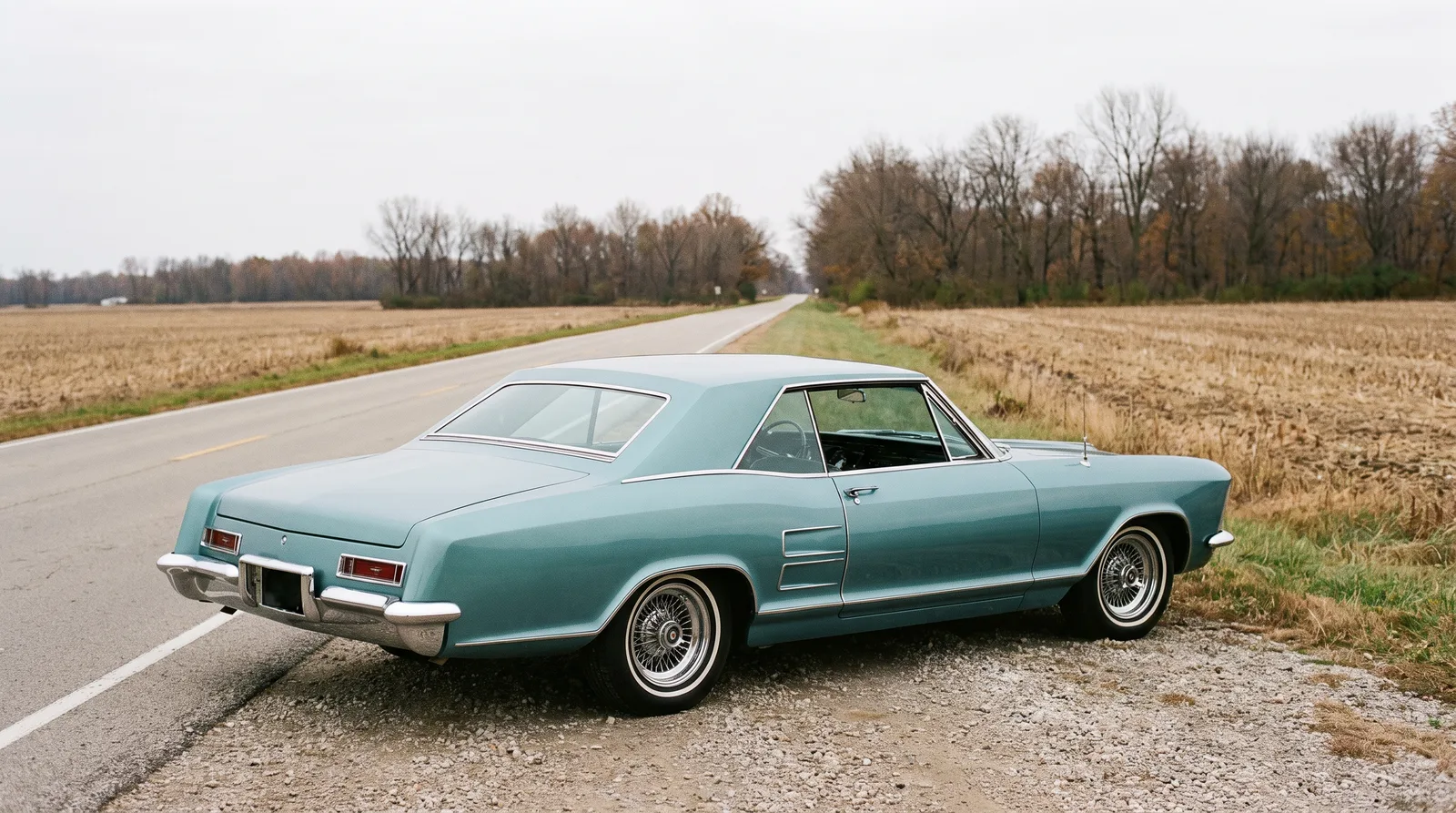
This guide addresses that situation specifically: the estate with three, ten or thirty cars, a mezzanine of spares and a filing cabinet of correspondence. The fundamentals of a single sale are in the full guide. What follows concerns the decisions that only arise when there are many cars and, usually, several heirs with different expectations. Tax and estate points below are general information only, not legal or tax advice, and every estate should confirm them with its own attorney and accountant.
Begin with an inventory, not a price
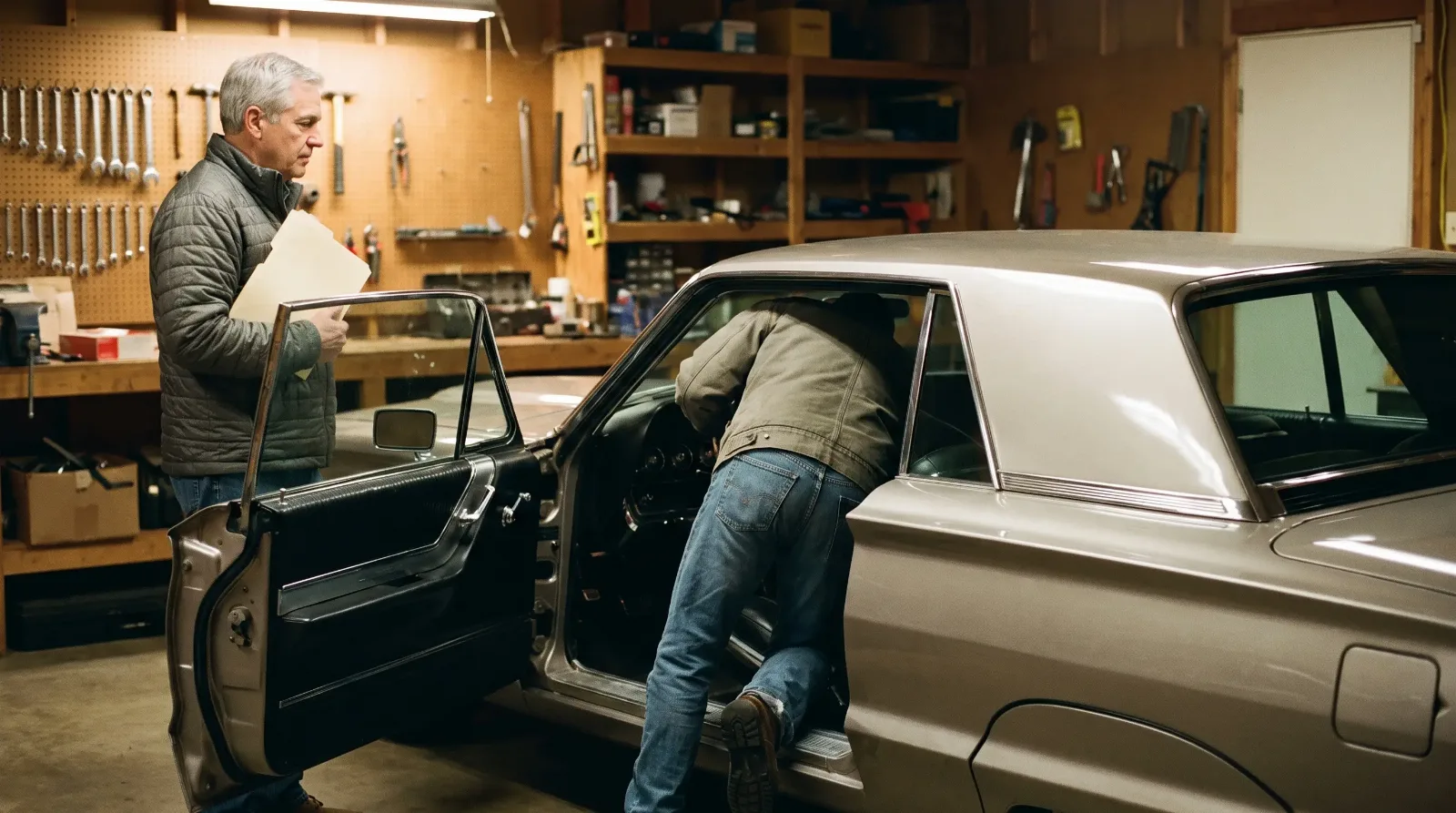
The first task is cataloguing, and it should be done before anyone forms an opinion about what the cars are worth. For each vehicle, record the VIN as stamped on the car, the title status and the name on it, engine and transmission numbers where visible, mileage, and the documentation that physically exists. Photograph every car from the same angles, in the same light, before anything is moved or started. A collection that has been disturbed is much harder to reconstruct afterward.
Documentation deserves its own pass. Collectors often filed paperwork by subject rather than by car, so a build sheet for one may be folded into a club newsletter about another. Separate it carefully and attach each document to its vehicle. Note also what is missing: a title that cannot be found, a car registered in another state, a vehicle that was purchased but never retitled. These are the issues that delay sales by months, and they are better discovered in week one than in the middle of a negotiation.
Parts, literature and automobilia belong in the inventory too. A shelf of new-old-stock trim, original sales brochures or a correct period radio can be worth a meaningful sum to the right specialist, and it is easily lost if the building is cleared in a hurry.
Appraisal, estate value and the tax framework
An estate generally needs a written fair market value for each car as of the date of death, prepared by a qualified independent appraiser. Individual appraisals commonly run around $200 to $500 per vehicle, and a collection may justify a single appraiser who can value the cars consistently against one another. The appraisal serves two purposes. It establishes the estate's reported values, and it sets the stepped-up basis that heirs will measure any later gain against. The IRS generally treats an heir's basis as the fair market value on the date of death, and where an estate tax return is filed, heirs must use the value reported to them by the executor.
A few general points shape the timing of a sale. The federal estate tax applies only above a high exemption amount, $15 million per person for deaths in 2026, so most estates owe none, though a large collection combined with real estate and investments can approach the threshold. States are another matter: twelve states and the District of Columbia levy their own estate tax, with exemptions as low as $1 million in Oregon and $2 million in Massachusetts, and five states (Kentucky, Maryland, Nebraska, New Jersey and Pennsylvania) charge an inheritance tax that depends on the heir's relationship to the deceased. Where a federal estate tax return is required, executors may elect an alternate valuation date six months after death, but only if that lowers both the gross estate and the tax due, and a car sold within those six months is valued at its sale date instead. And if a car is sold for more than its stepped-up basis, the gain is generally taxed under the collectibles rules, at a maximum federal rate of 28%, with the 3.8% net investment income tax possible for higher earners. Losses on cars held for personal use are not deductible.
An executor also carries a fiduciary duty to the beneficiaries. Selling the whole collection quickly to one buyer at a convenient discount may be defensible, but it should be a documented decision supported by the appraisals, not a matter of fatigue.
Keep, divide or sell, and in what order
Before any car goes to market, the heirs should settle which cars, if any, they intend to keep. Each family member who is thinking of holding a car should answer the honest questions first; the guide should you sell your classic car sets them out. Storage, insurance and maintenance do not stop at the reading of a will, and a car taken out of sentiment tends to return to the market within a few years in poorer condition.
When cars are distributed in kind, use the appraised values to keep shares equal, and record each distribution in writing. When they are sold, sequence matters. Lead with the cars that have the strongest documentation and broadest demand, since early results set expectations for the rest. Hold back incomplete projects and cars with title complications until those problems are resolved, rather than letting them drag the better cars into the same discounted lot.
"A collection is judged by its weakest well-documented car, not by its finest. Present the finest first, separately, with every paper it deserves, and let the others follow on their own merits."
Sarah Whitfield
Choosing a channel for each car
There is no single right channel for an estate. A significant collection may suit a single-owner auction, where the house builds a catalogue around the collector and the cars benefit from shared provenance. A dealer may offer to buy everything at once, which is fast and tidy and usually well below private-sale value. Ordinary drivers often do best sold individually by private sale. Most estates end up using two or three routes at once. For a full comparison of venues, see the best places to sell a classic car.
| Route | Best suited to | Typical cost | Trade-off |
|---|---|---|---|
| Single-owner collection auction | Collections with a strong theme or a known collector | Commission and fees often negotiated for a collection; standard live-auction seller commissions run about 6% to 10% | The house sets the date and the presentation; selective about what it accepts |
| Live auction, car by car | Individual cars with broad demand | Entry fee plus seller commission (Mecum: $350 to $1,000 entry, 6% no-reserve or 10% with reserve) | Fixed dates, transport to the venue, no-sale risk |
| Consignment dealer | Mid-value cars when the family cannot manage showings | About 5% to 15% commission or a flat fee; agreements commonly 60 to 90 days | Less control over pricing and timing |
| Dealer buys the whole lot | Estates that must close quickly | No fee, but offers commonly about 20% to 30% below private-sale value (our estimate) | Fastest route, lowest return |
| Private sale, one at a time | Drivers and well-documented mid-market cars | Listing fees only | Slower; someone must handle buyers and inspections |
Timing interacts with channel. The large collector-car auctions cluster in January in Arizona and Florida (Barrett-Jackson in Scottsdale, Mecum in Kissimmee) and in August around Monterey, and consignments for those sales are arranged well before the auction week. An estate that wants a premier auction slot must start the paperwork months ahead.
Paperwork that protects the executor
Every sale out of an estate should leave a clean record. The executor or successor trustee signs each title under the authority granted by the court letters or trust documents, and a copy of that authority usually accompanies the title when the buyer registers the car. A bill of sale for each car should state the sale is as-is, list the documentation transferred, and note whether the mileage is believed actual.
Keep a ledger of every car: appraised value, sale price, channel, fees paid and net proceeds. That single document answers most beneficiary questions before they become disputes, and it gives the estate's accountant what is needed to report any gain correctly. Retain copies of the appraisals, titles, bills of sale and auction settlement statements with the estate file for as long as the attorney advises.
Finally, release the parts and literature with the same care as the cars. Where a correct accessory or document belongs to a particular vehicle, sell it with that vehicle; it is worth more there than anywhere else. The collector assembled these things with intention, and the most faithful way to close the collection is to send each piece to the buyer who will understand it.
Sources and notes
- IRS: What's new, estate and gift tax (2026 basic exclusion amount)
- IRS Publication 551: Basis of assets, inherited property
- Creative Planning: 2026 state estate and inheritance taxes
- DC DMV: Vehicle acquired through death of owner
- Mecum Kissimmee 2026 event details
- Old Cars Weekly: Monterey Car Week 2026 auctions
Related Reading

Have a
Classic Car
for Sale?
Reach thousands of serious classic car collectors across the US.
Sell It Here →
Selling a classic? Here's how: compare the places to sell classic cars
Are You a Classic Car Dealer?
List your full inventory and connect with targeted classic car buyers.
Join as a Dealer →
#consignment
#executor
#stepped-up basis
#sell classic car collection
#classic car estate sale
#collection auction
#estate appraisal

About the author
Sarah Whitfield
Third-generation classic car collector specializing in pre-war American and European coachbuilt automobiles. Researcher and concours enthusiast.

Comments (1)
T
Terry N.
1 week ago
Lead with the best car? Uncle's estate did, and the leftovers looked sad after. Lesson learned.