
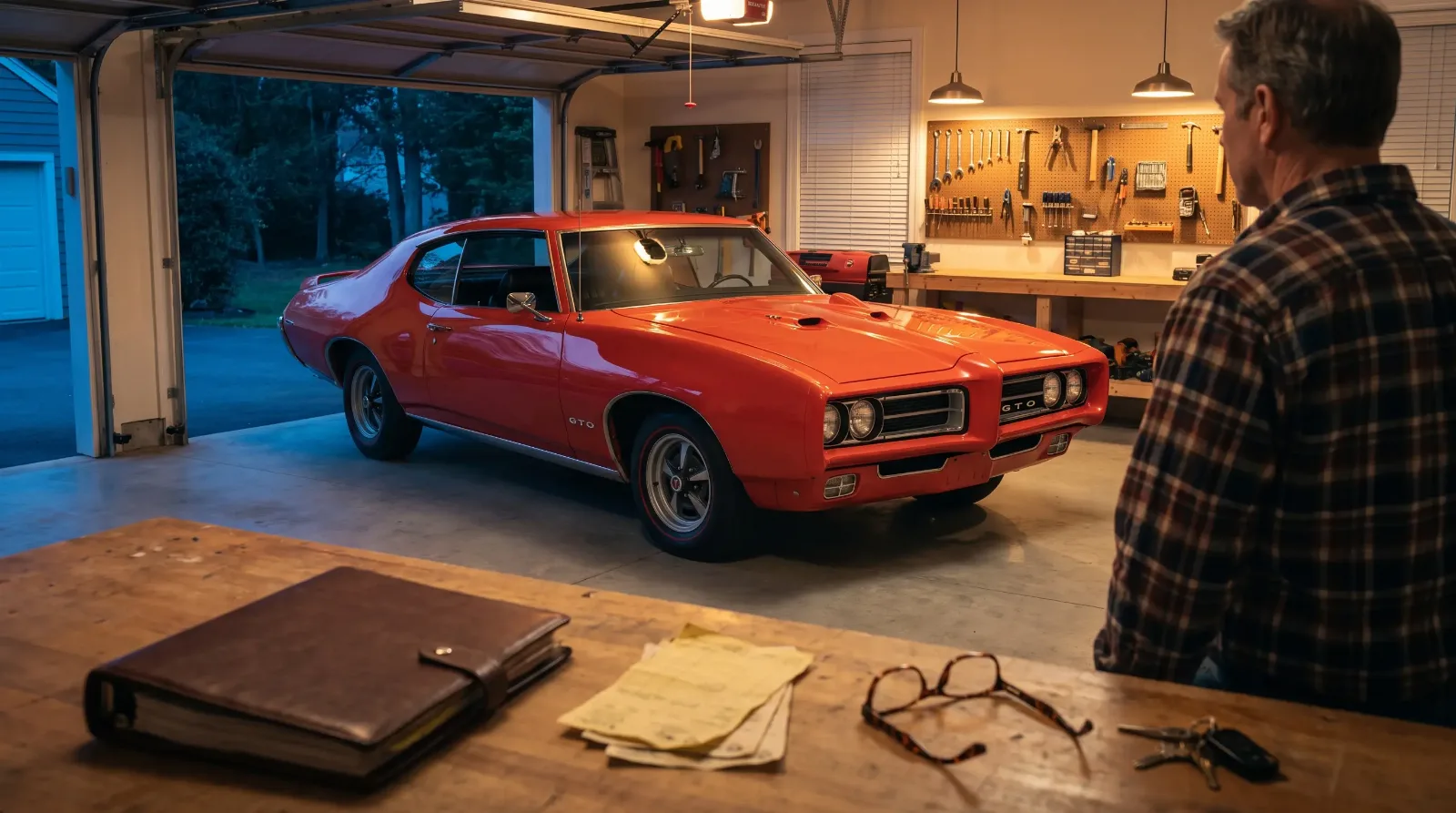
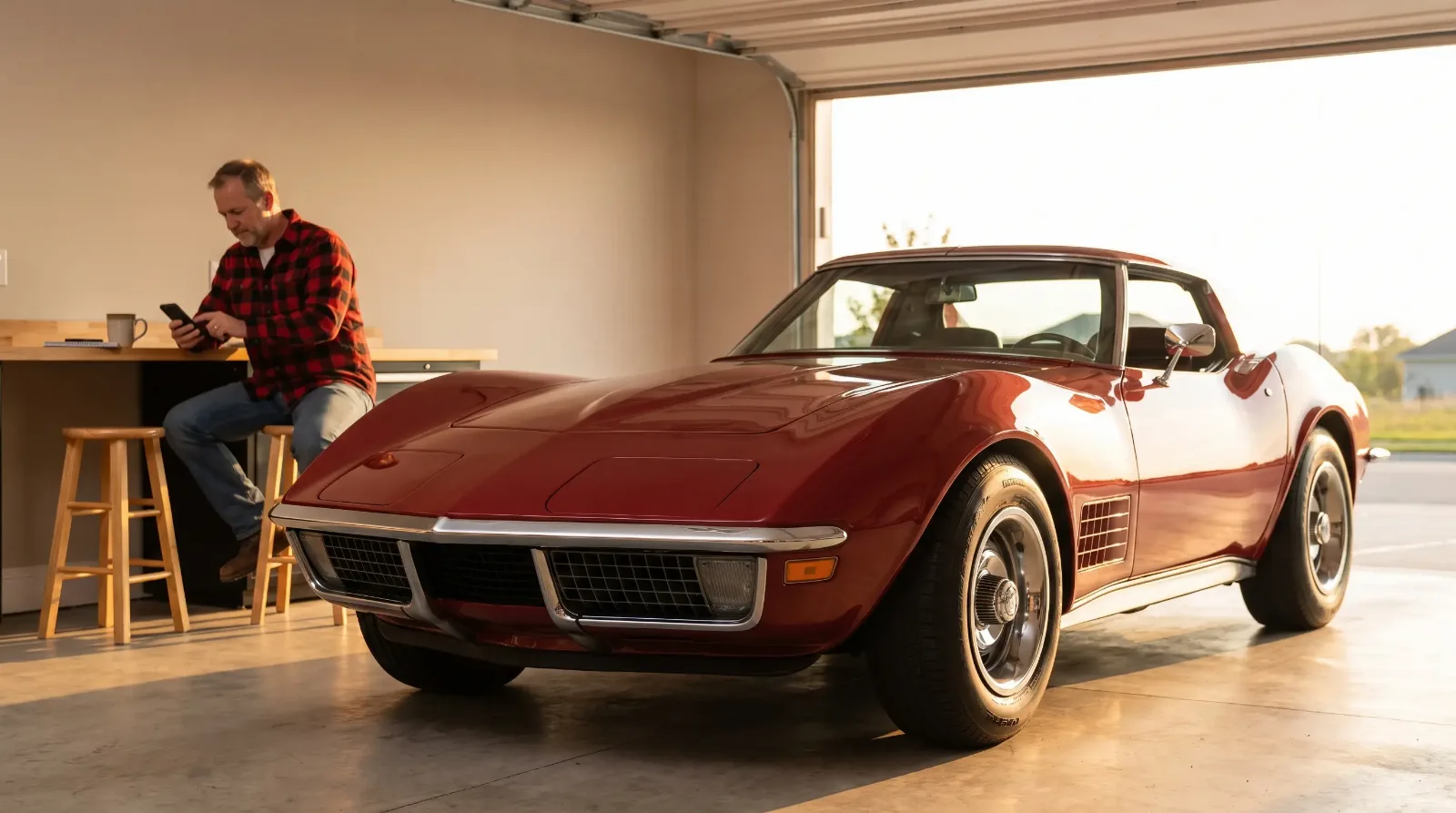
The number almost always gets decided in the garage. The seller stands next to the car with a coffee going cold on the workbench, the binder of receipts open to a page from 2009, and the price that comes to mind first is rarely the price the car will sell for. It is a number made of memory: the weekend the engine came back from the machine shop, the drive to the coast with the top down, the check that went out for the paint. Learning how to price a classic car so it actually sells starts with setting that number down for a moment and picking up a different one.
Market & Values
8 min read
How to Price a Classic Car So It Sells
Turn a fair value into an asking price that sells: set your floor, price inside buyer searches, read the first two weeks and cut once.
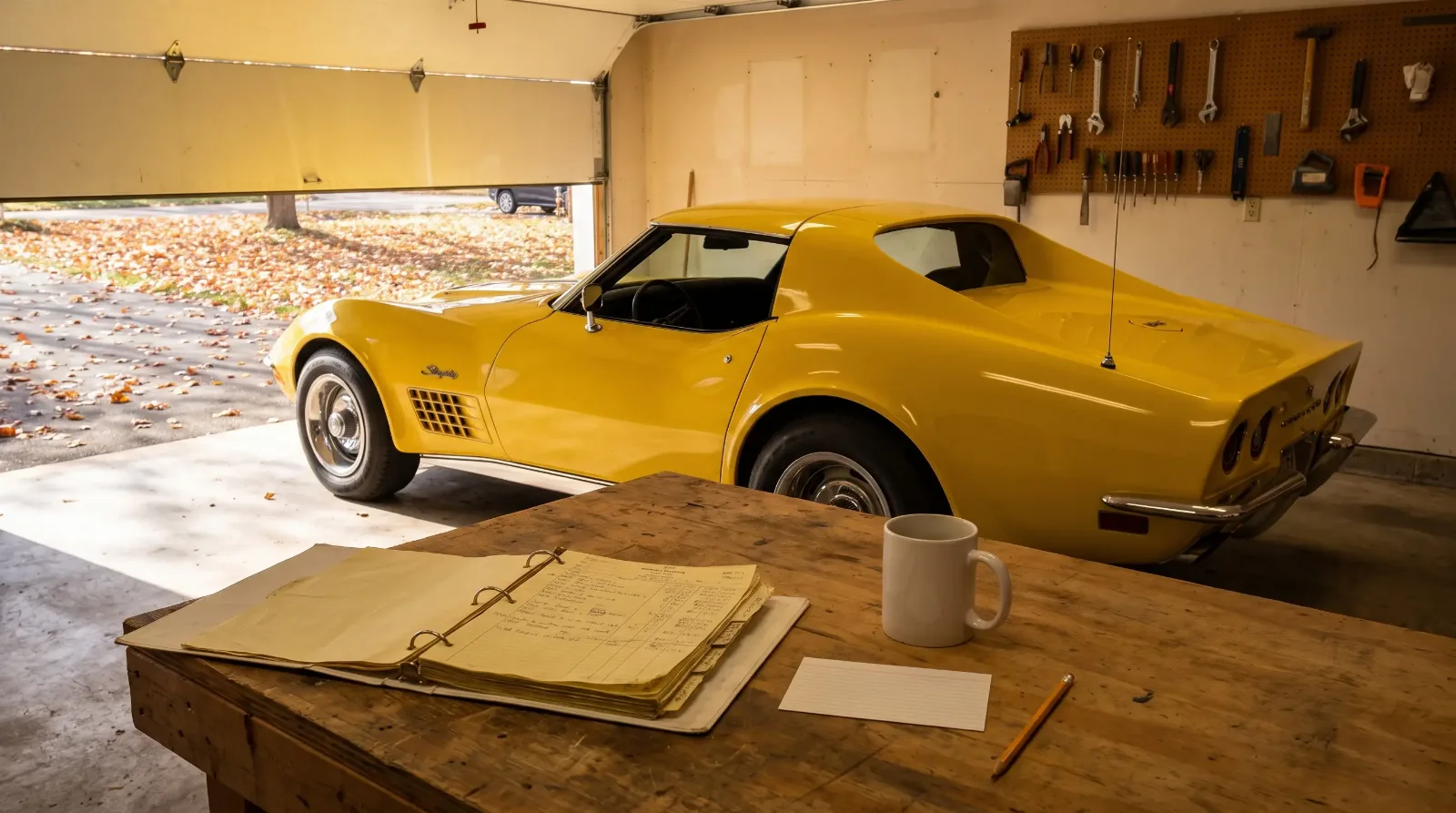
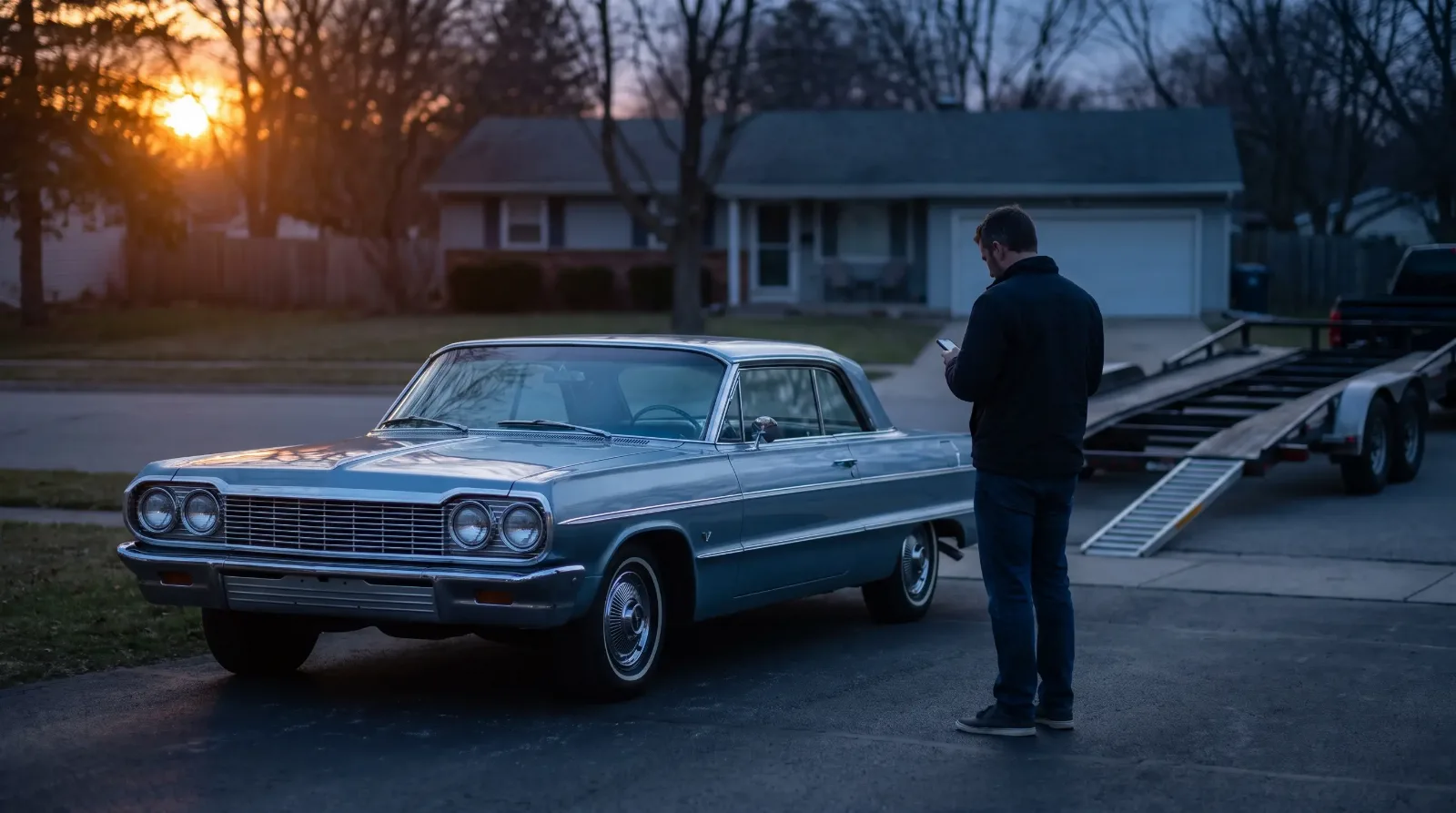
This piece is not about finding the value. If you haven't built a value range yet from sold comps and an honest condition grade, start with our how much is my classic car worth guide and come back. What follows is the next step, the one where a fair value becomes an asking price that brings the right person to your driveway with a trailer and a cashier's check.
Start with the floor, not the hope
Every good asking price is built from the bottom up. Before you write a single word of the listing, decide the lowest figure you would accept and still feel fine a month later. Write it down somewhere the buyer will never see it. That is your floor, and it does two jobs. It keeps you from taking a panicked offer on a slow Tuesday, and it keeps you honest about how much room you actually have.
The floor should come from the market, not from the receipts. A seller who spent $60,000 restoring a car that trades at $38,000 in its condition will not get the $60,000 back, and pricing toward it only means the car sits. That is hard to hear when the receipts are in your own handwriting. It is easier to hear now than after four months of silence.
Above the floor sits your target, the price you would be glad to get, usually close to the middle of the strongest comps once you've adjusted for your car's documentation, color, options and flaws. Above the target sits the asking price. The gap between those two numbers is the only part of the price that is really yours to play with.
Where the number sits changes who sees it
Buyers rarely scroll an entire marketplace. They type a model, set a price ceiling, and look at what comes back. Many search tools let them choose round limits, so a buyer with $30,000 to spend often never sees a car listed at $30,500. A few hundred dollars over a common threshold can quietly remove your car from the exact search your best buyer is running.
That is why prices just under a round figure work in this market, and not only for the familiar retail reason. $29,500 sits inside the $30,000 search. A price like $31,250 tells a buyer you worked it out from something, and if you can explain what, it earns respect. A price like $35,000 on a car whose comps cluster at $28,000 tells them you didn't.
| Pricing approach | What buyers read into it | When it fits |
|---|---|---|
| Just under a round threshold ($24,900, $29,500) | Fair, searchable, some room to talk | Most driver-grade (#3) cars with plenty of comps |
| Precise figure ($31,250) | Calculated from evidence, less room | Documented cars where you can show the math |
| Round number well above comps ($40,000) | Hopeful, likely to come down later | Rarely a good idea; invites waiting, not offers |
| Priced at or just below the market | Act now before someone else does | When speed matters more than the last dollar |
Venue matters as well. A local classified buyer expects to negotiate. A buyer who drives three states for a car expects the listing to be close to the truth, because nobody wants a twelve-hour round trip to argue over $4,000. If you're still choosing where to list, the complete rundown covers how each route shapes the price conversation.
Firm, negotiable, or best offer
Three small words at the end of a listing do a surprising amount of work. "Firm" tells buyers the number is the number. It suits a car priced right at the market with paperwork to back it, and it filters out the people who were only going to send a lowball.
"Negotiable" or "or best offer" opens the door. Used on a sensibly priced car it brings more calls. Used on a car already priced high it tends to bring offers measured from the comps rather than from your asking price, which means the first offer can land well below your floor.
For most sellers the quiet middle works best: an asking price with a modest cushion above the target, and no label at all. Buyers assume a private seller will talk. Your floor, written down, tells you when to stop.
"The price you list is the first thing a stranger learns about you. If it's honest, they trust the photos. If it isn't, they don't trust anything else you say."
Nora Beckett
Reading the first two weeks
The first stretch of a listing is when the most buyers will ever see it. Saved searches fire, alerts go out, people who have been waiting for this model notice it on day one. The response in those days is the most honest feedback the price will get.
Specific questions are good news. Someone asking about the date codes on the rear axle, whether the heater core was replaced, or if the original jack is still in the trunk is a buyer doing homework. Answer quickly and in full. Buyers who can verify details have more confidence, and confidence is what turns into a full-price offer. If the car's identity is part of its value, it helps to know in advance what the classic car value by VIN can and can't prove, because that's one of the first things a careful buyer checks.
Views with no messages say something too. When plenty of people look and nobody writes, the price is the most likely reason. A trickle of lowball offers with no questions says the same thing in a ruder voice.
When to lower the price, and how far
If two or three weeks pass without a serious conversation, the market has answered. The temptation is to trim $250 every few days, hoping to find the spot without giving up too much. It nearly always backfires. Buyers who saved the listing see each small cut and read it the same way: this seller is losing patience, so wait. A car that drops a little every week teaches people to watch it instead of buy it.
One decisive adjustment works better. Go back to your comps, look honestly at where your car sits among them, and move the price to where it should have started. That usually means a meaningful step, enough to land the car inside a new search band or below the cars it is competing against. Then leave it alone for another two weeks and watch the response again.
Fees belong in this math too. A commission or a buyer's premium changes what you take home from the same sale price, and it can push a seller to list higher than the market will bear just to cover the cut. A flat listing fee removes that pressure. On this site the fee is a one-time charge starting at $49, with no commission and the buyer paying you directly, so you can see the listing packages and price the car to the market instead of to the fee.
Somewhere past the garage, past the binder and the cold coffee, there is a buyer who wants this car for reasons of their own. A fair price is how you find each other.
Sources and notes
- Harvard Business Review: The Short Life of Online Sales Leads (Oldroyd, McElheran, Elkington, 2011)
- American Economic Review: Heuristic Thinking and Limited Attention in the Car Market (Lacetera, Pope, Sydnor, 2012), on price drops at round odometer thresholds
- ClassicCars.com: listing search with asking-price sorting and search tools
- eBay Motors: vehicle listing fees
- Motorious: Hagerty Market Rating falls to its lowest level in nearly 15 years (January 2026)
Related Reading
Have a
Classic Car
for Sale?
Reach thousands of serious classic car collectors across the US.
Sell It Here →
Selling a classic? Here's how: compare the places to sell classic cars
Are You a Classic Car Dealer?
List your full inventory and connect with targeted classic car buyers.
Join as a Dealer →
#classic car value
#private sale
#selling a classic car
#asking price
#how to price a classic car
#price negotiation

About the author
Nora Beckett
Automotive features writer and photographer who tells the human stories behind the cars, from show fields to cross-country road trips.
More in Market & Values

Comments
Be the first to comment on this article.