
The woman at the counter had driven forty minutes with a folder on the passenger seat and her late father's coupe still parked at home. She had found the shop by typing classic car consignment near me into her phone the night before, and it was the first result with a showroom photo that looked like the cars she remembered from his garage. The salesman was kind. The coffee was good. She almost signed before she thought to ask how many cars like her father's they had sold that year. He had to go look it up.
Market & Values
8 min read
How to Find Classic Car Consignment Near You
Where to search for classic car consignment near you, how to build a short list, and how to compare showrooms, brokers and specialists.
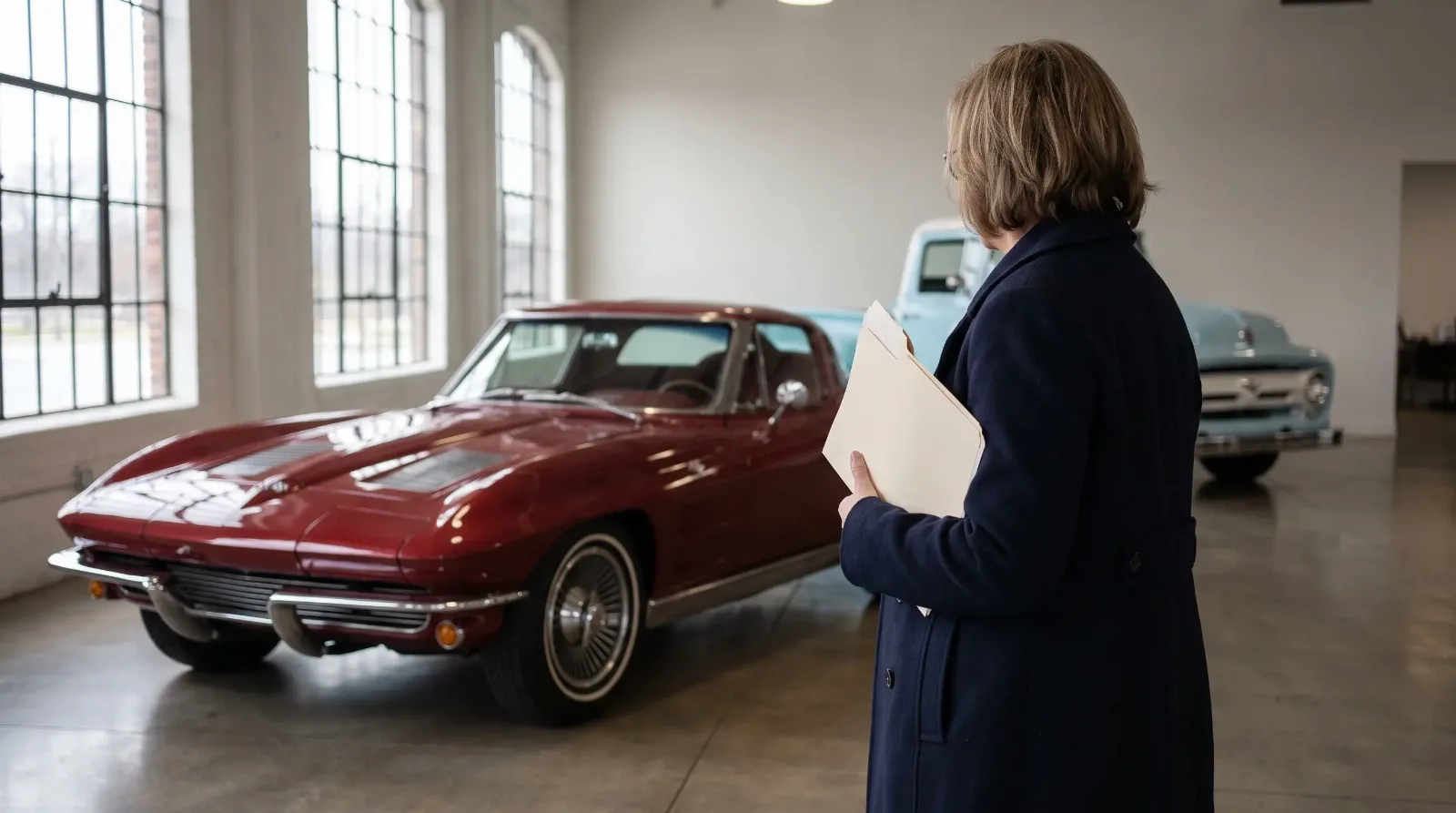
Finding a consignment shop close to home is easy. Finding the right one takes an afternoon of looking, a few phone calls, and a willingness to drive past the nearest showroom if it is not the best fit. This guide walks through where to search, how to build a short list, and how to compare the shops on it side by side. For the general picture, read how classic car consignment works.
Where to look beyond the first search result
A map search is a fine start. It shows who is nearby and gives you hours, photos and reviews. What it does not show is whether a shop sells cars like yours. A dealer that moves late-model exotics may have a beautiful floor and no buyers at all for a 1950s pickup. Treat the map as a list of names, not a list of answers.
The better leads come from people who already sell cars. Ask at the places where classic owners gather:
- Marque clubs and regional chapters. Members know which local dealers sell their make well and which ones let cars sit. A single club newsletter or a post on the chapter's forum can surface two or three names you would never find on a map.
- Car shows and cruise nights. Consignment dealers often bring inventory to local shows. Seeing how they present a car on a Saturday morning in a parking lot tells you a lot about how they will present yours.
- Restoration and service shops. The mechanic who has worked on your car for years usually knows which dealers send cars in for pre-sale work and which ones pay their bills.
- Online dealer directories. This site keeps a classic car dealer directory, organized by state, which is a quick way to see the specialists within driving distance and look at how each one lists its current inventory.
Do not limit the search radius too tightly. Remote consignment, where the car stays in your garage and the dealer handles marketing and buyers, has made distance matter less than it once did. A specialist three states away who knows your model may outsell a general dealer ten minutes from home.
Building a short list
Aim for three to five candidates. Fewer than three gives you nothing to compare against. More than five and the phone calls start to blur together.
Before you call anyone, look at each shop's current inventory online. You are looking for cars in the same family as yours: similar era, similar price band, similar buyer. If you own a $30,000 driver-quality muscle car and every car on a dealer's site is a six-figure European sports car, that shop's buyers are not your buyers. Then look at the listings themselves. Count the photos. Read the descriptions. Are known flaws disclosed, or does every car read like a museum piece? That is exactly how your car will be described to strangers.
Then check the sold section, if there is one. A dealer that proudly shows its sold cars, with dates, is showing you its track record. A dealer with forty listings and no sold history might be selling, or might be collecting cars that sit.
Finally, cut anyone who does not hold a dealer license where your state requires one for consignment sales. California, for example, counts anyone in the business of selling consigned vehicles as a dealer and requires a written consignment agreement. You can look most of them up on the state DMV or dealer board website in a few minutes.
Comparing local consignment options side by side
Local consignment comes in a few distinct shapes, and they suit different cars and owners. The table below shows the trade-offs before you start calling.
| Option | Where the car lives | Best for | What to weigh |
|---|---|---|---|
| Showroom dealer | On the dealer's floor | Owners who want hands-off selling and walk-in buyers | Storage or prep fees, miles from lot moves, insurance while away from home |
| Remote consignment broker | Your garage | Owners who can host showings by appointment | Your time on weekends, how buyers are screened before they visit |
| Marque specialist | Floor or your garage | Single-make cars with a dedicated buyer base | May be farther away, often charges more for its expertise |
| Auction house consignment desk | Auction premises or your garage until sale day | Owners who want a fixed sale date | Entry fees, seller commission and the public result if it does not sell |
Consignment commissions generally run about 5% to 15%, or a flat fee, and agreements commonly last 60 to 90 days. Those ranges are wide, and two shops in the same town can sit at opposite ends of them. There is more on classic car consignment fees and how storage and prep charges stack on top.
Before you commit to any of them, it is worth running the numbers on doing the work yourself. Our comparison of consignment vs selling it yourself lays out what the commission buys and what it does not.
Questions to ask on the visit
Go in person, even if you plan to use remote consignment. A visit tells you things a website will not: whether the cars on the floor are clean, whether anyone knows the inventory, whether the person you talk to on the phone is the person who will actually sell your car.
Pay attention to how the questions land. A good consignment dealer has heard all of them before and answers without fuss. Someone who gets defensive about payout timing or past consignors has told you what you need to know.
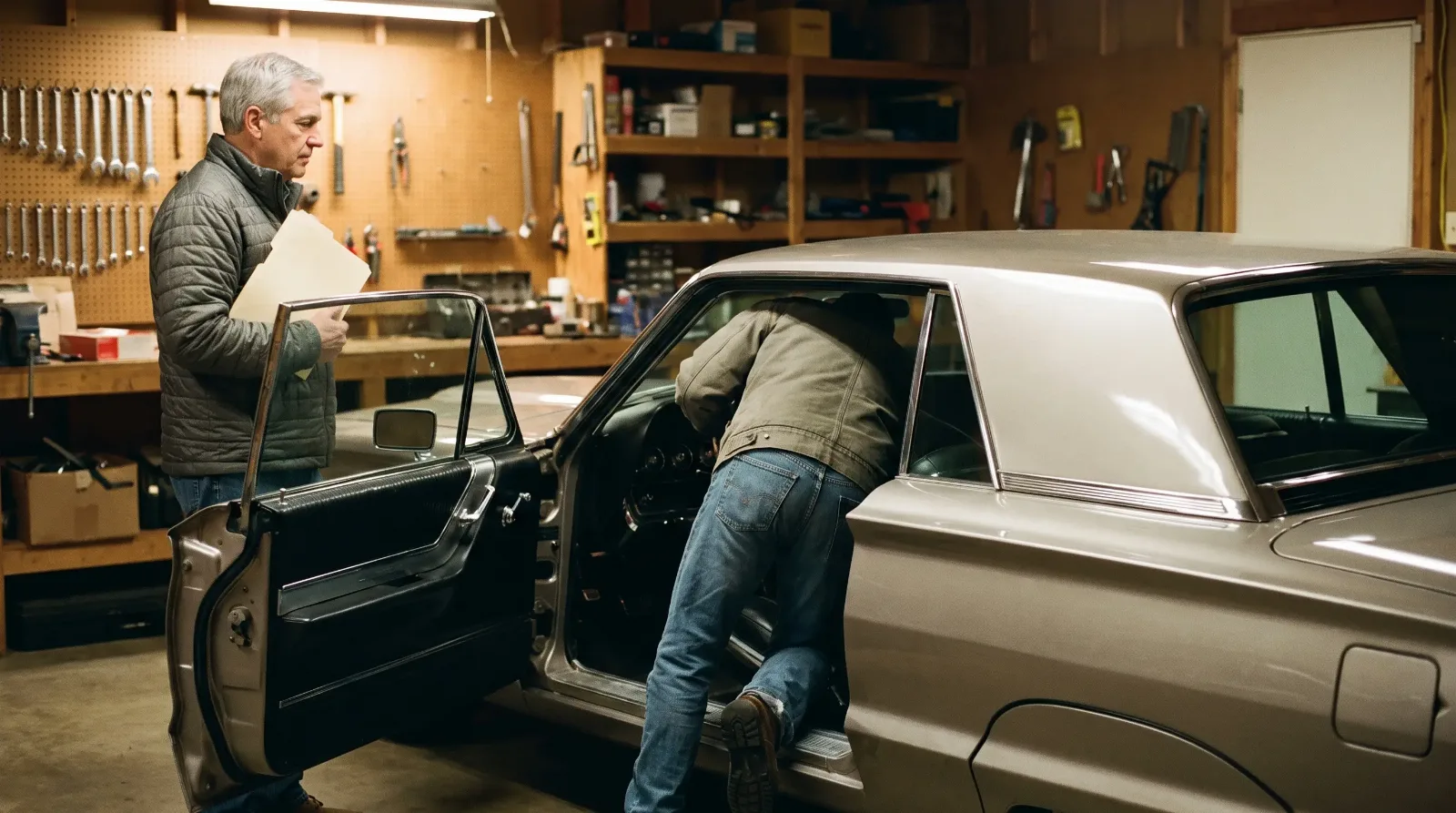
Then look at your own car with the dealer. Watch whether the salesperson walks around it, opens the hood, asks about the records. A dealer who quotes a price from across the room has not really looked, and a high number offered without looking is a pitch, not an appraisal.
"The nearest shop is only the right shop if it already sells cars like yours. Drive the extra hour if you have to. The car will remember who sold it, and so will you."
Nora Beckett
When local is not the answer
Sometimes the honest result of this search is that no shop near you is a good fit. Rural owners run into this often, and so do owners of unusual cars with a small, scattered buyer base. In that case a remote consignment specialist elsewhere, a marque club classified, or a private listing may do better than the closest showroom.
Consignment is one route among several. If your search leaves you unconvinced, step back and look at where to sell a classic car before deciding.
The woman with the folder did not sign that day. She called a club member her father had known, who gave her two names, one of them an hour farther from home. That dealer had sold four cars like her father's the year before. She drove the extra hour, and she still has the folder.
Sources and notes
- California Vehicle Code § 285: dealer definition, including vehicles consigned to be sold
- California Vehicle Code § 11729: written consignment agreement and payment within 20 days
- California DMV: Occupational License Lookup for vehicle dealers
- RM Sotheby's: selling options, including private treaty transactions
- Sports Car Market: Worldwide Auctioneers' private treaty sales service
Consignment commission and term ranges are typical figures across the trade; every shop sets its own. Licensing rules differ by state.
Related Reading
Have a
Classic Car
for Sale?
Reach thousands of serious classic car collectors across the US.
Sell It Here →
Selling a classic? Here's how: where to sell your classic car online
Are You a Classic Car Dealer?
List your full inventory and connect with targeted classic car buyers.
Join as a Dealer →
#car clubs
#consignment fees
#classic car dealers
#consignment
#sell a classic car
#classic car consignment near me
#remote consignment

About the author
Nora Beckett
Automotive features writer and photographer who tells the human stories behind the cars, from show fields to cross-country road trips.
Comments (1)
W
Wes Hollingsworth
1 week ago
Nora, add one to that list of questions: ask who pays to haul the car home if it doesn't sell. Fella I know got a transport bill that ate the whole summer's budget. Get it in writing.