
Few lines on a title cause as much hesitation as the odometer box. A seller with a 1969 car and a five-digit odometer reading 41,000 knows the car has not covered 41,000 miles in its life, or at least cannot prove that it has, and wonders what the law expects them to write. The short answer is that federal law expects nothing at all. The longer answer is worth knowing, because "odometer disclosure exempt" means less than many people think it does.
Market & Values
6 min read
Odometer Disclosure Rules for Older Vehicles
Model year 2010 and older cars are odometer disclosure exempt under federal rules. What that covers, what it does not, and how to record mileage.
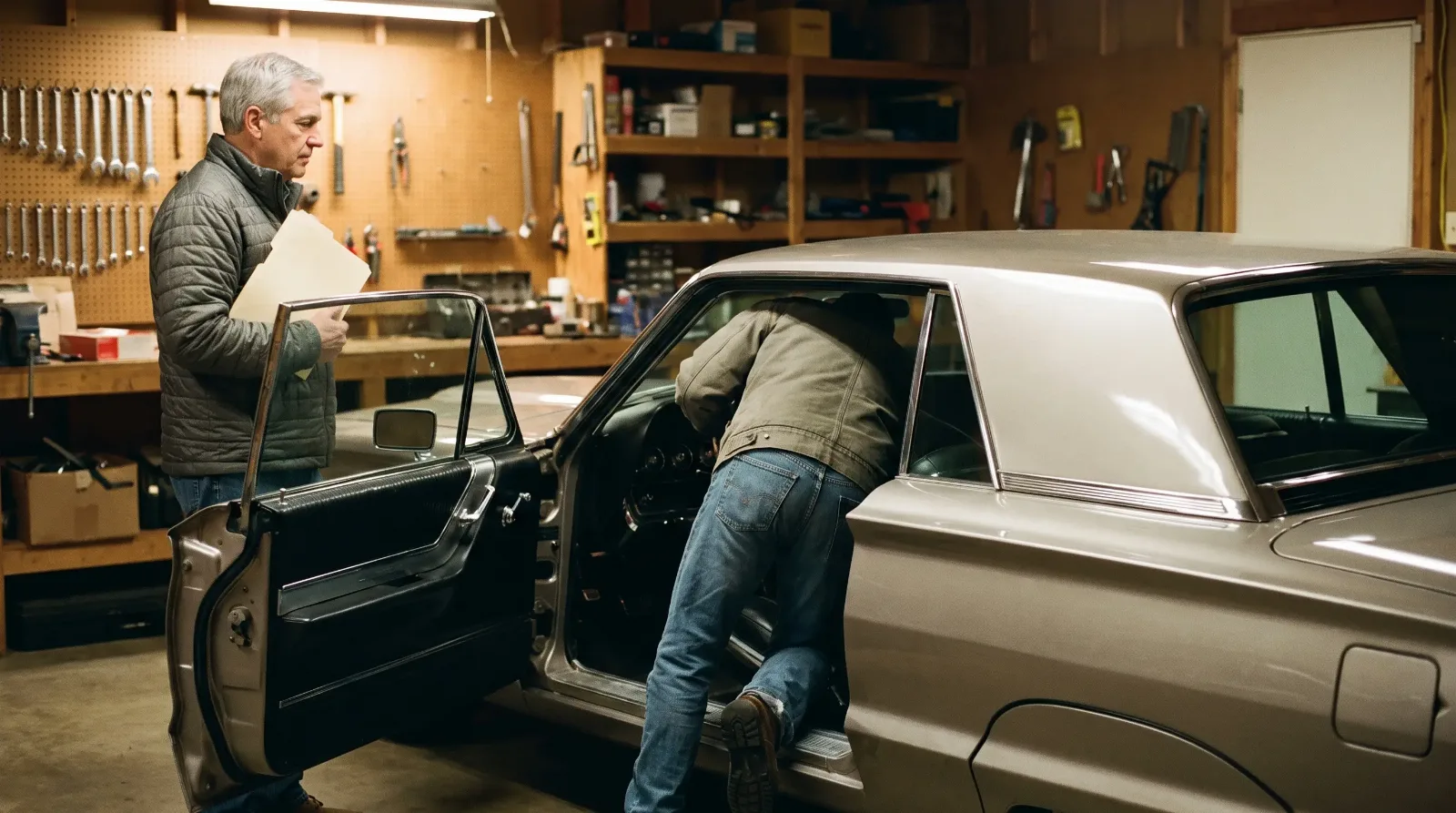
This is the federal rule as it stands in 2026, where it came from, what the exemption does and does not cover, and how to record mileage honestly on a car that predates electronic odometers by decades. It is general information, not legal advice, and your state may add requirements of its own.
The federal rule, as written
Federal odometer disclosure is governed by NHTSA's regulations in 49 CFR Part 580. The exemptions sit in section 580.17. Under the rule that took effect on January 1, 2021, vehicles of model year 2010 and older remain exempt from federal odometer disclosure. Vehicles of model year 2011 and newer must have their mileage disclosed on transfer for 20 years.
Before that change, the exemption applied to any vehicle ten years old or older. The longer window reflects how long cars now stay in service, and the extra decade of mileage records makes rollback fraud harder on vehicles that still have real resale value. The agency did not reach backward when it made the change. Cars that were already exempt under the ten-year rule, which by 2021 meant model year 2010 and older, stayed exempt permanently.
For the classic car market, this settles the matter. A 1957 Bel Air, a 1972 Chevelle, a 1987 Grand National and a 1999 Corvette are all model year 2010 or older. None requires a federal odometer disclosure statement when it is sold.
| Model year | Federal odometer disclosure in 2026 | Notes |
|---|---|---|
| 2010 and older | Exempt | Permanent exemption under 49 CFR 580.17; covers nearly every classic |
| 2011 to 2026 | Required | Disclosure applies for 20 years; model year 2011 vehicles become exempt on January 1, 2031 |
| Vehicles over a set gross weight rating | Exempt | Vehicles with a gross vehicle weight rating above 16,000 lb are exempt regardless of age |
What "exempt" does not mean
Here a gentle correction is in order, because the word "exempt" travels further in conversation than it does in the regulation. The exemption removes the requirement to provide a formal written odometer disclosure statement on transfer. It does not make a false mileage claim lawful.
The federal odometer law, now codified at 49 U.S.C. Chapter 327, prohibits disconnecting, resetting or altering an odometer with intent to change the mileage it registers, and prohibits fraud in connection with odometer readings, and those prohibitions are not limited by model year. A buyer deceived about mileage by someone acting with intent to defraud can bring a civil action under 49 U.S.C. 32710, with damages of three times the actual damages or $10,000, whichever is greater. State consumer protection and fraud law applies on top of that. In plain terms, a 1968 car does not require a mileage statement, but if you make one, it had better be true.
The cautious reading of the rule, then, is that the exemption saves you a form. It does not save you from your own words in the listing, in your messages to the buyer, or on the bill of sale.
Writing mileage honestly on a classic
Even where the law asks nothing, the buyer will ask, and the title form in your state may still carry an odometer box with checkboxes. The conventional terms are consistent across most states and across most bills of sale:
- Actual mileage means the reading reflects the true distance the vehicle has traveled, to the best of your knowledge. On an older car, check this only when the records support it.
- Exceeds mechanical limits means the odometer has rolled past its maximum and started again. This is the honest choice for many five-digit cars with a known history of high use.
- Not actual, sometimes written as "true mileage unknown," means the reading is not reliable: the odometer was replaced, repaired, disconnected for a period, or the history simply cannot be confirmed.
Where your state title marks older vehicles as exempt, some states provide a box or expect the word "exempt" in the mileage space; Nebraska, for example, records "Exempt" on the title, and once it does, mileage is not recorded on future titles. Follow the instructions printed on your own title; they vary more than the federal rule does. If your state does not title the car's model year at all, there is no odometer box to fill, and the bill of sale carries the reading instead. The rest of the title procedure, including signatures, notarization and the release of liability, is covered in our classic car title guide.
"I would rather see 'true mileage unknown' on a bill of sale than a confident number nobody can support. The first is a fact about the paperwork. The second is a claim, and somebody will eventually check it against the records."
Tom Ramirez
When the mileage is documented, prove it
Low mileage on a classic is valuable, and when it is real, it deserves to be shown rather than asserted. The evidence that holds up is the evidence that was created at the time: dated service invoices with odometer readings, state inspection records, prior titles that recorded mileage, dealer delivery paperwork, and owner's manuals or maintenance logs filled in by hand over the years. A continuous chain of readings that rises at a believable pace is far more persuasive than a single number on a current title.
Assemble those documents in date order before you list the car, and describe the mileage in the listing as the records describe it. "41,200 miles, documented by service records from 1971 onward" says something specific and defensible. "41,200 original miles" without the records says something a buyer's inspector may question. If the history has a gap, say where it is.
Then record the reading and the chosen description on the bill of sale, along with "sold as is, where is, with no warranty expressed or implied." That single document is where your honest statement of mileage lives once the car is gone, so give it the same care as the title. Our guide to the bill of sale for selling a car privately lists every line it should carry, including the odometer entry.
Sources and notes
Related Reading
Have a
Classic Car
for Sale?
Reach thousands of serious classic car collectors across the US.
Sell It Here →
Selling a classic? Here's how: compare the places to sell classic cars
Are You a Classic Car Dealer?
List your full inventory and connect with targeted classic car buyers.
Join as a Dealer →
#bill of sale
#selling a classic car
#classic car title
#odometer disclosure exempt
#odometer rollover
#mileage

About the author
Tom Ramirez
Corvette researcher and historian based in Bowling Green, Kentucky. Two decades documenting Corvette production history from original factory records.

Comments
Be the first to comment on this article.