
Detailing a car for sale is a sequence job. Do it out of order and you undo your own work: wash the paint, then degrease the engine bay, and you have just sent grime down the fenders you finished an hour ago. Do it in the right order and a weekend of work lets a classic photograph the way it looks to someone standing beside it in good light, which is all a buyer asks.
Market & Values
8 min read
Detailing a Classic Car for Photos
Detailing a car for sale in the right order: engine bay first, careful paint work, matte trim, and the jobs that make buyers suspicious.
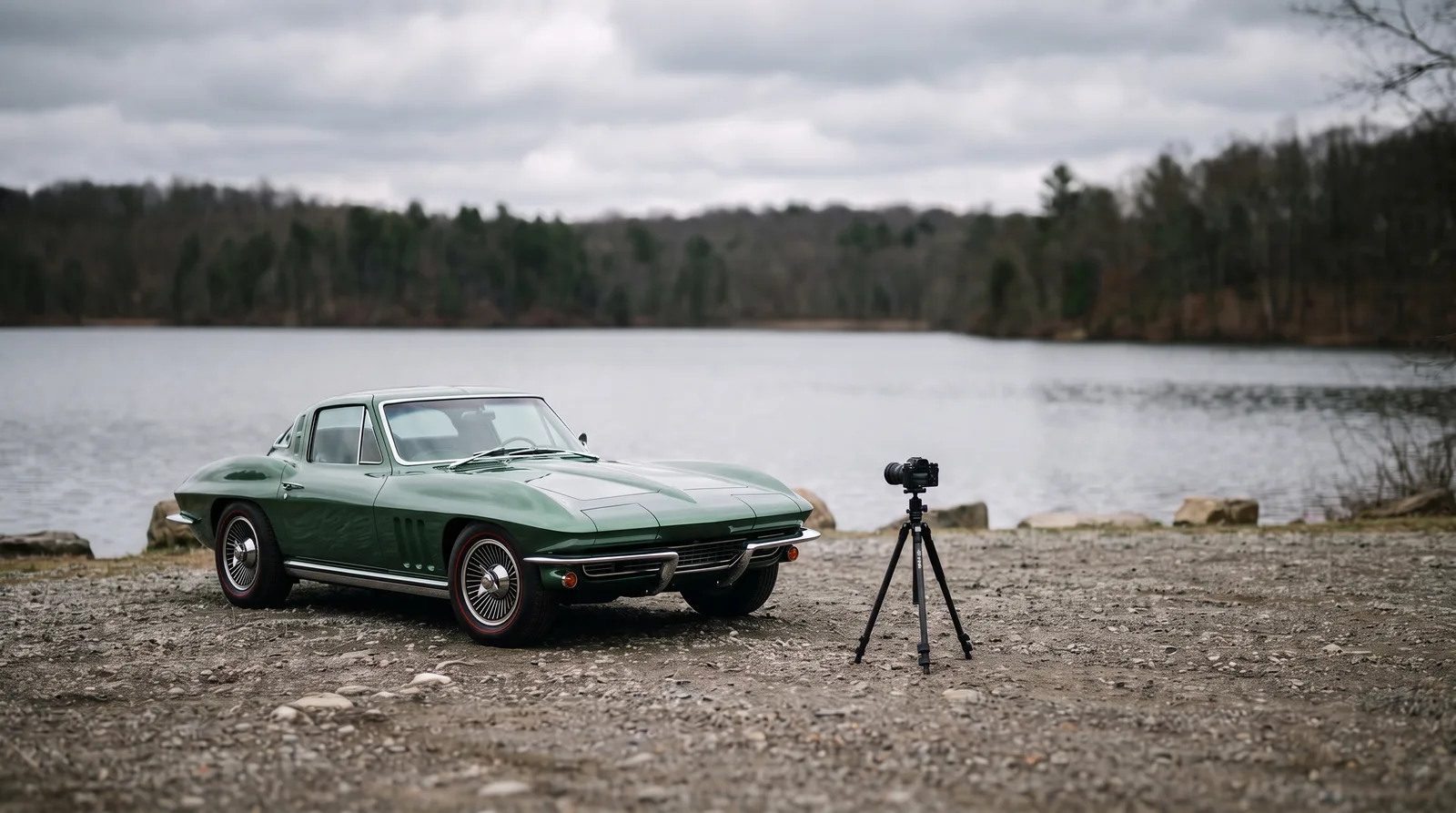
The goal is not to make the car look newer than it is. It is to remove the dirt so what remains is the car. That difference matters, because buyers of old cars read over-detailing as concealment. Photos sell the car before anyone sees it in person, and the how to sell a classic car faster guide covers where those photos go and what happens after. This page covers the prep that comes before the camera.
Work from dirtiest to cleanest
The order is engine bay, then wheels and wheel wells, then whatever part of the underside you can reach, then the body wash, then paint work, then trim and glass, and the interior last. Each step can drip or spray onto the next, so the dirty jobs go first and the jobs that leave a finished surface go last.
Plan two days if you can. Day one is the wet work: degreasing, washing, drying. Day two is the dry work: paint, trim, interior, glass, and the photos while everything is still fresh. Squeezing it into one day is where people cut corners on drying, and water trapped in seams and behind trim runs out in streaks the next morning, right across the panel you photographed.
| Job | Tools | Rough time | Where it goes wrong |
|---|---|---|---|
| Engine bay | Degreaser, soft brushes, plastic bags and tape, garden hose | 1 to 2 hours | Water in the distributor or exposed electrics |
| Wheels and wells | Wheel brush, non-acid cleaner, separate bucket | 1 hour | Acid cleaner on polished or plated wheels |
| Body wash | Two buckets, grit guards, wash mitt, drying towels | 1 hour | Washing in direct sun, leaving water spots |
| Decontamination | Clay bar or clay mitt, lubricant | 1 to 2 hours | Reusing dropped clay and scratching the paint |
| Polish and protect | Dual-action polisher, fine polish, soft pads, wax or sealant | 3 to 6 hours | Cutting through thin or original paint |
| Chrome, rubber, glass | Metal polish, rubber cleaner, glass cleaner, microfiber | 1 to 2 hours | Polish residue left in emblems and seams |
| Interior | Shop vac, upholstery and leather cleaners, detail brushes | 2 to 3 hours | Glossy dressing on the dash and vinyl |
The times are rough estimates for a careful owner working on a driver-grade car, not a professional benchmark. A neglected car takes longer. A well-kept one may need half of it.
The engine bay without drowning the electrics
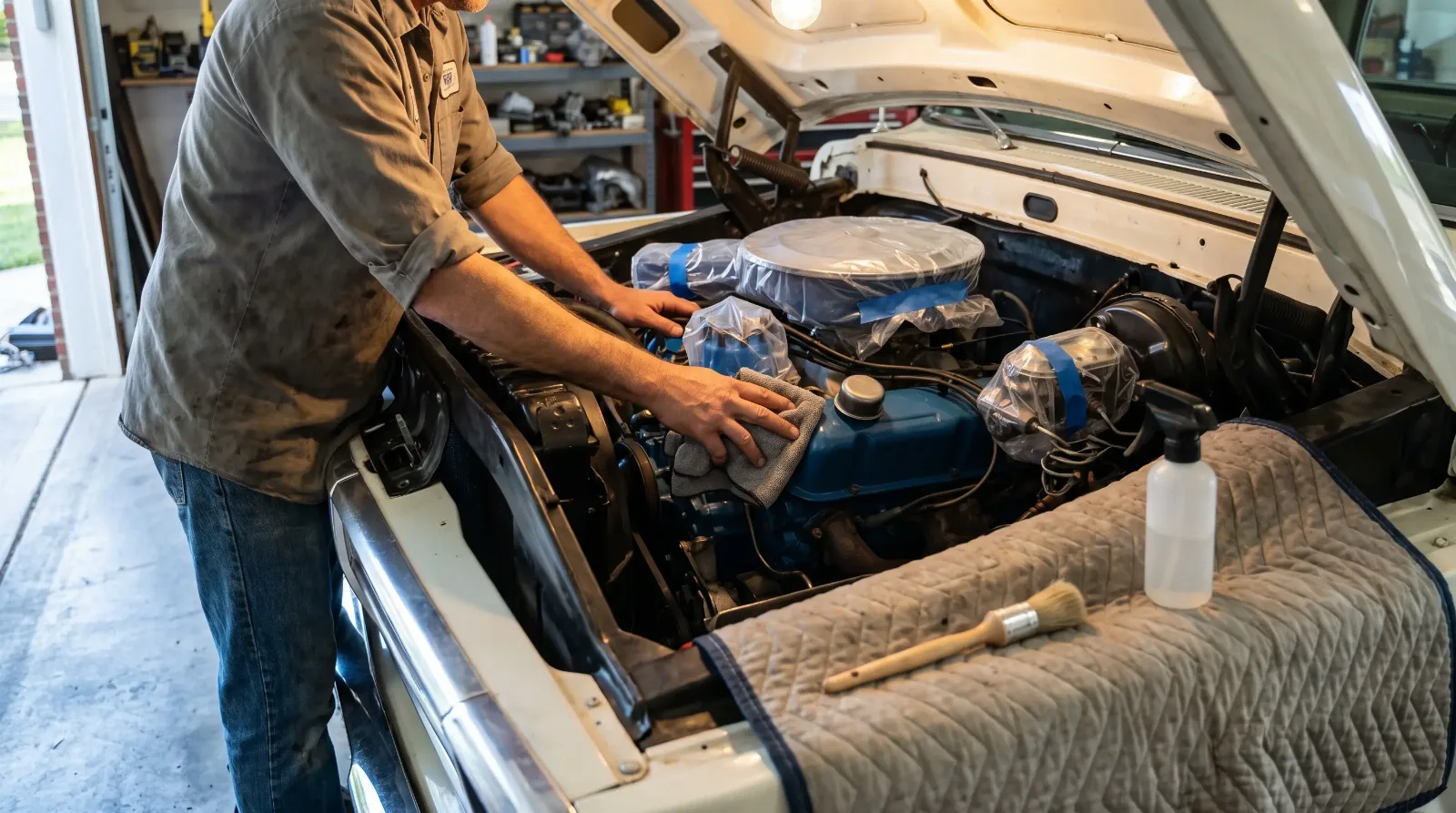
Buyers spend more time on engine bay photos than sellers expect, and a clean one tells them the car has been looked after. A greasy one makes them wonder whether the grease is old or new, which is another way of asking whether something is leaking right now.
Start with the engine cold. Hot metal flashes the degreaser dry and leaves stains. Cover the distributor, the coil, the carburetor or air cleaner inlet, and any exposed connectors with plastic bags and tape. Spray the degreaser, work it into the corners with soft brushes, then rinse with a garden hose at low pressure. No pressure washer. High pressure drives water into wiring, past seals and under decals, and on an older car it can lift tired paint off the inner fenders.
Let it dry with the hood up, then start the engine and let it idle to drive off the last of the moisture. Pull the bags only after it runs clean. A light, matte dressing on hoses is fine. A coat of shine sprayed over everything is not. It collects dust within a day and looks like a cover-up in every close-up.
One warning before you move on. If you find a fresh leak while cleaning, do not wipe it away and take the picture. Note it, fix it if you can, and disclose it if you can't. A spotless engine that drips oil on the buyer's driveway two weeks later ends the deal and your credibility with it.
Paint: clean it, don't erase it
Wash with two buckets, one with soap and one with clean water to rinse the mitt, so you are not dragging grit back across the paint. Work in shade, top down, one panel at a time, and dry with clean towels before the spots set.
Next, check for bonded contamination. Slip your hand into a thin plastic sandwich bag and run your fingertips across a clean panel. If it feels rough, a clay bar with plenty of lubricant will take that off. Work small sections and keep folding the clay to a clean face. If you drop it, throw it away. Picking it up and carrying on is how you put scratches into the paint you were trying to improve.
Polishing is where a weekend detail most often goes wrong on an old car. Original or older paint can be thin, especially on edges and body lines, and a rotary buffer with an aggressive compound can go through it in seconds. Use a dual-action polisher with a fine polish and a soft pad, stay off sharp edges, and stop at "better" instead of chasing "perfect." On single-stage paint the pad turns the color of the car as you work. That is normal for single-stage paint and not a sign of damage, but it tells you that you are removing paint, so go easy. Finish with a wax or sealant for depth and a little protection between now and the sale.
"Take the dirt off and stop. Keep going until the car looks better than it is, and the buyer finds the difference with a fingernail. After that he doesn't trust anything else you told him."
Ray Delgado
Trim, glass, interior, and the jobs to skip
Chrome and stainless take a metal polish and a soft cloth. Brush the residue out of emblems and seams before it dries, because white polish in a badge shows up in every close-up. Rubber seals and black trim come back with a dedicated cleaner and a matte protectant. Glass goes last on the outside, then again on the inside, since a hazy windshield turns every interior photo gray.
Inside, pull the floor mats, vacuum from the top down, and clean the upholstery with the right product for the material. Clean, don't dress. Glossy spray on a dash or vinyl seats looks wet in photos and slippery in person, and careful buyers read it as something to hide behind. Empty the glovebox, the door pockets and the trunk. Lift the trunk mat and vacuum underneath, because that floor is going to be photographed.
Some jobs are better skipped before a sale. Don't spray fresh undercoating on the underside. To a buyer it looks like rust being buried, whether it is or not. Don't paint over surface rust on a panel two days before the photos. Don't use a tire shine that slings onto the paint the first time the car moves. Each of these trades a small cosmetic gain for a large trust problem.
If you would rather hand it off, a professional detail is a sensible spend on a car worth more than a few thousand dollars. Published price guides put a full interior and exterior detail at roughly $150 to $500, with paint correction priced separately, from about $300 for a one-step polish to well over $1,000 for multi-step work. Those are national ranges, and big-city shops charge more. Ask the detailer up front how they handle older and single-stage paint before they put a machine on it.
When the car is clean, shoot it the same day or the next morning, before dust settles back on. The order of shots, the light and the angles are covered in the guide on how to take pictures of a car to sell. A clean car in good light, with its honest flaws still visible, is the best version of the truth, and the truth is what sells it.
Sources and notes
- Autogeek: How to test for clearcoat paint (the switch to clearcoat started in the 1980s; color on the pad means single-stage)
- Housecall Pro: Car detailing prices (full detail $150 to $500+; paint correction $300 to $2,500+)
- Chemical Guys: How to clay bar your car (plastic bag test, fold the clay, discard dropped clay)
- SlashGear: How to clean your car's engine bay (cool engine, cover electrics, light water pressure)
- AutoTrader.ca: How to photograph your used car for sale (wash and vacuum before the shoot)
Related Reading
Have a
Classic Car
for Sale?
Reach thousands of serious classic car collectors across the US.
Sell It Here →
Selling a classic? Here's how: sell my classic car
Are You a Classic Car Dealer?
List your full inventory and connect with targeted classic car buyers.
Join as a Dealer →
#selling tips
#sell a classic car
#classic car photos
#classic car detailing
#detailing car for sale
#paint care

About the author
Ray Delgado
Metal fabricator and chassis builder who has spent 25 years turning flat sheet and mild steel into hot rods, gassers and restomod underpinnings.
Comments
Be the first to comment on this article.