
Most consignment vs private sale comparisons stop at the commission. That is the wrong place to stop. The commission is the largest single line, but it is not the only one, and the private route carries costs that never appear on an invoice: your hours, your exposure to payment fraud, and the discount a buyer extracts when the person across the table is the owner rather than a professional. A useful comparison prices all of it. What follows is one car run through both routes, every line shown, with the arithmetic left open so you can replace my assumptions with yours.
Market & Values
8 min read
Consignment vs Selling It Yourself: A Real Cost Comparison
Consignment vs private sale on one $60,000 classic: every cost line, the net to the seller, and the break-even price a dealer must hit.
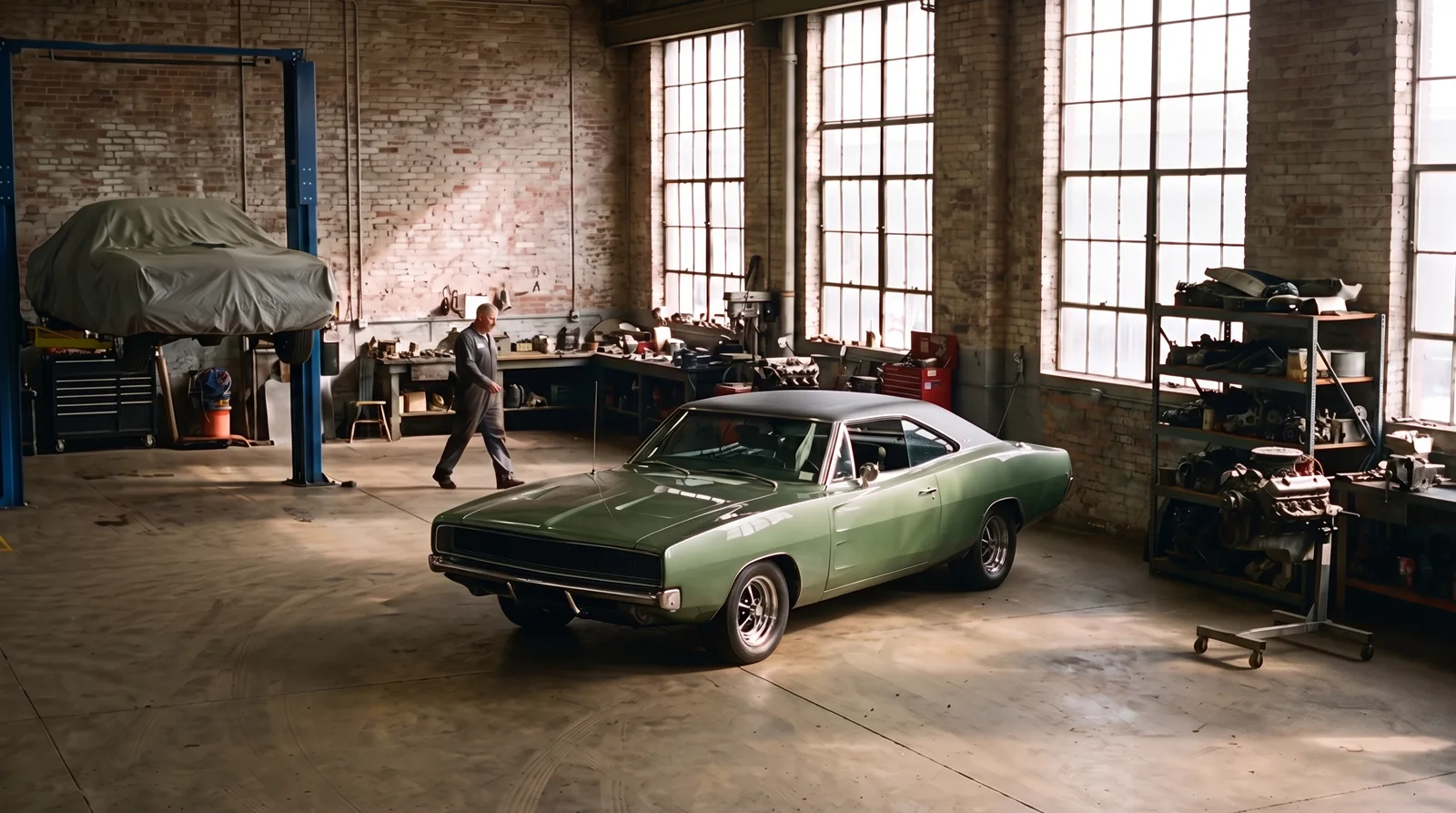
If you are still working out how consignment is structured in the first place, start here. This piece assumes you know the mechanics and want the math.
The worked example: one car, two routes
The figures below are illustrative. They describe a plausible case, not a specific transaction, and each assumption is stated so it can be challenged.
The car is a #3 condition driver, which is where Hagerty says the vast majority of collector cars sit. Recent comparable sales put it at about $60,000. Clean title, a reasonable file of receipts, nothing exotic.
On the consignment side, I assume a 10% commission. Consignment typically runs about 5% to 15% of the sale price or a flat fee, so 10% is the middle of the range, not the worst of it. The agreement runs 90 days, at the long end of the common 60 to 90 day term. The dealer sells the car at $60,000. The owner pays $300 to have it detailed and $400 to have it trucked to the showroom. Those two numbers are my assumptions; yours will differ by region and distance.
On the private side, the car sells for $58,000. The $2,000 haircut is my estimate, and it is the assumption most worth arguing with. Private buyers negotiate harder with an owner than with a dealer, partly because there is no professional buffer and partly because they assume an owner wants it gone. In some cases the gap is zero. In others it is larger. The owner lists in four places: a Featured listing here at $99, eBay Motors at $79 (the insertion fee for a vehicle above $15,000, with no final value fee, and I assume the buyer's deposit is not paid through eBay checkout, which would add 2.8% of the deposit), Craigslist at $5, and Facebook Marketplace at no charge. The owner also pays $350 for an independent appraisal and inspection report to show buyers, inside the $200 to $500 range independent appraisers publish, plus the same $300 detail.
Line by line: where the money goes
| Line item (illustrative) | Consignment at 10% | Private sale |
|---|---|---|
| Sale price | $60,000 | $58,000 |
| Commission | minus $6,000 | $0 |
| Listing fees | $0 | minus $183 ($99 + $79 + $5 + $0) |
| Appraisal and inspection report | $0 | minus $350 |
| Detailing | minus $300 | minus $300 |
| Transport to dealer | minus $400 | $0 |
| Net to the seller | $53,300 | $57,167 |
| Seller's hours (estimate) | about 5 | about 40 |
The private seller keeps $3,867 more. That is the headline, and it is real money. It is also the price of 35 extra hours: writing the listing, shooting photos, answering calls from people who will never buy, hosting showings, verifying funds, and handling the title. Divide one by the other and the private seller is paid roughly $110 an hour for the work. Whether that is a good rate depends entirely on who you are and what else those hours are worth.
Two lines deserve attention. The consignment column carries no listing or appraisal costs because a competent dealer absorbs the marketing and prices the car from its own comps. Some do not, and charge for photography, storage or prep on top of the commission. The structures differ enough that it is worth reading a fee schedule against a worked example before signing, and if that is your next step, see this next.
The break-even price
The more useful number is the one that makes the two columns equal. Consignment wins on net only if the dealer sells the car for enough above your private price to cover the commission and the extras. At 10%, with $700 in detailing and transport, the dealer has to sell the car for about $64,300 before the consignment net matches the private net of $57,167. That is about $6,300 above what the owner would get alone.
| Commission rate (illustrative) | Net to seller at a $60,000 sale | Sale price needed to match $57,167 private net |
|---|---|---|
| 5% | $56,300 | about $60,900 |
| 10% | $53,300 | about $64,300 |
| 15% | $50,300 | about $68,100 |
Read the first row carefully. At 5%, the dealer needs to beat your private price by only about $2,900, and a dealer with a qualified buyer list for your type of car can plausibly do that. At 15%, the dealer needs roughly $10,100 more than you would get yourself. That is a large premium for a #3 car with a public trail of comps, and few showrooms will produce it. The commission rate, not the concept of consignment, decides which side of the line you land on.
The sensitivity runs the other way too. If your private haircut is $5,000 rather than $2,000, because you dislike negotiating or the car has a quirk that only a dealer can explain calmly, the break-even falls and consignment looks better. If the haircut is zero, private wins at every rate in the table.
What the spreadsheet leaves out
Some costs do not fit in a column, and they are the ones that decide outcomes when things go wrong.
The first is the no-sale. A consignment agreement can expire with the car unsold. In that case the $700 in detailing and transport is spent, any storage charges have accrued, and the car comes home with a stale listing history. The consignment column above assumes a sale; it does not price the opposite outcome, and that outcome has its own set of decisions, covered in the piece on a consigned car not selling.
The second is payment risk, and it belongs entirely to the private column. PayPal and Venmo purchase protection exclude motor vehicles. Zelle has no purchase protection at all. The FTC warns that funds showing in your account do not mean a check is good, and a fake can take weeks to surface. A dealer running buyer funds through a proper account removes most of that exposure. A private seller has to remove it personally, which costs time and some knowledge.
The third is the floor. If both routes fail, the fallback is usually a dealer cash offer. Our own estimate, built from reconditioning, holding cost and margin rather than from a published statistic, is that those offers land about 20% to 30% below a private sale. On a car worth around $60,000 privately, that points to something near $42,000 to $48,000. Neither route should be allowed to drift so long that this becomes the realistic exit.
Which route wins for which seller
The arithmetic sorts owners into fairly clear groups. If your time is worth less than about $110 an hour to you, you are comfortable screening strangers and verifying funds, and the car has deep, public comps, the private route pays. If the car is specialist, the buyer pool is small and national, or you simply will not host showings, a low-percentage consignment with a dealer who already knows the buyers can beat the private net outright. The middle case, a higher commission on an ordinary car, is where owners most often overpay.
"Run the break-even before you sign anything. If the dealer can't credibly sell your car for that number, the commission isn't a fee for service. It's a discount you've agreed to give in advance."
Marcus Feld
Neither route is the only alternative, either. Auctions, online and live, sit on different terms again, and it is worth seeing all your options for selling a classic before committing the car to any one channel.
If the numbers point to selling it yourself, the cost side of the private column can be kept small. On this site you can list your classic for sale for a flat one-time fee, $49, $99 or $179 depending on the package, with no commission and no success fee. The listing stays up until the car sells, and the buyer pays you directly. The Featured and Premium packages add newsletter sends to more than 15,000 subscribers who signed up to receive new listings. In the example above, moving up from the $99 Featured package to the $179 Premium package would still leave the private net at $57,087.
Sources and notes
- eBay: Motors fees (vehicle insertion fees, no final value fee, 2.8% deposit processing fee)
- Hagerty: What does a car's condition really look like? (most collector cars are #3)
- Kelley Blue Book FAQ: values cover about 21 years, not collector cars (page blocks automated access; confirmed via search snippet of this page)
- FTC: How to spot, avoid and report fake check scams
- Zelle: Security (no protection program for authorized payments)
All sale prices, commissions, detailing, transport, appraisal and hour figures in the worked example are illustrative assumptions, not data from a specific transaction. The 20% to 30% dealer cash offer gap is our own estimate.
Related Reading
#private sale
#classic car consignment
#selling a classic car
#consignment commission
#consignment vs private sale
#break-even price

About the author
Marcus Feld
Accredited collector-car appraiser who reads the market through hammer prices, condition tiers and risk.

Comments
Be the first to comment on this article.