
A lien is a quiet thing. It sits on the face of a title as a single line, a lender's name and perhaps an address, and for years it asks nothing of the owner. Then the car is sold, and that line becomes the most important detail in the transaction. A buyer cannot take clear ownership of a car while someone else holds a legal claim to it, and no amount of goodwill between two private parties changes that.
Market & Values
8 min read
Selling a Classic That Still Has a Loan or Lien
Selling a car privately with a loan on it: payoff letters, three ways to close, negative equity, and clearing old liens on collector cars.
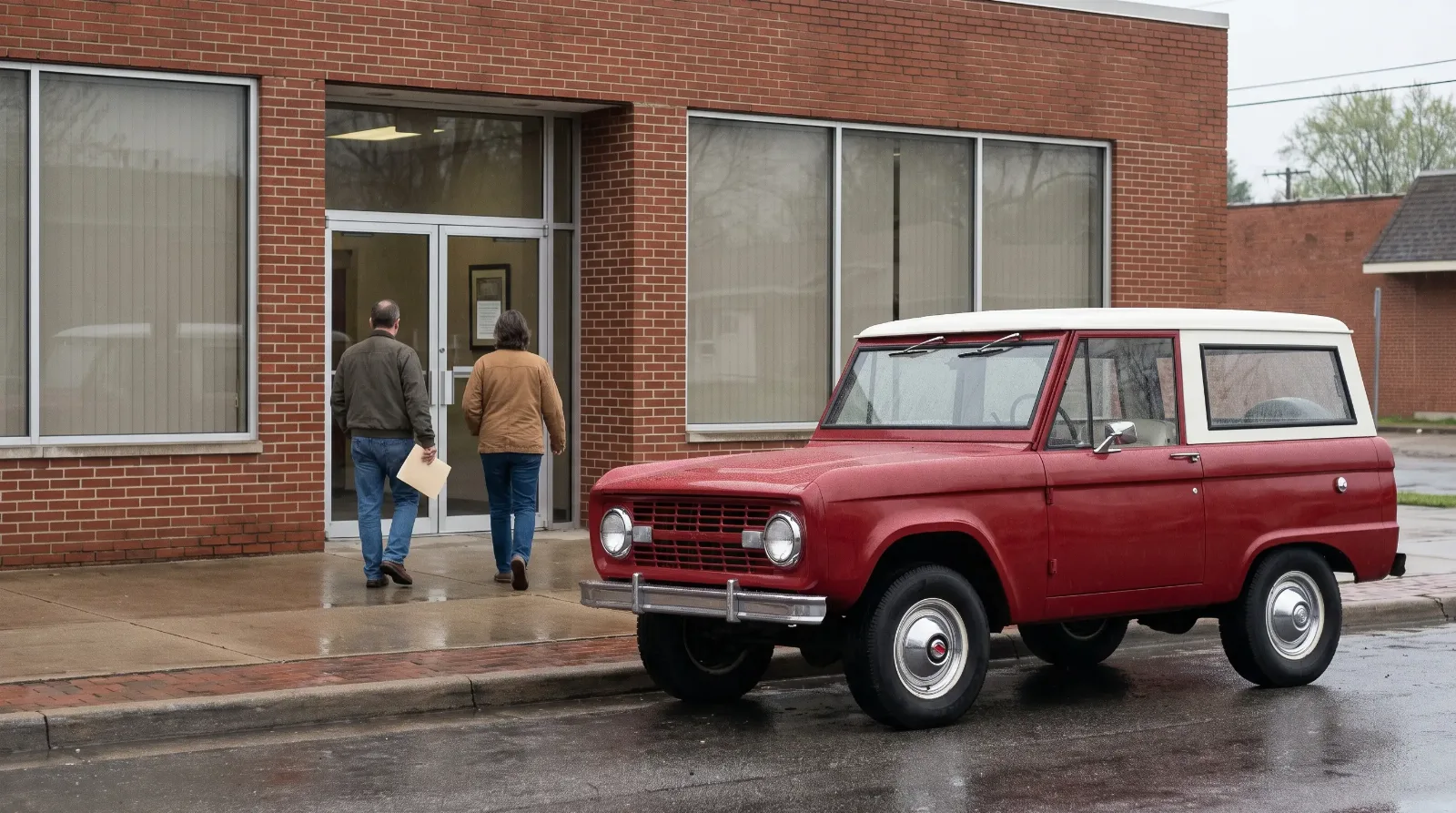
Selling a car privately with a loan still on it is entirely possible, and it is done every day. It simply has an order of operations, and the order matters more than the paperwork itself. Collector cars add a few wrinkles of their own: specialty lenders, long-forgotten liens from banks that no longer exist, and the occasional storage or repair claim that nobody mentioned. This is how each is handled.
How a lien appears on a title
When a car is financed, the lender is recorded as lienholder with the state. What the owner physically holds depends on the state. In some states the lender keeps the paper title until the loan is paid. In others the owner keeps a title that names the lienholder. Many states now run electronic lien and title (ELT) programs, and more than a dozen require lenders to use them. Under ELT, the title exists only as a state record while the loan is open. Once the lender sends an electronic release, the state removes the lien and mails a paper title to the owner, usually within days, though in some states it can take weeks.
The practical effect is the same everywhere. Until the lienholder releases its claim, you cannot deliver a clear title, and the buyer's DMV will not issue one in their name. So the first task is not finding a buyer. It is learning exactly what you owe and exactly how your lender releases a lien.
Call the lender and ask for a written payoff letter. It should state the payoff amount, the date it is good through, and the per-day interest that accrues after that date, along with the lender's instructions for receiving a payoff from a third party. Ask, too, how the release happens: an electronic release to the state, a signed lien release letter, or a paper title mailed to you, and roughly how long each takes. Those answers shape the rest of the sale.
Three ways to close the sale
There are three common routes, and the right one depends mostly on the gap between what you owe and what the car is worth.
| Route | How it works | Best suited to | Watch for |
|---|---|---|---|
| Pay off first, then sell | You clear the loan with your own funds, receive the clear title or release, then sell normally | Sellers with the cash on hand, or a small balance | Release and title delivery can take days or weeks; list only once the title is in hand |
| Close at the lender | Buyer and seller meet at the lender's branch; the buyer's payment covers the payoff, the remainder goes to you, and the lender releases the lien | Loans from banks or credit unions with local branches | Not every lender, especially online or specialty lenders, offers in-person closings |
| Buyer pays the lender directly | The buyer sends the payoff amount to the lender and the balance to you, under a written agreement both parties sign | Long-distance buyers and lenders without branches | The buyer carries the risk until the title arrives; expect a careful buyer to want an escrow service involved |
Whichever route you choose, put the arrangement in writing: the sale price, the payoff amount and the lender's name, the split of funds, who sends what to whom, and the date the title or release is expected. Both parties sign. A careful buyer will ask for the payoff letter itself, and you should be glad to provide it.
If you owe more than the car will sell for, the sale can still proceed, but the difference has to come from you, and it has to be in place at closing. A lender will not release a lien for less than the payoff without a separate agreement, so arrange that shortfall before you accept an offer rather than after.
Old liens on old cars
Collector cars carry a problem that newer cars rarely do. A title issued decades ago may still show a lienholder from a loan that was paid off in another era, by an owner long since gone, to a bank that has since merged, failed or changed its name twice. The loan is settled. The paper does not know it.
The remedy is a lien release, and the first step is to trace the lender. Bank mergers leave a trail, and the successor institution can usually issue a release once it locates the account or accepts reasonable evidence of payment. Where the institution truly no longer exists, federal regulators and state banking departments keep records of what became of failed banks, and state DMVs have their own routes for clearing an old lien when the lienholder cannot be found. Some accept a sworn affidavit with whatever proof of payment survives, then notify the listed lienholder and cancel the lien if no one objects in time. Others, Washington among them, require a court order. Ask your DMV which route applies before you start. These processes are slow, so begin them well before the car is advertised.
Two other claims deserve a mention, because they surface in the collector world more often than in ordinary used-car sales. A restoration shop, storage facility or body shop that was not paid may be able to assert a mechanic's or storage lien under state law, and in many states an unpaid claim can eventually lead to a lien sale of the car, after notice to the owner and any lienholder, with a new title issued to whoever buys it. If the car has spent time in a shop under a dispute, settle it in writing and obtain a release before you sell. And if the car came to you through an estate, confirm that no loan secured by the car remains open in the decedent's name.
"A title is a record, and records outlive the people who made them. A lien entered in 1979 is still a lien in 2026 until someone signs it away. Tracing it is patient work, but it is far easier before there is a buyer waiting at the door."
Sarah Whitfield
Completing the transfer once the lien is released
Once the lender has released its claim, the sale proceeds as any other. Keep the lien release letter with the title, or confirm that the state's electronic record shows the lien cleared, because the buyer's DMV may ask for proof. Sign the title in the seller section exactly as your name appears on its face, enter the buyer's details, the date and the true price, and keep a photograph of both sides. The details of signatures, notarization and the bill of sale are set out in our guide to the classic car title and the paperwork that accompanies it.
The odometer section of the title often prompts a pause at this stage, particularly on a car whose five-digit odometer has turned over at least once. For a classic, the federal requirement is lighter than most sellers expect, and the odometer disclosure rules for older vehicles explain what to write and why.
Afterward, file your release of liability with the state, remove your plates unless your state keeps them with the car, and cancel your insurance only once the car has gone. Keep the payoff letter, the lien release and your copy of the signed title together. If any question about the transaction arises later, those three documents tell the whole story in order, which is all a record is meant to do.
Sources and notes
- FDIC: Lien releases for loans from failed banks
- Electronic lien and title: state programs and paper title after release
- Washington DOL: How to remove a lienholder from a vehicle record
- California DMV: Lien sales for vehicles (repair, towing and storage liens)
- 49 CFR 580.17: odometer disclosure exemptions
Related Reading
Have a
Classic Car
for Sale?
Reach thousands of serious classic car collectors across the US.
Sell It Here →
Selling a classic? Here's how: the best sites to sell a classic car
Are You a Classic Car Dealer?
List your full inventory and connect with targeted classic car buyers.
Join as a Dealer →
#private sale
#selling a classic car
#classic car title
#lien release
#selling a car privately with a loan
#payoff letter

About the author
Sarah Whitfield
Third-generation classic car collector specializing in pre-war American and European coachbuilt automobiles. Researcher and concours enthusiast.

Comments (2)
V
vettedad72
2 weeks ago
Thinking about selling the C7, still owe on it with an online lender. Escrow basically mandatory?
Not mandatory, but sensible. With an online lender there's no branch to meet at, so the buyer pays the lender directly and carries the risk until the release arrives. An escrow service takes that risk off the table. Ask the lender first whether it releases electronically, because that decides how long everyone waits.
D
Derrick Haynes
6 days ago
Buick rated the 1970 Stage 1 455 at 510 lb-ft, and it still sells easier than a car with a lien on the title. Most buyers just move on to the next listing rather than wait on a payoff letter.