
The Chevelle market has always traded a notch below the Camaro and Chevrolet's own Corvette line at the very top end, but the gap has been closing for years. When a documented, top-tier Chevelle crosses the block now, it is capable of numbers that would have seemed like a typo a decade ago. The question is which specific car holds the record, and why.
Market & Values
7 min read
The Most Expensive Chevelle Ever Sold at Auction
A look at the record Chevelle sale, why LS6 convertibles outsell rarer COPO cars, and what the top of the market says about where prices are headed.
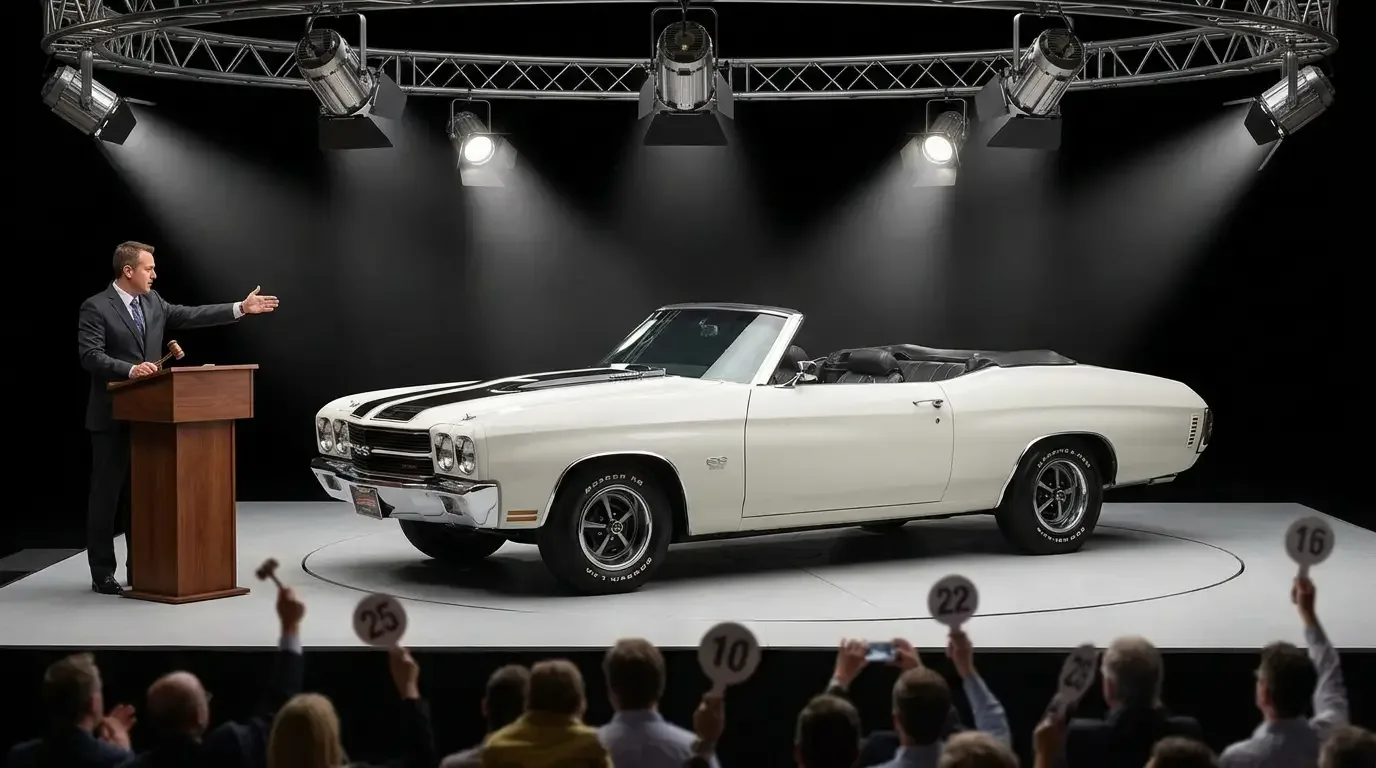
The honest answer is that "most expensive Chevelle ever sold" is a moving target, and results get revised as new sales happen and as older figures get re-verified against hammer price versus total price including buyer's premium. Here is what the data actually shows.
The segment: which Chevelles compete for the top spot
Three categories dominate any conversation about record Chevelle sales. First, factory 1969 COPO 427 cars, built in numbers small enough that individual chassis are tracked by name. Second, 1970 SS454 LS6 convertibles with documented build sheets and manual transmissions, the rarest configuration of the most powerful regular-production Chevelle Chevrolet ever built. Third, dealer-built exotics like the Baldwin-Motion and Yenko cars, which trade on provenance and story as much as factory rarity. Anyone new to this segment should start with Chevelle's collector world to understand how these three categories relate to each other before comparing individual sale prices.
The top sale
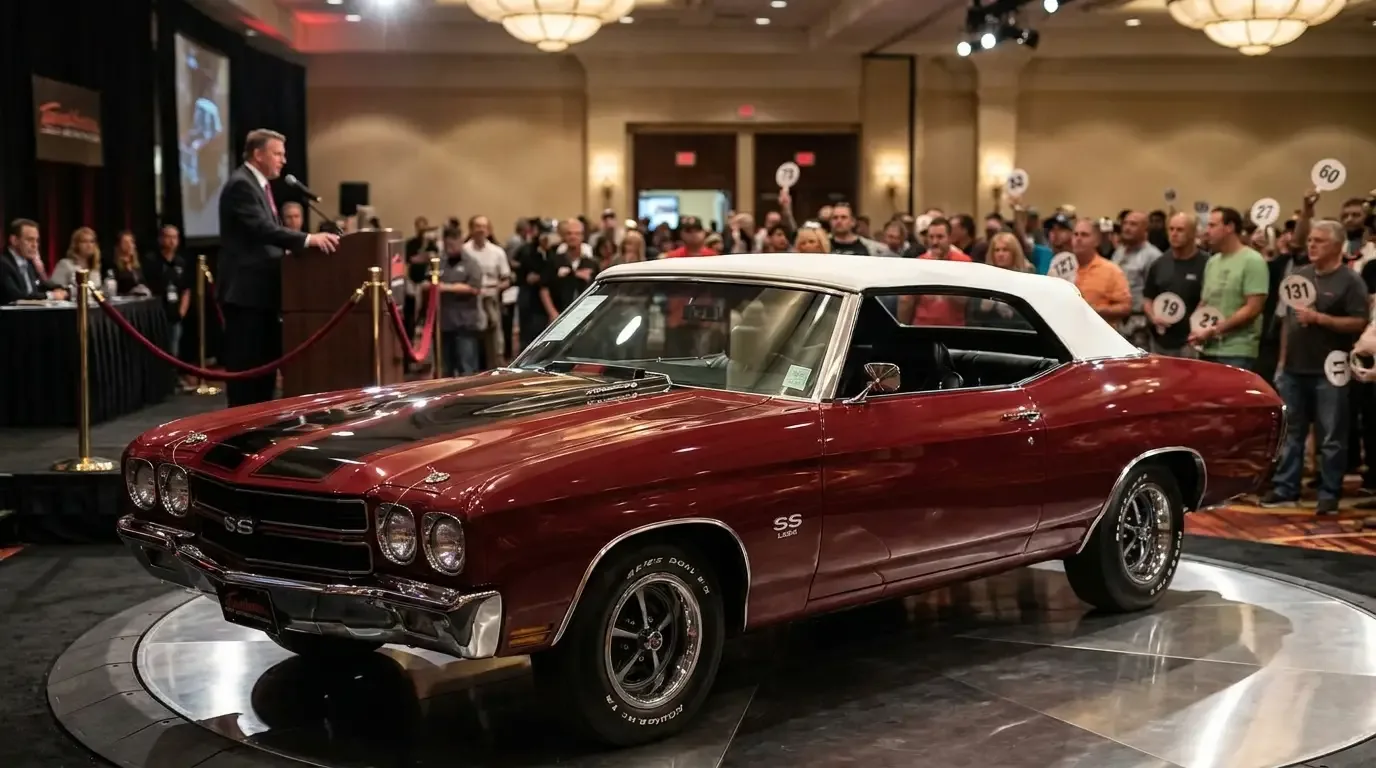
The honest answer has two layers, and both matter. The single highest hammer price ever recorded for a Chevelle is a 1970 SS454 LS6 convertible that sold for $1,242,000 including buyer's premium at Barrett-Jackson's Scottsdale auction in 2006, a car with genuine racing pedigree from the Briggs-sponsored Truppi-Kling team. But that number comes with a large asterisk. The car's original sheet metal had been reworked heavily for racing decades earlier, the factory engine was long gone, and a unit dressed up to look like an LS6 sat in its place by the time it crossed the block. Three years later the same car resold for just $264,000, a swing of nearly a million dollars that the collector press has since pointed to as a case study in auction fever overriding due diligence.
The record that the hobby now treats as the real benchmark, a documented, numbers-matching, factory-correct car, belongs to a 1970 Chevelle SS454 LS6 convertible with the desirable M22 four-speed that sold for $770,000 including fees at Mecum's Kissimmee auction, the result of a two-year frame-off restoration. That sale broke the previous record for a documented car, a white LS6 convertible that brought $600,000 in May 2024. Read together, the two numbers tell the real story: the all-time high hammer price and the all-time high price for a car the market actually trusts are not the same sale, and the gap between them is almost exactly the value of clean documentation.
| Car | Configuration | Result | Note |
|---|---|---|---|
| 1970 Chevelle SS454 LS6 convertible (Barrett-Jackson, 2006) | 450 hp, racing history, later found non-original | $1,242,000 | Highest hammer price on record, disputed authenticity |
| 1970 Chevelle SS454 LS6 convertible, M22 4-speed (Mecum Kissimmee, 2026) | 450 hp, documented, factory-correct restoration | $770,000 | Current benchmark for a trusted, documented car |
| 1969 COPO 9562 Chevelle | 427 L72, factory documented | roughly $115,000-$125,000 | Recent Mecum/Barrett-Jackson results |
| Baldwin-Motion Chevelle (Phase III class) | Dealer-built, big-block | roughly $175,000-$225,000 | Only a handful of documented cars exist |
Buyers who want to see what an LS6 convertible actually costs to acquire today, outside the record-setting outliers, can browse LS6 convertibles currently listed and compare asking prices against what these top sales suggest the ceiling looks like.
Why the LS6 convertible outsells the COPO cars by such a wide margin
This surprises people who assume the COPO 427 cars, being rarer in raw production numbers, should command more. They do not, and the gap is not a close one. Recent documented COPO 9562 sales have landed in the $115,000 to $125,000 range, while a documented LS6 convertible can bring six to seven times that. The reason comes down to body style and factory pedigree. The LS6 was a catalogued, regular-production option, not a special order run through a loophole, which makes documentation easier to verify and gives the car a cleaner story for a buyer who wants both investment security and bragging rights. Convertibles across the board carry a premium over coupes in this market, and the COPO cars sold in 1969 were nearly all hardtops, so that convertible scarcity stacks directly on top of the LS6's own rarity in a way the COPO cars simply cannot match.
There is also a liquidity dimension to this that gets overlooked. A COPO car's value depends heavily on a small pool of specialist buyers who understand the ordering system well enough to trust a given car's story. The LS6 convertible has a broader base of buyers, collectors who want the most powerful catalogued Chevelle, muscle car generalists who recognize the model without needing a COPO history lesson, and investors comparing it against LS6 hardtops and lesser Chevelle variants. A wider buyer pool at auction tends to produce more aggressive bidding, and more aggressive bidding is what actually sets the record, not the underlying rarity number by itself.
What a disputed record teaches you about reading auction results
Auction data is not just about the headline number. The 2006 sale shows what happens when a room gets caught up in a car's story, in that case genuine period racing history, without the underlying documentation to support it. The correction came fast: a million-dollar swing in three years once buyers looked past the provenance and into the sheet metal and engine numbers. That is a useful check on any headline price. When you read about a record sale, it is worth asking not just what the car sold for, but whether the number held up on resale, and whether the paperwork that justified the price was actually in the car or in the story around it.
"Rarity gets you into the conversation. Documentation and body style decide who wins it. I have watched a numbers-matching LS6 convertible outsell a technically scarcer COPO car simply because the paperwork left no room for doubt."
David Mercer
What this tells buyers about where the market is headed
The gap between a well-documented top-tier Chevelle and a driver-quality example has widened, not narrowed, over the past several auction seasons. That is the pattern you see across the muscle car segment generally as buyers age into higher net worth and prioritize certainty over speculation. If you are buying to hold, a documented example in the LS6 or COPO category is a defensible position even at a premium price, because the population of cars that can genuinely compete for record sales keeps shrinking as more of them land in permanent collections.
I'd add one caution to that outlook. Record prices at the very top of a segment do not automatically drag the rest of the market up with them. I've seen collectors assume that a headline sale means every SS454 in their garage just appreciated, and that is rarely how it works. The record cars are outliers precisely because they combine rarity, condition, and documentation in a way that most examples never will. A solid driver-quality LS6 hardtop without the full paper trail is a good car and a reasonable buy, but it is not on the same price trajectory as the documented convertible that set the benchmark, and treating the two as comparable is the most common mistake I see buyers make when a record sale makes the news.
For a closer look at one of the specific outliers that built this market's reputation, see next: The 1965 Chevelle Z16, a car that predates the LS6 and COPO stories by five years but set the template for what a documented, low-production Chevelle can be worth.
Sources and notes
- autoevolution: Holy-Grail 1970 Chevelle LS6 Convertible Sells for Record Price
- Jalopnik: This Chevy Muscle Car Lost Its Owner a Million Dollars
- Yahoo Autos, 1970 Chevelle LS6 Convertible Sets New Auction Record at Mecum Kissimmee
- Classic.com, 1969 Chevrolet COPO Chevelle auction result
- Bonhams, 1970 Chevrolet Chevelle Baldwin Motion Phase III
- Sports Car Market, 1970 Chevrolet Chevelle SS 454 LS6 Convertible profile
Related Reading
Have a
Chevrolet Chevelle
for Sale?
Reach thousands of serious classic car collectors across the US.
Sell It Here →
Are You a Classic Car Dealer?
List your full inventory and connect with targeted classic car buyers.
Join as a Dealer →

About the author
David Mercer
Classic car market analyst with two decades of experience tracking collector car valuations, auction results, and investment trends.
Related Listings - Chevrolet Chevelle
Comments
Be the first to comment on this article.