
Most people who know the Z16 name know one fact about it: roughly 200 were built. Fewer know why the number landed there, or what RPO Z16 actually specified beyond "big engine, stronger frame." The paperwork tells a more specific story than the legend does, and it is worth going through it option code by option code, because the Z16 is one of those cars where the factory records answer nearly every question the internet argues about.
Market & Values
6 min read
The 1965 Chevelle Z16: A 200-Car Grail
RPO Z16 broken down option by option: the 375 hp L37 396, the reinforced frame, the Muncie four-speed, and how to verify a genuine car today.
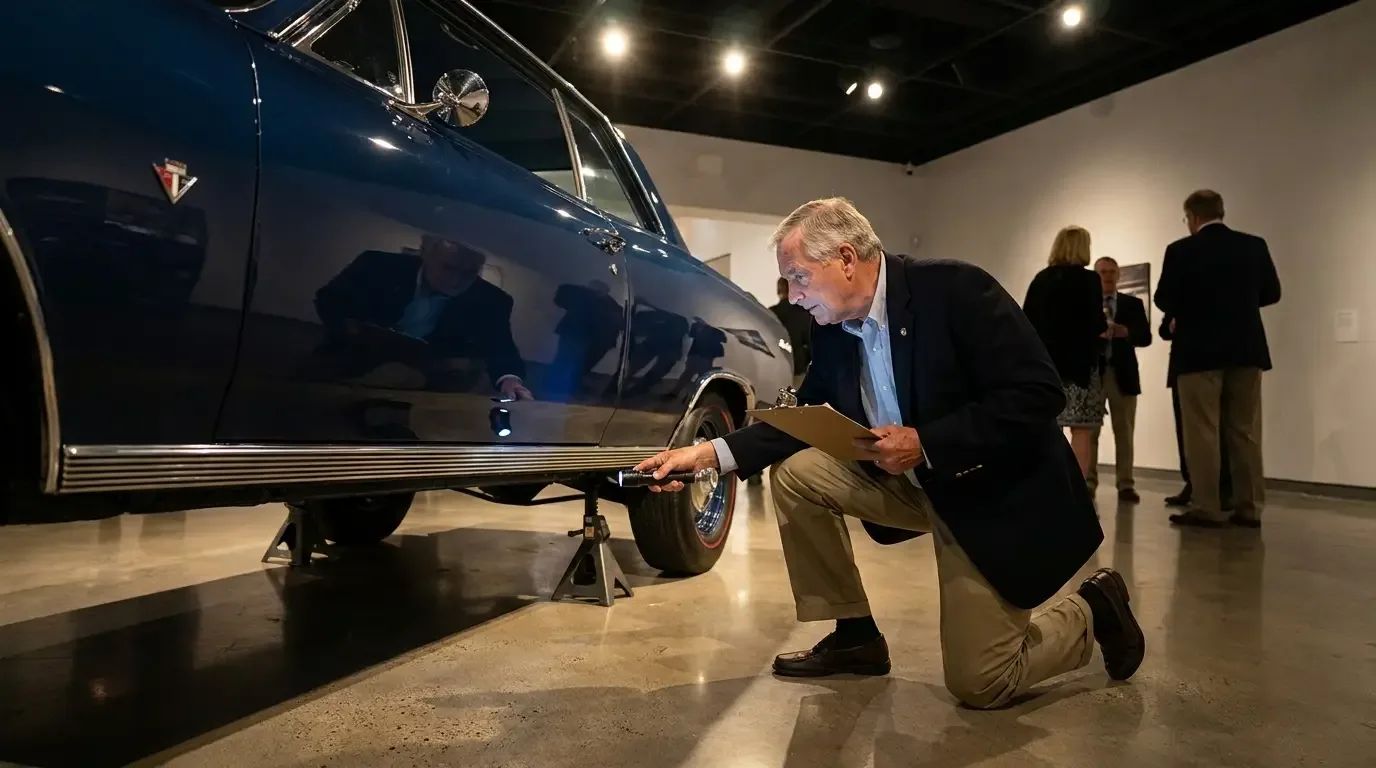
This was not a regular-production option in the way the later SS396 package became. It was a mid-year pilot run, built to test whether a big-block Chevelle made sense as a catalogued product for 1966. Chevrolet got its answer, and the Z16 became the reason the SS396 existed the following year in volume.
What RPO Z16 actually included
The package centered on the L37 396 cubic inch V8, rated at 375 horsepower, dropped into a 1965 Malibu SS body. That part gets repeated correctly most of the time. What gets left out is the chassis work underneath it. Chevrolet reinforced the frame, upgraded to a stronger 12-bolt rear axle, added power front disc brakes, and specified a Muncie M20 wide-ratio four-speed as the only available transmission. No automatic was offered. No factory air conditioning was offered either, because the added weight and the accessory drive complications did not suit the engineering brief for a car built to prove the 396 could live in a mid-size chassis without breaking something.
Readers looking for the broader context of where this car sits in the model's history should see the collectible Chevelle story, which places the Z16 alongside the other outlier Chevelles built across the model's production run.
The production number, and why it is not exact
The figure most reliably cited is 201 units for the 1965 model year, built at the Kansas City plant: two engineering prototypes, 198 production coupes, and a single convertible. That convertible was not a regular-production car at all. It was built to Chevrolet executive Semon "Bunkie" Knudsen's own specification for his personal use, it was never sold to a retail buyer, and it is understood to have been destroyed afterward. So the honest answer to "how many Z16 convertibles can a collector buy" is zero. Every Z16 that trades hands today, and every Z16 offered for sale, is one of the 198 production coupes. What the build sheets and factory records do confirm consistently is that coupe-only production and the Muncie four-speed requirement across the run.
How to verify a Z16 today
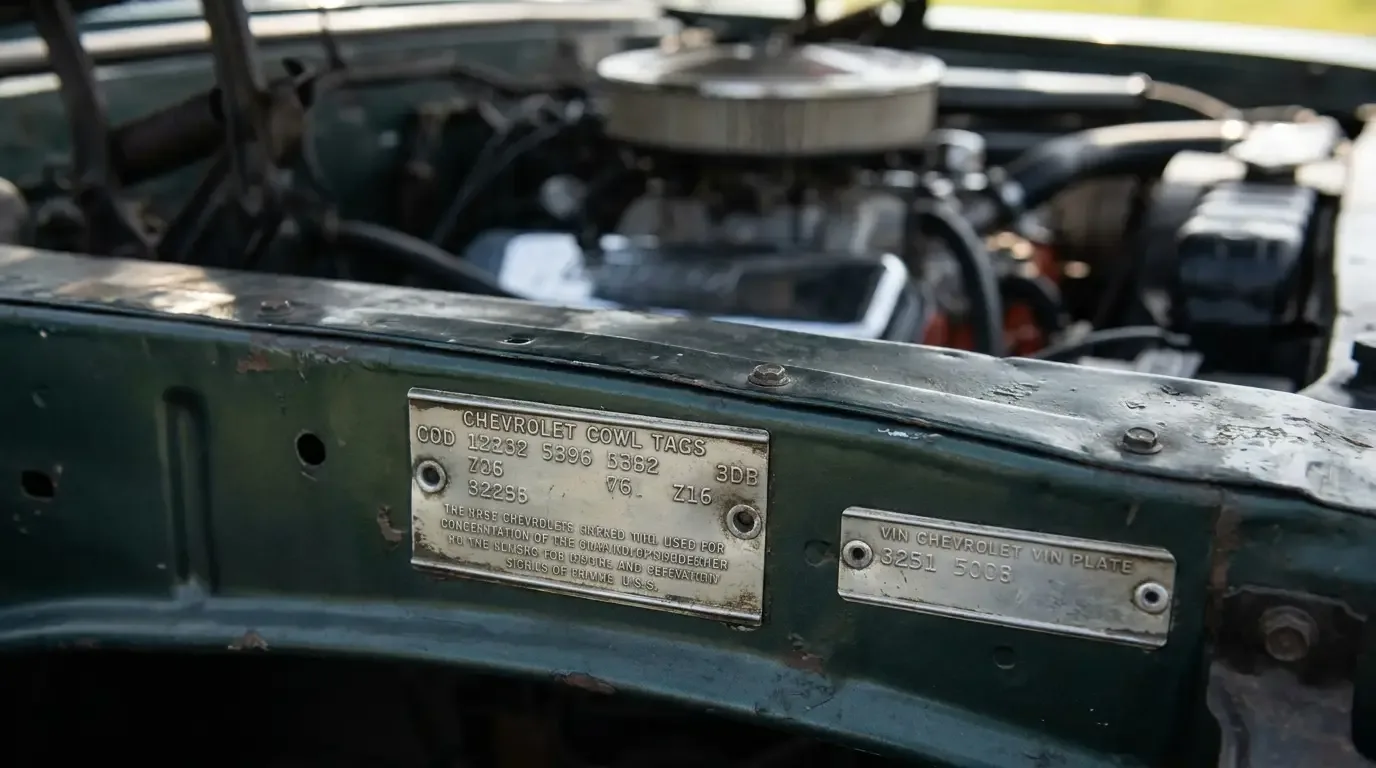
The cowl tag and the trim tag carry the option codes that confirm the package, but the more reliable document, when it survives, is the original build sheet, typically found tucked under the rear seat springs or occasionally in the trunk area, plus the dealer invoice if the family kept it. A car described as a Z16 without any of that paperwork is a claim, not a fact, and the difference matters enormously to value. I have seen genuine 396 SS Chevelles from 1966 misidentified as 1965 Z16 cars by sellers who either did not know the distinction or hoped a buyer wouldn't ask. The two are not the same car, and the frame and rear axle differences are there to check if you know what you are looking at. For buyers who want to see what genuine, documented examples currently look like on the market, view Chevelle listings filtered to the era.
Beyond the paperwork, there are physical checks worth doing before anyone spends real money. The reinforced frame rails are a known point of difference from a standard 1965 Malibu, and a car claiming Z16 status without the corresponding chassis reinforcement is a red flag regardless of what the cowl tag says. Matching the engine block casting number and date code against what the build sheet specifies is standard practice, the same way it would be for any numbers-matching claim, and it catches a surprising number of cars where a correct-for-year 396 was swapped in later rather than being the car's original engine.
What a genuine example costs today
I am cautious about quoting hard price figures for Z16 cars specifically, because so few trade in a given year that any single sale can distort the picture. What I can say is that a documented, numbers-matching Z16 sits in a different pricing bracket entirely from a 1966 SS396, even a well-optioned one, because the production gap between 198 coupes and tens of thousands of SS396s is enormous, and researchers estimate only around 65 Z16 coupes survive today in restored or unrestored condition, and the market prices that scarcity accordingly. Buyers should expect that a genuine Z16 with full documentation will draw serious attention from the small group of collectors who specialize in early big-block Chevrolets, and that attention tends to produce competitive rather than casual offers.
"The build sheet either confirms the story or it doesn't. I'd rather tell an owner their car isn't a documented Z16 than let a bad assumption stand, because the paperwork always wins the argument eventually."
Tom Ramirez
Why the Z16 matters beyond its production number
The Z16 is significant less for its rarity, though that alone makes it valuable, and more for what it proved. Chevrolet's engineers used this small run to validate that a big-block could live in the intermediate chassis without redesigning the car from scratch, and the lessons from the Z16's frame and brake upgrades fed directly into how the 1966 SS396 was engineered as a full production package. Every SS396 that followed owes something to the two hundred or so cars that came before it. For the full picture of how the factory-order muscle car culture that produced the Z16 eventually led to cars built entirely outside the regular ordering system, see next: COPO Chevelles, and for the model's complete generational arc, the full Chevelle story covers how the SS package evolved from this pilot run through the end of the muscle car era.
Sources and notes
- Curbside Classic, 1965 Chevelle SS396 Z16: 201 Built, and a Common 396 Engine Misunderstanding Resolved
- Mac's Motor City Garage: Birth of the Big-Block Chevelle: The 1965 Z16
- Muscle Car Fan: The Rarest Chevelle of All Time, 1965 Z16 SS396
- Sports Car Market, 1965 Chevrolet Chevelle Malibu SS 396 Z16 profile
- 65chevelle.org: Z-16 reference page
- Curbside Classic: Vintage Car Life Review: 1965 Chevelle Malibu SS396 Z16
Related Reading
Have a
Chevrolet Chevelle
for Sale?
Reach thousands of serious classic car collectors across the US.
Sell It Here →
Are You a Classic Car Dealer?
List your full inventory and connect with targeted classic car buyers.
Join as a Dealer →

About the author
Tom Ramirez
Corvette researcher and historian based in Bowling Green, Kentucky. Two decades documenting Corvette production history from original factory records.
Related Listings - Chevrolet Chevelle
Comments
Be the first to comment on this article.