
Old pickups don't sell like old cars, and the sooner a seller accepts that, the sooner the truck leaves the yard. The guy who wants a 1972 C10 is not the guy who wants a 1972 Chevelle, even if they park next to each other at the cruise night. He may want to haul hay with it. He may want to drop it on an air ride and put a modern drivetrain in it. He may just want the truck his granddad drove. If you want to sell classic truck stock for a fair price, figure out which of those men you're talking to, then go stand where he shops.
Market & Values
8 min read
Where Classic Trucks Sell Best
Where to sell a classic truck: which buyers want which pickups, and the local, national and auction channels that suit each one.
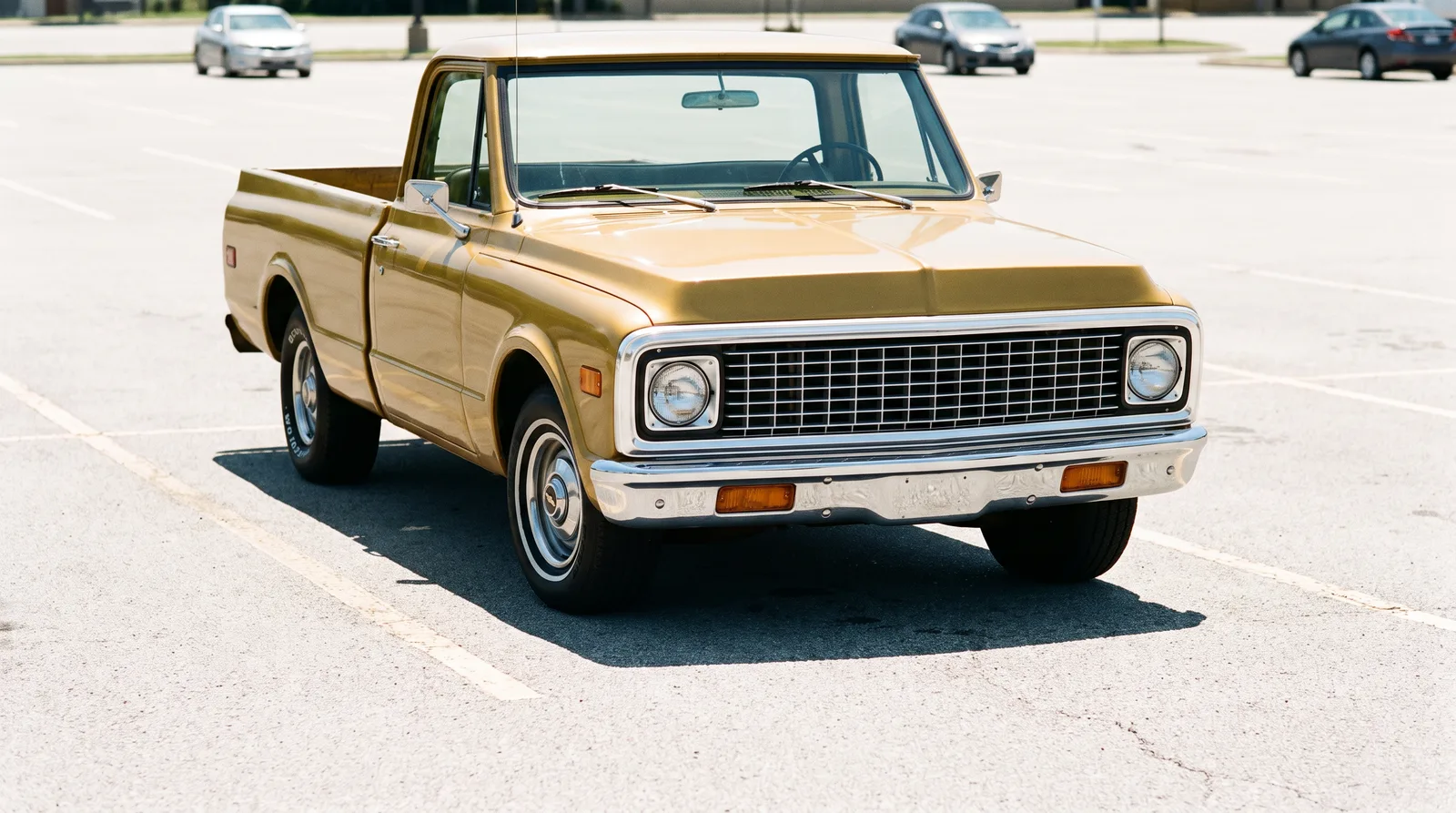
That is what this piece is about: which channels suit which trucks, and why. If you want the site-by-site rundown of fees and photo limits, the comparison of the best site to sell a classic car covers that. I'm not going to repeat it. I'm going to talk about the buyers.
Truck buyers are not car buyers
Classic truck buyers come in roughly four kinds, and they want different things from the same old iron.
The builder wants a straight cab, a solid frame and a clean title. He doesn't care much about the engine, because it's coming out. Squarebody Chevys, '67 to '72 C10s and '53 to '56 F-100s draw a lot of these buyers, since the aftermarket for those trucks is deep and the parts are easy to get.
The originality buyer wants the truck the factory built. Correct engine, correct bed wood, original paint if it still exists, and a data plate that matches. He's smaller in number, but he'll pay for the right truck and he'll ask hard questions.
The patina buyer wants a truck that looks like it worked, because it did. Faded paint, a dented bed, honest wear. Don't restore that truck before you sell it. You'll spend money to chase away the man most likely to buy it.
The user wants a running truck to use: around the property, to the dump, on a Saturday to the parts store. He's price-sensitive, he's local, and he's going to crawl underneath it.
Each of these men looks in a different place, and a truck listed only where the wrong one shops will sit.
Matching the truck to the channel
Here's how I'd sort it. These are rough bands, not rules, and a truck with a story or a rare option can jump a row.
| Truck | Likely buyer | Where it sells best | Why |
|---|---|---|---|
| Rough project or parts truck | Builder, user | Facebook Marketplace, Craigslist, swap meets | Local buyers with trailers, cheap or free to list |
| Running, driving work truck | User, patina buyer | Local listings plus truck-specific Facebook groups | Buyers want to drive it before they pay |
| Solid driver with good paint | Patina buyer, weekend cruiser | Classic-only listing site plus a local post | Reaches buyers beyond your county |
| Correct, documented original | Originality buyer | Specialist classifieds, marque clubs and registries | Collectors who pay for paperwork |
| Finished restomod or show build | Buyer who wants it done | National listing sites, larger auctions | Price needs a national audience |
Notice where most trucks land: in the top half. The majority of old pickups out there are drivers and projects, and the buyers for those are local. That's not bad news. It means a lot of trucks sell for the cost of a Craigslist ad and a weekend of answering the phone.
Local and cheap: Marketplace, Craigslist and swap meets
Facebook Marketplace is free to list a vehicle for a local sale, and for a project truck it is hard to beat. The folks who want a $6,000 F-100 with a stuck motor are scrolling it every evening. Craigslist charges $5 for a car or truck ad by owner in the US, and it still pulls the cash-and-trailer crowd. Expect lowball offers on both. Expect trade offers too, some of them for things you didn't know people traded.
Truck-specific Facebook groups do better than Marketplace for a running truck. A group for squarebody owners or Ford trucks of a certain era is full of people who know what a rust-free cab corner is worth, and who won't waste your time asking if it has power steering when the photo shows the box.
Swap meets and truck shows still matter more for trucks than for most cars. Pull it onto a lot with a "for sale" sign and a sheet on the window. Truck people walk the rows looking for exactly that. Events built around pickups, such as the Carlisle Truck Nationals in Pennsylvania, which runs a truck corral for buying and selling next to its swap meet, put you in front of a crowd that came to buy.
National listings and auctions for the good ones
Once a truck gets above driver money, the local buyer pool thins out and you need a wider net. A correct, documented original or a finished build will sell faster to the right buyer three states away than to the wrong buyer down the road.
Specialist classified sites put your truck in front of collectors nationally. ClassicCars.com, for instance, sells private seller packages from $149.99 to $349.99 that run until sold, with a big dealer presence in its results and a large newsletter. If you're weighing that site against a flat-fee alternative, the ClassicCars.com reviews and comparison we've put together lay out the differences. Hemmings draws an older, experienced readership that respects a correct truck. eBay Motors charges a flat $34 at $15,000 or less and $79 above, with no final value fee, and gives you an auction clock if you want one.
Live auctions such as Barrett-Jackson and Mecum have run plenty of pickups across the block in recent years, especially restomods and high-end restorations. The fixed date and the crowd can work for a truck that photographs well and has the receipts. But commissions, entry fees and transport add up fast, and a rough truck on the block gets a rough result in public. I'd only go there with a truck that would stand up at a judged show.
If you're still sorting out channels beyond listings, such as consignment, dealers and clubs, the guide to where to sell walks through each one.
"Sell the truck to the man who's going to use it the way you'd want it used. Price it honest, show him the frame, and don't spend a dime on paint he's going to sand off anyway."
Robert Halloran
Writing the ad truck buyers actually read
Truck buyers are practical. They want the facts that cost them money, and they want them early. Lead with year, make, model, cab and bed, two-wheel or four-wheel drive, engine and transmission. Then the rust story, frame up, with photos to back it. Then title status. Then price.
Skip the poetry. A line like "a real head-turner" tells a truck buyer nothing. "Cab corners and floors are original metal, small rust hole in the passenger side bed floor" tells him exactly what he's driving out to see, and he'll trust the rest of the ad more for it.
Price against trucks, not cars. A 1970 C10 and a 1970 Chevelle in the same condition do not bring the same money, and the comps for your truck are other trucks of the same generation, cab and drivetrain. Long bed or short bed matters. So does four-wheel drive. Get those comps from sold results, not asking prices.
For a driver or a good original that needs a wider audience than your county, a classic-only listing works well next to a free local post. Listing on Classic Cars Arena costs a flat one-time fee, $49, $99 or $179, with no commission and no buyer premium, keeps the listing up until it sells, and covers the US and Canada. Featured and Premium also go out to more than 17,000 newsletter subscribers who signed up for new listings. It's a smaller crowd than the big general sites, but every one of them came for old iron. Look over our seller packages if that fits your truck, and keep your local post running alongside it.
Sources and notes
Related Reading
Have a
Classic Car
for Sale?
Reach thousands of serious classic car collectors across the US.
Sell It Here →
Selling a classic? Here's how: sell my classic car
Are You a Classic Car Dealer?
List your full inventory and connect with targeted classic car buyers.
Join as a Dealer →

About the author
Robert Halloran
Texas-based classic truck enthusiast with decades of experience buying, restoring, and writing about American pickups from the 1940s through the 1980s.
Comments
Be the first to comment on this article.