
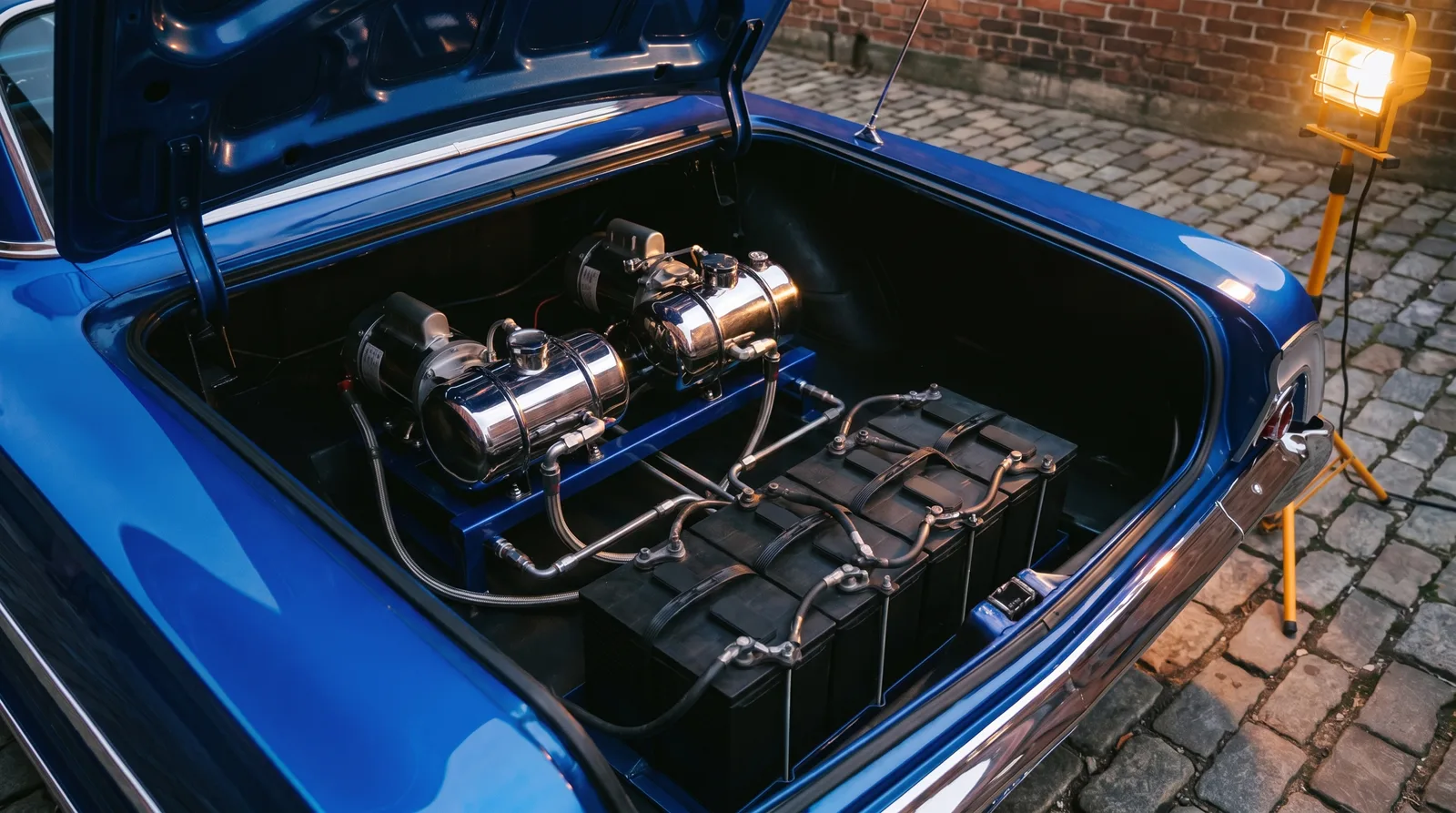
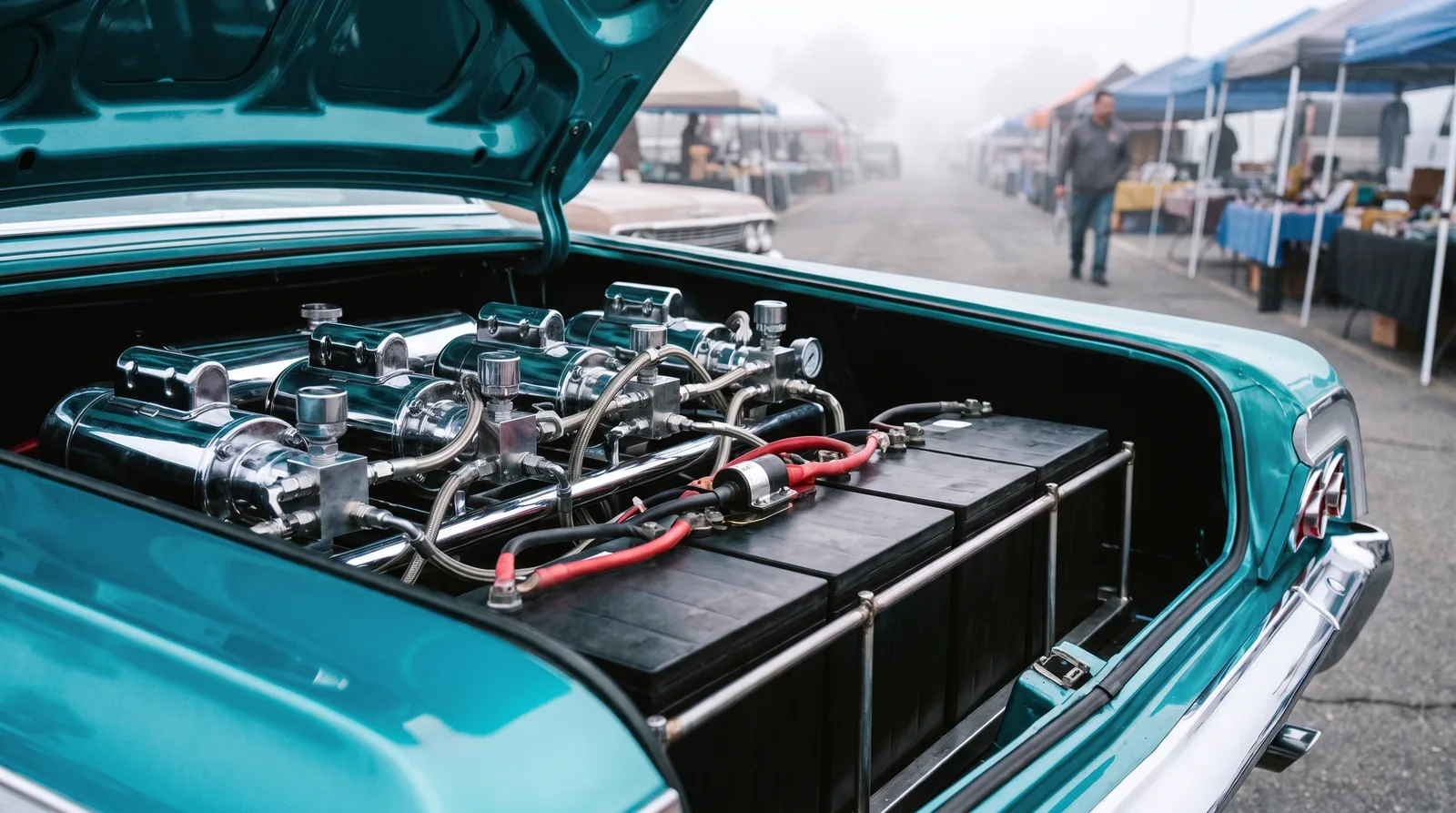
I have set up both. Hydraulics with steel cylinders and lead-acid batteries, and bag setups running a compressor and a tank in the trunk. People ask me which one is better like there is a clean answer. There is not. There is what you want the car to do, and there is what you are willing to live with underneath it. Pick the wrong one for the wrong reason and you will hate the build in six months.
Restoration & Tech
6 min read
Airbags vs Hydraulics on a Lowrider: Honest Tradeoffs
Bags ride smoother, hydraulics hop. A blunt, hands-on breakdown of ride quality, cost, reliability, and the culture behind each choice.
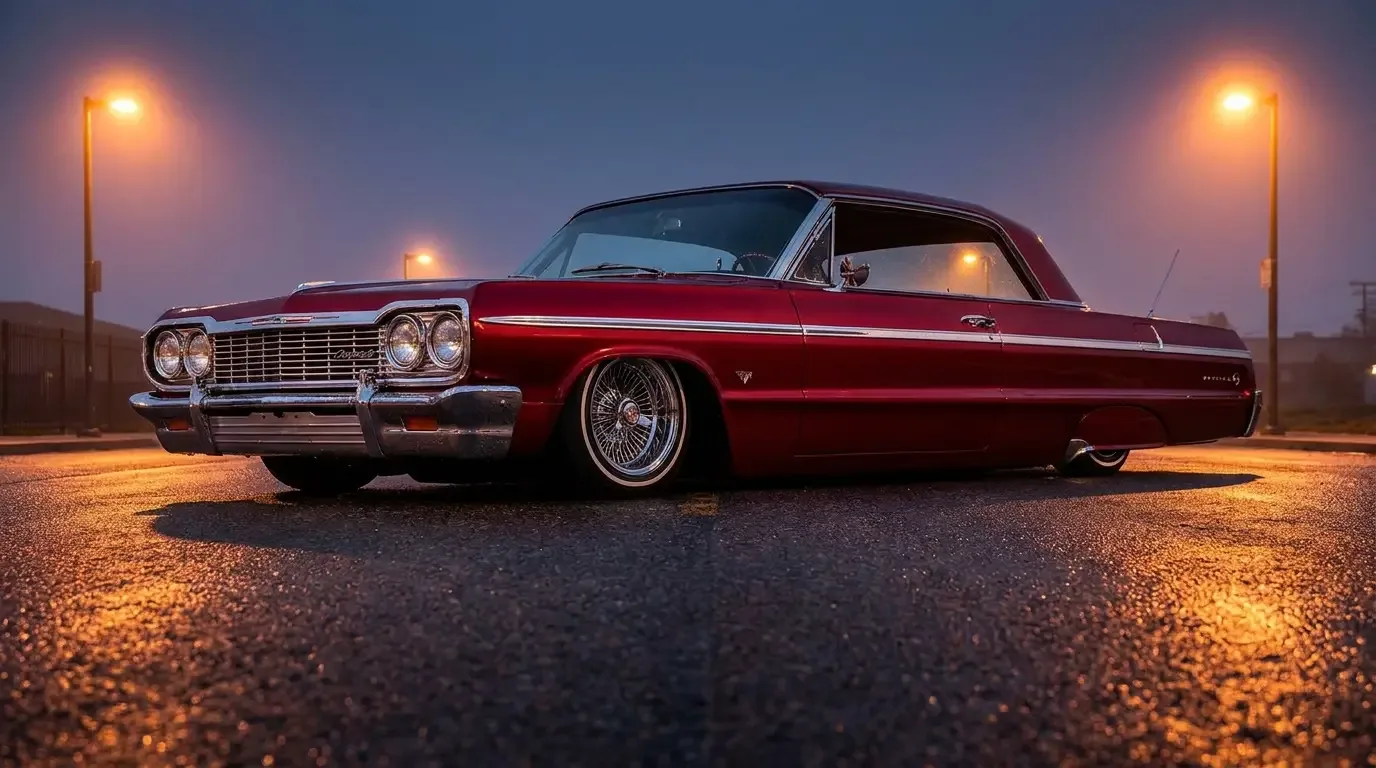
So let me lay it out the way I would at the shop, with the gloves still on. If you want the full mechanical background before you commit, read How Lowrider Hydraulics Work first, because half the arguments in this fight come from people who do not understand the pump side.
Ride quality: bags win, and it is not close
On the street, air suspension rides better. A bag is a rubber and cord bladder full of compressed air, and air compresses. That cushion soaks up expansion joints and pothole edges the way a stock coil never did. You air it up in the morning, drive to work, air it down in the parking lot, and nothing about the trip beat you up.
Hydraulics do not compress. Fluid is fluid. When you lock a hydraulic car up at driving height, you are riding on the cylinder and whatever coil is left in the mix, and it can feel stiff and busy over bad pavement. Guys tune around it with softer springs and by not slamming it to the bump stops, but you never get the pillowy feel a bag gives you for free.
Hop and lift: this is why hydraulics still rule the show
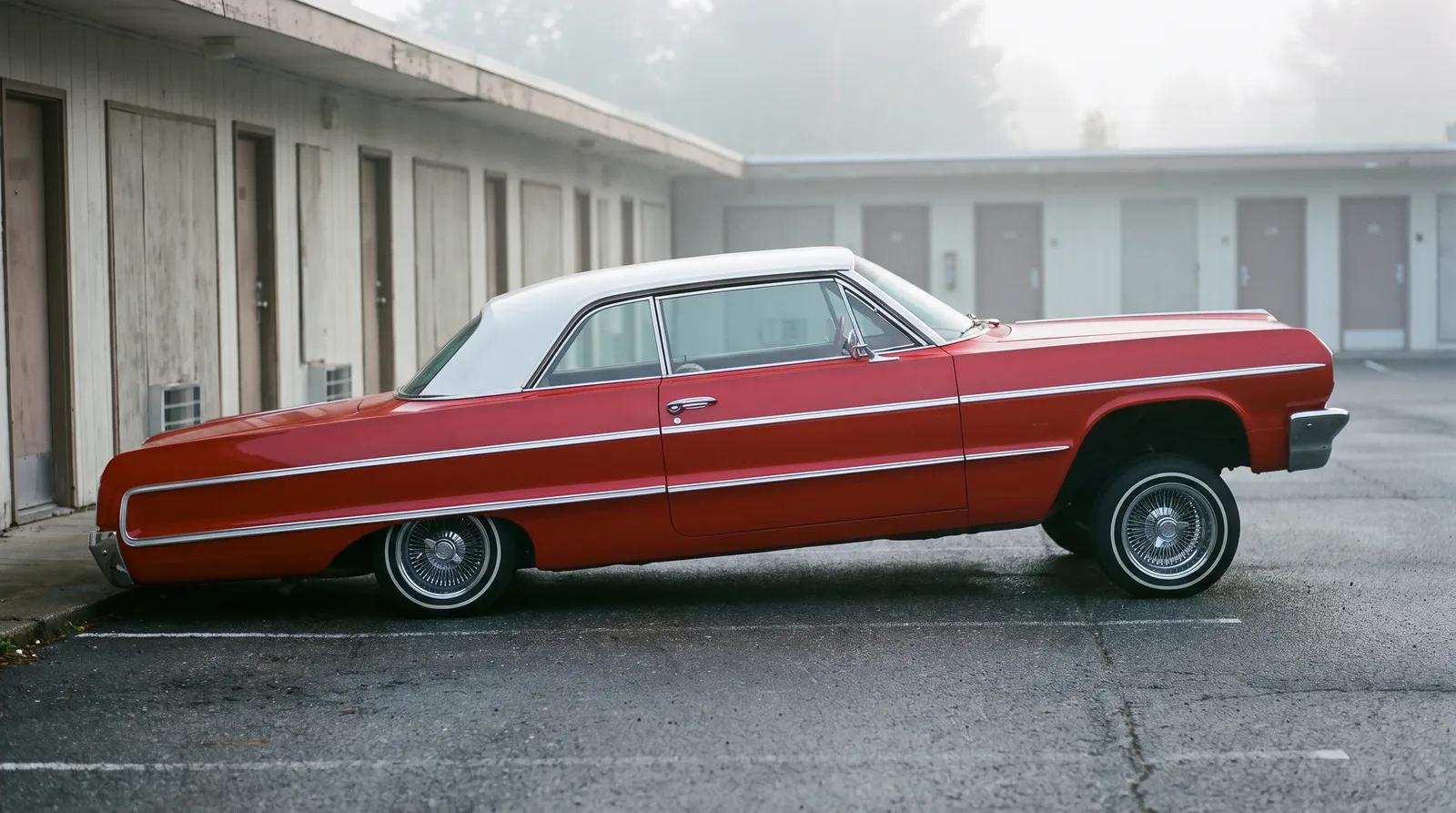
Here is where the whole thing flips. If you want to hop, if you want that violent front-end jump off the ground, you want hydraulics. A hydraulic setup dumps a huge slug of pressure into the cylinder almost instantly when you hit the switch. That spike of force is what throws the nose in the air. Batteries in series, a fast pump, the right gear head, and a car will stand up and slam back down all day.
Air cannot do that. A compressor and tank can lift the car and hold a height, but it cannot deliver that instant hammer blow. Bags fill at the speed the valve and the air will allow, which is smooth, not explosive. You will see bagged cars lay frame and do a slow lift-and-drop dance. You will not see a bagged car win a hopping contest against a real hydraulic setup. That is just physics.
- Hydraulics: instant force, real hopping, aggressive lift, three-wheel motion, competition capable.
- Bags: smooth lift, clean lay, height presets, no hop, show-and-go cruising.
Cost and reliability: honest numbers
Neither one is cheap, and anybody who tells you otherwise is selling something. A basic two-pump hydraulic setup with cylinders, dumps, hoses, batteries, and a rack of steel runs into real money once you count the labor to plumb it clean. A quality air management kit with a good compressor, tank, valves, and a digital controller lands in a similar range. The parts costs are closer than people think.
The difference is in what breaks and how it breaks. Hydraulics fail loud and physical. Blown seals, cracked cylinders, a hose that lets go and sprays fluid, batteries that boil off if you overwork them. Air systems fail quieter but sneakier. A slow leak at a fitting, a compressor that burns out from running wet air, water in the tank that rusts things and freezes in winter if you skip the drain.
| Factor | Hydraulics | Airbags |
|---|---|---|
| Ride comfort | Firm, can be busy | Soft, absorbs bumps |
| Hop ability | Yes, competition level | No |
| Lift speed | Instant, violent | Smooth, controlled |
| Common failures | Seals, hoses, battery drain | Air leaks, wet air, compressor burnout |
| Maintenance style | Fluid checks, battery care | Water drain, leak hunting |
| Trunk footprint | Battery rack plus pumps | Tank plus compressor |
The purist view, and why it matters
There is a real cultural line here, and I am not going to pretend it does not exist. To a lot of old-school builders, hydraulics are the lowrider. The switches, the batteries, the hop, that is the heritage that came up out of East LA when guys were beating a section 21999 height law by rigging aircraft hydraulics to lift the car back up on demand. That history is baked into the whole thing, and if you want the background, the lowrider story covers where it all started.
To those purists, a bagged car is a nice custom, but it is not a true lowrider. It cannot hop, so it cannot play the game the way the game was invented. I do not fully agree, but I understand it. Bags are the newer, easier, smoother path, and easier is not always what the culture respects. You will feel that at any serious show or on any club forum.
"Bags will win you a smoother drive home. Hydraulics will win you the hop pit and the respect of the old heads. Decide which one you actually built the car for, then stop apologizing for it."
Mike Sullivan
My honest take after years under these cars: if you daily it, cruise it, and want it to lay clean and ride easy, run bags. If you want to hop, work the switches, and carry the tradition forward the way it was born, run hydraulics and learn to maintain them. Both are valid. Just be honest about which car you are building, and go read up on lowrider hydraulics so you know what you are signing up for. When you know your answer, the good news is there are plenty of both styles among the lowriders for sale, already done right by somebody who made the same choice.
Sources and notes
- Builder and installer interviews on hydraulic and air suspension setups.
- General suspension and pneumatic engineering references for air-spring behavior.
- Lowrider club and community discussion on culture, hopping, and the purist position.
- Period accounts of early lowrider hydraulic use and vehicle height regulation.
Related Reading
Have a
Classic Car
for Sale?
Reach thousands of serious classic car collectors across the US.
Sell It Here →
Are You a Classic Car Dealer?
List your full inventory and connect with targeted classic car buyers.
Join as a Dealer →

About the author
Mike Sullivan
Detroit-area muscle car enthusiast and restoration specialist with three decades of hands-on experience working on American iron.
More in Restoration & Tech
Comments
Be the first to comment on this article.