
The Ford flathead V8 is a stubborn engine. It makes heat, it fights you on cooling, and it never made big power the easy way. But rodders have been squeezing more out of it for eighty years, and they still do it today. If you want to understand why, you have to understand what the engine is and where it runs out of breath. This is the part of the story that starts with flathead v8 hardware and how you make it live at higher output.
Restoration & Tech
8 min read
Building a Ford Flathead V8 for Power
Heads, cams, multiple carbs and the heat problem you cannot design away. How to build a Ford flathead V8 for power, and why rodders still do it.
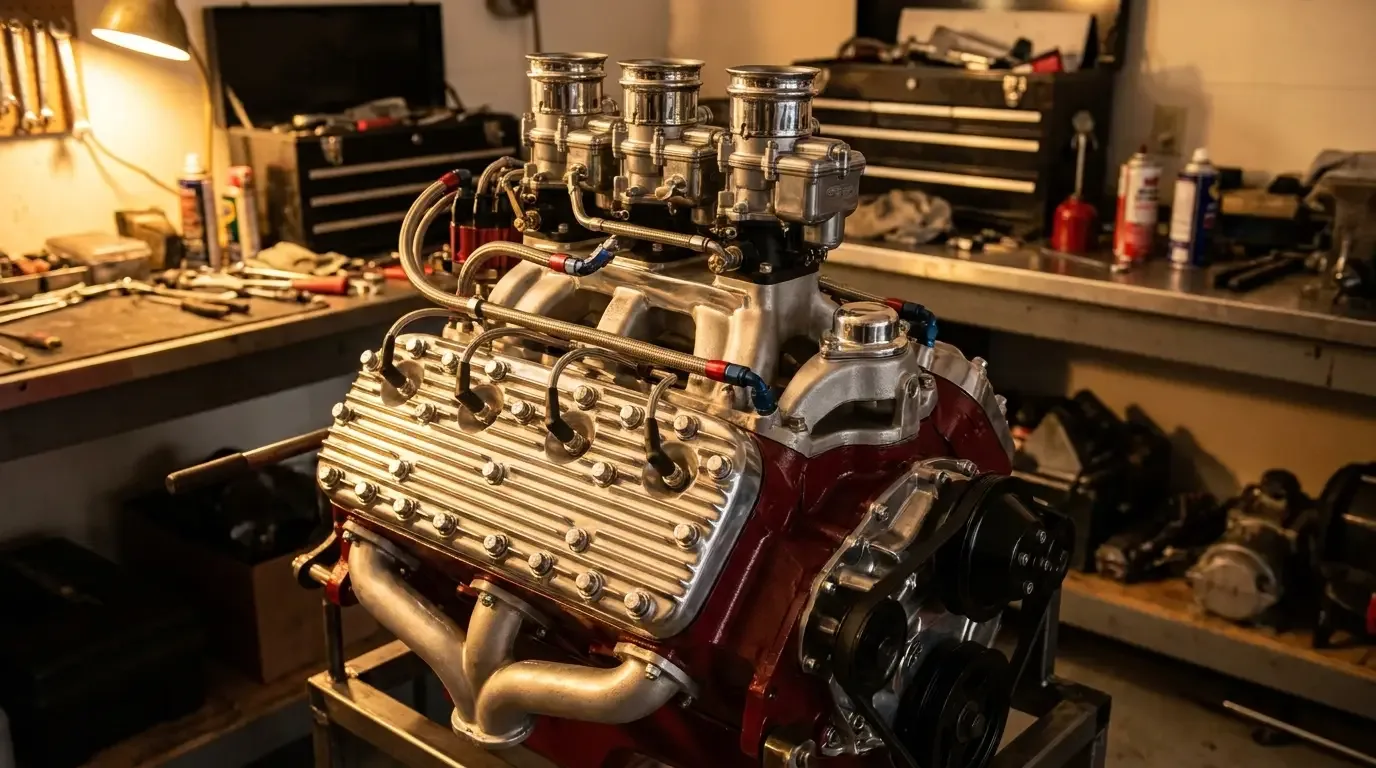
Start with the basics. Ford built the flathead from 1932 to 1953 in the US. The valves sit in the block, not the head. The intake charge has to make a hard turn up and over, past the valve, then back down into the cylinder. That layout is cheap to build and simple to service. It also strangles airflow and traps heat right where you least want it. Everything you do to build one for power is a fight against those two facts.
Heads and compression: the first real gain
Stock flathead compression is low. The early 21-stud engines and the later 24-stud 8BA blocks all ran modest ratios from the factory because pump gas in the 1930s and 1940s was garbage by today's standards. The first thing a builder does is bolt on aftermarket aluminum heads. Edelbrock, Offenhauser and Navarro made them then and reproduction castings are still sold now.
Aluminum heads do two jobs. They raise compression, and they pull heat out of the combustion chamber faster than cast iron. On a flathead that second part matters more than people think. You are running the exhaust valve inside the block, so the head is one of your few good paths to shed heat. Milling the heads or choosing a higher-ratio casting gets you more squeeze, but you cannot chase compression forever. Push it too high on a flathead and you get detonation long before you get the power you wanted. Somewhere around 8.0 to 8.5:1 is a sane street ceiling on pump gas. Race guys went higher on alcohol and lived with the consequences.
Cams and valves: making it breathe
A hotter camshaft is where the flathead wakes up. The stock cam is mild. A regrind or an aftermarket bumpstick from a name like Winfield, Iskenderian or Potvin opens the valves further and holds them open longer, so more mixture gets in and more exhaust gets out. On an engine this airflow-starved, cam timing is one of the best dollars you can spend.
But the valvetrain fights back. The flathead uses solid lifters riding directly on the cam, and the valves are small and buried in the block. Bigger valves need the block relieved, which means grinding a channel from the valve pocket toward the bore to help the charge get around the corner. Relieving is old-school flathead work and you can overdo it. Take too much and you kill low-speed torque and hurt cooling around the valve seats. Do it right and the engine pulls harder up top without falling on its face down low.
- Match the cam to the rest of the build. A big race grind behind stock heads and one carb is a waste.
- Check valve-to-block clearance after any relieving. The valves live close to the deck.
- Adjustable lifters or a proper lash setup save you grief. Solid lifters need attention.
"People want to bolt on a wild cam and call it a day. The flathead does not work like that. The cam, the heads, the carbs and the relief job all have to talk to each other, or you built a boat anchor that overheats."
Mike Sullivan
Carburetion: why two, three, or more
A single carburetor on a flathead is a compromise. The intake runners are long and the fuel has to travel a bad path. Rodders answered that by bolting on multiple carbs sitting on an aftermarket manifold, so each cylinder bank gets fuel from a shorter, straighter route. Two-carb and three-carb setups are the classic flathead look for a reason. They work.
Two 97-series Stromberg carbs on a dual manifold is the traditional street answer. It feeds the engine better than a single without turning the thing into a cold-blooded mess in traffic. Three carbs make more sense on a bigger, cammed build that actually needs the airflow up top. The trick is progressive linkage so only the center carb runs at part throttle and the outboard carbs come in when you get on it. Run all three wide open all the time on a street car and you will foul plugs and drink fuel. If you want the deeper story on induction, that runs through Multi-Carb Setups: Tri-Power and Beyond.
| Setup | Typical use | Trade-off |
|---|---|---|
| Single carb | Stock, mild rebuild | Simplest, least airflow |
| Dual 97s | Street rod | Good balance, still driveable |
| Triple carbs | Hot street / show | Needs progressive linkage or it fouls |
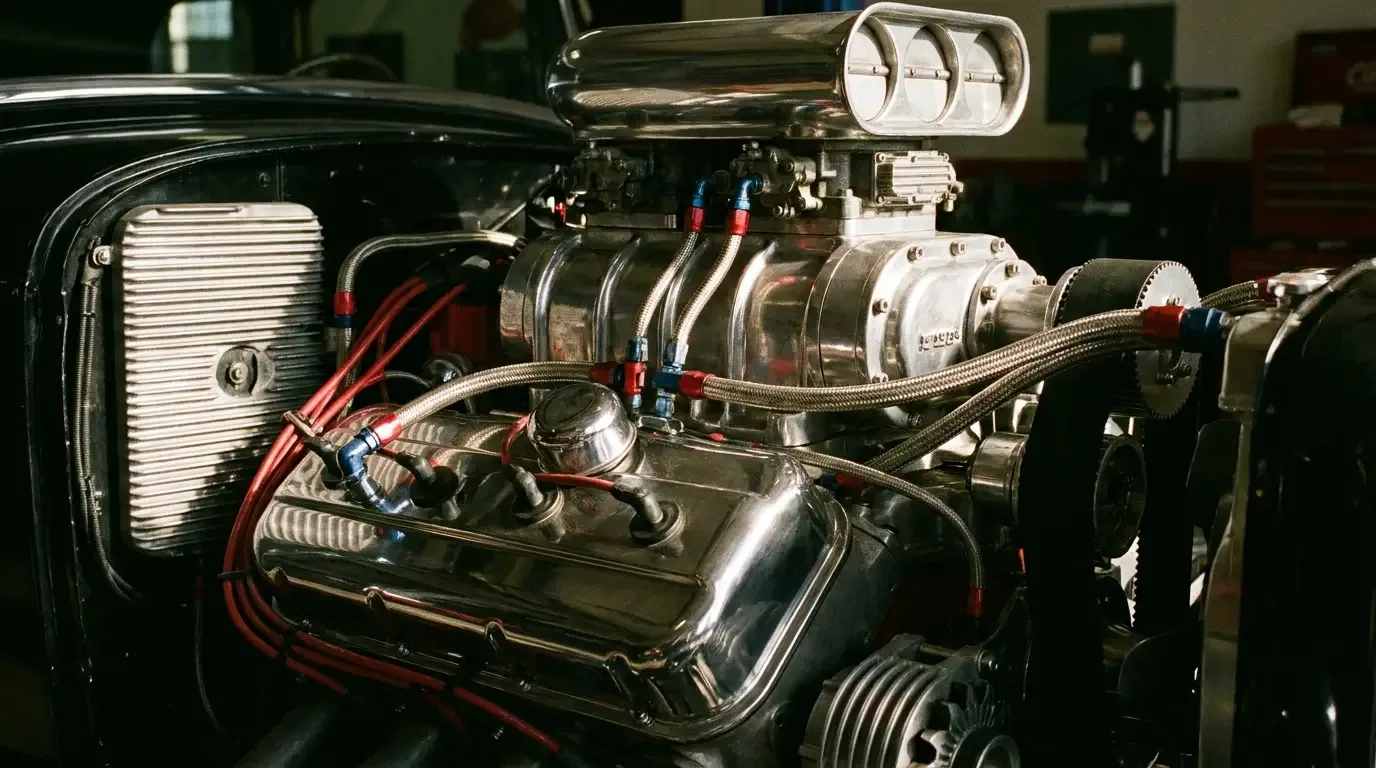
| Blower / supercharger | Serious power | Adds heat and stress; not a bolt-on |
The heat problem you cannot design away
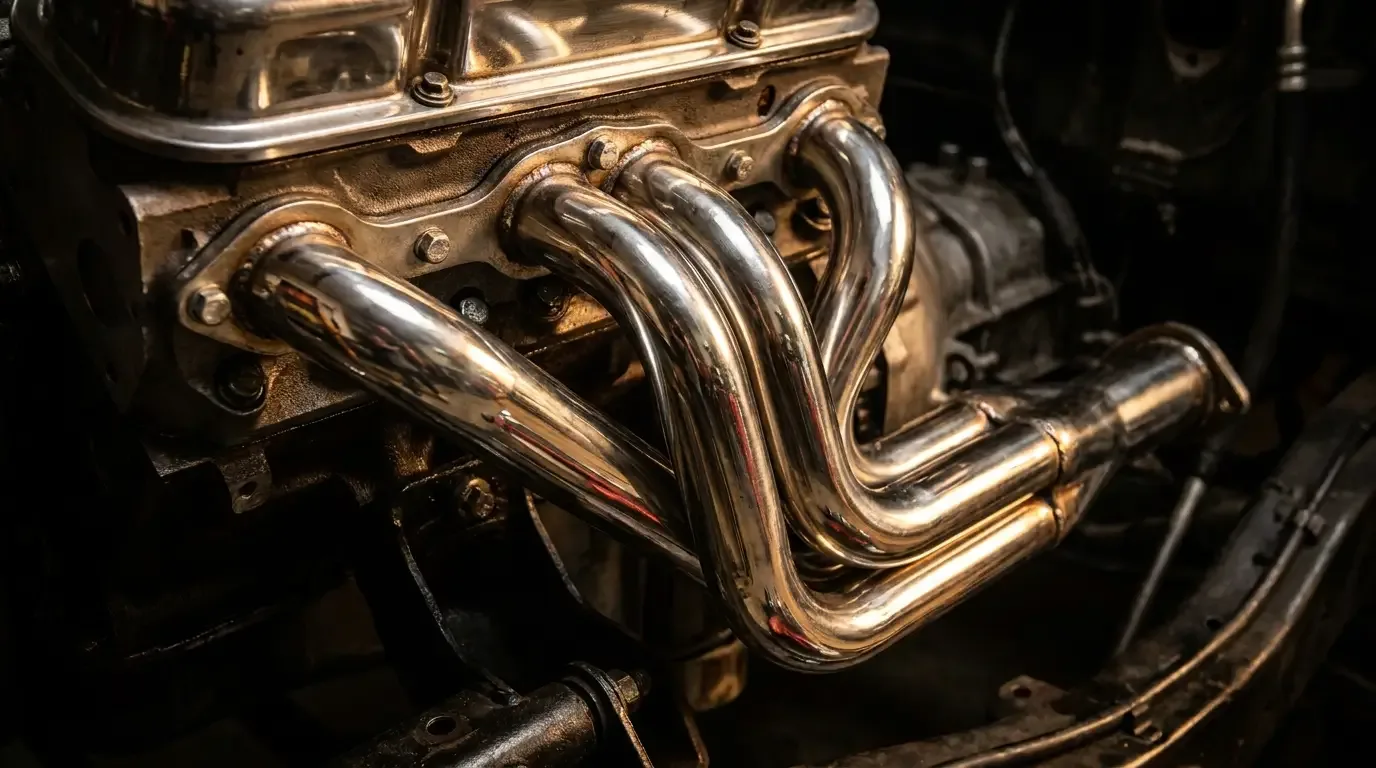
Here is the honest part. You can build the best flathead in the world and it will still run hotter than a modern overhead-valve engine doing the same work. The exhaust path through the block dumps heat into the coolant. The water pumps on early cars are marginal. The cooling passages get crud in them after decades. This is not a flaw you fix, it is a limit you manage.
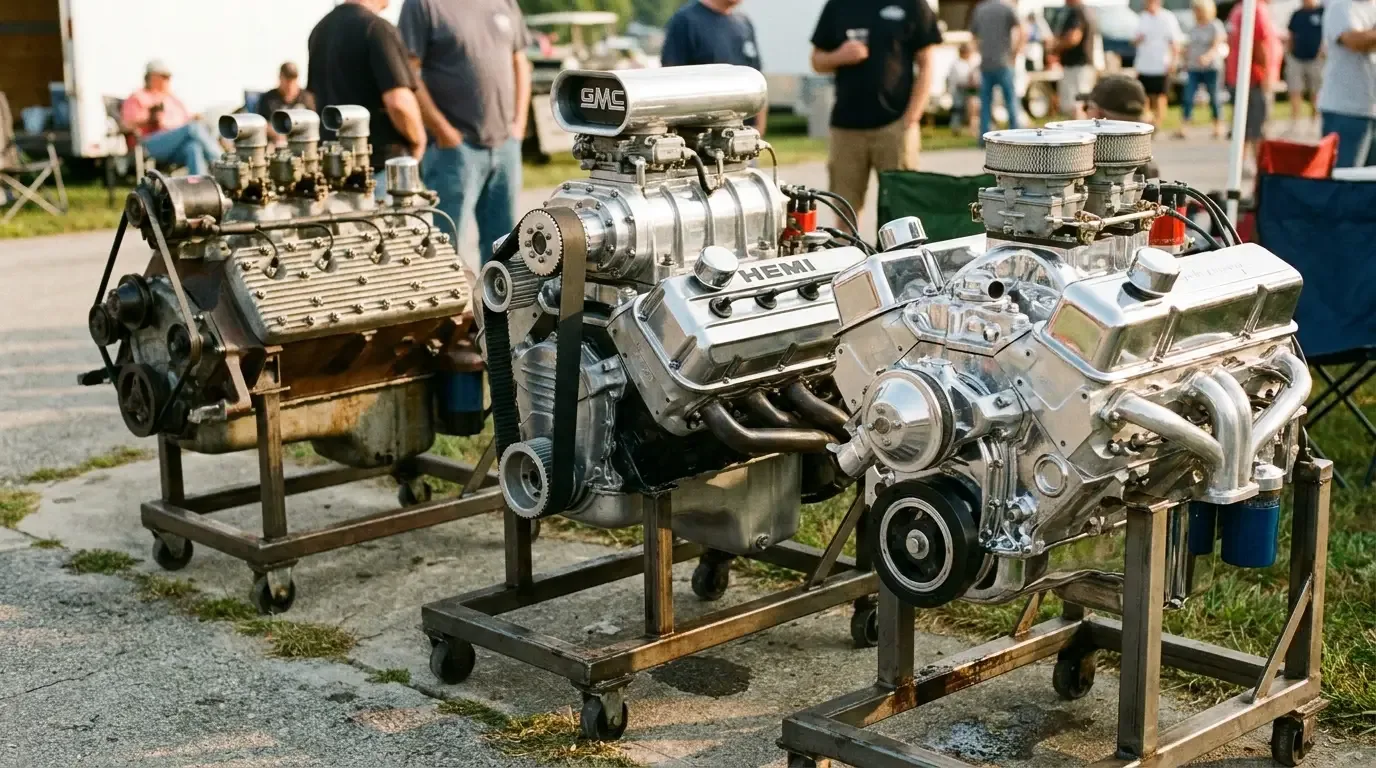
Manage it and the engine will live. Ignore it and you crack a block or warp a head. The overhead-valve engines that followed, including the The Early Hemi: Hot Rodding's First Modern V8, moved the exhaust out of the block and solved this problem outright, which is exactly why they eventually pushed the flathead aside for pure power builds.
🔧 Inspection Priorities
- Cracks between the valve seats and cylinders. The number-one flathead killer. A cracked block is common on hard-run cores and it is expensive to find a good replacement.
- Water pump condition. Original pumps are weak. Rebuilt or upgraded pumps are cheap insurance and keep the coolant actually moving.
- Blocked cooling passages. Decades of rust and casting sand clog the jackets. A hot-tanked, cleaned block runs far cooler than a dirty one.
- Head gasket surfaces. Check the decks are flat. Warped or corroded surfaces leak combustion into the coolant and make the heat problem worse.
Why rodders still build them
If the flathead runs hot and never made easy power, why bother in 2026? Because it is the engine that built the hobby. The postwar hop-up industry, the speed shops, the dry lakes records, all of it grew up around this block. Building one is a direct line back to how the whole thing started, and if you want that history you can read it in the hot rod story.
There is also the sound and the look. A dual-carb flathead with finned aluminum heads sitting in an early Ford is correct in a way no crate motor will ever be. It rewards a builder who understands it. You cannot fake your way through a flathead build the way you can with a modern engine and a wiring harness. You have to know why it runs hot, why the carbs are set up the way they are, and how far you can safely push the compression and the cam. Get all of that right and the engine gives back a driving character that is worth every bit of the fight.
Sources and notes
- Period hot-rod press and postwar hop-up manuals covering flathead Ford tuning.
- Ford flathead V8 engine references and factory service data (1932 to 1953 production).
- Aftermarket speed-equipment catalogs and manufacturer literature (aluminum heads, cams, intake manifolds).
- Builder interviews and workshop practice on flathead cooling, relieving and multi-carb tuning.
Related Reading
Have a
Classic Car
for Sale?
Reach thousands of serious classic car collectors across the US.
Sell It Here →
Are You a Classic Car Dealer?
List your full inventory and connect with targeted classic car buyers.
Join as a Dealer →

About the author
Mike Sullivan
Detroit-area muscle car enthusiast and restoration specialist with three decades of hands-on experience working on American iron.
More in Restoration & Tech
Comments
Be the first to comment on this article.