
An engine makes a hot rod. The body gets the attention at the show, but the thing that decides whether the car is a driver or a lawn ornament sits between the frame rails. Hot rodding started as a fight to get more power out of what was cheap and available, and the story of the engines is the story of the hobby itself. It runs from the Ford flathead V8 through the early Hemi to the small-block Chevy, with a stack of induction and exhaust tricks bolted on along the way.
Restoration & Tech
10 min read
Hot Rod Engines: Flathead to Small-Block
The Ford flathead started it, the Hemi took to boost, and the small-block Chevy changed everything. A wrench-turner's guide to hot rod engines.
If you want the full picture of how hot rods began, start there. This piece is about what turns the crankshaft.
The Ford flathead V8: the engine that started it
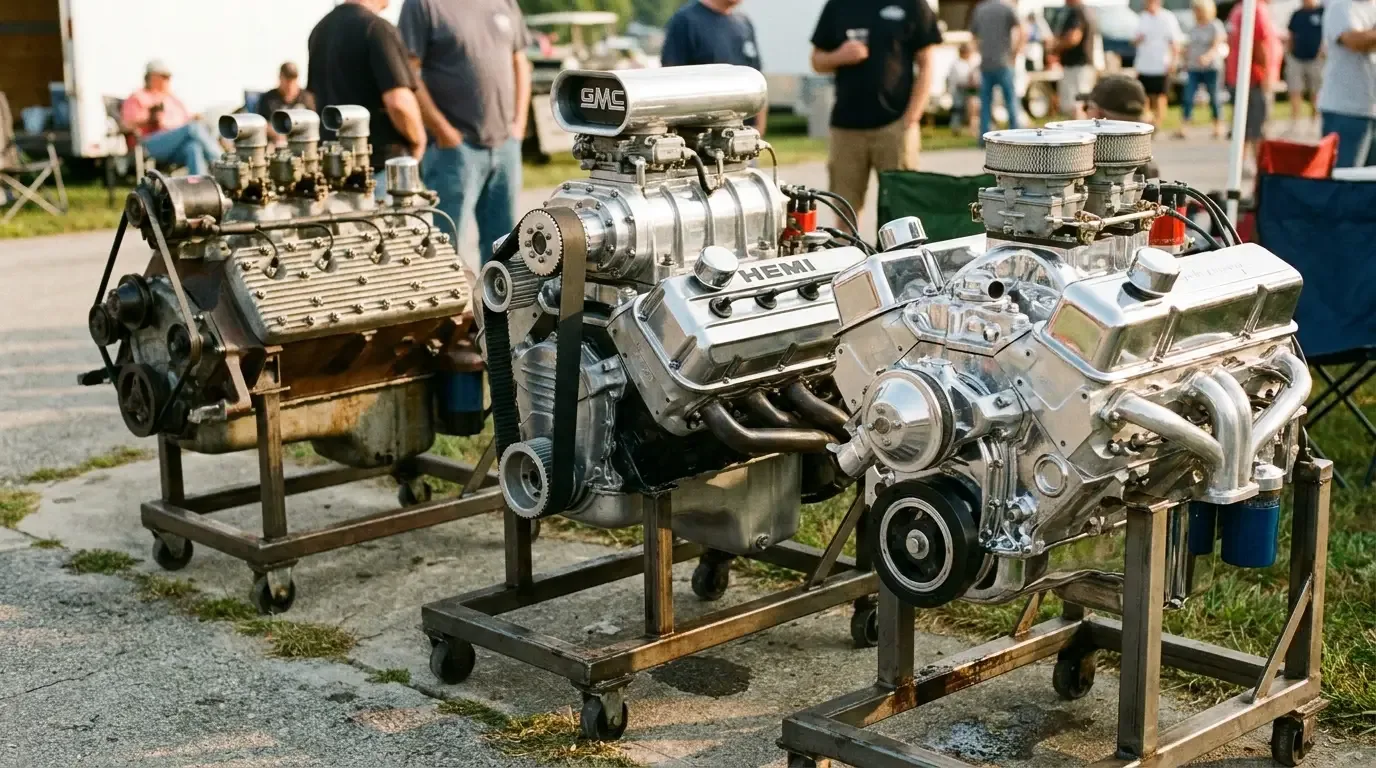
Ford put a V8 in a cheap car in 1932. That is the whole reason hot rodding exists in the form we know it. Before that, a young guy who wanted eight cylinders had to buy an expensive car. The flathead V8, the valves sit in the block instead of the head, so the whole thing is low and flat, gave working people a V8 they could afford used a few years later.
The early ones were small. Displacement grew over the production run, and by the late 1940s the flathead was making somewhere around 100 horsepower stock. Nobody left it stock. The aftermarket that grew up around this engine is what built the hobby. Companies like Edelbrock, Offenhauser, and Navarro sold finned aluminum heads to raise compression and multi-carb intake manifolds to feed it more fuel.
The flathead has real limits, and any wrench-turner who has built one will tell you about them. The exhaust ports run through the block, so the engine dumps heat into the cooling system and these motors run hot. Breathing is poor because the ports take a bad path around the valves. You can spend serious money making a flathead make numbers a stock small-block makes on the cheap. People do it anyway, because the flathead is the sound and the look of a traditional hot rod, and no other engine has that history.
The early Hemi: hemispherical heads change the math
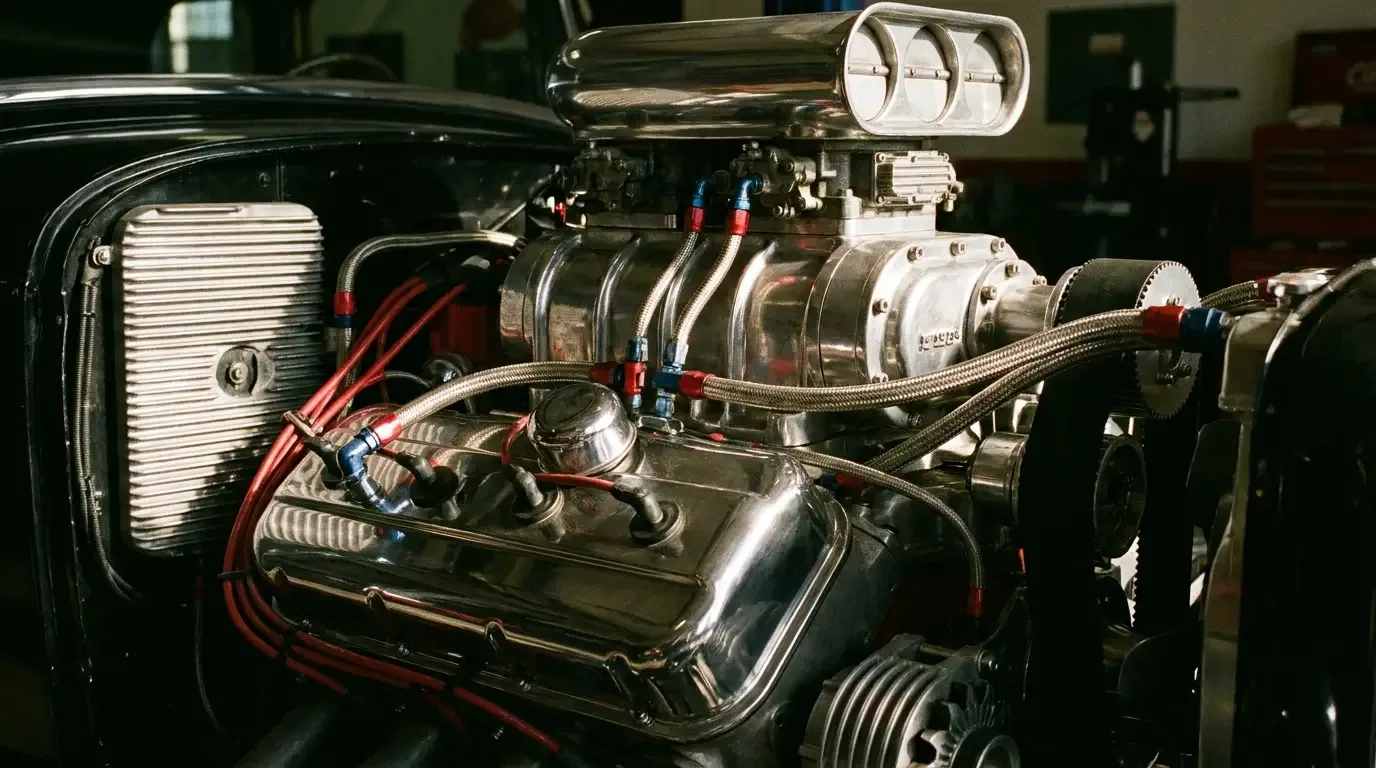
Chrysler's first Hemi arrived in 1951 in the Chrysler Saratoga and New Yorker. The name comes from the hemispherical combustion chambers. The valves sit at an angle across a domed chamber, which lets air and fuel move through the engine cleanly and lets you run big valves. That breathing is why the Hemi made power and why it kept making more power every time somebody threw more air at it.
The first-generation Hemis came in several displacements across Chrysler, DeSoto, and Dodge, and the early Chrysler versions were rated somewhere around 180 horsepower in stock trim. The number is not the point. The point is what the head design allowed once the drag racers got hold of it. Bolt on a supercharger and a shot of the right fuel and the early Hemi took to boost better than anything else of its era. That is why you still see the tall blown Hemi standing up out of the hood on a traditional rail or a fuel altered.
The downside is weight and cost. The Hemi is a heavy, wide, complicated engine with a valvetrain that costs money to build right. For a street rod it is often more engine than the car needs. For all-out power it was, for years, the answer.
"A flathead teaches you patience and a Hemi teaches you what a checkbook is for. Both are worth doing once. After that you build what you can actually drive."
Dan Reeves
The small-block Chevy swap that changed everything
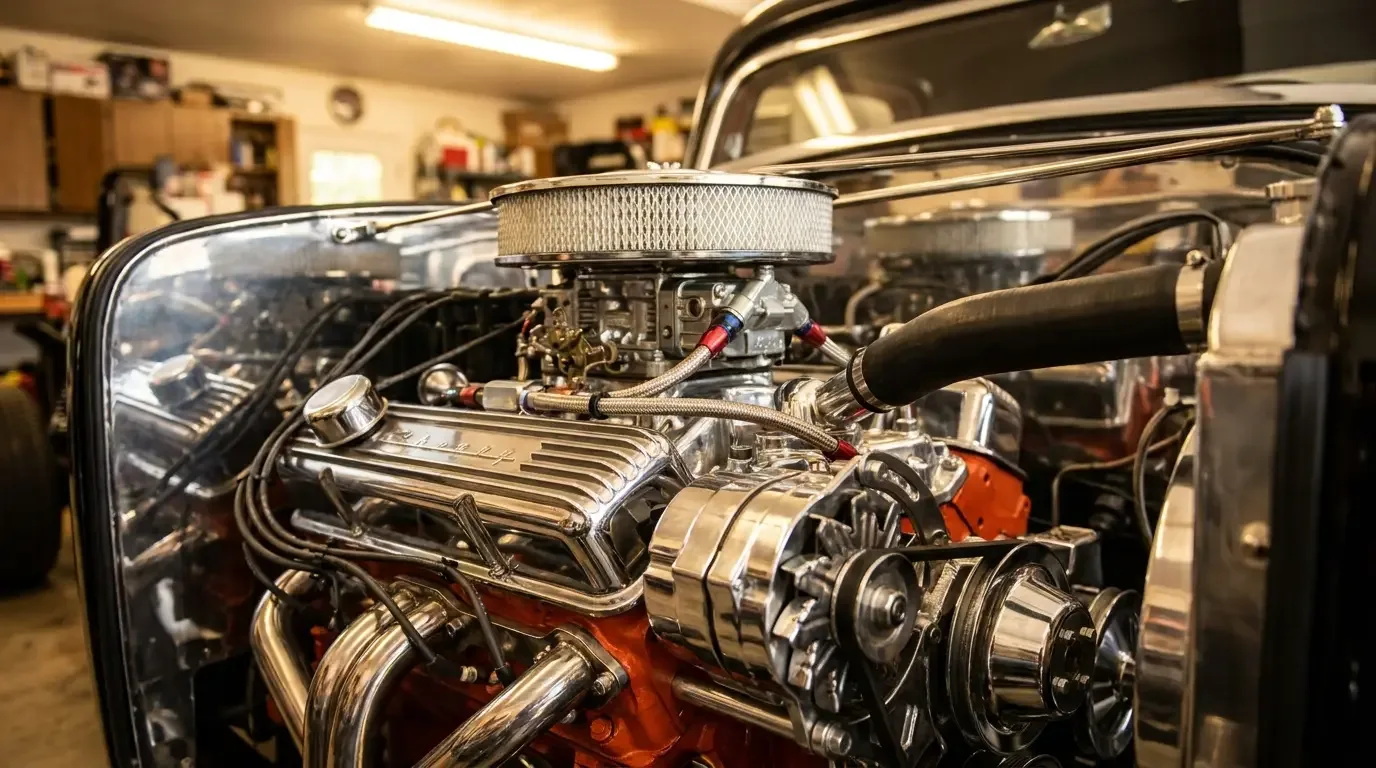
In 1955 Chevrolet released a 265 cubic inch V8. Two years later it grew to 283. This engine, the small-block Chevy, did to hot rodding what the flathead had done twenty years earlier, except more so. It was light, it was compact, it breathed well with overhead valves, and Chevrolet built millions of them. That last part matters most. A junkyard full of small-blocks meant cheap cores, cheap parts, and a whole industry of speed equipment aimed at one engine family.
The small-block is why the phrase "SBC swap" is shorthand for the easy path to power. It fits in almost anything. It makes good power stock and stupid power built. It shares parts across decades because Chevrolet kept the basic architecture in production from 1955 into the 1990s and beyond in crate form. For a guy building a car in his garage, the small-block removed the excuse. You no longer had to fight a flathead to get real horsepower. You bolted in a Chevy and drove.
Purists argued about it then and still do. Dropping a Chevy into a Ford body offends people who care about brand loyalty. But the numbers won. If you are choosing an engine for a first build today, the small-block Chevy is still the sane answer, and plenty of the cars in the project hot rods for sale listings already have one sitting in the bay.
Multi-carb setups: feeding the engine more air and fuel
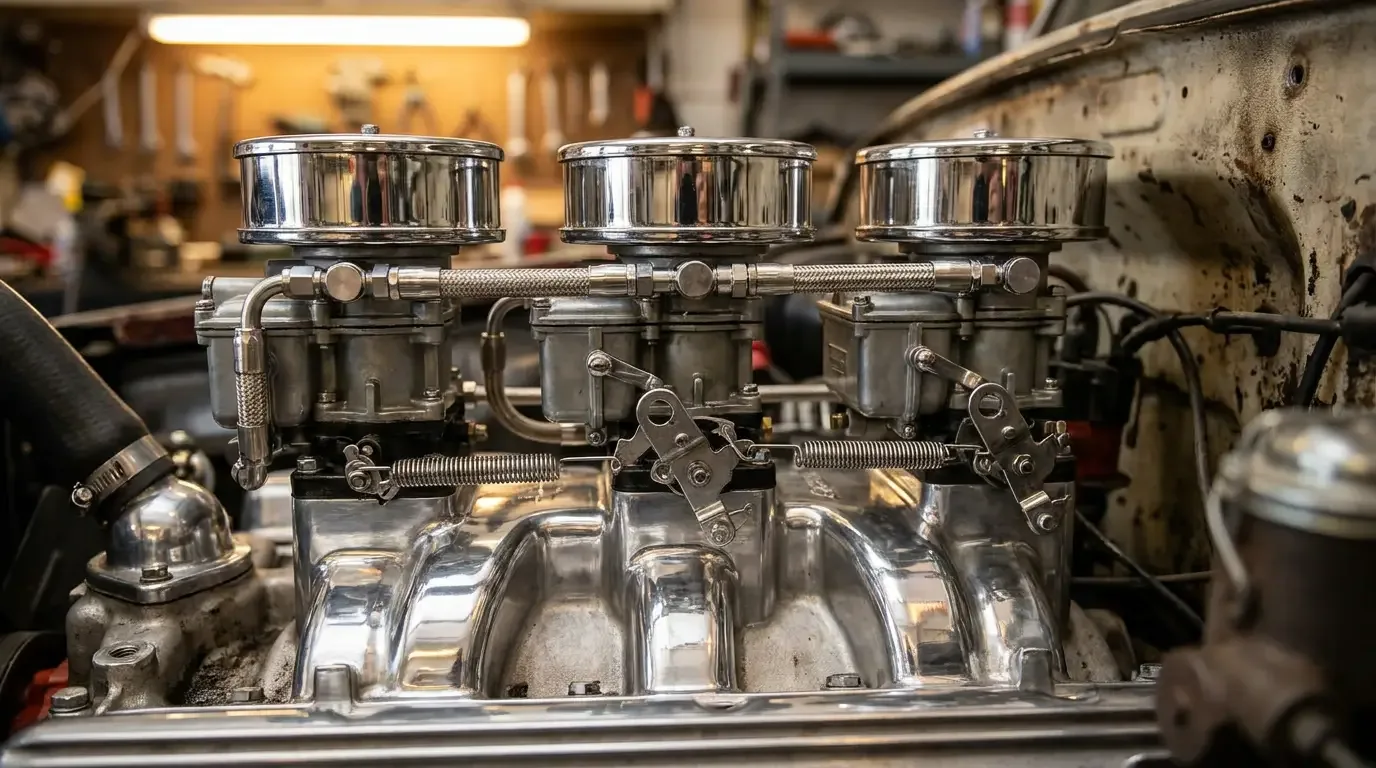
A single carburetor is a bottleneck. The fastest cheap way to make an old engine breathe was to bolt on more carburetors, and the multi-carb intake is one of the signatures of a traditional hot rod. The two common layouts are two-carb setups and the three-carb arrangement everyone calls "three deuces," three two-barrel carburetors sitting in a row on a long manifold.
The idea is simple. More carburetor throat area means more air and fuel can get into the engine at wide-open throttle. On a flathead, a two- or three-carb Stromberg setup on an Edelbrock or Offenhauser manifold was close to standard practice for anybody serious. On a small-block, the same visual trick works with three Rochester two-barrels or a pair of four-barrels.
The honest truth from the workshop: multiple carbs are a pain to tune and keep in sync. A modern single four-barrel or fuel injection will usually make more usable power with far less headache. People run multi-carb setups because they look right and sound right, not because they are the efficient choice. That is a fine reason. Just know what you are signing up for before you buy three carburetors that all need to agree with each other.
Superchargers and blowers: forcing the issue
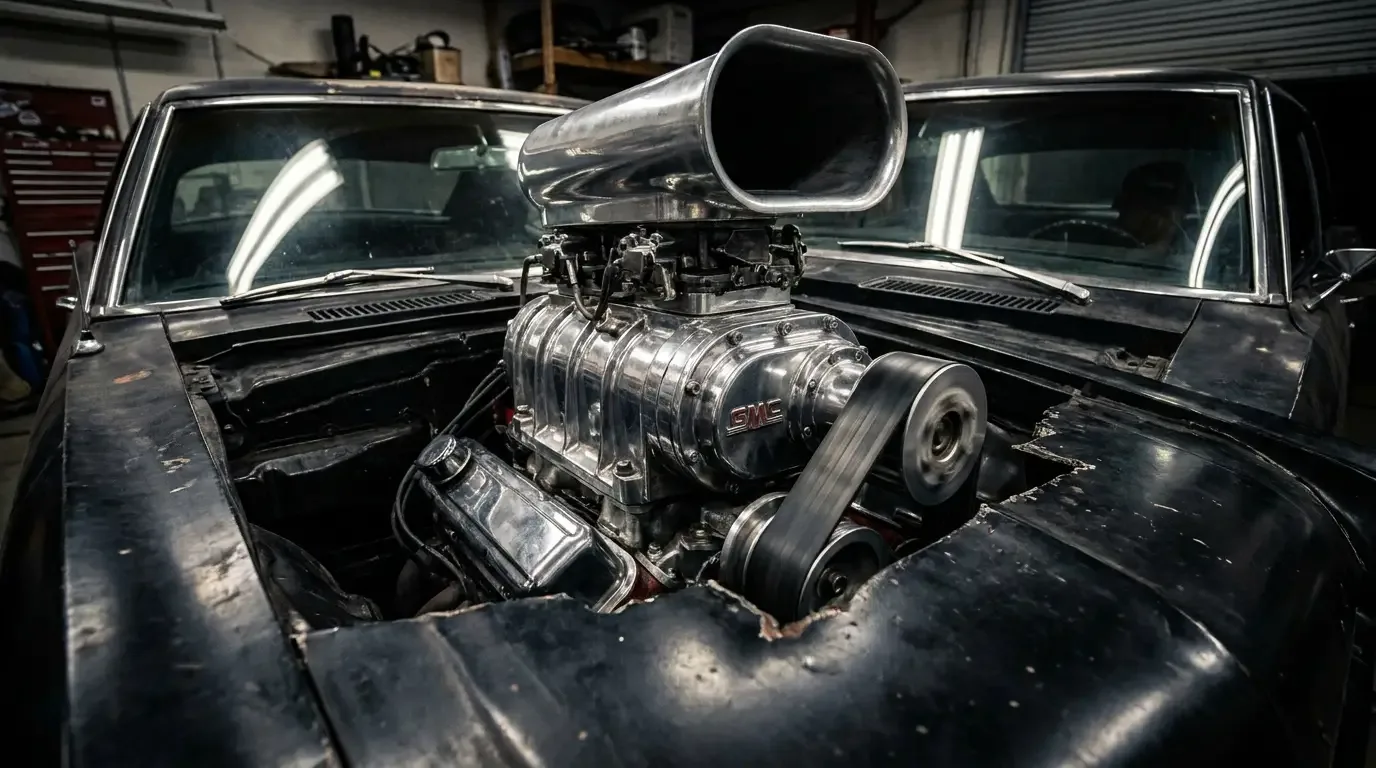
A supercharger is a pump that shoves more air into the engine than it could pull in on its own. More air plus more fuel equals more power, and the big Roots-type blower standing proud of the hood is one of the most recognizable images in all of hot rodding. The type most people picture came off of GMC diesel engines originally, the 4-71 and 6-71 blowers, named for the diesel cylinder count and size they were built for.
Hot rodders adapted those truck blowers to gas V8s because they were available and they moved a lot of air. Bolt a 6-71 on top of an engine and you can make big power gains, but you are also loading the bottom end hard. Boost multiplies cylinder pressure, and cylinder pressure is what breaks pistons, rods, and head gaskets. A blown engine needs to be built to take it: lower compression, stronger internals, careful fuel and timing.
There is a visual game here too. Plenty of show cars run a blower that is barely making boost, or none, because the look sells the car. A wrench-turner can usually tell the difference by looking at how the thing is plumbed and driven. If you want the real power a blower promises, you build the whole engine around it. If you want the look, that is cheaper and lives longer, and there is no shame in either as long as you are honest about which one you built.
Headers: getting the exhaust out
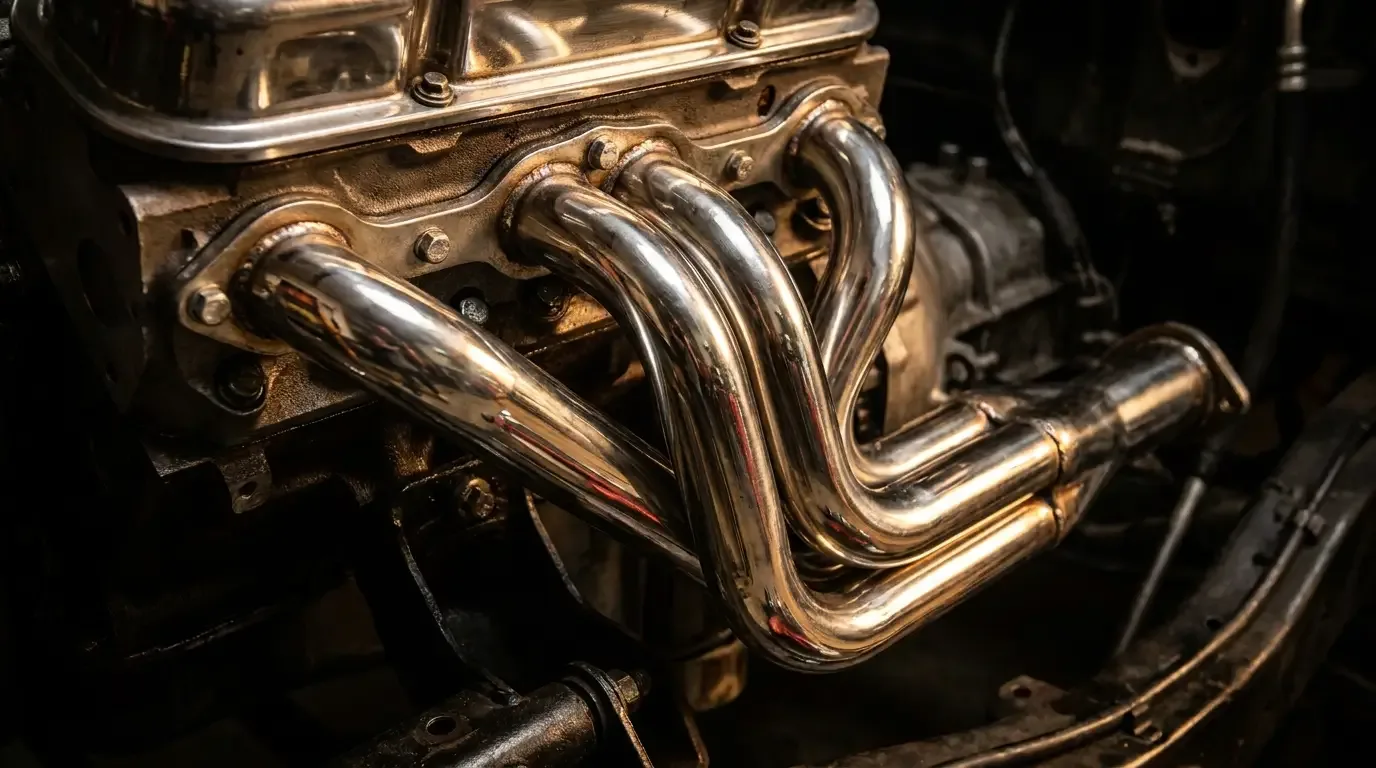
An engine is an air pump. Everything above deals with getting air in. Headers deal with getting it out. Stock exhaust manifolds are lumps of cast iron that share passages and choke the flow to save space and money. Headers replace them with individual tuned tubes, one per cylinder, that merge into a collector. Done right, they let each cylinder empty cleanly and even help scavenge the next one.
On a traditional hot rod, headers are also part of the look and the sound. Lake pipes and short zoomie headers dumping straight out the side are period-correct on the right car. On a street car you want a proper collector and probably a muffler unless you enjoy attention from law enforcement. The power gain from a good header is real but modest on a mild engine and grows as the rest of the combination gets more serious. On a built, high-revving engine, the exhaust is doing real work and a matched header is not optional.
The rest of the car has to keep up with the engine, which is where hot rod flames and the rest of the styling meet the mechanical side. A car that looks fast and drives slow is a letdown. A car that does both is the whole idea.
Representative hot rod engines at a glance
Here is a rough map of the engines covered above. Treat the horsepower figures as ballpark stock ratings, they varied year to year and by application, and any built version blows past them.
| Engine | Type | Intro | Approx. displacement | Approx. stock hp | Why it mattered |
|---|---|---|---|---|---|
| Ford flathead V8 | Valve-in-block V8 | 1932 | ~221–255 cu in | ~85–100 hp | First affordable V8; birth of the aftermarket |
| Chrysler early Hemi | OHV hemispherical V8 | 1951 | ~331 cu in early | ~180 hp early | Best-breathing head of its day; loved boost |
| Small-block Chevy (265/283) | OHV V8 | 1955 | ~265–283 cu in | ~162–220 hp | Light, cheap, everywhere; the default swap |
Numbers aside, the pattern is clear. Each engine won because it made power accessible to people building cars at home, not because it was the most exotic thing on the dyno. That is the through-line of hot rod engines from 1932 to now.
Sources and notes
- Period hot-rod press and how-to titles covering flathead, Hemi, and small-block builds.
- Engine and marque reference works for Ford flathead, Chrysler first-generation Hemi, and Chevrolet small-block production histories.
- Speed-equipment manufacturer catalogs and manifold/blower reference material for induction and forced-induction context.
- Builder interviews and workshop experience for tuning and forced-induction cautions.
Related Reading

Article
The Classic Hot Rod Story
Article
How a Hot Rod Is Built: The Techniques
Article
Hot Rod Style: Flames, Paint and Stance
Article
Building a Ford Flathead V8 for Power
Article
The Early Hemi: Hot Rodding's First Modern V8
Article
The Small-Block Chevy Swap
Article
Multi-Carb Setups: Tri-Power and Beyond
Article
Superchargers and Blowers on Hot Rods
Article
Headers and the Hot Rod Sound
External
/hot-rods-for-sale
Have a
Classic Car
for Sale?
Reach thousands of serious classic car collectors across the US.
Sell It Here →
Are You a Classic Car Dealer?
List your full inventory and connect with targeted classic car buyers.
Join as a Dealer →

About the author
Dan Reeves
Performance engine builder from North Carolina's motorsports corridor, focused on swaps, forced induction and making real, repeatable power.
More in Restoration & Tech
Comments
Be the first to comment on this article.