
Everybody has a story about the parts car that paid for itself. Everybody also has a second story about the parts car that sat in the driveway for three years, collected leaves and made the neighbors write letters. Both stories are true. The difference is whether you bought the donor for a reason or just because it was cheap.
Restoration & Tech
6 min read
Buying a Parts Car: When a Donor Makes Sense
A parts car can save a restoration or sink your budget. Here is when a donor makes sense, what to look for, how to price it and what to do with the leftovers.
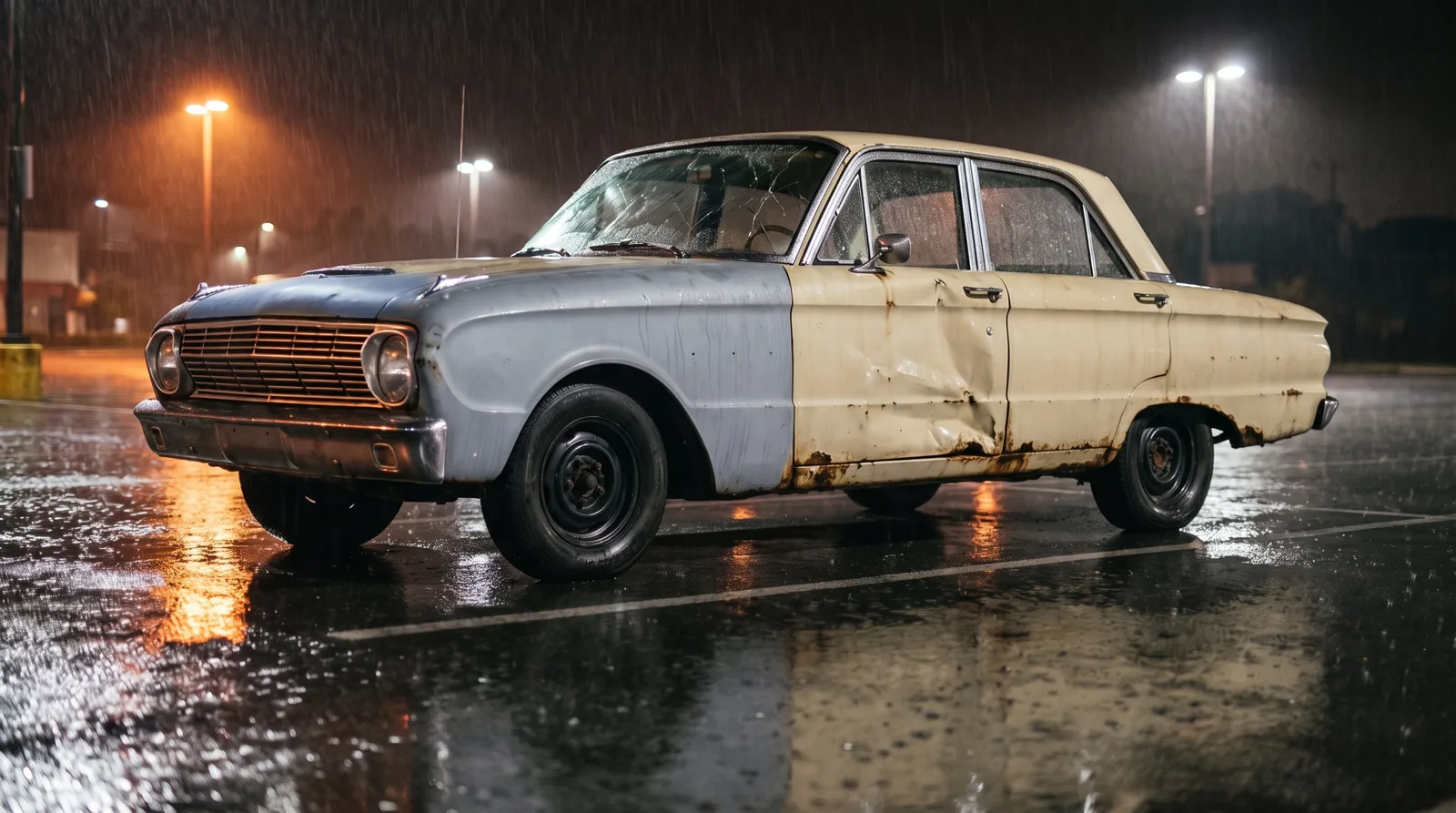
A parts car makes sense when the pieces you need are scarce, when they all come off one vehicle, and when you can use or sell most of what is left. It does not make sense when you need one fender and a set of hubcaps. For the full picture of sourcing options, our restoration parts guide lays out the alternatives.
When a donor beats buying pieces one at a time
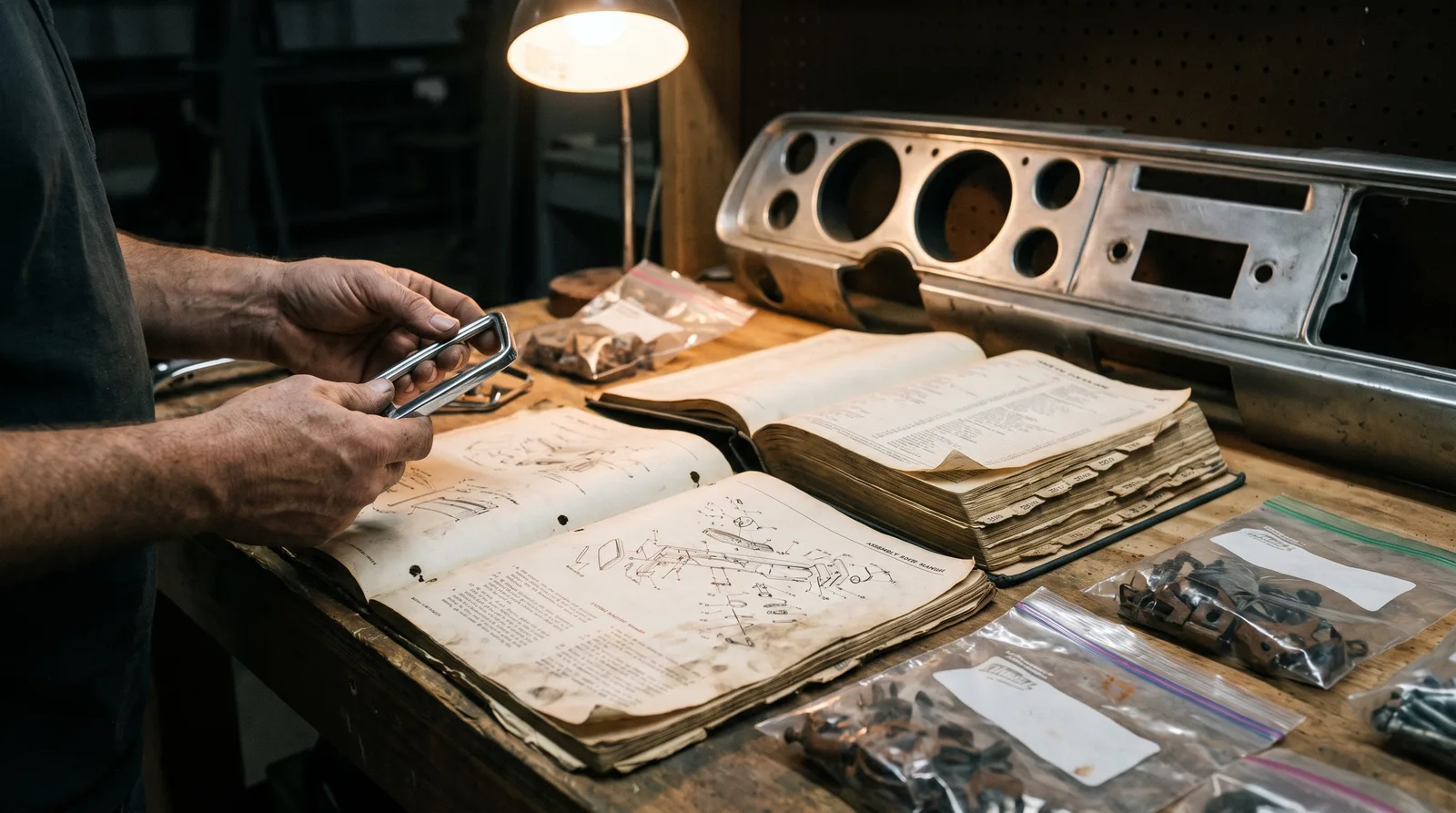
Add up the shopping list first. Write down every part you still need, then price each one honestly, with shipping and the cost of the ones that arrive wrong. If the list is long and full of items that never get reproduced, like dash assemblies, wiring harnesses, interior panels, unique trim and brackets, a donor starts to look good. A complete car brings all of those parts in one tow, already matched to each other.
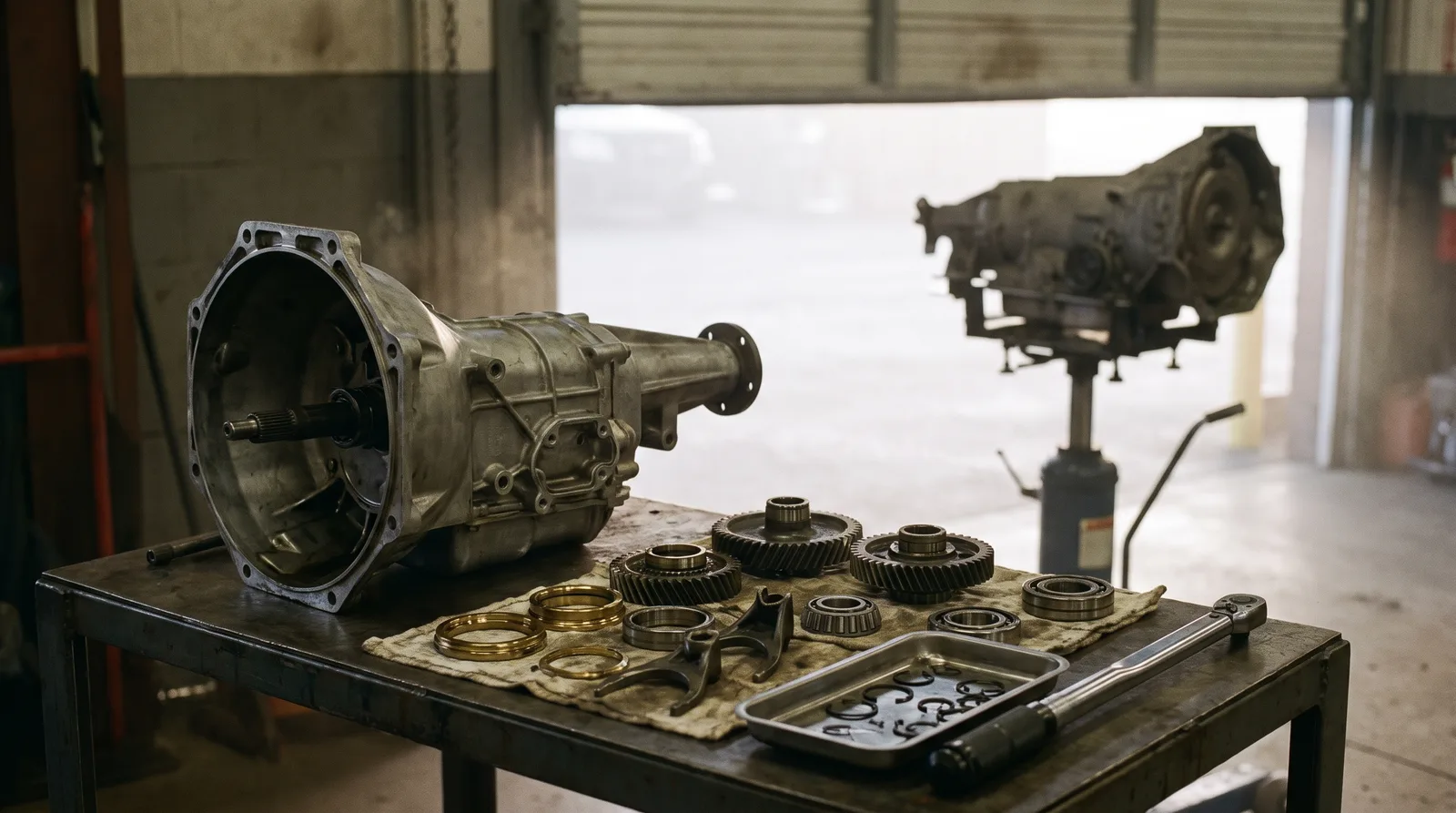
It also helps when you need drivetrain pieces. A donor with a running engine and transmission lets you test before you commit, and that beats trusting a stranger's description of a core. If you need a rebuilt unit anyway, check the reproduction quality available for your model before assuming the donor engine is the cheaper path.
A donor makes the least sense on a common car with deep reproduction support. If the catalog covers it, the catalog is usually cheaper once you count storage, scrapping and your own time.
What to look for in a donor
Match the car to your car. Same body style, same year range, and ideally the same trim level, because the interior and trim parts are what you are really buying. Then check that the body is straight enough that the panels are worth saving. A donor that was rolled, burned or left under a leaking tarp for a decade gives you very little.
🔧 Inspection Priorities
- Title and VIN. Get a clean title or a bill of sale you can defend, and make sure the VIN matches the car. Cars built before 1981 do not carry a standard 17-character VIN, so compare the serial number on the title with the plate on the car. A donor with a mismatched or missing VIN is a legal headache that can cost more than the car.
- Completeness. Count what is missing. A donor with the engine gone, the interior stripped and the glass broken is not a donor, it is a shell.
- Rust in the structure. Floors, rockers and frame rails tell you whether the sheet metal is usable. Rusty panels are a repair job, not a parts source.
- Interior condition. Original upholstery, door cards and dash pads are the hard parts to replace. Check for sun cracking, mice and water damage.
- Trim and glass. Look for straight stainless, undamaged emblems and glass with no delamination.
- Mechanical state. If the engine turns over by hand and the oil is not milk colored, it is worth more than a core.
What a donor costs
Price depends on the car, and that is why this is the weakest part of any online advice. Prices swing too much by model and region to quote one range: a complete but tired donor of a popular model is often a few thousand dollars, and rare or desirable models cost much more. Add transport, which on open carriers commonly runs somewhere between $350 and $1,900 depending on distance, with enclosed typically 30 to 60 percent more and a non-running fee of a few hundred dollars on top. Add storage if you do not have room. Add the labor to dismantle it, which is a real weekend or two of work.
| Cost item | Rough range | Notes |
|---|---|---|
| Donor purchase | Often a few thousand dollars for a popular model | Higher for rare models |
| Transport | Roughly $350 to $1,900 open, more enclosed, plus a non-run fee | Depends on distance and whether it runs |
| Storage and space | Roughly $100 to $370 a month in published examples | Free only if you own the space |
| Disposal of the shell | Usually small | Scrap value can offset it |
If you are still looking, browse project cars to strip for parts to see what is out there and what asking prices look like in your area.
Making the donor pay for itself
A good donor gets sold twice. Take what you need, then clean, photograph and list the rest. Original engines, transmissions, rear axles, seats, wheels and trim all have buyers in club classifieds and online marketplaces. Rare parts sell quickly. Common ones take patience. Keep a spreadsheet of what you list and what you get, because the net cost of the donor is the purchase price minus what comes back.
Scrap the shell only after you are sure. Ask a few clubs whether anyone needs a panel, and check for body numbers and data plates you might want to keep. Once the shell goes to the crusher, there is no second look.
"A parts car is not a bargain, it is a trade. You are swapping cash and driveway space for time and scarce pieces. Do the math before you tow it home, not after."
Mike Sullivan
Planning the swap
Decide up front how the swap will happen. If you are doing the work yourself, label every bag, photograph every assembly and keep the harnesses intact. If you are paying someone, get a quote for the transfer work early. Some owners hire a shop to do the swap-over, particularly for wiring, glass and trim that are easy to damage. That labor is a real cost and belongs in the same spreadsheet as the donor.
Keep the donor honest too. If your project is already behind on budget, a second car adds a second set of problems. If the parts list is short, buy the parts. If it is long and scarce, buy the car. That is the whole rule.
Sources and notes
- Intercity Lines, shipping a classic car that does not run, non-running vehicles usually carry a non-run fee of a few hundred dollars
- FreightWaves, open vs. enclosed car shipping, distance-based open and enclosed price ranges and the 30 to 60 percent enclosed premium
- Popular Restorations, storage costs during a restoration, example monthly storage rates that vary by region
- Wikipedia, Vehicle identification number, the 17-character VIN was standardized in 1981; earlier numbering varied
- SEMA, Nebraska parts-car law, an example of a state allowing parts cars to transfer on a DMV bill of sale
- Old Cars Weekly, Nebraska parts cars without title, confirms the conditions for bill-of-sale transfers
Related Reading

About the author
Mike Sullivan
Detroit-area muscle car enthusiast and restoration specialist with three decades of hands-on experience working on American iron.
More in Restoration & Tech
Comments
Be the first to comment on this article.