
The classic car junkyard you remember is mostly gone. The long rows of 1960s sedans rusting into the grass got crushed years ago, sold for scrap before the hobby had decided that a four door Biscayne was worth saving. What is left is thinner and harder to find, and the ordinary self service yards that remain mostly stock newer cars. It is also still worth the trip, because some parts simply do not exist anywhere else.
Restoration & Tech
7 min read
Classic Car Junkyards and Salvage Yards: What's Still Out There
Classic car junkyards are fewer than they were, but they still turn up trim, glass, brackets and whole donor cars. Here is how to find them, work them and not overpay.
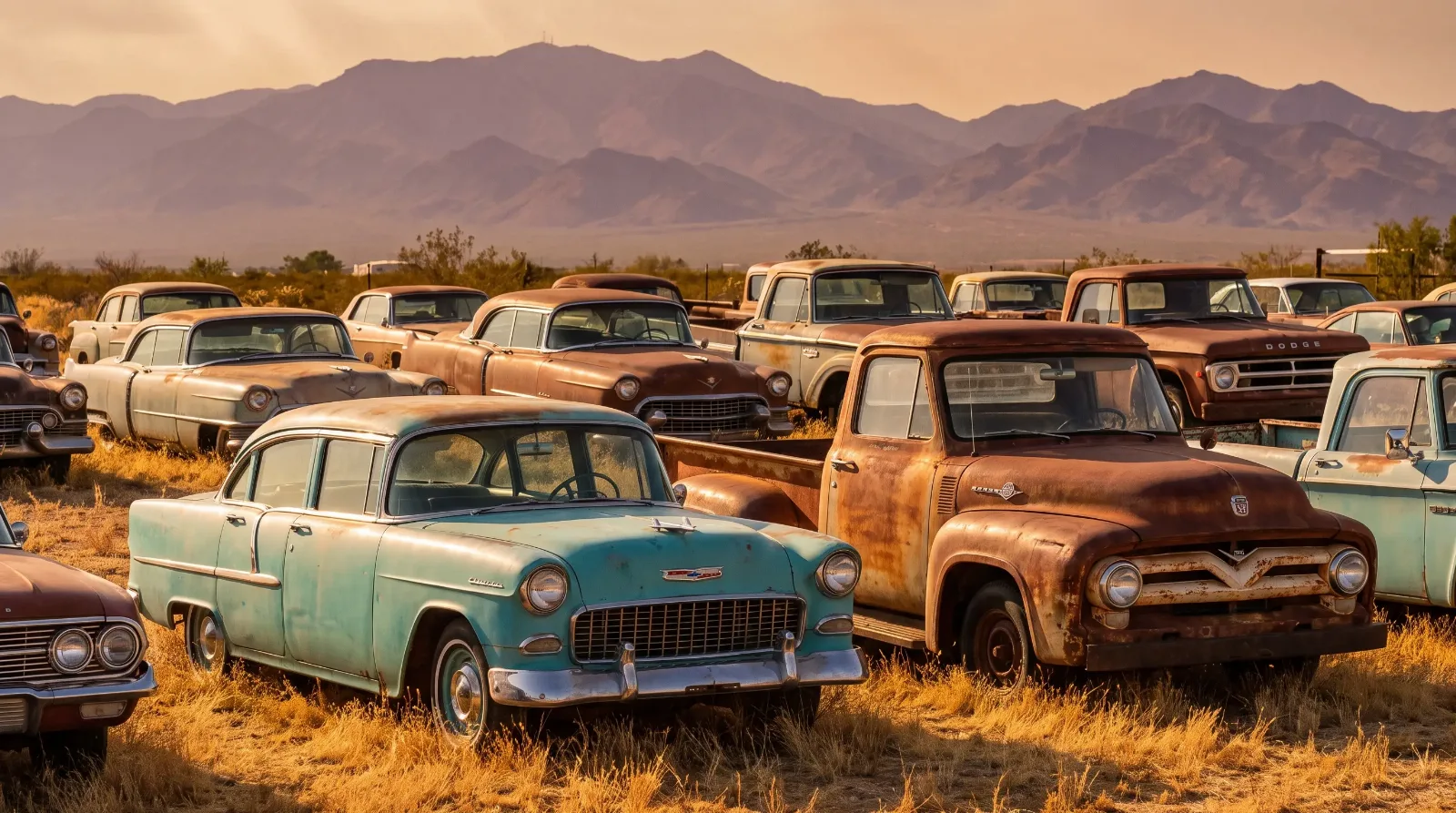
If you are still deciding whether to chase used, new old stock or reproduction, start with the bigger picture in our guide on NOS, reproduction or used. This article covers the used side of that choice, specifically what yards still hold and how to work them without getting burned.
What a salvage yard can still give you
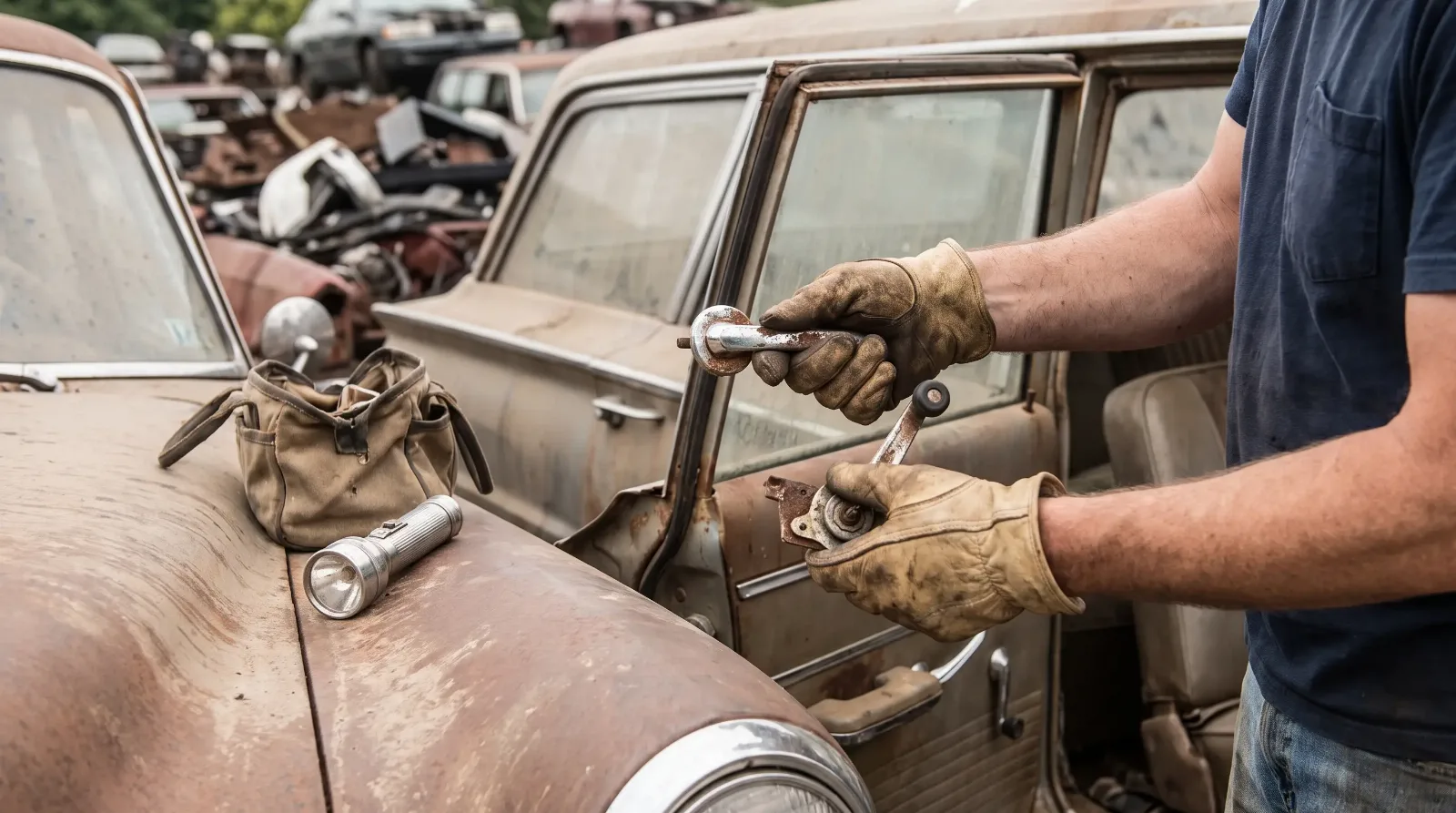
Do not expect to find a complete, rust free body waiting in row nine. What you can expect are the pieces that were never reproduced because nobody could make money on them. Interior door handles, window regulators, dash bezels, original radio brackets, heater boxes, sun visor clips, the odd bracket that holds the wiring harness to the inner fender. Reproduction suppliers cover the big sellers and skip the rest.
Glass is the other reason to go. Date coded original glass matters to a judged car, and a clean door glass with the right markings is hard to find through catalogs. Chrome and stainless trim pieces for lower volume models also show up in yards, usually pitted but sometimes good enough to send to a plater.
Whole cars are the long shot. A donor that is complete and solid enough to strip is a different purchase from a part pull, and it deserves its own plan. If you think that is where you are headed, read up on a parts car before you hand anyone money.
Where the old yards actually are
Dry states hold the best material. Arizona, New Mexico, Nevada, inland California and the high plains keep steel straight for decades, while a yard in the rust belt is mostly a place to buy a rusty fender. That said, the best leads are rarely on a map. They sit behind a farm, at the end of a gravel road, owned by someone who never put up a sign.
- Ask at local swap meets and club meetings. Old timers know who still has a back lot.
- Check online salvage databases such as Car-Part.com that let you search specialty yard inventory by part and year.
- Drive county roads in farm country and look for rows of cars behind a barn. Knock on the door, do not just walk in.
- Call the local towing and body shops. They know who bought the old stock when the previous owner died.
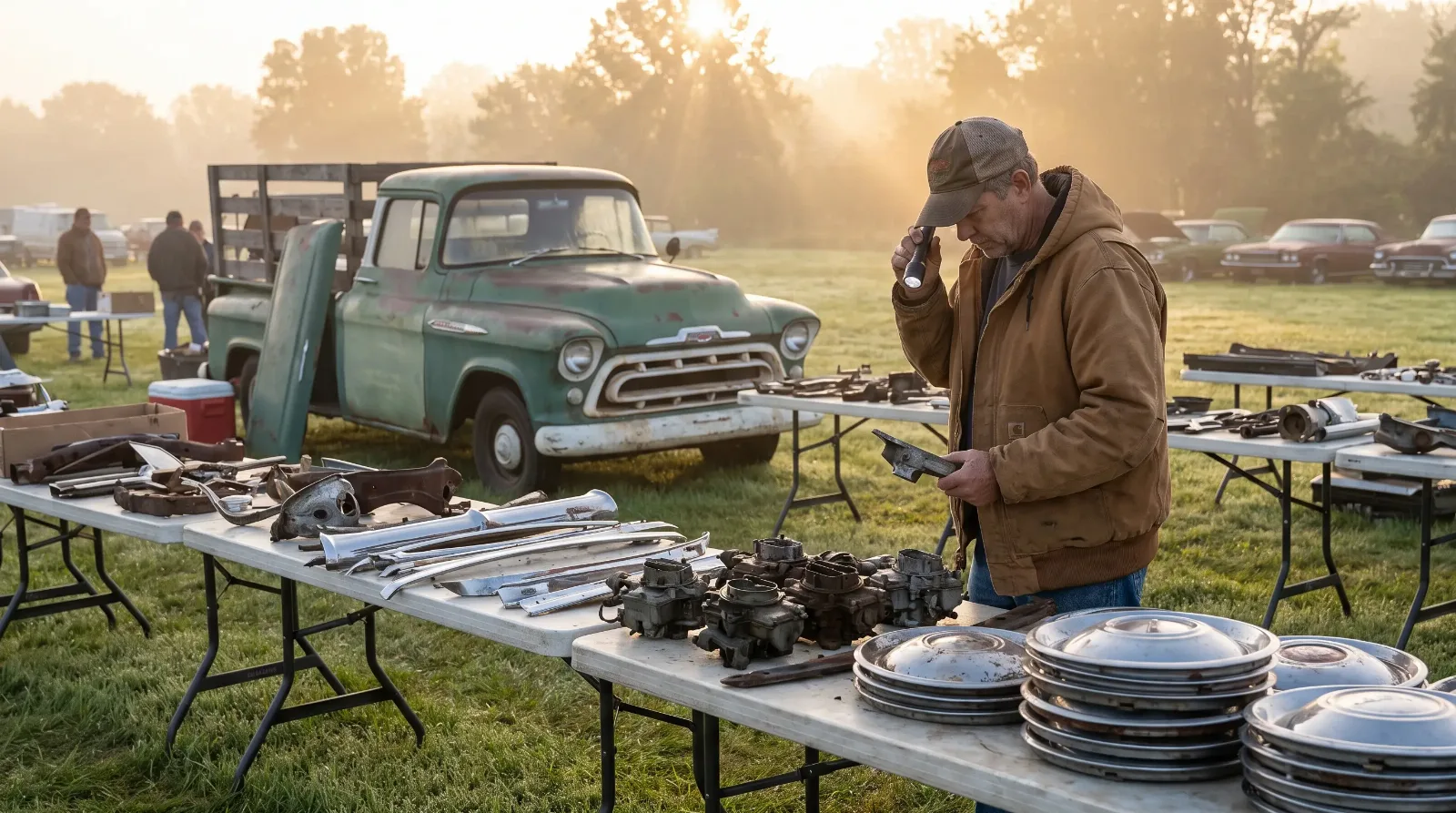
Pickups are the best example of a segment where this still works. Farm trucks were parked where they quit, and many are still there. If trucks are your interest, browse a few old pickups for sale to get a feel for what is complete and what is already picked over, and read our piece on sourcing parts for a classic truck for the brands and bolt on parts that interchange.
How to work a yard
Bring tools, gloves, penetrating oil, a flashlight and a way to carry what you pull. Self service yards typically expect you to bring your own tools, charge a small entry fee, have you sign a waiver, and ban torches, jacks and batteries. Call ahead, ask about fees, and ask whether they pull parts for you or let you do it. Rules vary a lot, and a specialty classic yard may run differently from a modern pull-it-yourself lot.
Photograph the part where it sits and photograph the donor car's data plate or VIN. That record tells you the build year, engine and trim, which tells you whether the part will fit your car or only look like it will. A bracket from a base model and a bracket from the sport package can look identical until you try to bolt one on.
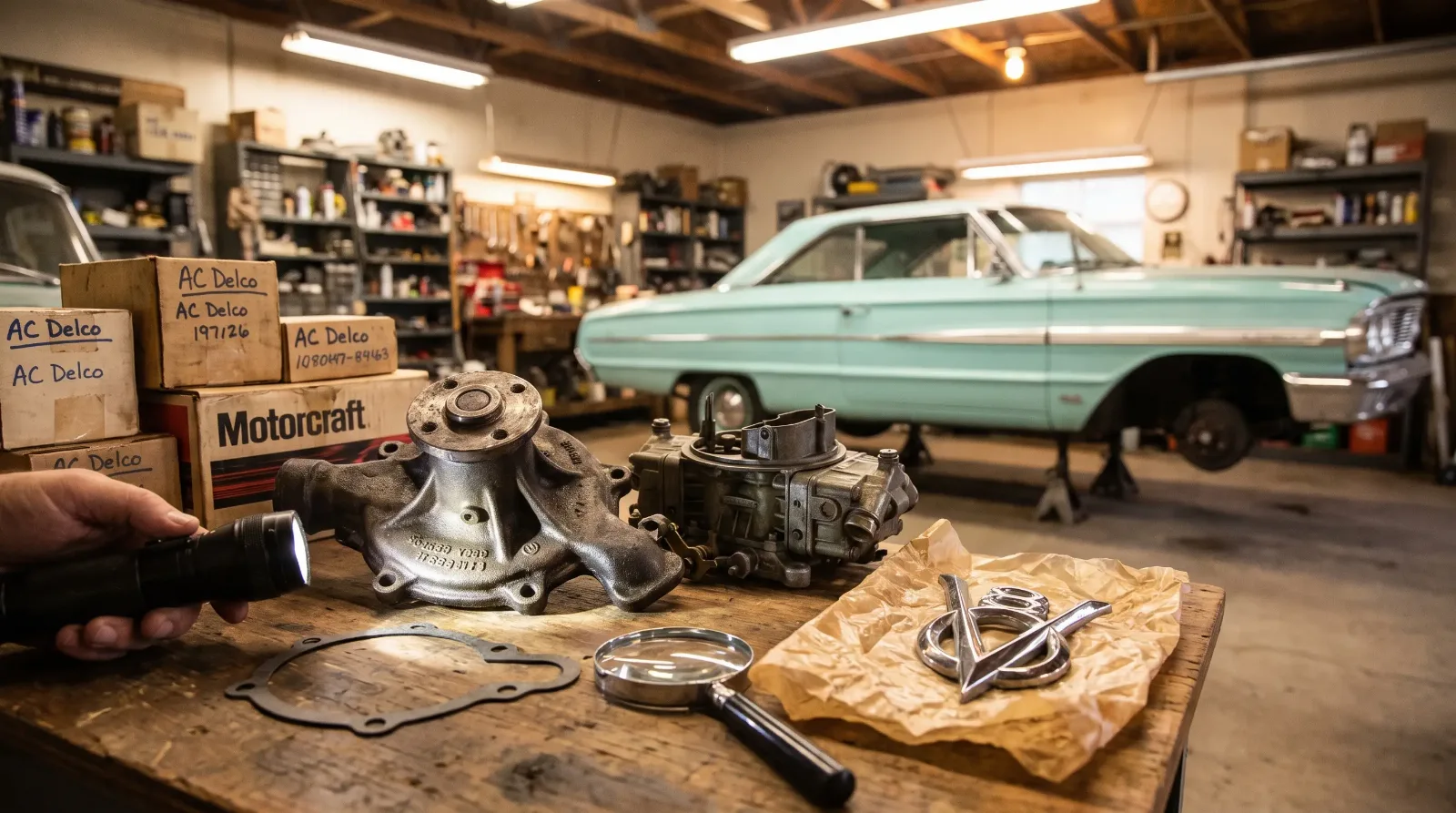
Check castings and date codes before you carry anything to the counter. A carburetor, a distributor or a steering box with the wrong date code is a part that fits fine and costs you points later. Look for cracks, stripped threads and rust pits in anything that seals or moves.
What to buy, and what to leave
Buy the small, original, hard to replace items. Buy glass if you can carry it safely. Buy sheet metal only if you are sure it is straighter than what repair panels would give you, and know that old junkyard sheet metal is usually dented, rusty at the seams and covered in someone else's body filler.
Leave anything safety critical that you cannot inspect. Brake hoses, old master cylinders, steering components with play, rubber of any kind. Dry rot does not show from the outside, and a brake part that looks fine can fail on the first hard stop. Leave wiring that has been chewed by mice. Leave anything that needs a specialist to evaluate and cannot be returned.
| Part type | Junkyard value | What to expect on price |
|---|---|---|
| Small trim and brackets | High, often the only source | A few dollars to a few tens of dollars |
| Interior handles and regulators | High if complete and working | Tens of dollars to low hundreds |
| Original glass | Good, if unscratched | Low to mid hundreds, varies by model |
| Major sheet metal | Low, repairs often cost more than repro | Several hundred dollars, set by the yard |
| Brake and steering parts | Poor, replace or rebuild | Not recommended |
Paying a fair price and knowing when to walk
Yard owners know what a part is worth to you better than you do, and they price by how badly you look like you want it. Do not announce that it is the last one in the country. Ask the price, offer a fair number for a bundle, and be ready to leave. If three or four small parts go together, bundle them and negotiate once.
"I have walked out of more yards empty handed than I have walked out with a trunk full. The trick is knowing which trip was the good one. If the part is not right, it is not a bargain at any price."
Robert Halloran
Salvage yards also inspire a different kind of project. Some builders skip originality entirely and work from what a yard offers, turning discarded steel into something new. That approach has its own rules, and our article on building from junkyard finds walks through it. For a numbers matching restoration, though, treat the yard as one source among several and check every part against the factory records before you install it.
Plan your sourcing before you plan your paint. The parts you cannot find will set your timeline, and a good yard visit early in a project saves months later. Be polite, be patient and bring cash.
Sources and notes
- How to Find Classic Car Parts for Your Vintage Vehicle (Wilson Auto), why standard yards stock mostly newer cars, specialty classic yards, what to buy and skip, Car-Part.com
- Visitor's Guide, Chesterfield Auto Parts, a real self service yard's rules: entry fee, waiver, bring your own tools, no torches, jacks or batteries
- Finding Local Auto Salvage Yards, TFLcar, calling ahead, inventory systems, checking interchange and part numbers
- Wrecking yard, Wikipedia, how yards work, you-pull-it model, computerized inventory, hulks sold for scrap
- Numbers matching, Wikipedia, why casting numbers and date codes document originality
Related Reading
Have a
Classic Car
for Sale?
Reach thousands of serious classic car collectors across the US.
Sell It Here →
Selling a classic? Here's how: where to sell your classic car online
Are You a Classic Car Dealer?
List your full inventory and connect with targeted classic car buyers.
Join as a Dealer →

About the author
Robert Halloran
Texas-based classic truck enthusiast with decades of experience buying, restoring, and writing about American pickups from the 1940s through the 1980s.
More in Restoration & Tech
Comments (2)
J
Janet Morrow
1 month ago
Took the wiring harness off a donor MGB outside Silverton, mouse nibbles and all, because how much worse could it be than Lucas already is? Bit of a disaster, it turns out. Two evenings of smoke before I gave up and bought new. Leave the chewed wiring where it sits.
Back when we were frenching headlights on Mercs, the yard was where you found trim to cut up, and the rule still holds: buy the whole piece even if you only need one corner, because the repro stuff never has the right crown and you'll want the extra stainless for patching.