
Picture an owner at the kitchen table, laptop open, the same shop's website on three tabs. Five-star reviews at the top. A gallery of gleaming cars. A friendly email promising a callback. Everything looks right, and that is exactly the problem, because a polished page costs a shop almost nothing to build and tells you almost nothing about what happens in month fourteen of a job.
Restoration & Tech
8 min read
Checking a Shop's Reputation: References, Clubs and Finished Cars
Online reviews tell you little about a restoration shop. Here is how to check references, club standing and finished cars before you hand over a deposit.
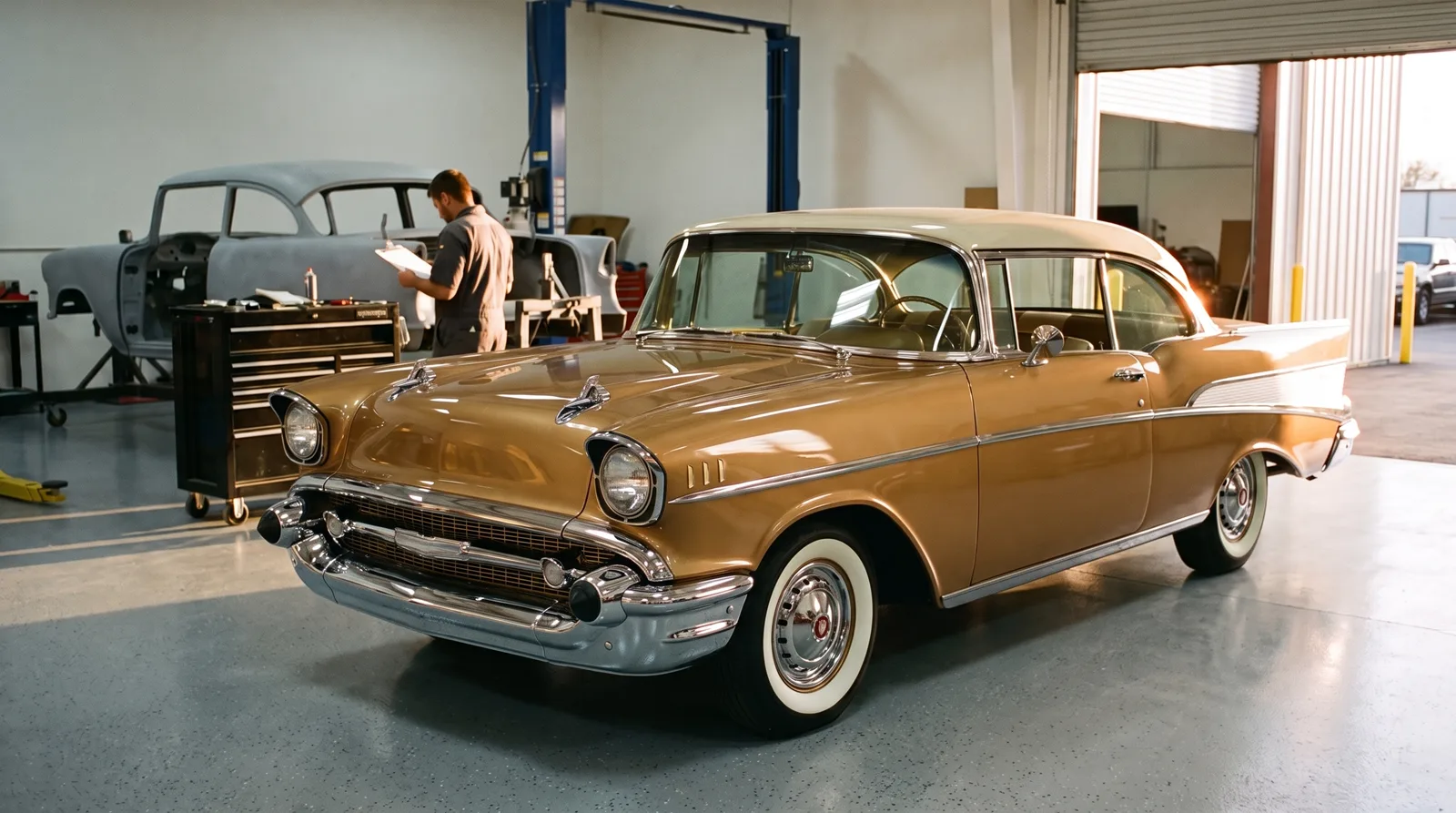
Restoration shop reviews are worth reading, but they are the thinnest layer of evidence you will find. The real picture sits with people: past customers, club members, the judges and parts suppliers who see a shop's work whether the shop wants them to or not. This piece walks through where to look and what to ask. If you want the wider decision framework, how to pick a shop covers the full process from shortlist to contract.
What online reviews can and cannot tell you
A review site rewards the happy customer on delivery day. That is the moment of maximum goodwill, when the car is finished, the paint is wet-sanded and nobody has yet driven it through a summer. The problems on a restoration surface later: a door that drifts out of alignment, a harness that starts to chafe, a bill that grew in ways nobody explained. Those owners are often too tired or too embarrassed to post anything at all.
Read reviews for patterns, not scores. Three different owners mentioning slow communication is a finding. One angry post about a single disagreement is noise. Pay attention to how the shop answers criticism, if it answers at all. A calm, specific reply that names what went wrong and what was done about it says more than a wall of praise. Be wary of a shop whose reviews all arrive in a tight cluster of weeks, or read in the same voice.
Also notice what reviews do not say. Few of them mention whether the work was correct for the car, whether the shop kept its original estimate in reach, or whether the car was finished in the time promised. Those are the questions that matter, and you will have to ask them yourself.
Asking for references, and asking properly
Any serious shop can hand you a short list of past customers. Treat the list as a starting point, because a shop will naturally offer its happiest clients. Ask for two kinds of reference instead: one owner whose car was finished recently, and one whose job ran long or hit a snag. A shop that can name a customer through a difficult job, and trusts that person to speak fairly, is showing confidence you cannot fake.
When you get an owner on the phone, skip "were you happy?" and ask questions that have factual answers.
- How did the final cost compare with the first estimate, and was every change approved in writing before the work was done?
- How long did the job take compared with the original schedule?
- How often did the shop update you, and did the updates match what you saw when you visited?
- Has the car needed any warranty or follow-up work, and how quickly was it handled?
- Would you send them another car, and would you send them the same kind of car?
That last question is the useful one. A shop that does superb work on prewar coachbuilt cars may be a poor fit for a unibody muscle car, and a past customer will often tell you so without being asked twice. Listen for hesitation. Owners are polite, and a pause before "yes" is information.
What the clubs and the judges know
Marque clubs are the closest thing this hobby has to a reputation bureau. Members compare notes on who rebuilt a transmission properly, who chased a wiring problem to the end, and who quietly disappeared with a deposit. If your car has a dedicated club, a regional chapter or an owners' forum, introduce yourself and ask about the shops you are considering. You will usually get a blunt answer within a day.
Judged events are another source. Cars that have been through a club judging program or a concours carry written scoresheets, and the judges can often tell you which shops produce cars that hold up under scrutiny and which produce cars that look fine at fifteen feet. Ask who did the work on cars that placed well in your class, and then ask the same judges about cars that lost points. The shop names will repeat.
Parts suppliers and machine shops see the other side. A supplier who has sold to a restorer for years knows whether the account pays on time and whether the shop orders the right part or guesses. A casual question at a swap meet or a call to a specialist vendor can surface things no customer will mention.
Walking through finished cars
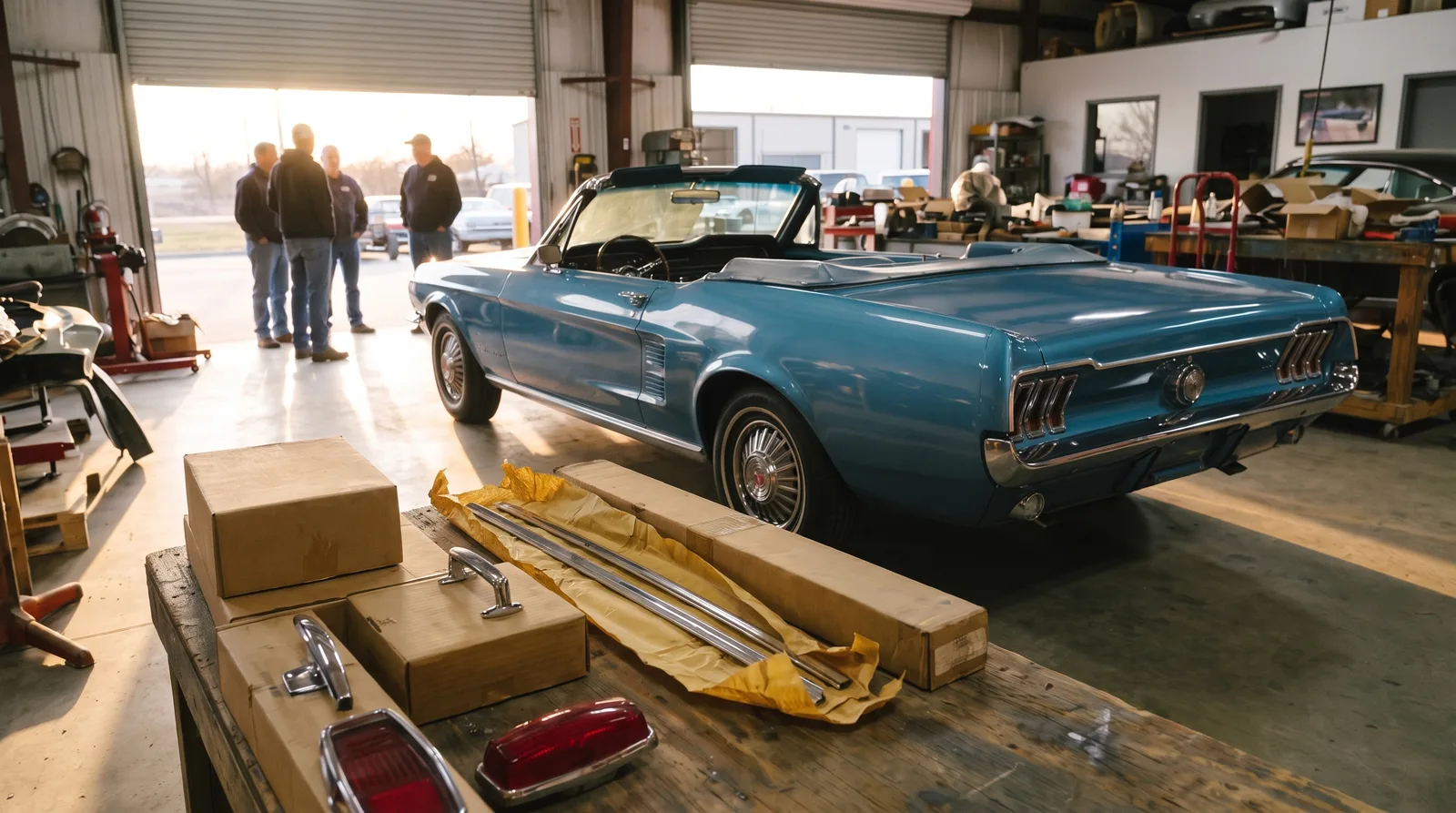
Photographs are curated. A finished car parked in your path is not. Ask to see recently completed work in person, and ask to see a car that has been delivered and driven for a season, which a shop can arrange through a willing owner. Look at what is hard to fake.
| Where to look | What good work shows | What should worry you |
|---|---|---|
| Panel gaps and door fit | Even gaps that stay even when the door is opened and closed | Gaps that taper, doors that need a lift to latch |
| Under the hood and dash | Wiring loomed and routed with clips, hoses in correct lengths | Zip ties everywhere, spliced wires, mismatched clamps |
| Underside | Clean welds, coated floors, correct fasteners | Fresh undercoat hiding unfinished metalwork |
| Paint in raking light | Flat panels, consistent texture, sharp edges | Waviness, orange peel that changes from panel to panel |
| Cars in the shop now | Orderly work, labeled parts, documented progress | Cars stacked for years with no visible activity |
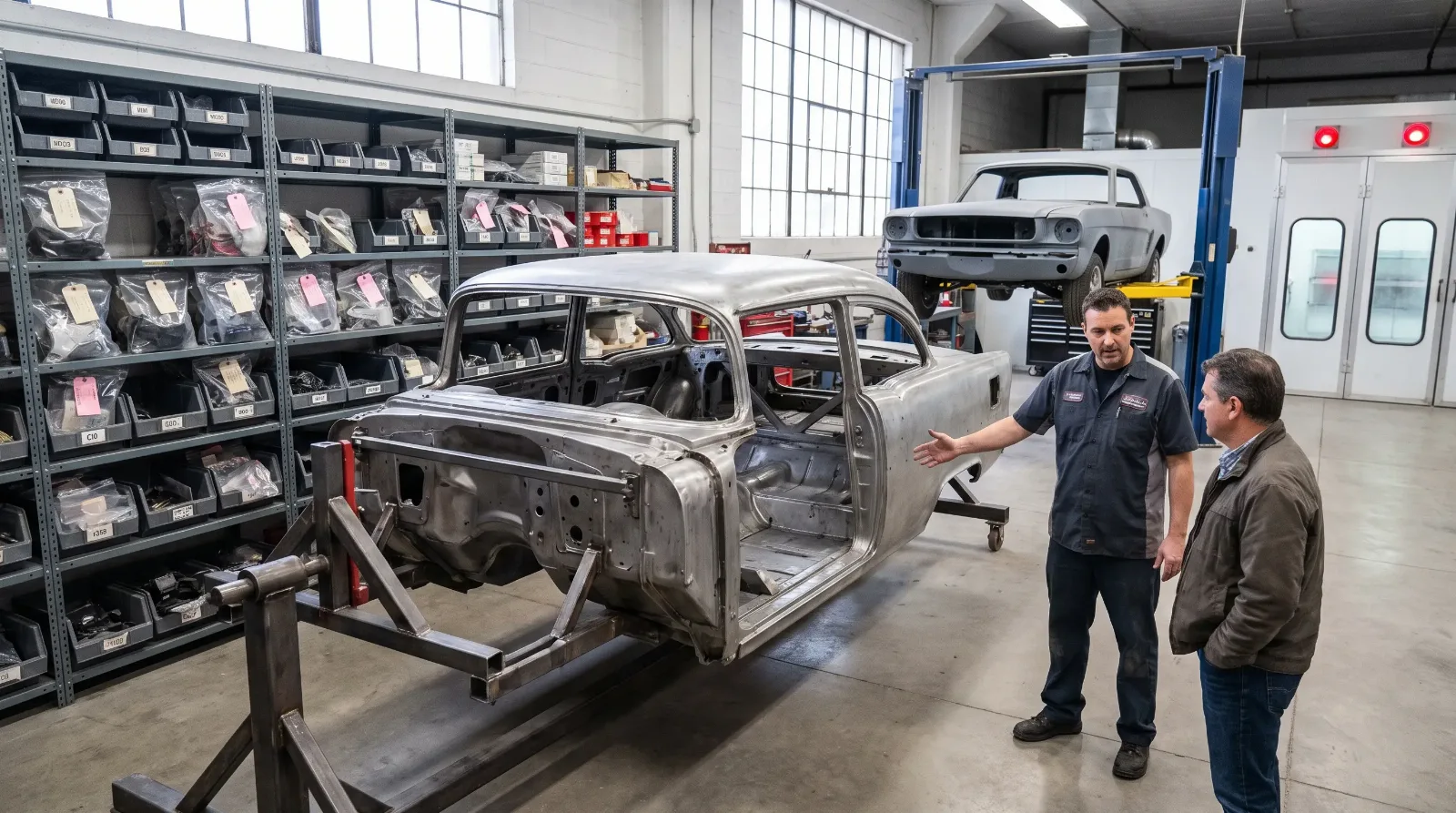
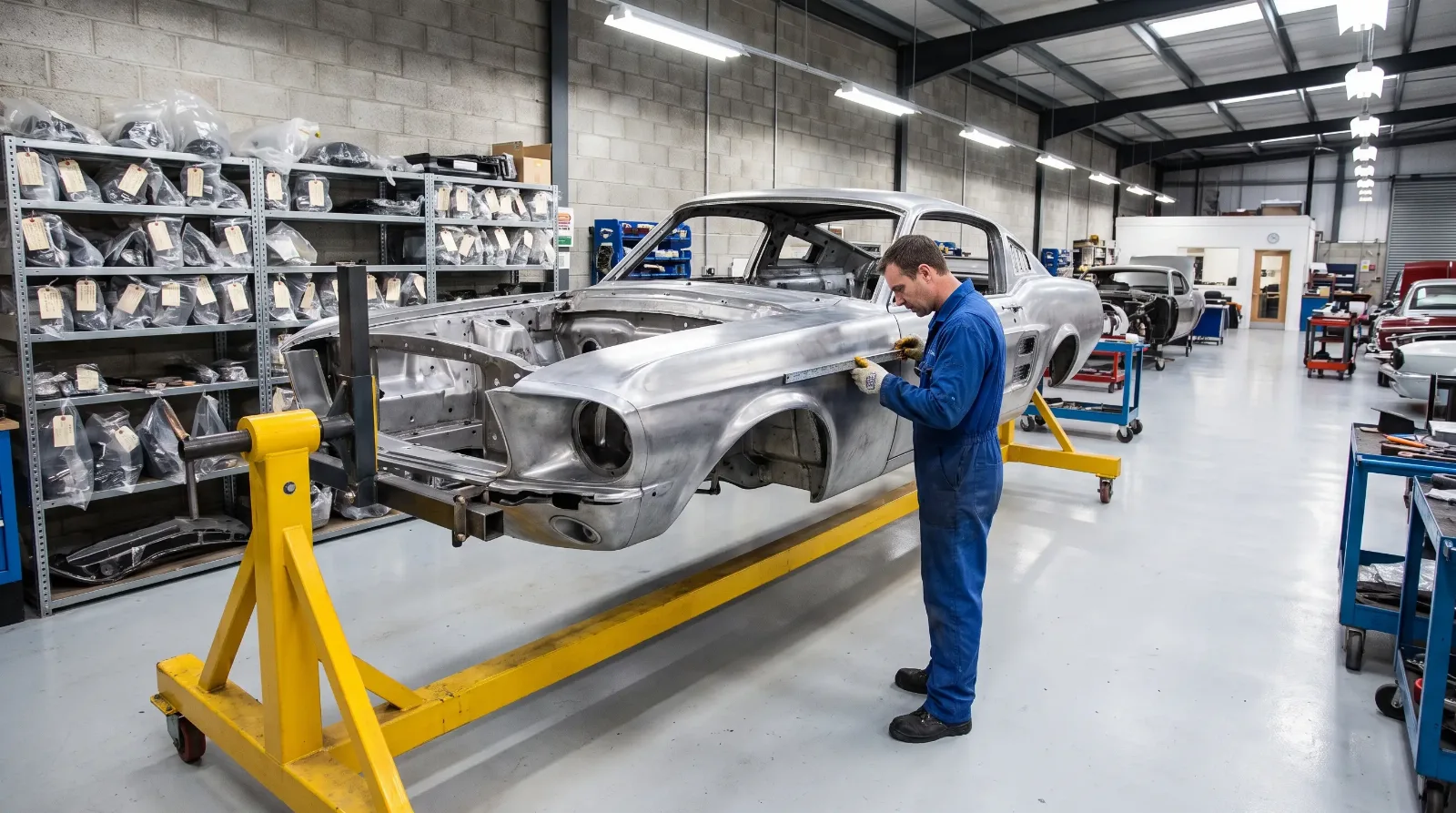
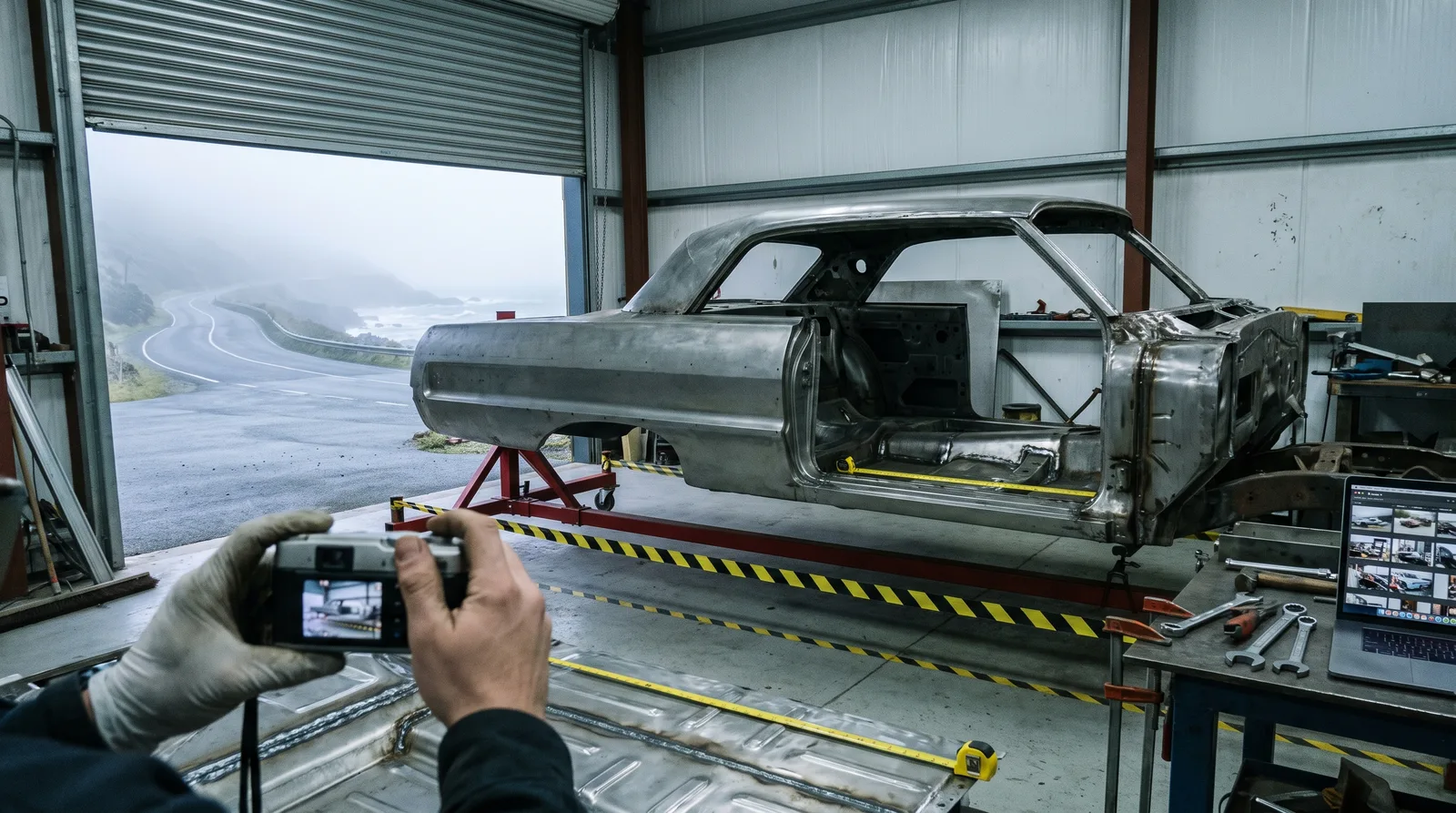
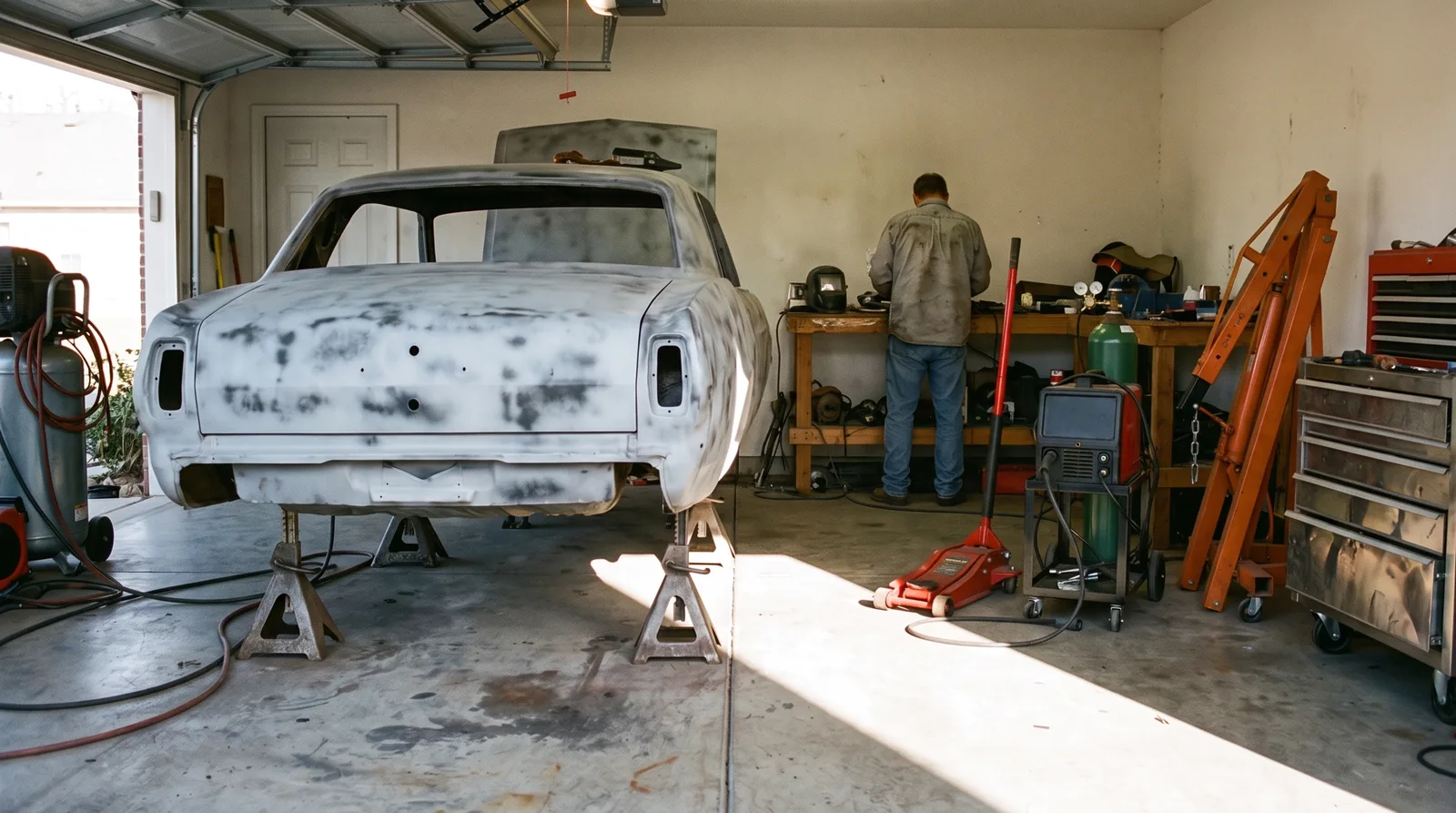
The cars still waiting inside the building matter as much as the finished ones. A busy, orderly floor with jobs at different stages is healthy. A floor full of stalled projects, dusty and half dismantled, suggests a shop that takes on more than it can finish. If you see that, ask directly how long each car has been there. Shops that document their work well, and share it, tend to run cleaner jobs, which is the subject of progress photos and how good shops use them.
"A shop's reputation is not the cars it shows you. It is the owners who still answer the phone about it three years later."
Nora Beckett
Putting it together before you commit
Do the checking in a sensible order. Start with the shortlist, then read reviews for patterns. Call the references, including the awkward one. Ask the club and the judges. Visit, and inspect finished cars and the cars in progress. Confirm the shop's business basics: a registered business, current garage keepers insurance covering customer vehicles, and a written agreement that spells out deposits and approval of changes. A deposit should cover parts ordering and early labor. A large sum due up front, with no staged payments tied to completed work, is a warning sign that many owners treat as a red flag, since it can mean the shop is leaning on new customers' money to fund old jobs.
If you are still building that shortlist, you can find restoration shops by region and specialty, then run each name through the steps above. Expect it to take a few weeks. That is a small price against a restoration that can run for a year or more and cost many thousands of dollars.
No shop is perfect, and no check is airtight. What you are looking for is consistency: the same story from customers, clubs, suppliers and finished cars. When the pieces agree, you can commit with open eyes. When they argue with each other, keep looking.
Sources and notes
- FTC: Auto repair basics, supports asking trusted people for recommendations, checking complaint records with the state attorney general or consumer agency, and written estimates with an approval threshold
- For A Bodies Only: How to choose a Mopar restoration shop, owner experience on references, visiting past work, staged draw payments and avoiding large up-front payments (anecdotal)
- Grundy: Car restorer program, supports garagekeepers coverage for customer vehicles during restoration
- Hagerty: How much does it cost to restore a classic car, background on shop labor costs and why restoration is a large commitment
- Wikipedia: Mechanic's lien, explains artisan's liens and why written estimates and approvals matter if a dispute arises
Related Reading
Have a
Classic Car
for Sale?
Reach thousands of serious classic car collectors across the US.
Sell It Here →
Selling a classic? Here's how: sell my classic car
Are You a Classic Car Dealer?
List your full inventory and connect with targeted classic car buyers.
Join as a Dealer →

About the author
Nora Beckett
Automotive features writer and photographer who tells the human stories behind the cars, from show fields to cross-country road trips.
More in Restoration & Tech
Comments (2)
A
Arturo Benavides
1 month ago
Paper beats people for me, every time. Question though: when a shop hands you the "difficult job" reference, how do you know it isn't a buddy of the owner? My Lincoln project goes out this winter and my gut says ask for three references, not one.
Arturo, you can't always know. But a friend tends to tell the story smoothly, and a real customer who lived through a hard job usually stops in the middle to choose his words. Ask him what he'd change in the contract. People who went through it answer fast, and with specifics.
F
fordgirl_kate
4 weeks ago
Or skip the shop's list entirely and ask the club who left that shop.
Same rule at the boat yard, mano. Ask the third-year owners.
Ernesto, sometimes the best shop has no reviews at all. The guy who did my T-Bird's quarters works out of a barn, no website, two-year wait, and the gaps are dead even.