
The small-block Chevy 350 is the engine I have pulled out of more garages than any other. It went into pickups, station wagons, Camaros and Novas for decades, and there are still more of them around than anybody has a use for. That is exactly why a rebuild price is hard to pin down. Two shops can quote the same engine and land $2,000 apart, and both can be honest about it.
Restoration & Tech
8 min read
Chevy 350 Rebuild Cost: The Most-Rebuilt Classic V8
What a Chevy 350 rebuild really costs in 2026, from a basic refresh to a built street motor, where the money goes, and when a swap makes more sense.
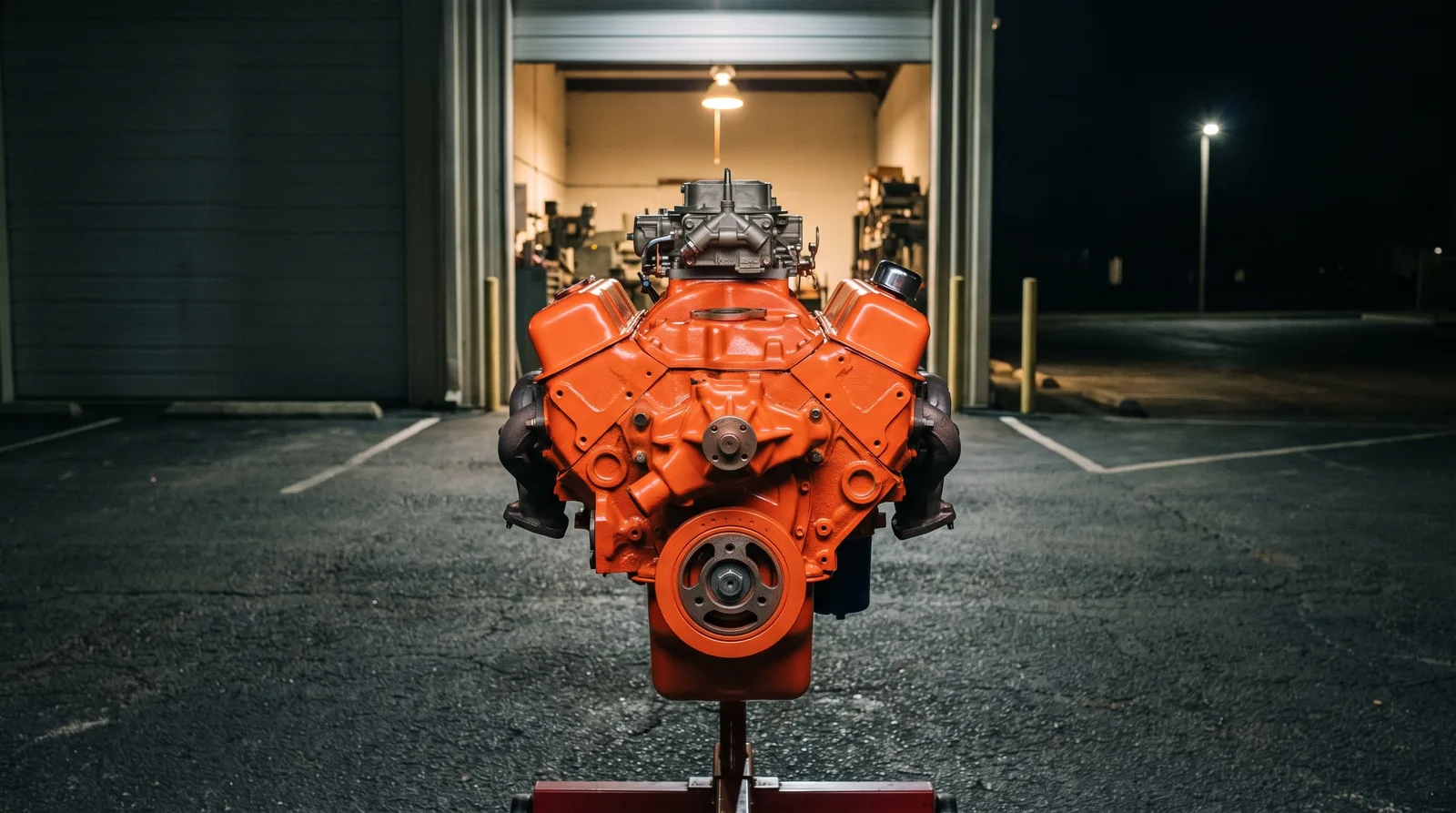
Here is how the numbers shake out in 2026, where they come from, and where a rebuild stops making sense. For the bigger picture on classic engine rebuild costs across other engine families, start there. This piece stays on the 350.
Why the 350 is the baseline
Chevrolet built the 350 cubic inch small-block from 1967 into the early 2000s in a long list of versions, from mild truck motors to the high-compression engines that people chase, such as the solid-lifter LT-1 of 1970 to 1972. Because so many were made, the parts supply is deep. Pistons, bearings, gaskets, cams, timing sets and rebuild kits sit on shelves at almost every parts counter. Nothing on that list is hard to find, and that keeps rebuild prices lower than for almost any other V8 of the era.
The flip side is that cheap parts tempt people into cheap work. A basic master rebuild kit can cost only a few hundred dollars and will make the engine run. It will not make it correct, and it will not make it last unless the machine work under it was done properly. I have seen plenty of fresh engines tear themselves up inside 5,000 miles because somebody skipped the block prep.
What a rebuild costs by level
The figures below are 2026 US dollars for a shop-built engine with parts, machine work and assembly, not including removal and installation. They assume a block that is usable. Only the standard rebuild row carries a firm range, because that is the one most shops quote the same way. A cracked or badly rusted block changes the math, and I cover that further down.
| Level | What you get | Typical cost |
|---|---|---|
| Basic refresh | Hone, rings, bearings, gaskets, oil pump, new cam and lifters, no machining beyond a hone | Low thousands, mostly parts and assembly labor |
| Standard rebuild | Bore over, new pistons, crank ground, heads rebuilt, balanced, correct-style parts | About $4,000 to $8,000 for a shop-built stock long block |
| Performance street build | Better heads, cam package, forged or hypereutectic pistons, blueprinted clearances | Above the stock range, with heads and cam package setting the total |
| Concours correct rebuild | Date-code correct castings, original-style finishes, period hardware | Often well beyond the stock range, quoted job by job |
The labor rate at your machine shop and the assembly shop matters as much as the parts. Rates vary by region, and many independent shops charge about $85 to $150 an hour for engine assembly, and a shop in a big metro area can run well above a rural one.
Where the money goes
Machine work is the part people underestimate. Boring the block, honing it with a torque plate, decking the surfaces, grinding the crank, resurfacing the heads and doing a valve job commonly adds up to about $1,500 to $3,500 on a typical American V8. Then comes balancing the rotating assembly, which is cheap insurance on an engine that will turn real RPM.
Parts are the second block of cost. A good piston and ring set, a bearing set, a quality cam and lifter kit, a timing set, an oil pump and a full gasket set will usually run about $800 to $2,500 depending on how far you go. Heads are the swing factor. Rebuilding a good pair is reasonable. Replacing them with aluminum aftermarket heads can double the parts bill.
Then there are the pieces that surround the engine. A new water pump, harmonic balancer, flexplate or flywheel, intake, carburetor rebuild, distributor and exhaust manifolds all add up. People budget for the short block and then discover the rest of the engine is three more invoices.
Where the budget blows up
Three things push a 350 rebuild from reasonable to ugly. First, a bad block. If the machine shop mags it and finds a crack, a cylinder that will not clean up at the maximum overbore, or serious core shift, you are buying another block. A decent used core often costs a few hundred dollars, plus the cost of cleaning and checking it all over again.
Second, a bent or worn crankshaft. Cast cranks are often fine with a regrind. A badly scored one is a replacement, and a forged crank adds several hundred dollars or more to the parts bill.
Third, scope creep. The engine is out, the car is on jack stands, and suddenly the radiator, motor mounts, hoses, belts and wiring all look tired. That is normal. It is also why I tell people to add 20 percent to any engine budget before they write the first check. If you are working out the wider restoration budget, put the engine on its own line and keep a contingency next to it.
"The block decides the budget. Get it to the machine shop and have it checked before you buy a single part, because everything else depends on what it tells you."
Mike Sullivan
Doing it yourself versus paying a shop
A competent home builder can assemble a 350 on a bench with a torque wrench, plastigage and patience. Doing the assembly yourself can save the shop assembly labor, typically about $850 to $1,650 for a V8 at $90 to $150 an hour. What you cannot do at home is the machine work. You will still pay for the boring, honing, grinding and balancing, and you should not skip any of it.
A shop rebuild gets you a warranty, usually for a year or a set mileage, and that has real value. If it fails, someone else is on the hook. If you built it and it fails, you are. For a numbers-correct restoration where the engine has to look period right as well as run, a shop that knows the correct finishes and hardware will save you trouble at judging time.
Rebuild or swap
Here is the honest question. If the engine in the car is a numbers-matching 350 that came with it, rebuild it. The value of originality outweighs the money saved. If it is a replacement block of unknown history, the math is different. A remanufactured or crate 350 can cost about the same as a full shop rebuild and arrive with a warranty (a shop-built short block alone is often quoted at about $1,000 to $3,000, and remanufactured long blocks at roughly $2,600 to $5,000), and in that case the question of rebuild or swap deserves a real look before you commit.
My rule is simple. Rebuild when the engine is original to the car and the block is sound. Swap when it is a mismatched core, when you want more power than the stock design can safely give, or when the labor to bring a worn engine back costs more than a new one. And if you are shopping for a car where the engine question is already settled, there are plenty of small-block muscle cars listed with their history documented.
Final numbers to carry with you
Budget about $4,000 to $8,000 for a shop-built stock long block, more if you want correct finishes or real power, and keep 20 percent aside for what the machine shop finds. Get itemized quotes, ask what is included in the machine work, and ask who is doing the assembly. The engine itself is the easy part. The surprises live in the details nobody wrote down.
Sources and notes
- EngineerFix: How much does it cost to rebuild a 350 engine?, assembly labor of $850 to $1,650 at $90 to $150 an hour and low-cost master kit prices
- Bullnose Garage: Common engine machine work definitions and costs, what boring, honing, decking, crank grinding, balancing and magnafluxing involve
- The Drive: Short block vs. long block, definitions and a short block starting at about $1,000 to $3,000
- SlashGear: Chevy 350 small block crate engine cost and horsepower, crate 350 pricing and the 1967 Camaro SS debut
- Wikipedia: Chevrolet small-block engine, first and second generation, 350 production years, LT-1 solid lifters and four-bolt main applications
- BK Racing: Torque plate honing, why it matters, why bores are honed under torque-plate load and when a stock rebuild can skip it
Related Reading
Have a
Classic Car
for Sale?
Reach thousands of serious classic car collectors across the US.
Sell It Here →
Selling a classic? Here's how: where to sell your classic car online
Are You a Classic Car Dealer?
List your full inventory and connect with targeted classic car buyers.
Join as a Dealer →

About the author
Mike Sullivan
Detroit-area muscle car enthusiast and restoration specialist with three decades of hands-on experience working on American iron.
More in Restoration & Tech
Comments
Be the first to comment on this article.