
The photograph arrives on a Tuesday night: a bare floorpan on a rotisserie, fresh weld seams catching the light, a tape measure laid across the cut. The owner, three states away, has never touched this car's metal. But he looks at that picture for a long time, and something in his shoulders settles. He can see the work, and so he can trust it.
Restoration & Tech
7 min read
Progress Photos and Build Logs: How Good Shops Communicate
Good shops show you the work before you ask. Here is what useful restoration progress photos and build logs look like, and what silence from a shop can mean.
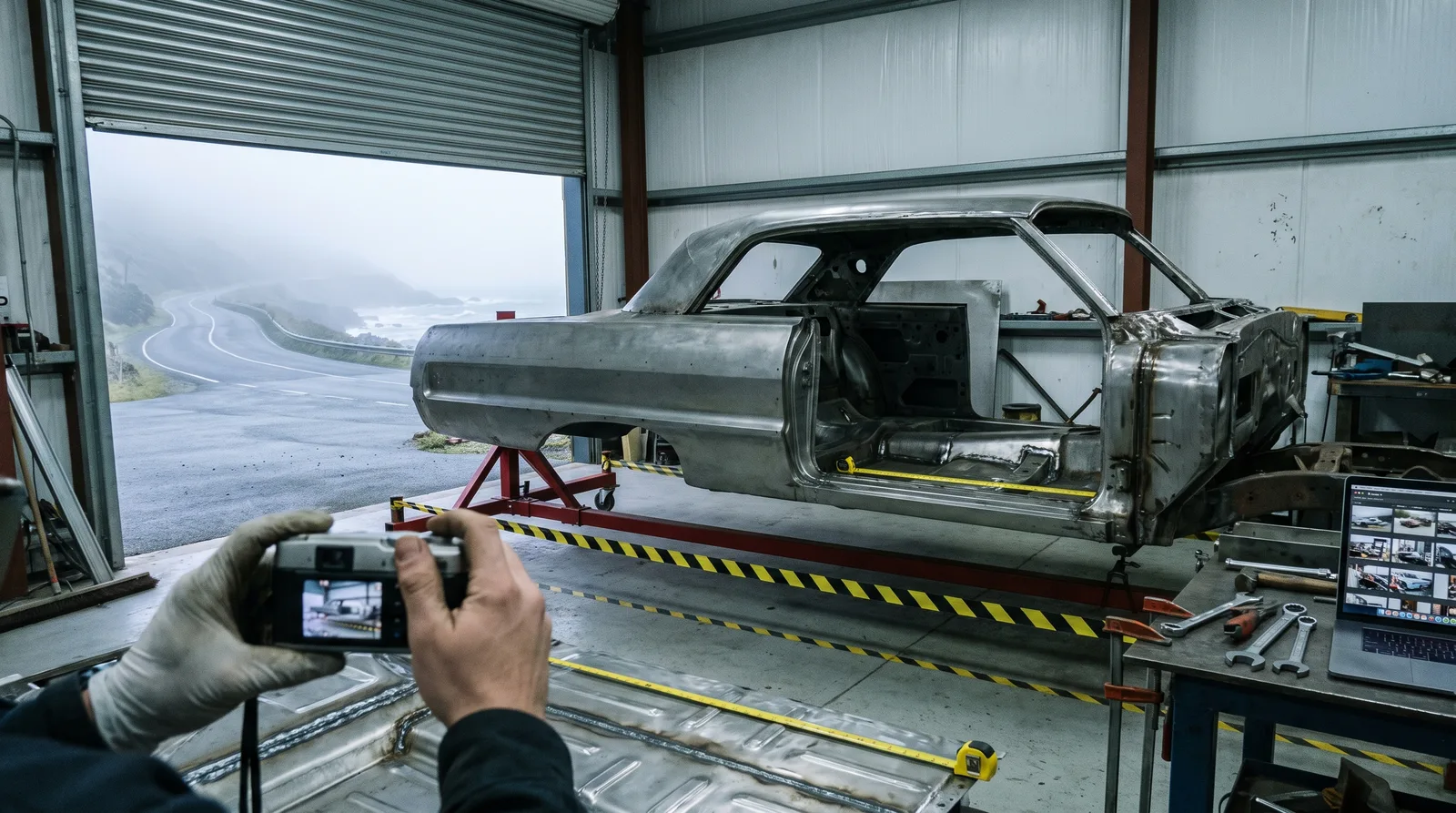
That small exchange is most of what communication on a restoration comes down to. A classic car job runs for months, sometimes years, and the owner is mostly absent. What fills the gap between drop-off and delivery is information, and shops differ enormously in how much of it they give. This piece looks at what useful progress photos and build logs contain, how often you should expect them, and why they say so much about the shop. For the whole picture of choosing a shop, start with the full guide.
Why updates matter more than they seem
A restoration is a long series of decisions made in a place you are not standing. Rust turns up behind a quarter panel. A part that was supposed to be reusable turns out to be cracked. Each discovery needs your approval, and each approval needs you to understand what you are approving. Photos are the cheapest way to do that. A single clear picture of a rotted frame rail ends a debate that three emails could not.
Updates also work as a quiet quality check. A shop that photographs its work is a shop that expects the work to hold up to being looked at. Welds, fitment and prep are all easier to get right when someone might see them. Shops that resist sharing, or that go quiet for weeks, are not always hiding something, but you should treat the silence as a question worth asking out loud.
What good progress photos actually show
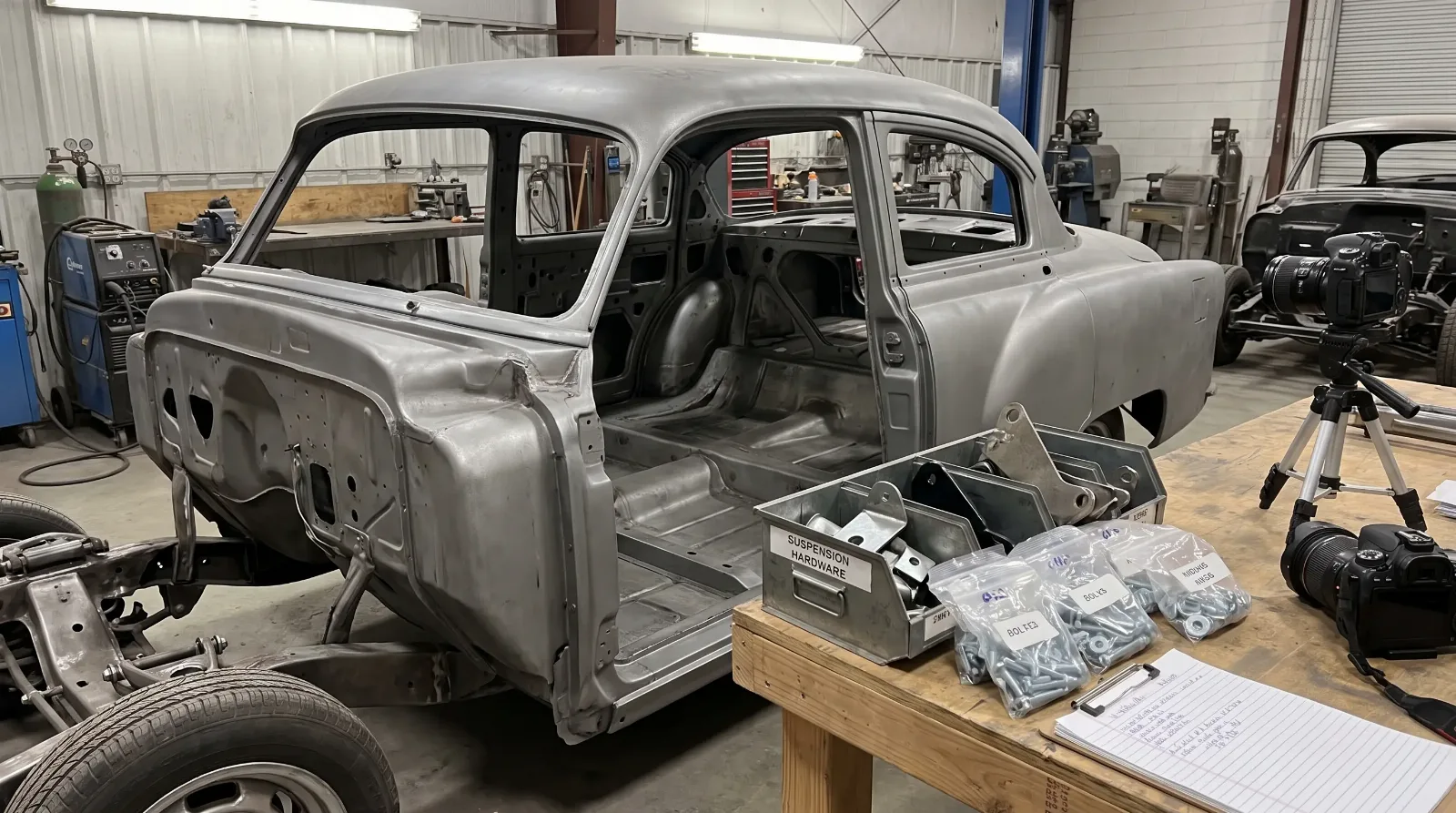
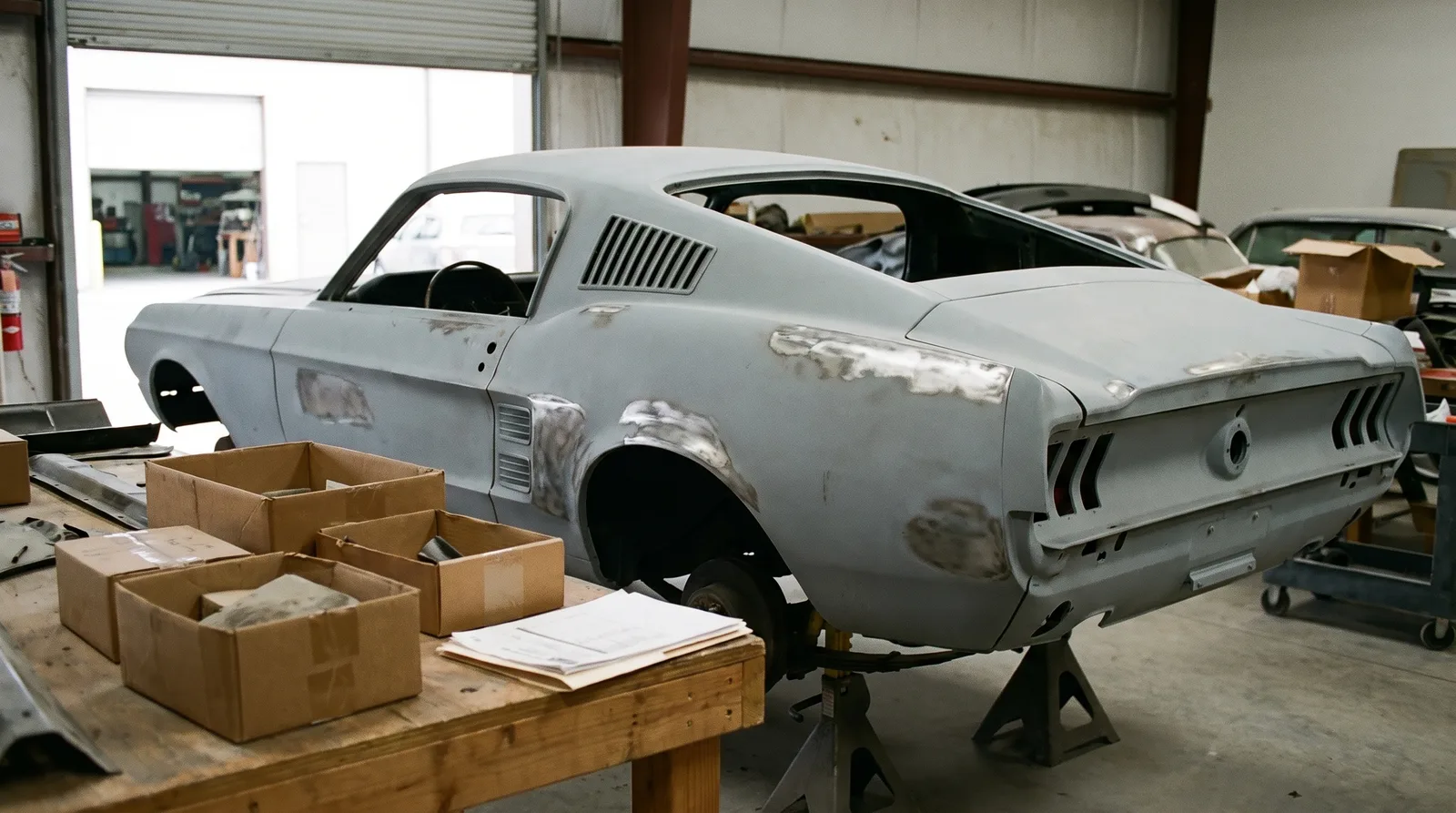
Quantity is not the point. Two hundred blurry snapshots of an engine bay tell you less than twenty well-lit pictures taken at the right moments. Look for photos that document the stages where mistakes get buried.
| Stage | What the photos should show | Why it matters |
|---|---|---|
| Teardown | Car as received, parts bagged and labeled, existing damage | Sets the baseline and protects both sides in a dispute |
| Media blasting or stripping | Bare metal from every angle, including inside rails and under panels | Shows the real condition before anything is covered |
| Metalwork | Cut-out sections, patch panels, welds before grinding | Proves the repair is metal and not filler |
| Body and prep | Panel gaps, primer coats, block sanding | Gaps and flat panels are settled here, not in paint |
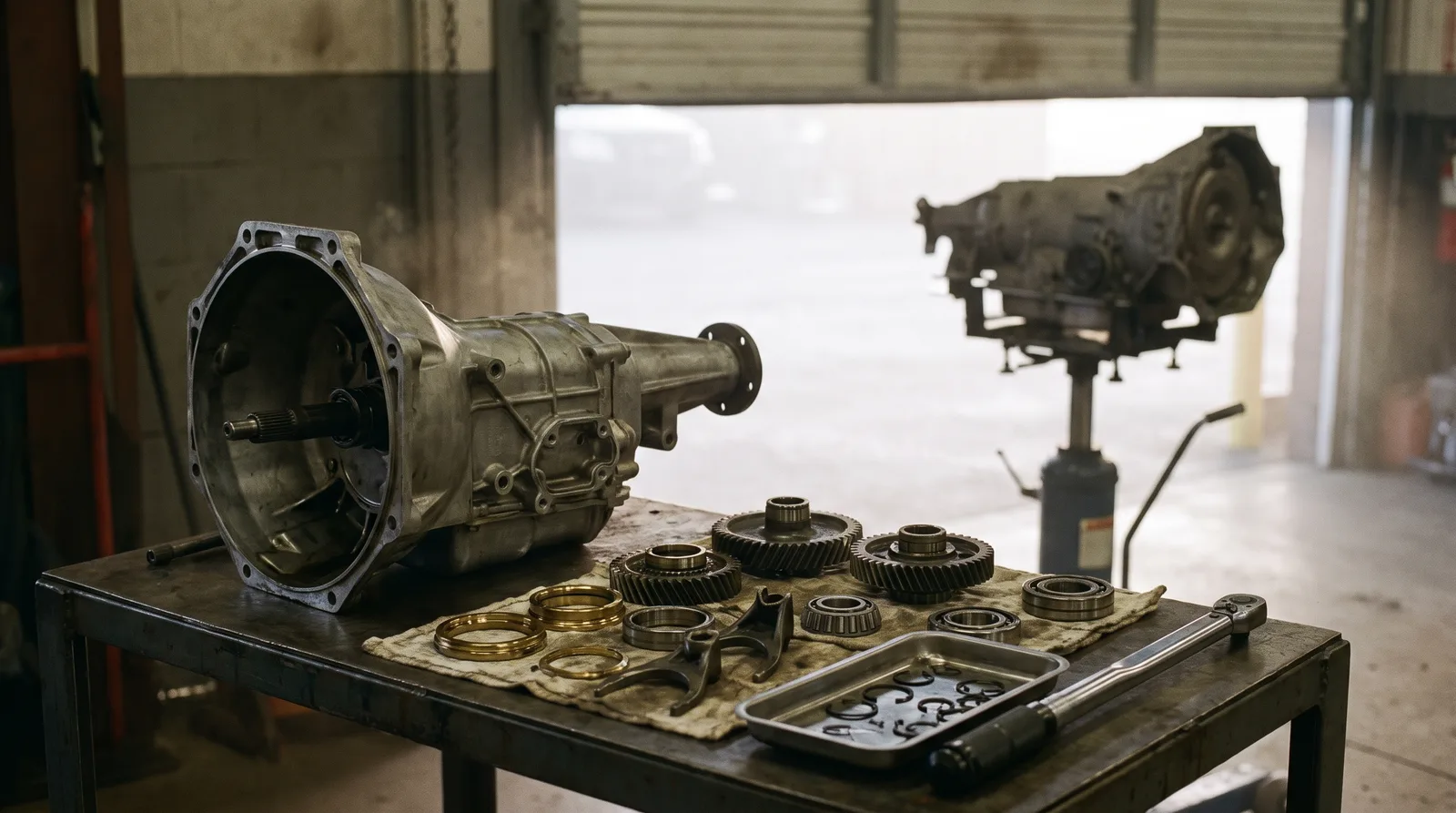
| Assembly | Wiring, brake lines, fuel lines, trim fitting | Hidden systems disappear behind finished surfaces |
Good photos also carry context. A date, a short caption saying what is being done and why, and a wide shot that shows where the close-up belongs. If a shop sends a picture of a repaired section with no explanation, ask for one. The best shops volunteer it. The point is that you can follow the job without needing to be an expert.
Build logs, invoices and the written record
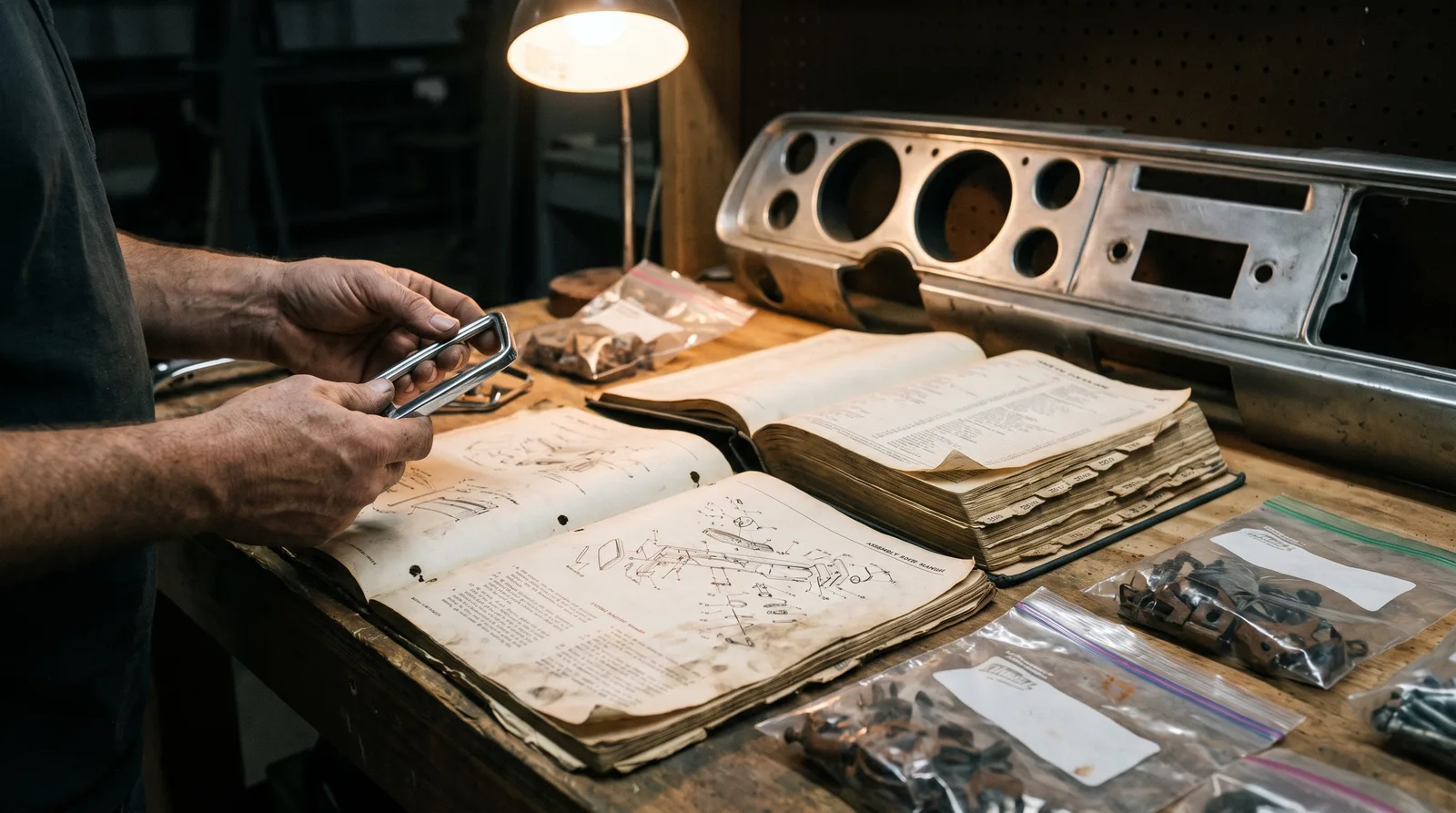
Photos show the work. A build log explains it. A good log is a running list of what was done, by whom, in how many hours, with notes on parts ordered and decisions made. Some shops keep it in project management software that owners can log into. Others send a weekly email with a short summary and attached photos. The format matters less than the habit.
The log is also where your budget lives. If labor is billed by the hour, the log should line up with the invoices, and any change from the original estimate should show up with a note about who approved it. When a bill arrives that surprises you, the log is how you trace it. A shop that cannot produce one after the fact will have trouble explaining the money.
You can keep your own record too, and you should. How to build one that holds up is covered in our walk-through of documenting a restoration. Save every photo the shop sends, with its date, in a folder you control. Keep copies of approvals. If the relationship goes bad, a tidy folder is worth more than a hundred phone calls.
How often should a shop update you?
There is no universal schedule, but many shops that document their work send photos weekly, others send a monthly report with photos, so a reasonable rhythm is an update every week or two during active work, and a short note any time something significant changes. Agree on it before the car leaves your driveway. Put the cadence, the format and who your contact is into the written agreement, along with how decisions get approved.
Expect gaps when the car is waiting on a part, a paint booth slot or an outside specialist. A good shop tells you about the wait instead of leaving you to discover it. A message such as "the replacement panels are backordered, here is the new estimate, here is the photo of what we did meanwhile" is a sign of a healthy job. Silence, followed by an apology and a bigger invoice, is not.
"The shops worth trusting are the ones who send you the ugly picture first. The rust, the wrong part, the weld they cut out and redid. Anyone can show you a finished fender."
Nora Beckett
When the updates stop
Every owner eventually meets a quiet stretch. Before you assume the worst, send a short, specific written request: ask for current photos, the current hours logged and a revised completion estimate. Give a reasonable deadline. Most shops, reminded politely, reply. If a week or two passes with nothing, call, and if the car is not accessible when you ask to see it, that is a more serious signal.
Pay attention to patterns. One missed update is a busy week. Three in a row, along with vague answers about timing, is a project in trouble. Knowing your options before you reach that point makes it easier to act calmly. Our piece on when a job stalls goes through the steps, from documentation to recovering the car.
The simplest protection is to choose well in the first place. Ask a prospective shop, before you sign anything, to show you a recent job's photo set and log. If they are proud of it, they will hand it over. If they hesitate, you have learned something before spending a dollar.
Sources and notes
- How to Choose a Mopar Restoration Shop (For A Bodies Only forum), owner and restorer advice on photos, weekly visits and documenting the car before drop-off
- How to Avoid a Restoration Nightmare (ClassicCars.com Journal), asking how a shop updates clients, monthly progress reports with photos, and the red flag of silence
- Precision Car Restoration, example of a shop that sends weekly photographs, emails and calls
- Muscle Car Restorations, Inc., example of a shop that offers weekly photo and progress updates
- Sample restoration agreement (Graveyard Run), example of weekly invoices, a time journal and monthly photo and video records
- Classic Car Restoration glossary (Retro Rides Florida), saving receipts, progress photos and a work log for resale, insurance and appraisal
Related Reading

About the author
Nora Beckett
Automotive features writer and photographer who tells the human stories behind the cars, from show fields to cross-country road trips.
More in Restoration & Tech
Comments
Be the first to comment on this article.