
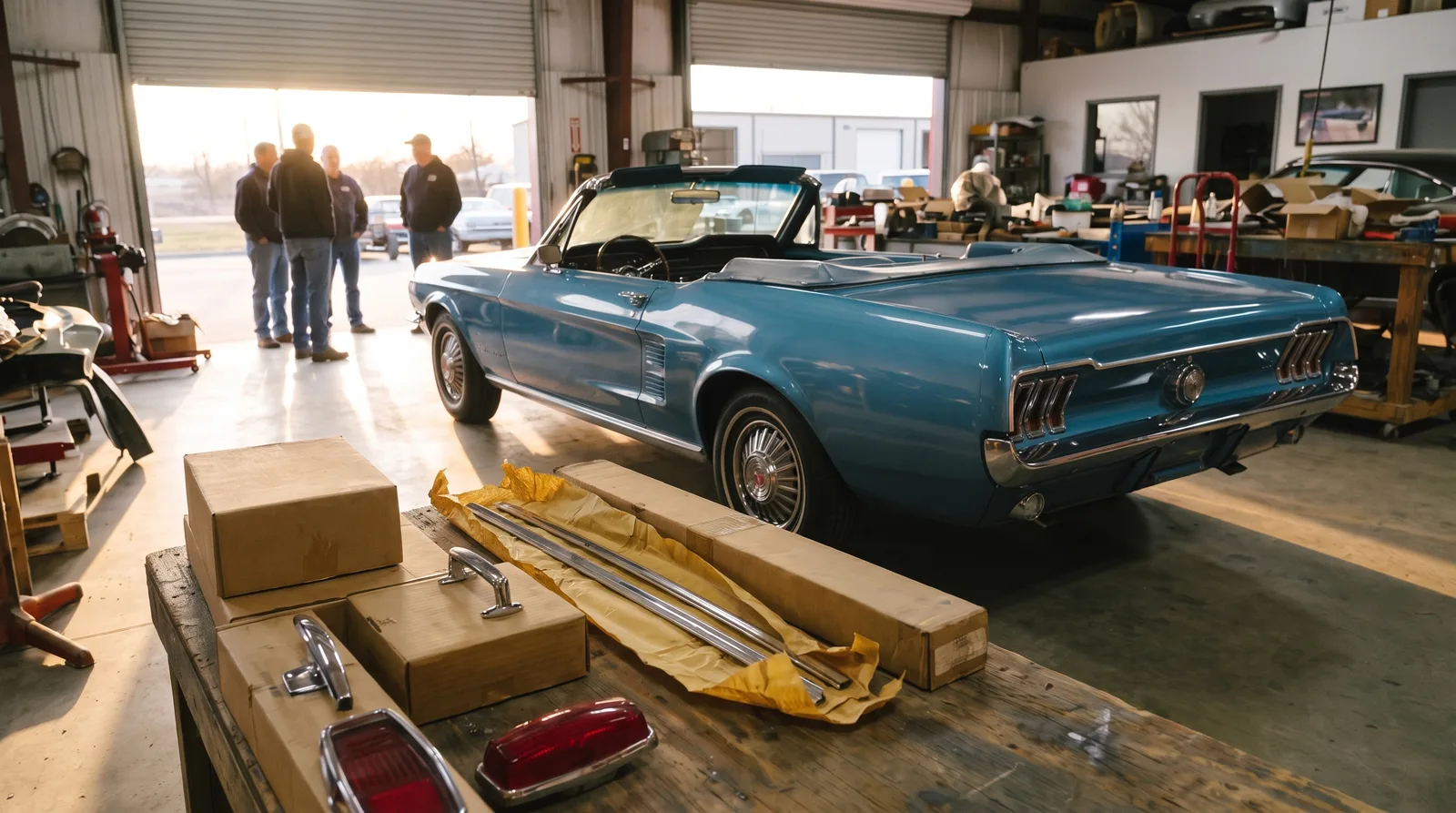
A restoration does not need a shop full of equipment. It needs the right equipment, bought in the right order. I have watched people spend a few thousand dollars on a flashy tool chest and then stall because they had no way to hold the body off the floor. This guide covers classic car restoration tools in the order the job asks for them, with rough price guidance. Check any specific tool against your own car's needs before buying.
Restoration & Tech
7 min read
The Tools a Home Restoration Actually Needs
The classic car restoration tools a home garage really needs, in the order the job asks for them, with 2026 price ranges and notes on what to rent or leave to a shop.
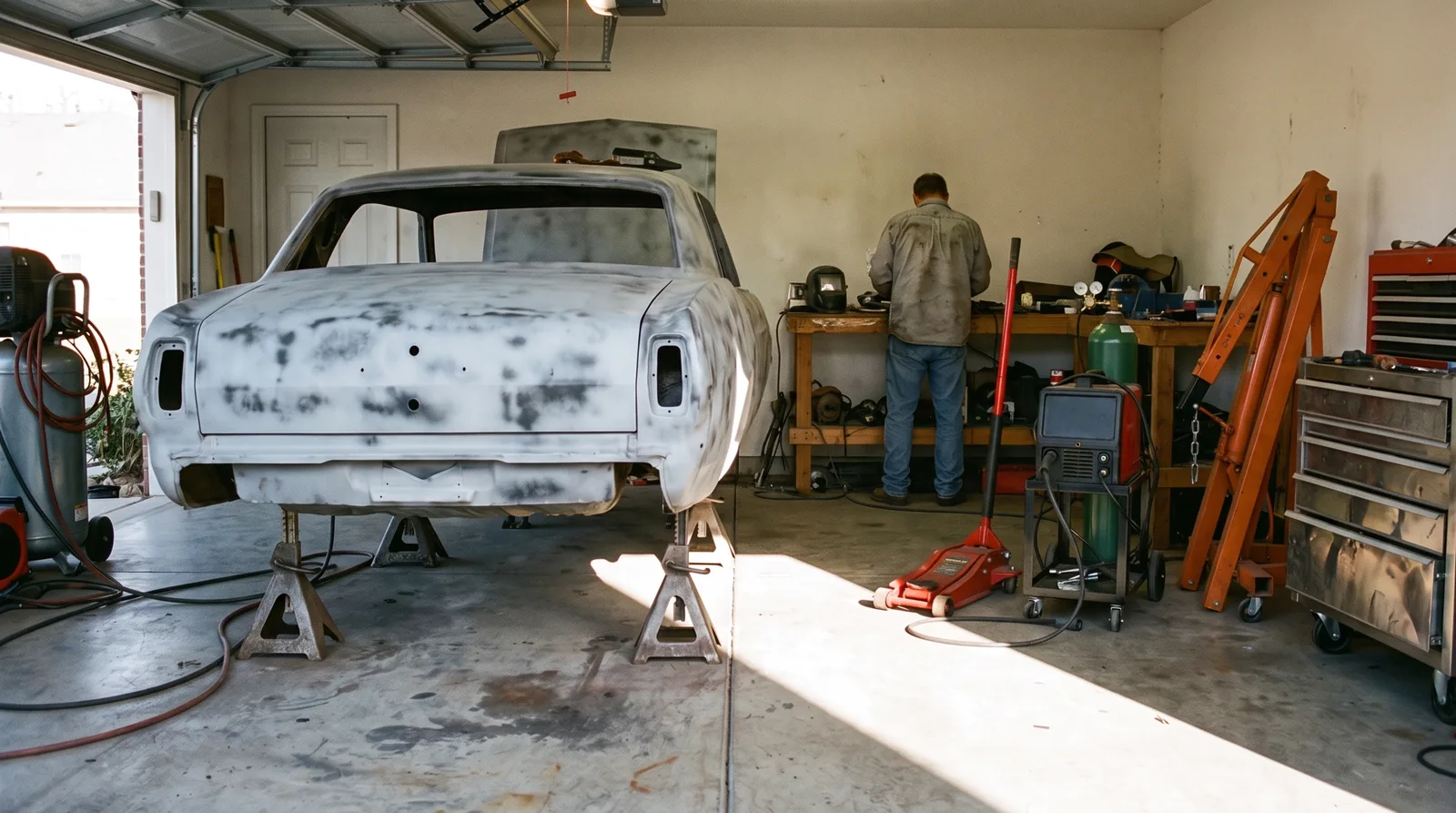
Start with the space
A two-car garage is enough for most projects, but only if it is organized. You need floor area for the car plus a clear walkway around it, a workbench, good light and a way to keep dust off paint. Concrete, level and dry, matters more than a nice floor coating. A 240-volt outlet is worth having if you plan to run a larger welder, since 120-volt machines top out at lighter work.
Hand tools that do most of the work
A solid socket set in metric and SAE, a set of combination wrenches, a torque wrench, pliers, screwdrivers and a good set of pullers cover the bulk of teardown. Buy quality ratchets and wrenches from a known maker. Cheap sockets round off old fasteners, and then a ten-minute job becomes a weekend. Expect to spend from several hundred dollars to over a thousand for a serious starter set. A torque wrench is not optional. Over-tightened bolts on aluminum parts and under-tightened wheel nuts are common restoration mistakes.
Specialty tools worth owning
- A flare-nut wrench set for brake and fuel lines
- A harmonic balancer puller and a bearing puller set
- A trim tool kit for interior panels and door hardware
- A compression tester and a timing light
- A set of feeler gauges and a dial indicator
Lifting and holding
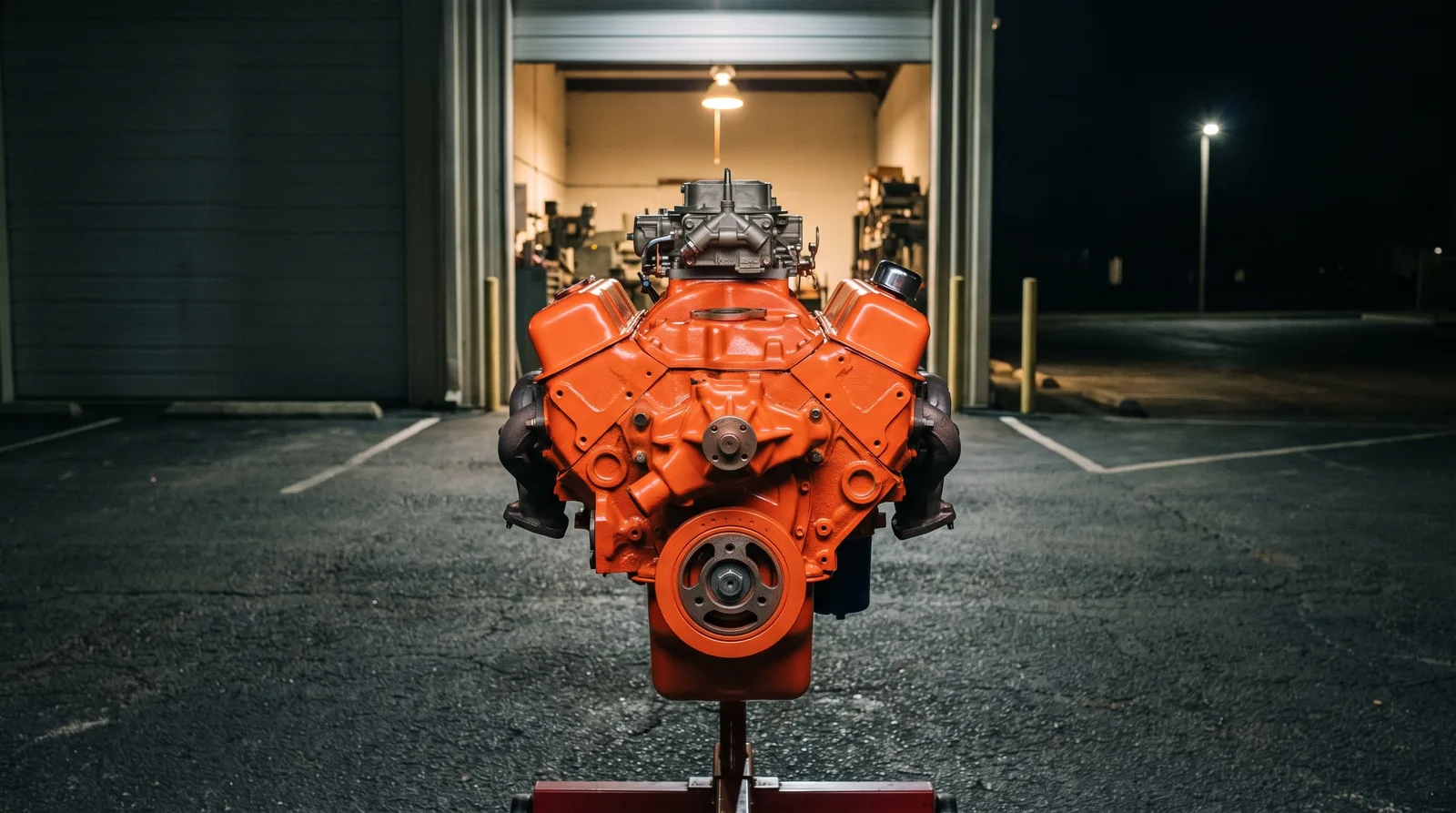
You cannot safely work under or around a car without proper support. Buy a floor jack rated above the car's weight, and use steel jack stands, never cinder blocks or the jack alone. A pair of rolling dollies or a body cart lets you move a shell around the garage. An engine hoist, usually rated for around 2 tons, is something many rental counters offer, and a new one often costs a few hundred dollars. An engine stand makes a rebuild possible without a bench.
Metalwork and welding
If the car needs rust repair, a welder is the first major purchase. A MIG welder around 140 amps on household 120-volt power handles most car sheet metal, while 240-volt and dual-voltage machines in the 200-amp class add penetration for thicker steel. Auto body guides suggest a machine that starts low, around 25 to 30 amps, so thin panels do not blow through. Expect roughly $650 to $1,750 for a quality unit, with dual-voltage models at the top. Add a welding helmet, gloves, clamps and a supply of wire and gas. Learn on scrap before touching the car. A cut-off wheel, an angle grinder with a few types of discs, a spot-weld cutter, a body hammer and dolly set and a sheet metal brake or shear if you plan to fabricate panels round out the metal kit.
Plan for lots of consumables. Grinding discs, flap wheels, welding wire and cutting wheels disappear faster than any one tool, and a restoration can use a few hundred dollars of them. Fabricating new floor sections is entirely realistic at home. Structural and critical areas deserve a second opinion from someone with welding experience.
Bodywork and paint prep
Sanding blocks in several lengths, a dual-action sander, body filler spreaders and a guide coat are enough for body prep. A compressor is the big decision. Spray equipment needs far more air than most home compressors deliver: HVLP guns commonly call for 10 to 15 CFM at 40 psi, and guides suggest a compressor that exceeds the gun's requirement by at least 30 percent. An undersized one is a common reason for poor paint. If you are not painting yourself, skip the compressor and use the money for prep tools.
| Tool group | Rough cost | Buy or rent |
|---|---|---|
| Hand tools and torque wrench | Several hundred dollars to over $1,000 | Buy |
| Jack, stands and dollies | A few hundred dollars | Buy |
| Engine hoist and stand | Roughly $100 to $300 for a new 2-ton hoist; stands vary | Rent or buy used |
| MIG welder and safety gear | Roughly $650 to $1,750 for the machine, plus gear | Buy |
| Body and sanding tools | A few hundred dollars | Buy |
| Compressor and spray gear | Several hundred to a few thousand dollars, sized to the gun | Buy only if you will paint |
Measuring and testing
People forget the tools that tell you what is happening. A tape measure, a straightedge, a set of calipers and a level help with panel fit and alignment. A multimeter and a test light solve most wiring problems, and a vacuum gauge and a fuel pressure gauge tell you whether an engine is healthy before it ever goes in the car. A basic digital multimeter costs little. A diagnostic tool for a car of this age is mostly a simple set of gauges and some patience.
Add a good work light, preferably an LED unit that stays cool near fuel and paint. A magnetic tray, plenty of small containers and a roll of masking tape and a marker for labels will save more time than any power tool. They cost almost nothing, and they are what keeps teardown from becoming a mystery during reassembly.
A camera, even a phone, is the cheapest restoration tool there is. Photograph everything before it comes apart, from three angles, and keep the pictures organized by system. Those photos will answer questions a year later that no manual can.
What to leave to a shop
Machine work on blocks, heads and crankshafts needs equipment that is not worth owning. Media blasting, chassis alignment and final paint are often better outsourced. A lot of the rest, including disassembly, rust repair, bodywork prep and reassembly, can be done at home. If you are weighing it, read about what a full frame-off restoration at home demands before committing.
"Buy the tool when the job in front of you needs it. A garage full of gear you have not used yet is money that should have gone into parts."
Mike Sullivan
Safety gear and the shop itself
Safety glasses, hearing protection, a respirator rated for the chemicals you use, a fire extinguisher and a first aid kit are non-negotiable. Welding and grinding throw sparks, and solvents and fuel create fumes. Ventilate. Keep the extinguisher near the door, not at the far end of the garage.
One last tool decision
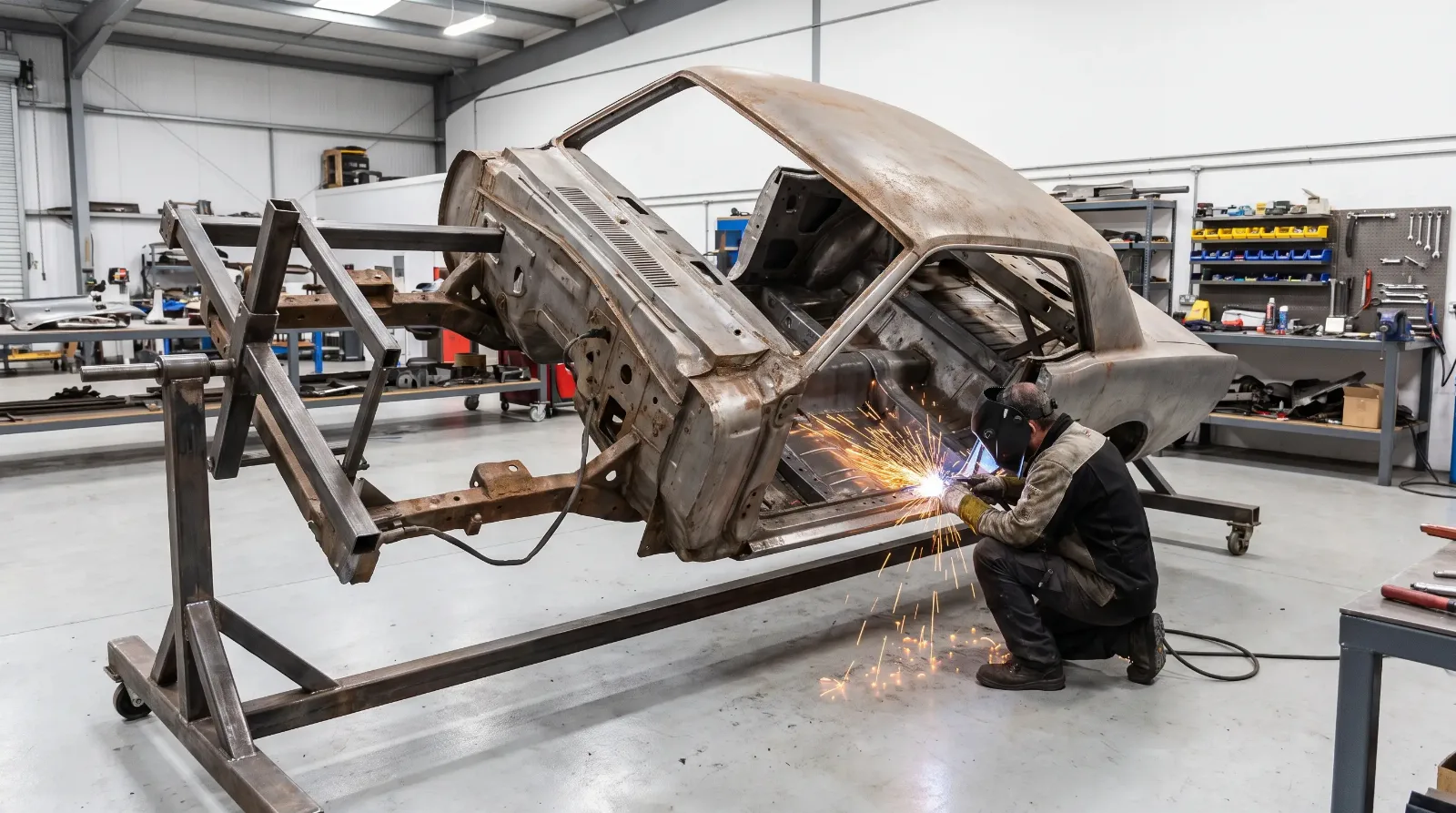
If you plan to strip and repair the entire body, a rotisserie transforms the work. It lets you reach every seam and underbody section without crawling. The choice between building your own, renting or buying is worth reading about before the shell comes off the frame. We cover it in our piece on what a rotisserie restoration involves.
Sources and notes
- Best welder for car panels and sheet metal, amperage rules of thumb and 120-volt versus 240-volt input for auto body work
- 6 best MIG welders for auto repair, low-end amperage for thin panels and price range of automotive MIG machines
- CFM requirements for HVLP paint guns, 10 to 15 CFM at 40 psi and the 30 percent sizing margin
- RCN Tool Reviews: 2-ton foldable shop crane (Rare Car Network), 2-ton hoist lifting V8 engines from small blocks to a 440, with a full price of about $240
- Gas metal arc welding, MIG use in automotive sheet metal and shielding gas mixes
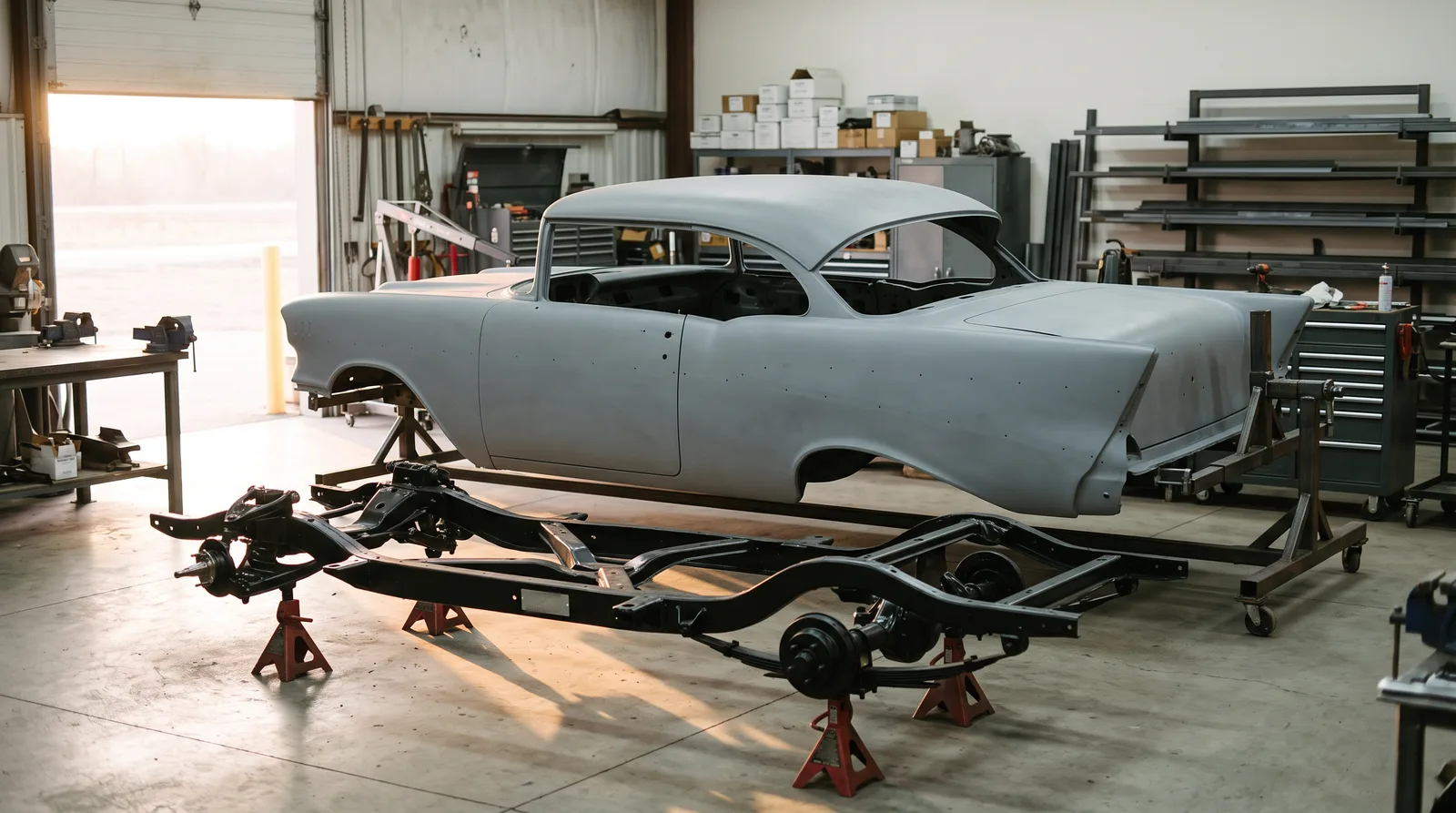
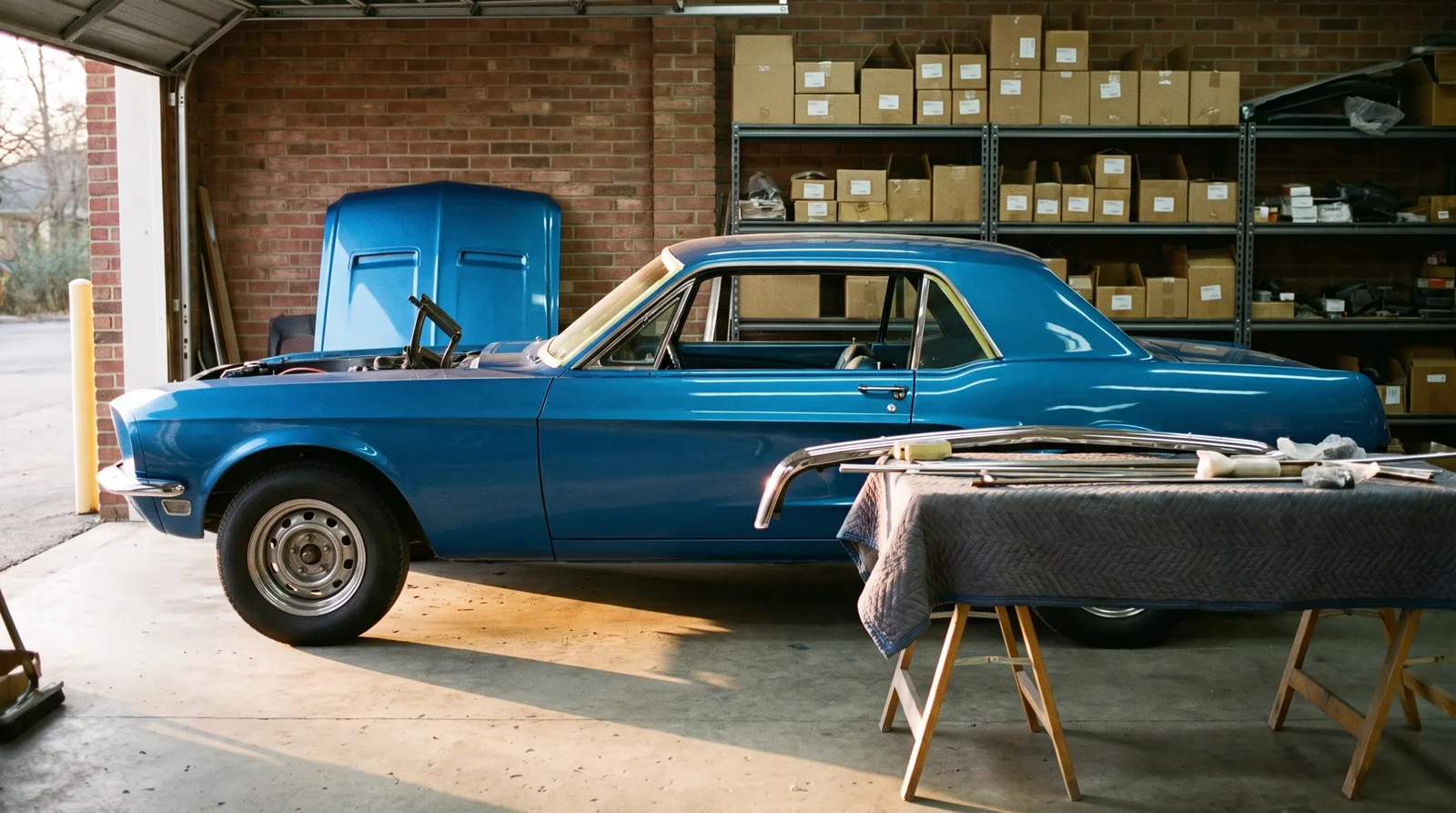
Related Reading
Have a
Classic Car
for Sale?
Reach thousands of serious classic car collectors across the US.
Sell It Here →
Selling a classic? Here's how: sell my classic car
Are You a Classic Car Dealer?
List your full inventory and connect with targeted classic car buyers.
Join as a Dealer →

About the author
Mike Sullivan
Detroit-area muscle car enthusiast and restoration specialist with three decades of hands-on experience working on American iron.
Regarding the torque wrench, which I agree is essential: would the author recommend a click-type unit marked in newton-metres as well as foot-pounds, and how often should it be checked? Mine, used on the 356 and the 2002, is verified annually against a reference; perhaps that is excessive for a home shop.