
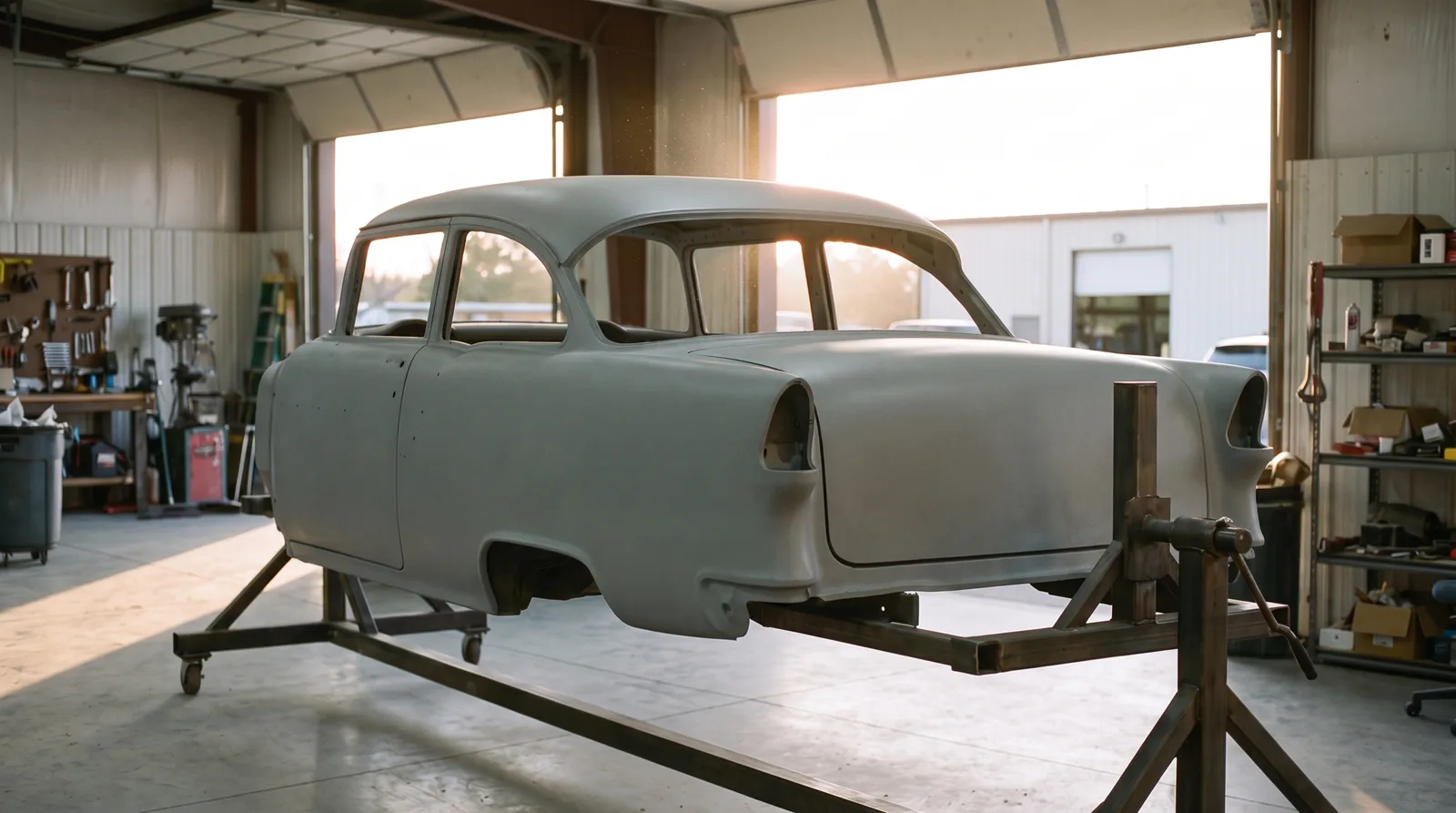
Ask a builder where a hot rod starts and most of them will point at the frame, not the engine. The chassis is the one decision that colors every other choice you make. It sets the stance, it sets the ride height, it sets how the car drives at 70 on the freeway, and it sets how much fabrication you sign up for before the thing ever fires. Get it right and the rest of the build falls into place. Get it wrong and you spend the next two years fighting geometry you should have sorted on the jig. This is the part of how to build a hot rod that nobody can shortcut.
Restoration & Tech
8 min read
Choosing a Hot Rod Chassis and Suspension
Original or repro frame, dropped axle or IFS, transverse leaf or coilover. The chassis decision that sets the whole hot rod build.
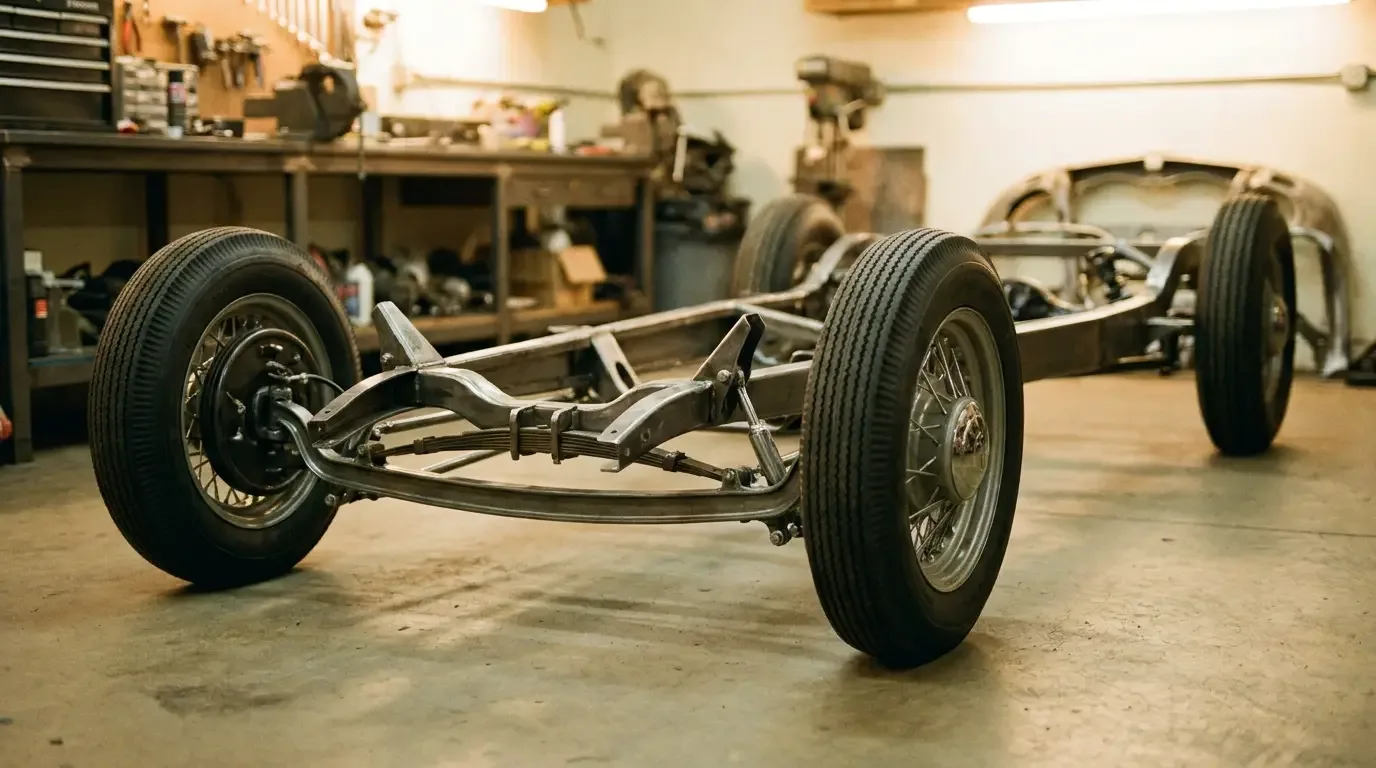
So before you buy a body or a motor, you settle the frame. Original or aftermarket. Solid axle or independent. Buggy spring or coilover. Those three questions decide what kind of car you are building.
Original frame or aftermarket rails
The old-school answer is you find a real Ford frame, box the rails, and go from there. On a Deuce that used to be gospel, because the '32 frame with its reveal along the top edge is part of what makes a highboy look right. A boxed original frame with the correct rails still carries authenticity that a lot of guys care about, and if you are chasing a period-correct build it matters.
The problem is supply. Genuine 1932 Ford frames are getting rare and expensive, and a lot of the survivors are rusted, tweaked, or already hacked up by somebody in 1968. That is why the aftermarket repro frame exists. Companies build brand-new '32-style rails, and better ones are stamped with the correct reveal so they read right from ten feet away. New steel, no mystery cracks, and mounting points already sorted for a modern drivetrain.
Here's how I sort it: for a driver you plan to put miles on, a good repro frame is the smart money. For a numbers-matching period restoration or a car where originality is the whole point, hunt down the real rails. Just know a straight, honest original '32 frame can run into serious money before you've done anything to it.
Solid drop axle versus IFS
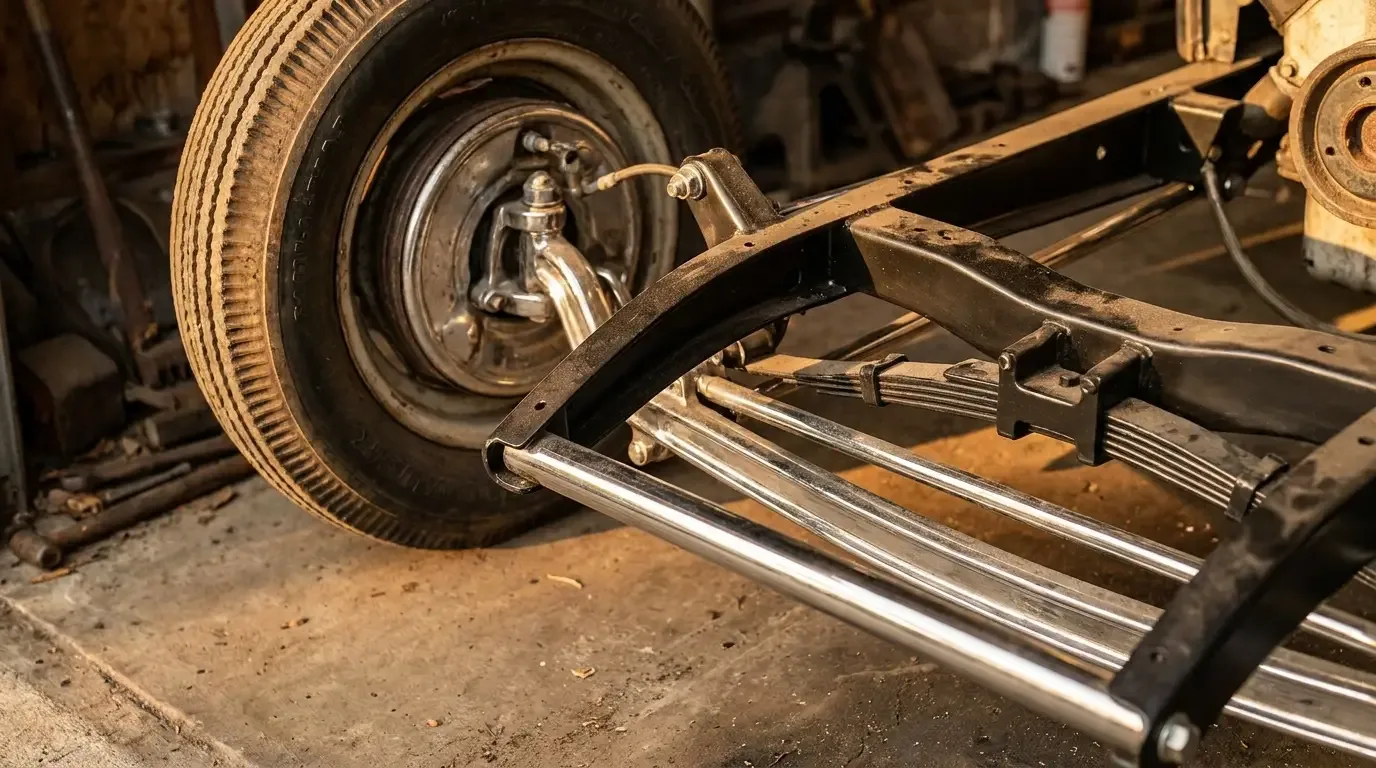
Up front you pick a philosophy. The traditional hot rod runs a solid I-beam or tube axle, usually dropped, hung on a transverse leaf spring. That dropped-axle front end is what gives an early rod its face, that skinny-tire, low-nose stance the whole look is built on. It is simple, it is period-correct, and it is easy to work on. It also rides like what it is, a 90-year-old suspension design, and a badly set-up beam axle can wander and shimmy if the caster and toe are off.
The other camp bolts in an independent front suspension, usually a Mustang II-style crossmember or a purpose-built IFS kit with rack-and-pinion steering, disc brakes, and coil-overs. It rides better, steers better, and stops better. That is not opinion, it is geometry. The trade is that a Mustang II front end under an early highboy can look wrong to a traditionalist, and it moves the car away from the old-school idiom.
- Dropped solid axle: best stance, period-correct, simple to service, harsher ride, more setup sensitivity.
- IFS (Mustang II or aftermarket): better ride and steering, easy disc brakes, more parts, less traditional look.
"I have built both. A dropped tube axle on a hairpin is the prettiest front end there is, and I will die on that hill. But if a guy tells me he is driving to Bonneville and back every summer, I am putting a decent IFS under it and I sleep fine at night."
Ray Delgado
Transverse leaf, wishbones and the four-bar question
How you locate that front axle matters as much as the axle itself. The traditional setup is a transverse "buggy" leaf spring mounted ahead of the axle, with the axle located by wishbones or hairpin radius rods running back to the frame. Original wishbones are split and mounted wide for a cleaner look. Hairpins are the hot rod shorthand, simple, strong, and they look the part.
The modern answer is a four-bar setup, which locates the axle more precisely and lets the spring work without binding. A four-bar drives better and is more forgiving of setup error. Purists grumble that four-bars look too clean and engineered for a traditional car, and they are not wrong, but plenty of nice rods run them hidden or semi-hidden.
Out back you face the same fork. A transverse rear leaf with a triangulated wishbone keeps the whole car in the old idiom. A parallel-leaf or four-link with coilovers gives you adjustability and a better ride, which you notice the first time you load two people and a cooler into a channeled coupe.
🔧 Inspection Priorities
- Frame straightness. Put any frame, original or repro, on a level surface and measure diagonals. A tweaked frame telegraphs into steering and tire wear forever. Correcting one costs real fabrication time.
- Weld and boxing quality. On an original boxed frame, inspect every weld. Bad boxing plates and cold welds are a safety issue, not a cosmetic one.
- Front axle setup. Check caster, toe, and kingpin condition. A worn kingpin or wrong caster is the usual cause of that classic dropped-axle wander.
- Motor and trans mounts. Confirm the crossmembers actually fit your intended drivetrain before you buy. Retrofitting mounts is where budgets quietly disappear.
Coilovers, ride height and the stance that sells the car
Spring choice is really a stance choice. The transverse leaf is what lets an early rod sit low and level or with that nose-down rake, and it is part of the traditional look. Coilovers give you ride quality and easy ride-height adjustment, but a coilover hanging off the back of a Model A can look out of place if you are chasing the old style.
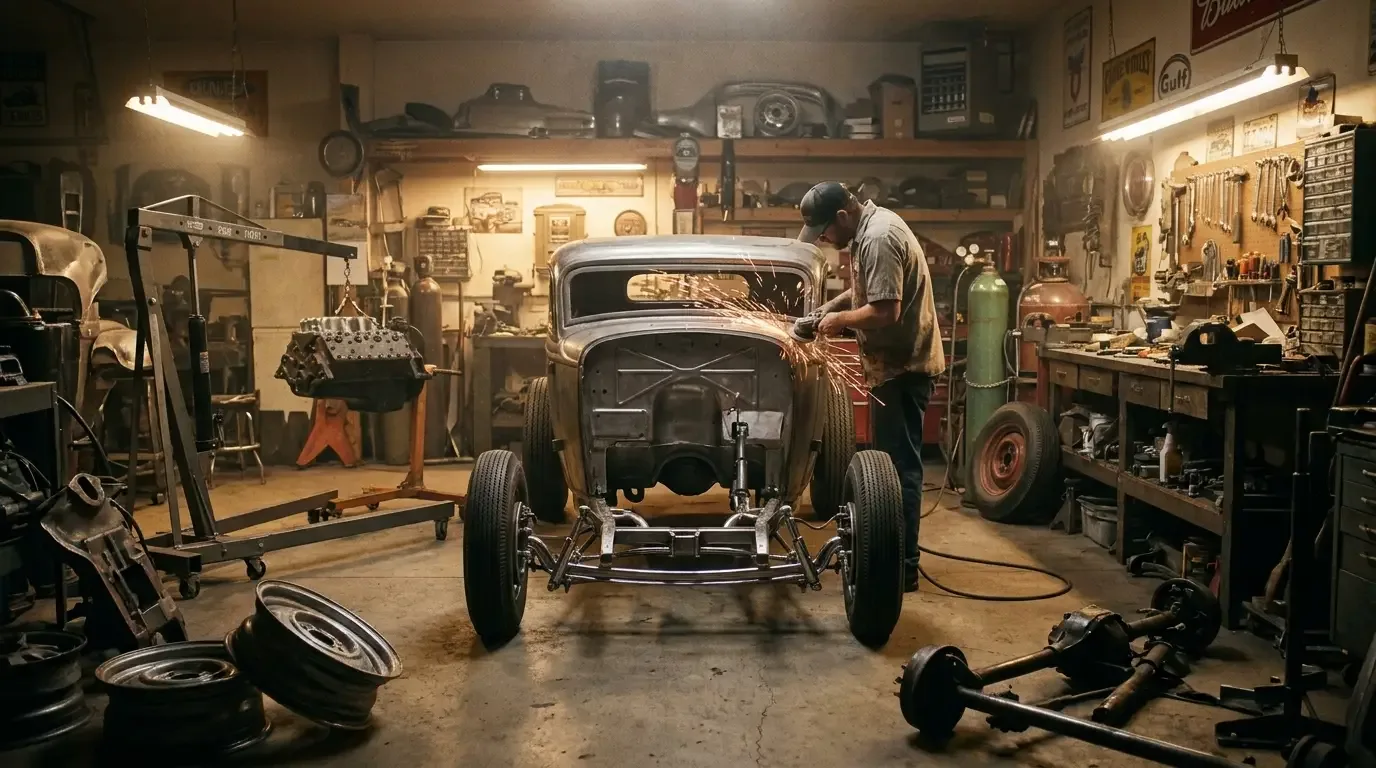
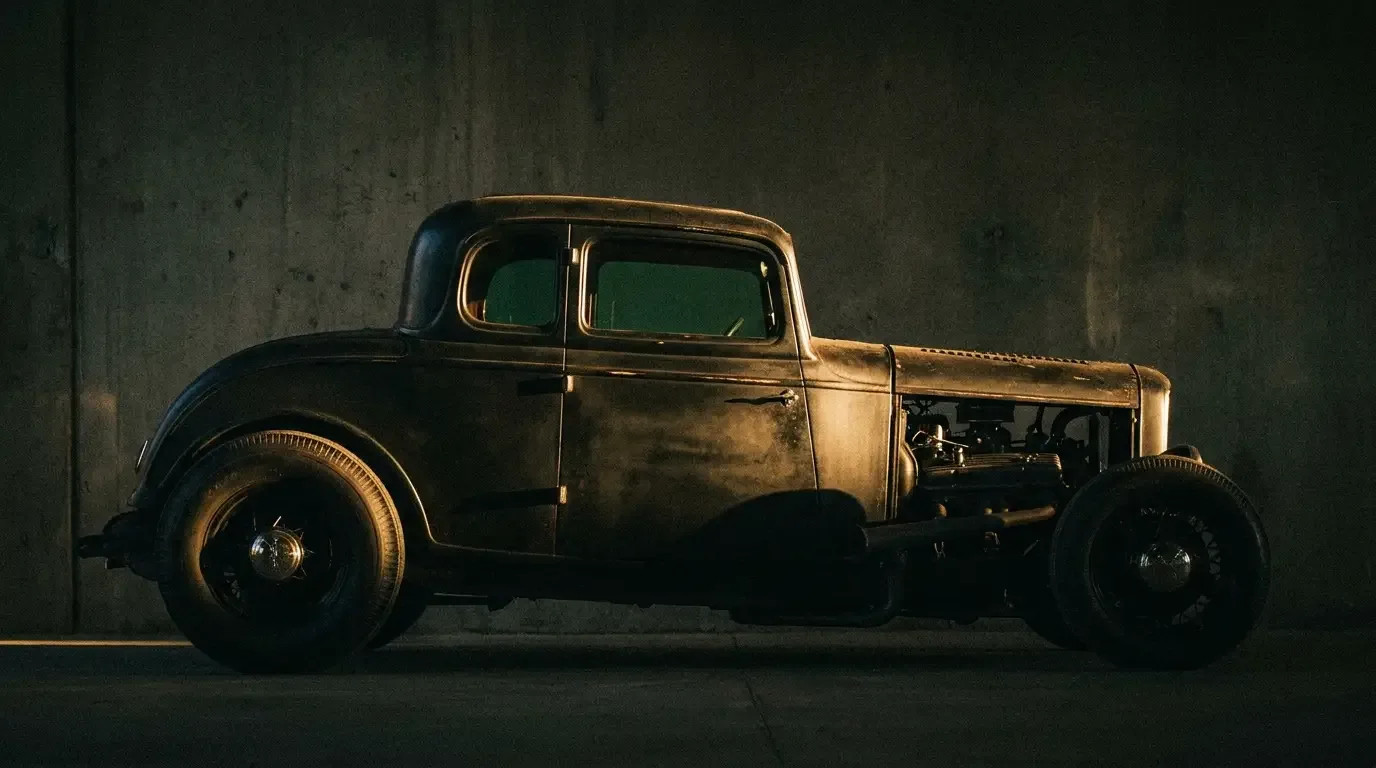
Whatever you run, ride height is the payoff. The chassis is what lets you drop the nose, set the rake, and get the tires filling the arches the way they should. That is why builders obsess over it. Stance is the first thing anyone reads on a hot rod, and it is decided on the frame table, not in the paint booth. If you are still deciding how aggressive to go, it pairs directly with a top chop, and it is worth reading up on Chopping a Top: What It Means and Why before you commit a number, because the two decisions play off each other.
How to choose for the car you actually want
Pull it together and the decision is not that hard once you are honest about the car. If it is a period-correct traditional rod that lives at shows and cruises locally, run a real or repro '32 frame, a dropped solid axle on a transverse leaf, and hairpins or split wishbones. That combination looks right and stays true to the idiom.
If it is a driver you plan to log real miles in, an aftermarket frame with IFS up front and a four-link and coilovers out back gives you a car you can point at the highway without a second thought. Neither answer is wrong. They are just different cars, and the frame is where you decide which one you are building. Everything downstream, the motor, the body, the paint, follows the geometry you set on the jig.
Sources and notes
- Period hot-rod press and long-run how-to build features on chassis fabrication and front-end geometry.
- Aftermarket hot rod chassis and reproduction '32 frame manufacturer specifications and fitment references.
- Builder interviews and shop practice on dropped-axle setup, wishbone versus four-bar location, and coilover conversions.
- Ford early V8 frame references for original rail dimensions and the '32 frame reveal.
Related Reading
Have a
Classic Car
for Sale?
Reach thousands of serious classic car collectors across the US.
Sell It Here →
Are You a Classic Car Dealer?
List your full inventory and connect with targeted classic car buyers.
Join as a Dealer →

About the author
Ray Delgado
Metal fabricator and chassis builder who has spent 25 years turning flat sheet and mild steel into hot rods, gassers and restomod underpinnings.
More in Restoration & Tech
Comments
Be the first to comment on this article.