A restoration calculator is not a web form that spits out a number. It is a spreadsheet you build once, fill with real quotes and revisit every month. Here is the structure I use when valuing a project, and the rules that keep it honest.
Start with the end condition, not the start
Pick the target tier before you price anything. A #4 fair car, a #3 good car (what most owners call a driver) and a #2 excellent show car are different products with different cost curves. Most calculators fail because they price the work for a #1 car and compare it against a #3 value. Write the tier down and keep it fixed.
| Category | Share of a typical budget | Notes |
|---|---|---|
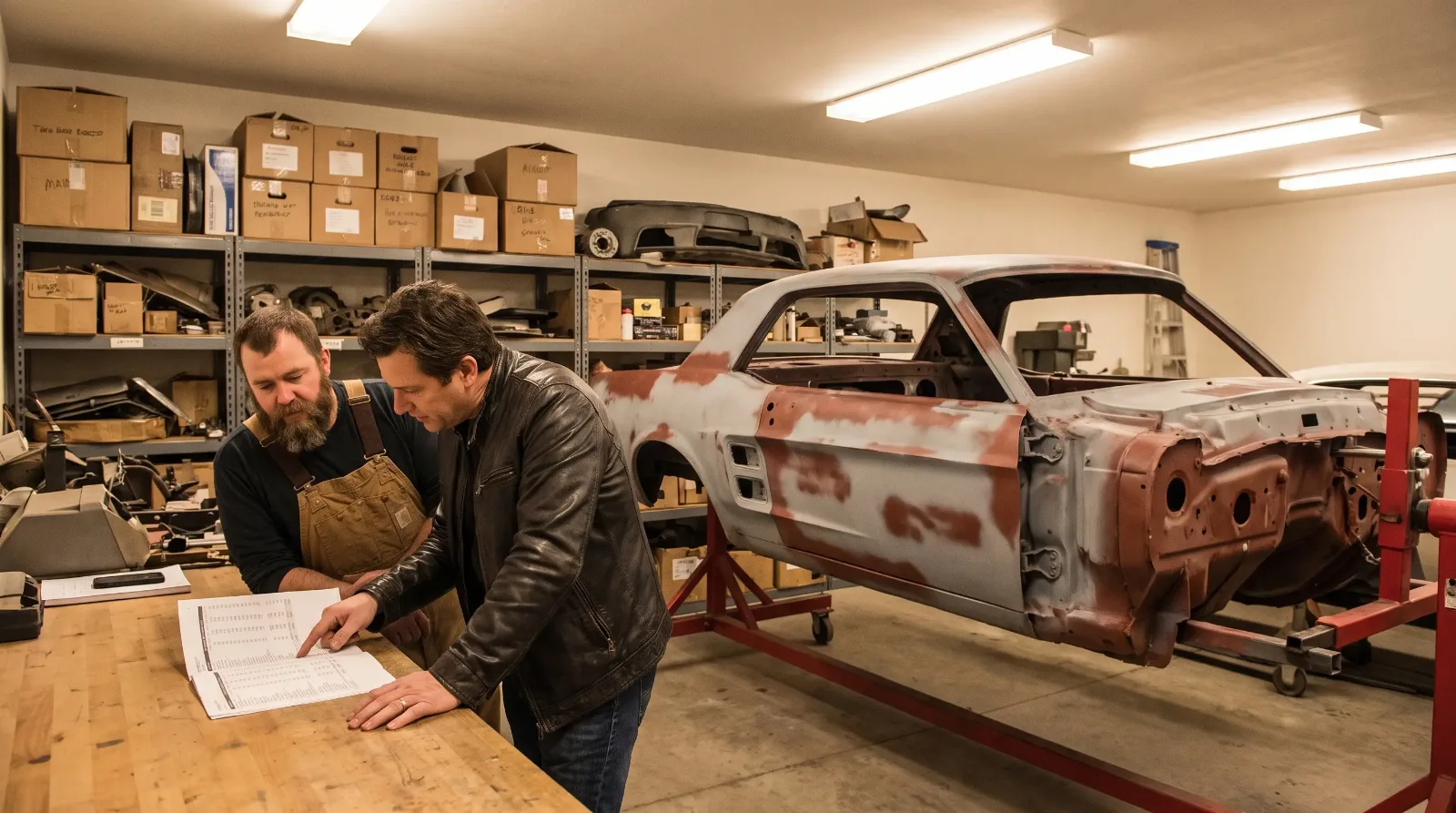
| Teardown, blasting, rust, body and paint | Roughly 40 to 50 percent | Largest swing factor, driven by rust repair hours |
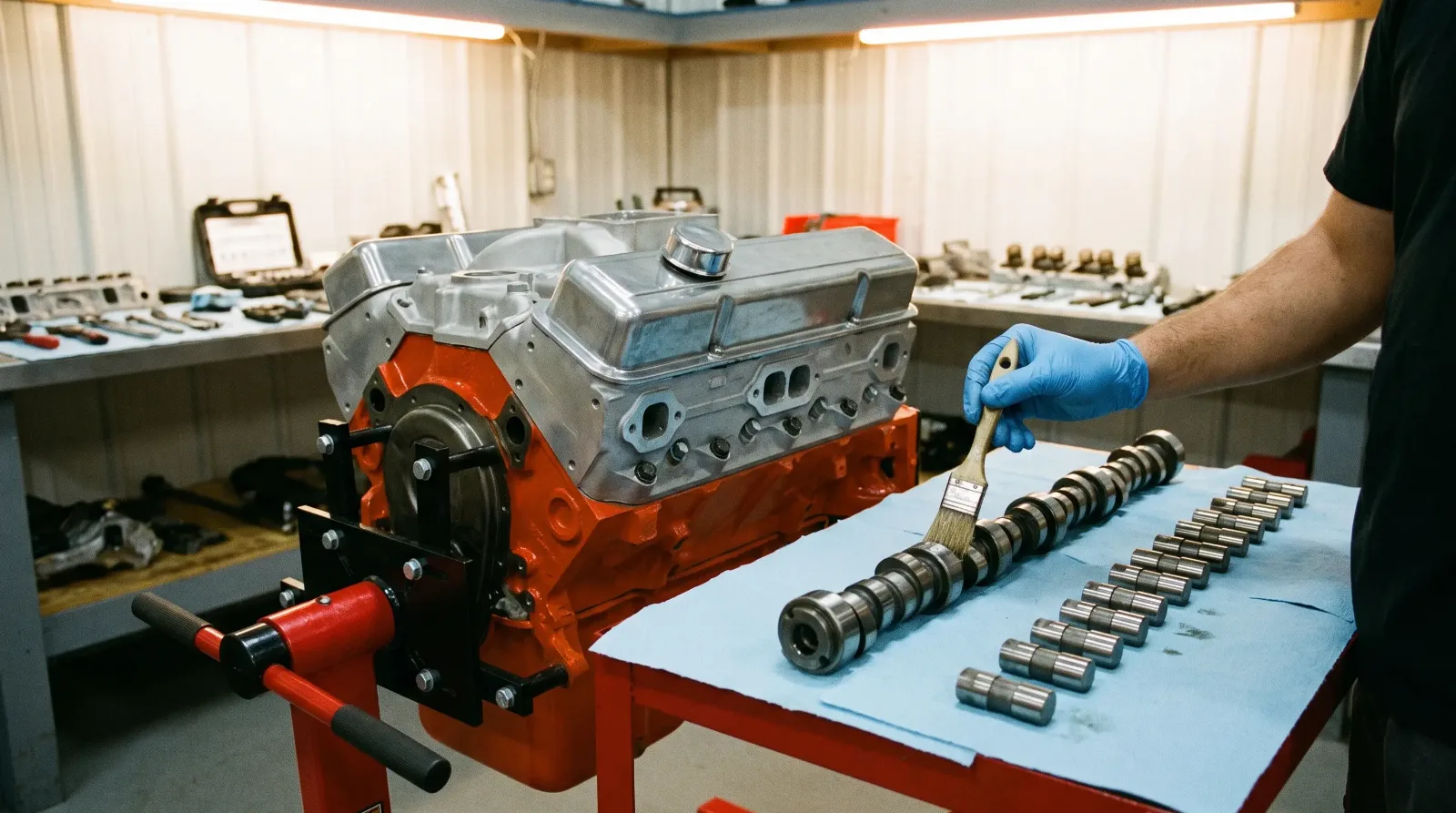
| Mechanical and drivetrain | Roughly 25 to 30 percent | Engine, transmission, brakes, suspension, fuel |
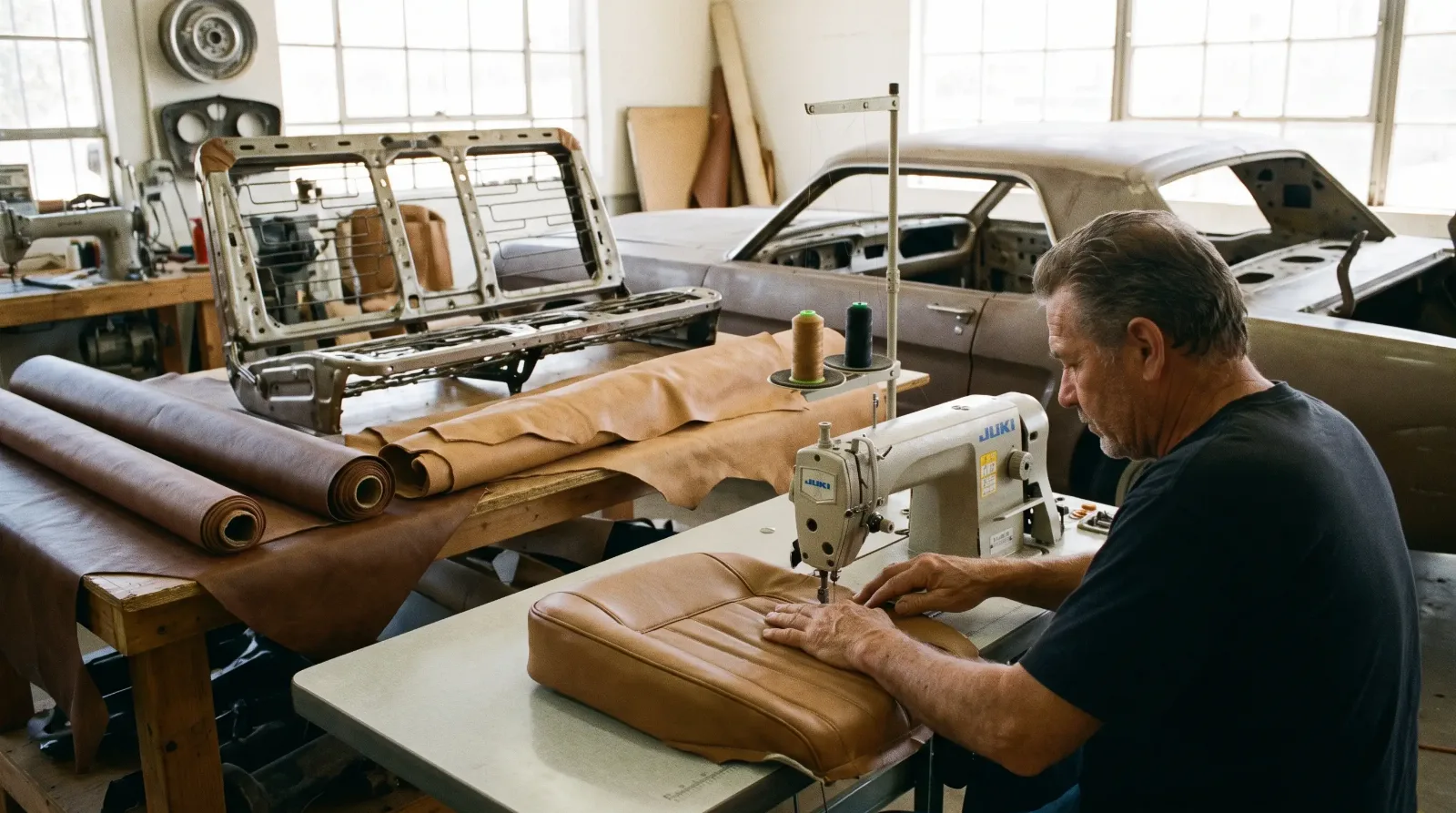
| Interior | Roughly 10 to 15 percent | Seats, carpet, headliner, dash, trim |
| Chrome and brightwork | Roughly 5 to 10 percent | Plating and polishing, often sublet |
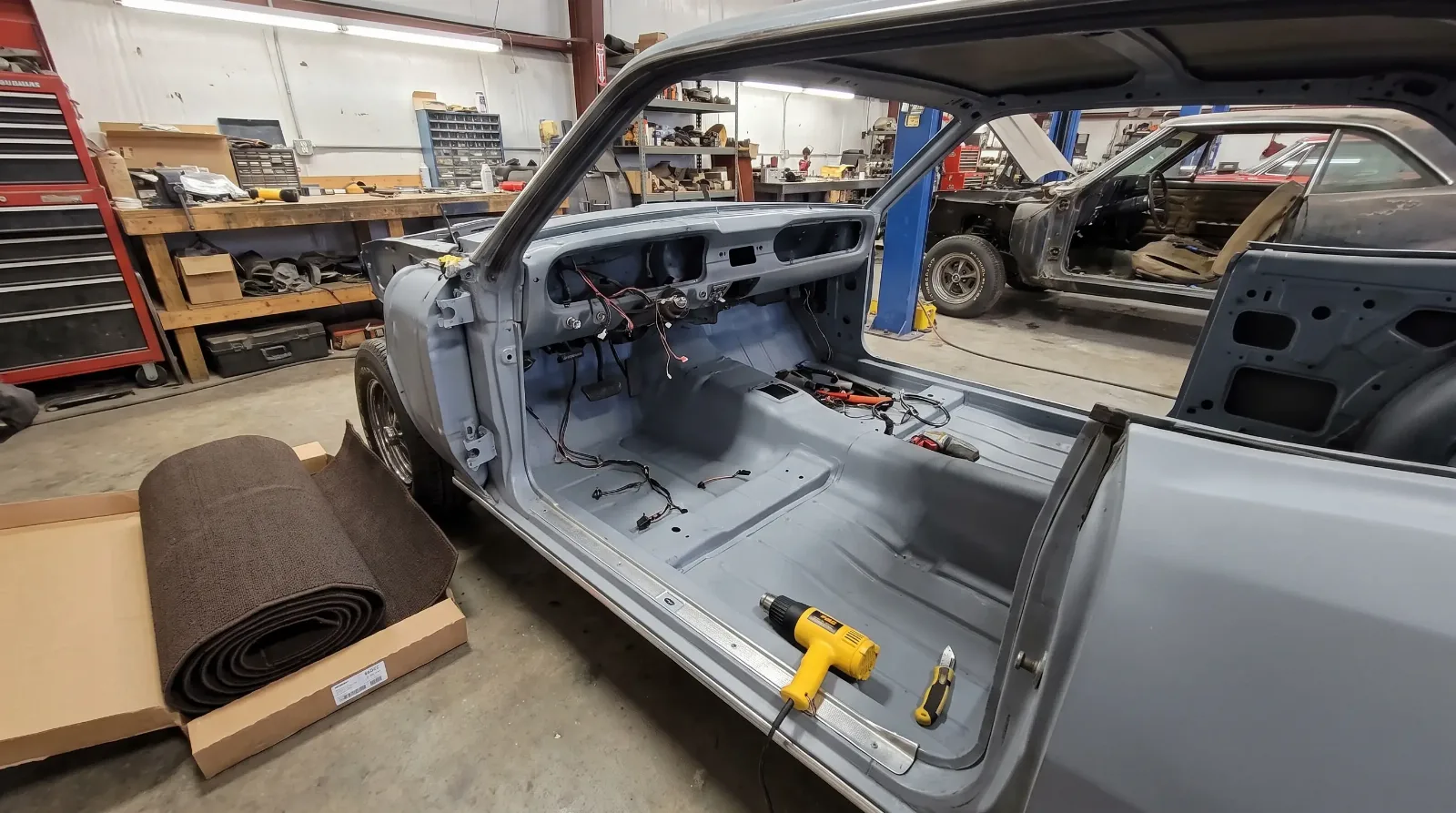
| Electrical and sundries | Roughly 5 to 10 percent | Harness, gauges, glass, rubber, hardware |
| Contingency | 20 to 30 percent on top of the estimate | Not optional, more on salt-state cars |
The shares above are a planning guide for a #3 driver, worked out from typical per-area cost ranges for a common American classic, and they will shift with the car and its rust. The contingency is added on top of the base estimate rather than carved out of it.
Build the model in five columns
Every line gets a description, a low estimate, a high estimate, a source and a status. Source is the key column. A number from a forum thread is not a quote, and a quote from a shop is not a contract. Mark each line as guess, quote or invoiced, and watch how the share of invoiced numbers grows as the project advances.
Use labor hours and an hourly rate, not lump sums, where you can. Independent shop rates in 2026 commonly run about $85 to $150 an hour, with about $125 typical and concours or marque specialists at $175 or more. A full frame-off or rotisserie restoration is often 1,000 to 2,500 hours across all trades, and the spread between the two ends of that range is bigger than most people expect.
Price the parts separately from the labor
Parts depend on the car. Mainstream American models from the 1960s through the 1980s have deep catalogs and predictable pricing. Rare cars rely on used parts, small-run fabrication and specialists, and every item takes longer to source. Add shipping, core charges and the cost of parts that do not fit and must be returned or adapted. I carry a small parts-waste line and size it from my own past returns.
Add the costs people forget
Calculators tend to omit things that do not look like work. Transport to and from the shop, storage while parts are out for plating or machine work, insurance during the project, sublet costs for chrome and glass, registration, inspection, break-in fluids and the first tune. A common planning allowance is around 10 percent of the total, adjusted to your own situation. Add it as its own line so it stays visible.
Once the model has structure, validate it. get quotes from local shops for the three biggest lines (body, mechanical, interior) and replace your guesses with their numbers. Three quotes are a minimum. If one is far lower than the rest, ask what it leaves out.
Test the result against reality
Compare the finished total to what the market pays. If the all-in cost sits above the value of a finished #3 or #2 car, which is the usual outcome unless the car is rare or high-value, you are paying for the experience, and that is a legitimate choice if you know it. If the total lands close to or under the finished value, the math is workable. For context on where budgets usually land, see typical restoration costs, then run the numbers on your own car.
"A calculator is only as good as its inputs. Replace guesses with quotes, and the output stops being an opinion and starts being a position."
Marcus Feld
A worked example
Suppose the target is a #3 driver, a 1960s American coupe, and the early quotes suggest $32,000 for teardown, rust, body and paint, $20,000 for mechanical, $8,000 for interior, $5,000 for chrome and $5,000 for electrical and sundries. That sums to $70,000. Add 10 percent ($7,000) for transport, storage and insurance, and 20 percent ($14,000) contingency on the base figure. The all-in estimate is then about $91,000, before the purchase price of the car.
The figure may look high next to the first quote. That is the calculator doing its job. It shows the number a project actually tends to reach, and it gives you time to decide whether the target tier is right. Dropping the target from #2 to #3 may save more than any single line item, and it is the first lever to pull.
Common mistakes in the sheet
The same few errors come up repeatedly. Owners price the work but not the car, so the purchase price is missing from the total. They apply the contingency to a single category instead of the whole project. They assume labor rates stay flat for a three-year build, and they never include their own time. If you will spend 600 hours of weekends on the project, decide whether that time has a cost, then put the answer in the sheet as a note.
Keep it live
Review the sheet every time an invoice arrives. Track estimate versus actual per line, and recalculate the contingency based on what has already gone wrong. Projects that overrun often do so early and quietly, once hidden rust and damage show up after teardown. The question that follows the model is the one nobody enjoys: is it worth restoring once the real figure is on the table?
One last habit helps. Keep a dated copy of every version of the sheet. When the project closes, compare the first estimate with the final total, line by line. The gaps tell you where your judgment was weakest, and they make the next project, or the next car you consider buying, far easier to price with confidence.
Sources and notes
- Hagerty: How much does it cost to restore a classic car?, supports labor as the dominant cost, hidden surprises after teardown, and restoration rarely recouping its cost
- Hagerty: How to find the value of a classic car, supports the six-step condition scale and checking current market sales
- Hagerty: Vehicle under construction coverage, supports insuring a car during a project as a real cost line
- Hagerty: Insurance for restorers and builders, supports shop-side garage keepers coverage on customer cars
- Wikipedia: Car restoration, supports restoration costing often more than the finished car's value and outsourcing to specialty shops