
Interiors are where restoration budgets quietly go sideways. The engine and paint get the attention, but a full cabin redo on a car with complex trim can approach the cost of the mechanical work. Here is how the money actually breaks down in 2026, and what moves the number.
Restoration & Tech
7 min read
What an Interior Restoration Costs
A realistic 2026 price breakdown for a classic car interior restoration: seats, carpet, headliner, dash and trim, by scope, with what drives the total up or down.
What a full interior costs, by tier
A full driver-quality interior with reproduction kits on a common American coupe typically costs $1,800 to $5,000 in parts and about $5,000 to $12,000 installed at a trim shop. A show or concours restoration, with factory-pattern materials, rebuilt seat frames, reworked door panels and a dash pad, starts around $15,000. Rare, prewar or coachbuilt cars with hand-fitted leather, wool broadcloth and wood veneer can go far beyond that, and the top end has few ceilings.
Those are shop figures, not parts figures. Labor is the larger share. Skilled trim work is scarce, and a good upholsterer is often booked for months, which tells you something about pricing power.
| Scope | Typical range (2026 USD) | What it covers |
|---|---|---|
| Refresh | Roughly $2,500 to $7,500 (sum of the seat, carpet and headliner lines below) | Seat covers with new foam, carpet, headliner, no frame or dash work |
| Driver-quality full interior | $5,000 to $12,000 installed ($1,800 to $5,000 in parts) | Seats rebuilt and recovered, door panels, kits, new weatherstrips |
| Show or concours restoration | $15,000 and up | Factory-pattern materials, dash and gauge work, wiring checks |
| High-end or coachbuilt | $15,000 and up, often far more | Hand-fitted leather, wood, custom patterns, period-correct stitching |
Where the money goes
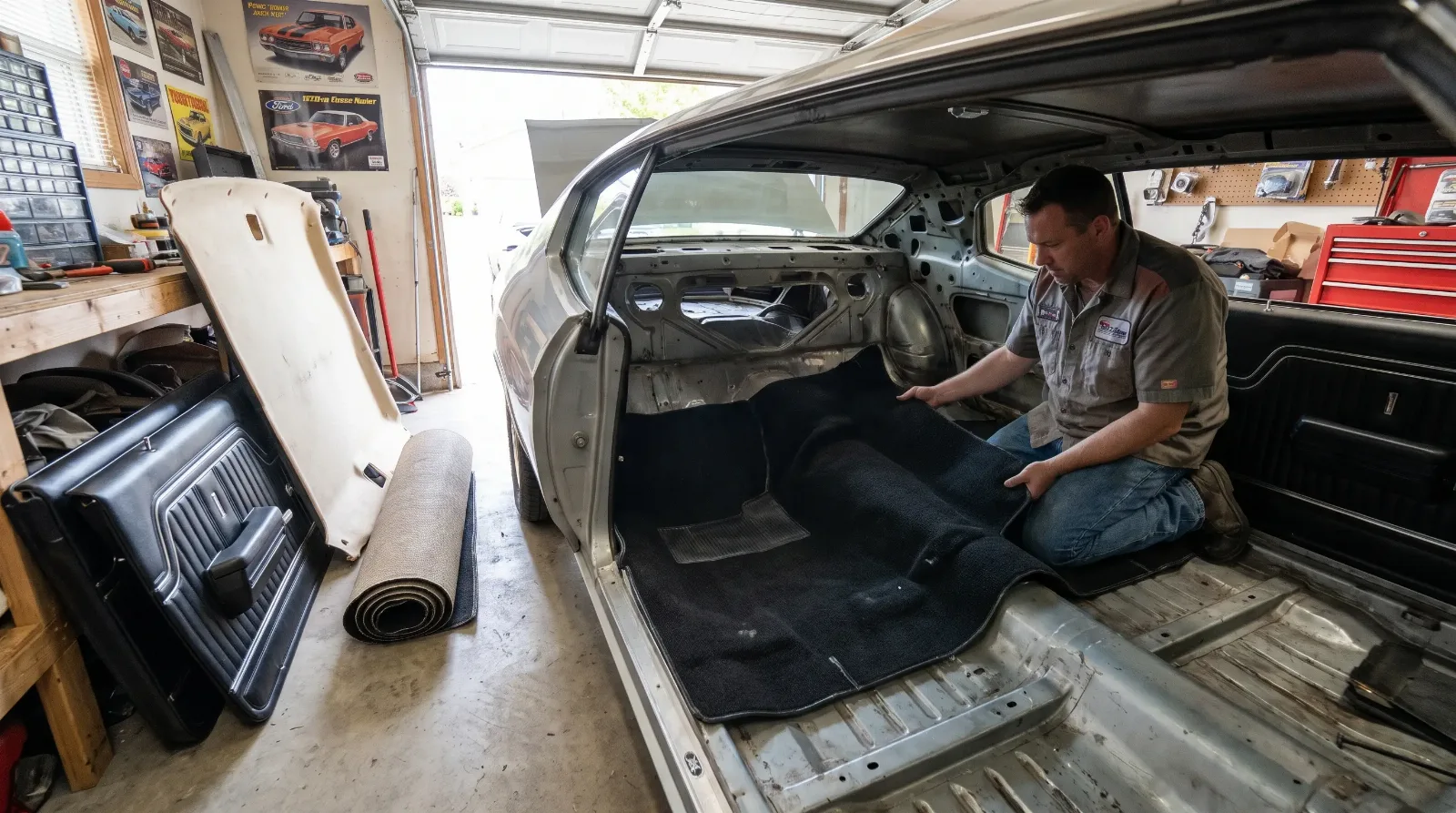
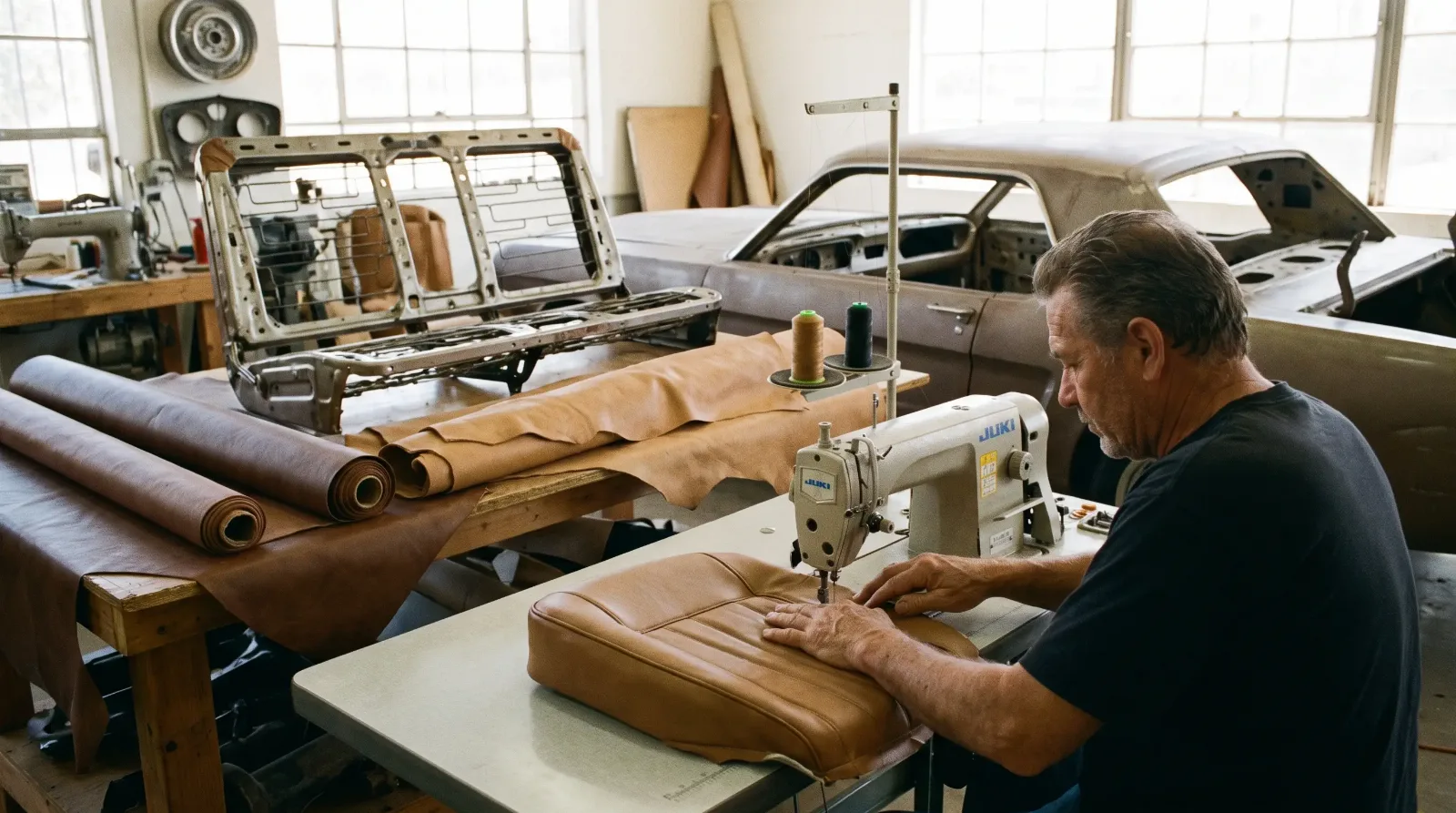
Seats are usually the biggest single line. Seat covers with new foam, front and rear, run about $500 to $2,000 in parts and $1,500 to $5,000 installed, depending on whether the frames and springs need work. A single tear or seam repair is usually $100 to $500, and one panel or bolster $250 to $850. Leather adds roughly $1,000 over cloth on a basic retrim, more for correct-grain hides. Carpet is cheaper: a molded kit with padding is about $200 to $600 in parts and $600 to $1,500 installed. The headliner is a deceptively fiddly job, about $150 to $400 for a bow-type kit and $500 to $1,200 installed, and cars with sunroofs cost more.
Then come the pieces nobody budgets for. Door panels, kick panels, package trays, sun visors, seat belts, window cranks and the steering wheel all appear on the final invoice. A cracked dash pad runs about $250 to $1,200 in parts and $600 to $2,500 installed, and varies widely by model. A door panel set is typically $400 to $1,500 in parts and $600 to $2,500 installed. Chrome and plated trim inside the cabin often goes out to a plating shop, and that is a separate bill.
Materials: reproduction, original and period-correct
Common American cars from the 1960s and 1970s have deep reproduction support, so kits arrive in correct patterns at fair prices. That keeps costs predictable. European sports cars, pre-war cars and anything built in small numbers are a different market. Original-pattern leather or wool might be sourced in small lots, or woven and dyed to order, and a single car can take several yards at premium rates.
Judged cars need correctness. Drivers do not. Choosing durable modern materials in a period look is a legitimate decision that can save thousands, and it lowers the risk of spending money that the market will not reward. Most restorations are not recouped at sale unless the car is rare or high-value, and buying a finished car is usually cheaper. For a sense of how the full scope breaks down, our guide to interior restoration walks through the work step by step.
What pushes the price up
Three variables decide whether you land at the low or high end. First, condition of the hidden parts: rusted floors, broken seat frames and rotted wood framing in the doors make the job larger before a single stitch is sewn. Second, the car itself. Power seats, power windows and integrated radios add wiring and mechanical work that a basic cabin does not have. Third, the shop. A well-known trim specialist charges more, and a shop that does mostly concours work will use more hours per piece than a general upholsterer.
Odd jobs add up fast. Sound deadener and insulation, rubber floor pads, correct seat-belt hardware and re-dyed plastics are individually modest and collectively noticeable. Many restorers add a contingency of 20 to 30 percent on top of the estimate, and the interior line is no exception, especially if the floors have not been checked.
"Interior work is the one place where cheap reproduction material and expensive labor meet. Buyers who budget for the labor are rarely surprised by the invoice."
David Mercer
Do it yourself or hire it out
Some interior work is reasonable for a patient owner. Laying carpet, fitting door seals, installing a pre-sewn seat cover kit and replacing a headliner board are all within reach with basic tools and a free weekend. The savings are roughly the gap between the parts and installed prices above, often several hundred dollars per job. Sewing, steaming and stretching leather or vinyl over a seat frame is another matter. Mistakes show immediately, the material is expensive, and a poor result cannot be hidden.
A sensible split is to buy the kit and the foam, hand the seats and dash to a professional, and do the carpet and panels at home. Ask the shop whether it will install customer-supplied materials. Many will, but some refuse to warranty the work, and the difference in policy matters if a seam splits in the first year.
Timing and lead times
Trim shops book out. A good shop is often booked for months, and specialist shops that handle rare cars can be longer. Materials can add their own delay. Custom-dyed leather and period fabrics are often made to order, and a missing roll can stop the work for a month. Because the interior is installed late in the process, a late delivery can hold up the finished car even when everything else is ready. Order materials early, and confirm the quantity with your upholsterer before the order is placed.
How to fold it into the larger plan
Treat the interior as its own line, not a footnote. Get at least two written quotes that itemize seats, carpet, headliner, panels and dash separately, and ask what is assumed about the condition of the frames. Then compare the total against the rest of the restoration budget so you can see whether the cabin is a modest slice or an outsized one. On a driver, it should sit nearer the low end of the ranges above.
If you want to put numbers on your own project, use the worksheet in the next piece in this series and build your own estimate from your car, your market and your quotes rather than from an average.
Sources and notes
- ThePricer: how much it costs to reupholster a car, supports per-seat, small-repair and classic interior price ranges
- Legendary Auto Interiors: top 5 interior restoration projects, supports the scope of carpet, seat, headliner, door panel and dash work
- Concours d'Elegance (Wikipedia), supports the originality-versus-condition judging emphasis
- Hagerty UK: which classic cars are worth restoring, supports restoration cost exceeding owner expectations and market value
- Allstate Canada: buy restored or buy to rebuild, supports buying a finished car being the cost-effective route
Related Reading
Have a
Classic Car
for Sale?
Reach thousands of serious classic car collectors across the US.
Sell It Here →
Selling a classic? Here's how: sell my classic car
Are You a Classic Car Dealer?
List your full inventory and connect with targeted classic car buyers.
Join as a Dealer →

About the author
David Mercer
Classic car market analyst with two decades of experience tracking collector car valuations, auction results, and investment trends.
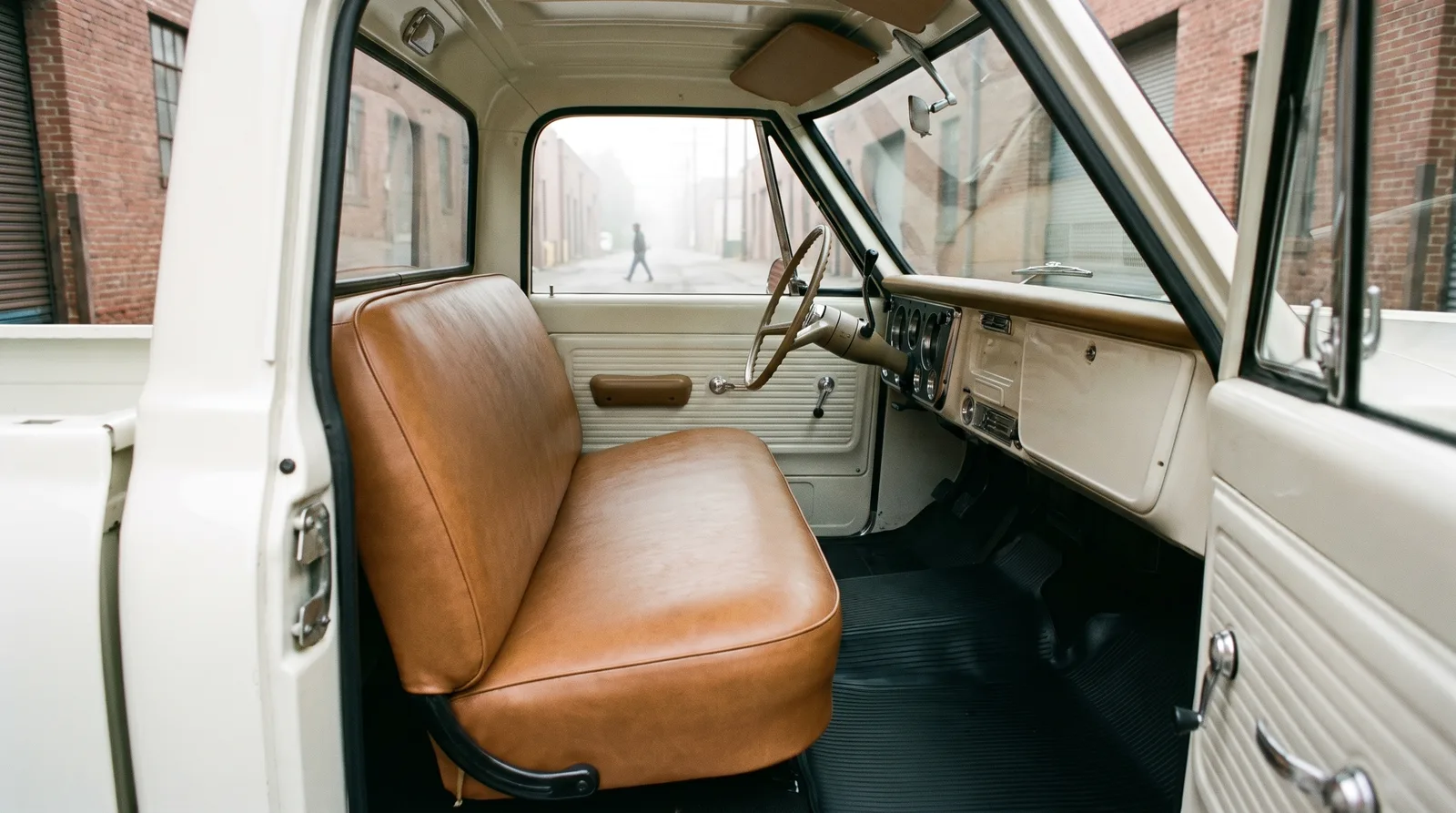
When I had the seats in my '64 redone, the shop matched the vinyl grain against my old slides from a 1990s shoot, and that one detail is what makes the cabin read correctly in raking light. The labor line was easily double the kit, which matches your breakdown.