
A frame is the part of a car that spends its life taking abuse. Road salt, gravel, water, oil, and the occasional dropped wrench. The finish you put on it has to survive all of that, and it has to look right when somebody gets under the car with a light. That is why the choice between powder coating and paint matters more than most people think.
Restoration & Tech
7 min read
Powder Coating vs Painting a Classic Frame and Chassis
Powder coating versus paint for a classic frame and chassis: durability, appearance, cost, originality, and which one fits a driver, a work truck or a judged restoration.
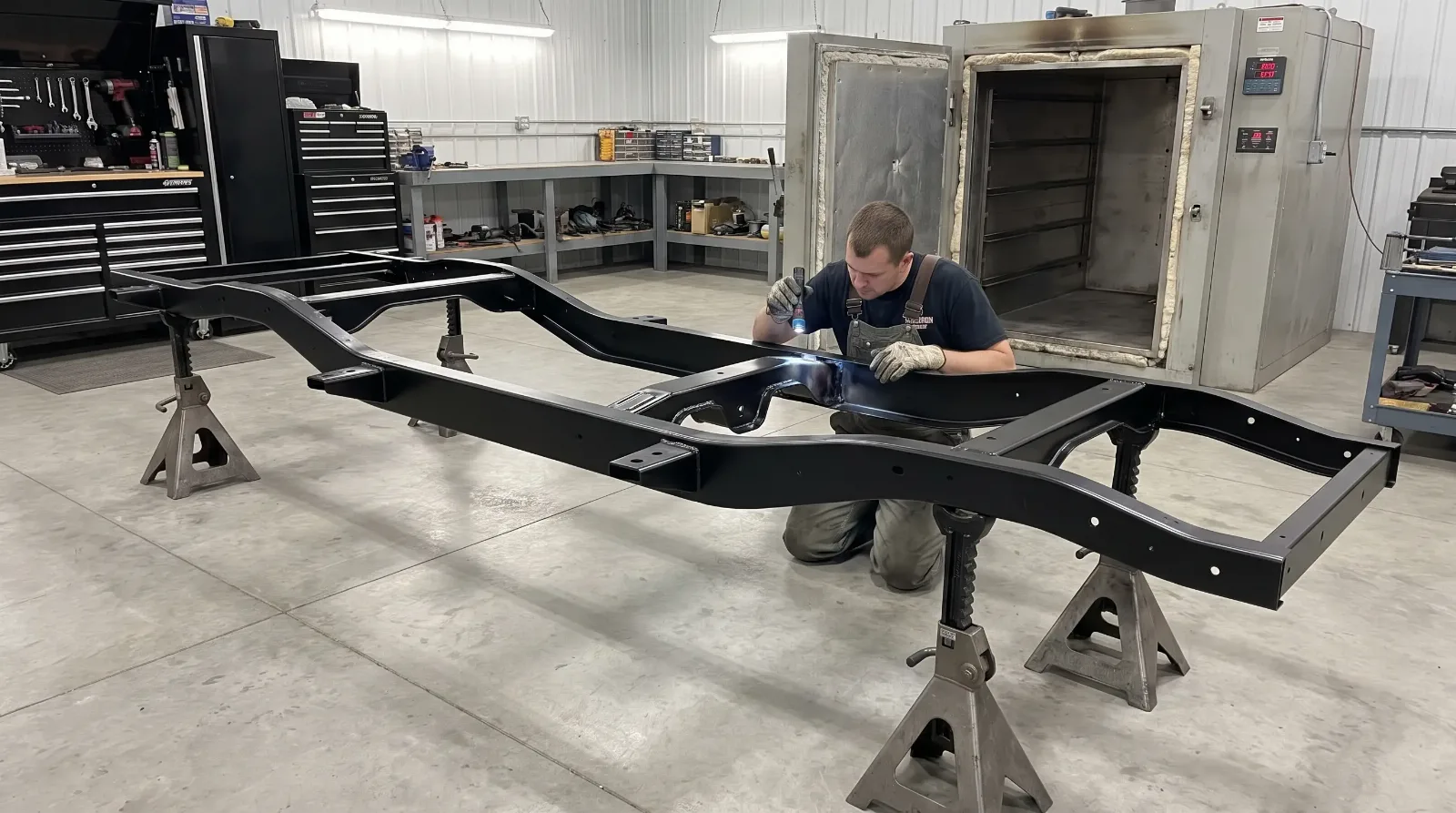
Both work. Neither is right for every job. Here is how they compare once you stop reading brochures and start counting what you will actually live with.
What each process is
Powder coating is a dry finish. Fine powder is sprayed on with an electrostatic charge so it clings to the bare metal, then the whole piece is baked in an oven until it melts and cures into a hard, even film. Paint is liquid. A shop or an owner sprays primer and a topcoat, and the film cures through air drying or a mild bake, depending on the product. Some chassis systems use a two-part epoxy or urethane that cures chemically.
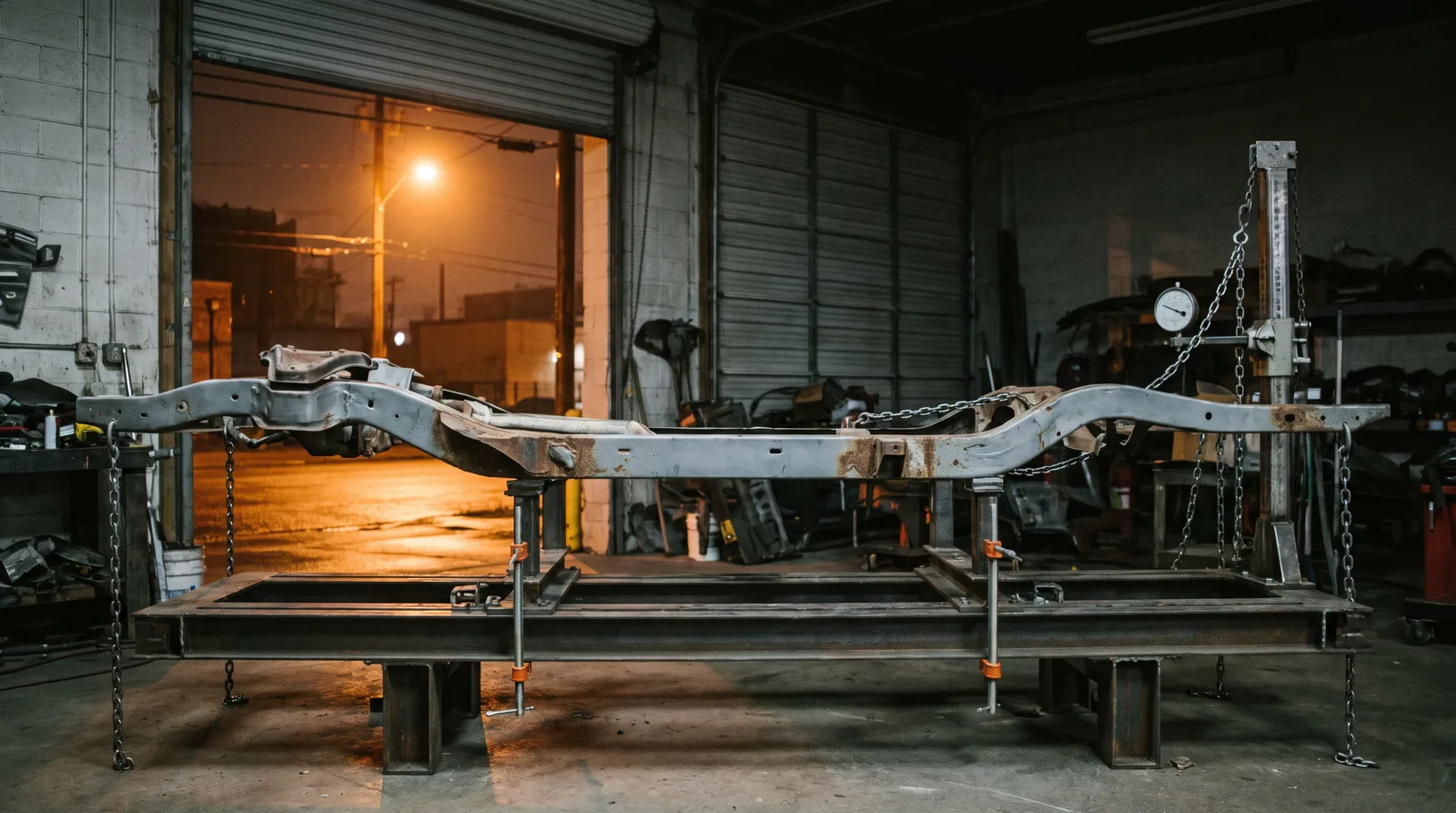
The prep is the same for both and it is the real work. Strip the frame to bare metal, by blasting or chemical stripping, and remove every trace of rust and oil. Skip that and neither finish will last. A finish is only as good as what it is stuck to, and that holds on a Texas ranch truck or a pampered coupe.
Durability and protection
Powder coat has a reputation for toughness, and it earns it. The baked film resists chipping, abrasion, road chemicals and many solvents better than a typical brushed or sprayed enamel, and it builds a thick film over flat surfaces and welds, though it can run thin on sharp edges. For a frame that will see rain, snow or work, that matters. A quality powder coat on a properly prepared frame typically lasts many years with little maintenance.
The weak points are hidden. Powder coat cannot reach the inside of a boxed section on its own, so rails need an interior rust inhibitor. The oven bake can also be a problem for assembled parts or items with rubber, bearings or old lead filler. A coated frame can still rust where the film is damaged, and a deep gouge lets moisture creep underneath.
A good two-part chassis paint, applied over epoxy primer, performs well too, and it has an advantage when something goes wrong: you can touch it up. Paint is also easier to apply to a frame that cannot be baked, such as a body-on-frame truck where parts stay in place.
| Factor | Powder coating | Paint |
|---|---|---|
| Chip and abrasion resistance | Excellent | Good with a quality two-part system |
| Coverage on edges and seams | Thick film, can thin on sharp edges | Depends on the sprayer |
| Touch-up and repair | Harder, may need a full recoat | Easy, spot repair is possible |
| Look | Uniform, modern, can look too perfect | Can match period finishes and sheen |
| Typical cost, bare frame (2026) | Roughly $225 to $900 for commercial powder coating of a frame according to Auto Restorer, more for large or heavily prepped frames | A few hundred dollars in materials if you do it yourself, more if a shop does it |
| Best for | Drivers, work trucks, heavy use | Show cars, original-look builds, field repairs |
Appearance and originality
This is where owners argue. Factory frames were usually painted in a semi-gloss or satin black, sometimes with visible overspray, drip marks and inspection daubs. A thick, glossy, perfect powder coat does not match that, and in a judged restoration it can count against you. If originality matters, you are likely better off with a period-correct paint finish and the correct sheen.
On the other hand, if the car is a driver and you want it to look clean and last, powder coat in satin or semi-gloss black is hard to beat. Colored or glossy powders are popular on restomods and custom builds. Nobody asks whether a hot rod frame is correct, they ask whether it is neat. I do not hold patina against anyone, but on a frame it does the opposite of protecting.
Cost and logistics
Prices vary by region, frame size and how much prep is needed. Many shops quote a bare car frame in the range shown above, and stripping, blasting and extra prep add to the bill. Treat these as rough figures and get local quotes. A full-size truck frame costs more because of its length and the larger oven it needs, and shops without an oven big enough will quote you for sectioning or decline the job.
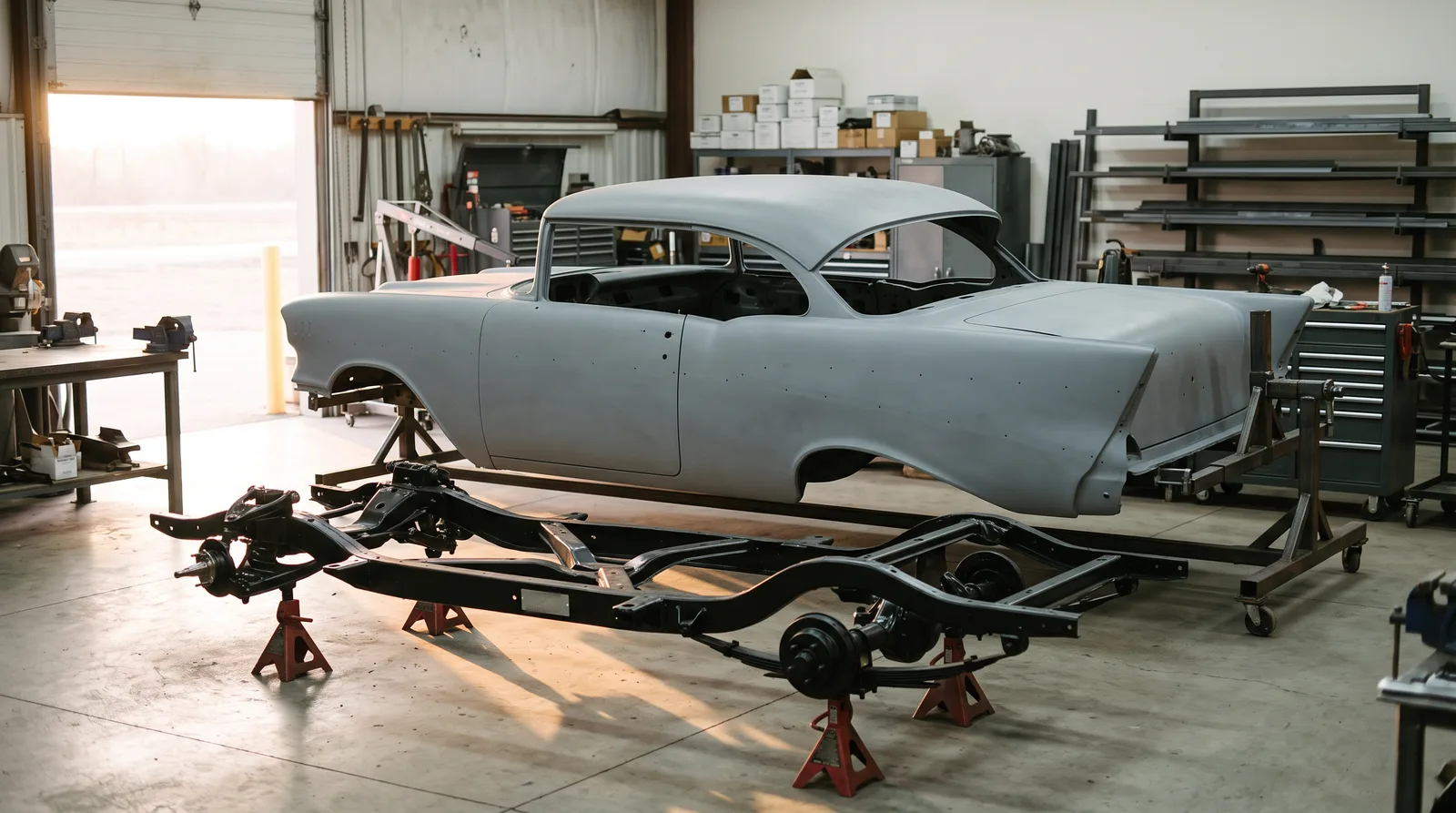
Logistics can decide the question. Powder coating means the frame must be fully stripped of everything, including the body, which is the situation on a full frame-off and a reason many owners choose it at that stage. Painting is more forgiving of partial work, and a home shop can do it with a good spray setup. For anyone working on a budget with a driver-quality target, paint is the cheaper path if you do the labor yourself. If you pay a shop for both, the gap narrows.
Choosing for your build
Choose powder coat when the car is a driver, a truck that will work, or a build that will see weather, and when the frame can be fully stripped. Choose paint when you want a factory-correct look, when the parts cannot go in an oven, or when you want to touch up the finish yourself. For a judged restoration, ask the judging body what finish and sheen they expect before you decide.
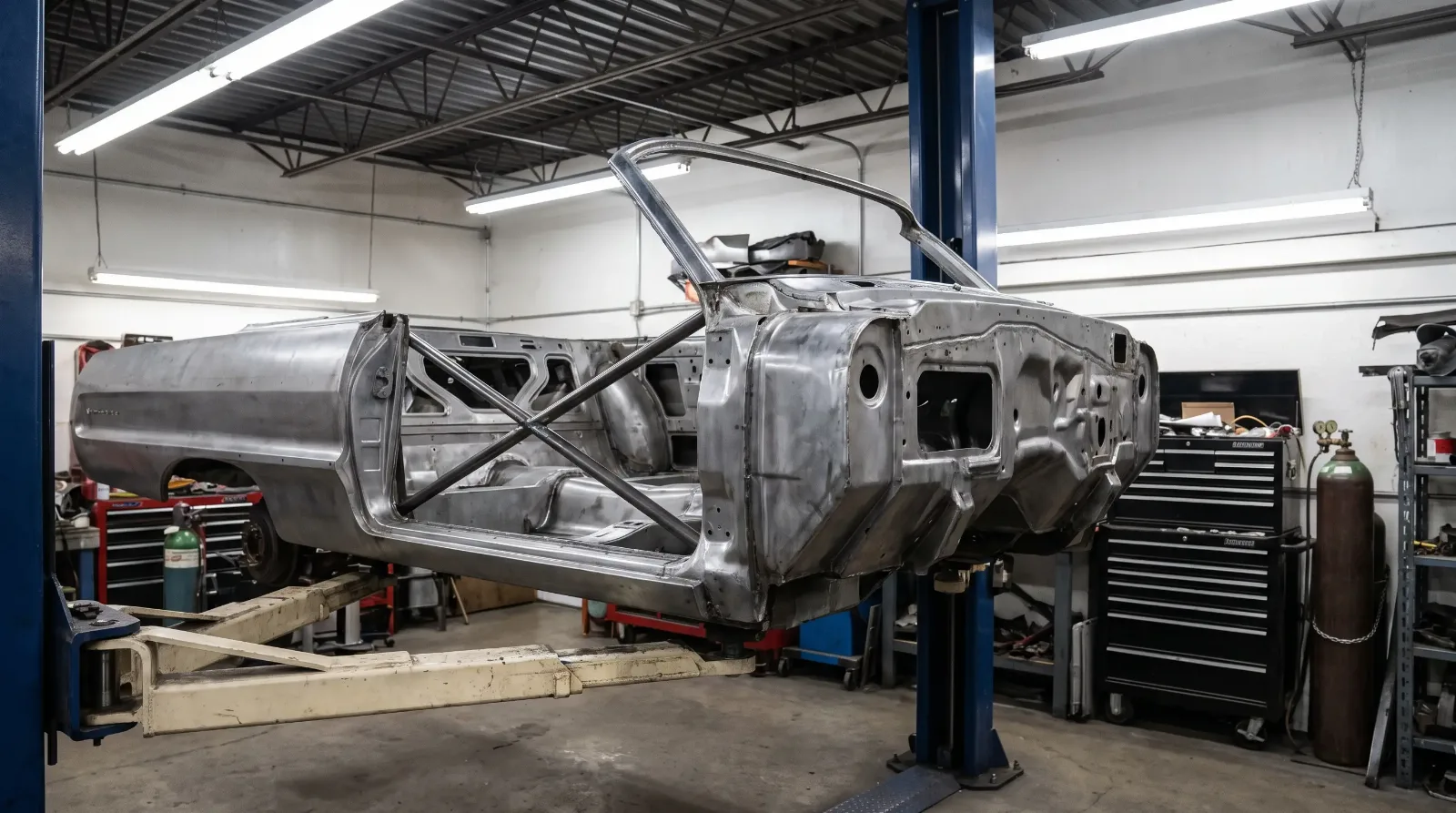
Some projects also add complications that change the answer. A car with a unibody structure, partial frame rails or extra reinforcement, like many convertible restorations, may need chassis coatings applied in sections or in combination, so plan the finish with the structural work and not after it. The same holds for rust prevention inside boxed members, which no topcoat can handle by itself.
It is a fair question for anyone with a truck project too. Frames on classic trucks take the most punishment of any chassis, and a coating that stands up to mud, water and a loaded bed is worth the extra money.
"A frame does not care how it looks. It cares whether the steel is dry. Pick the finish that keeps it that way for the use you will give it."
Robert Halloran
The verdict
For a driver or a working truck, powder coat plus an interior rust inhibitor is the best protection per dollar. For a correct restoration or a build with parts that cannot be baked, a quality two-part paint over epoxy primer is the better call. Either way, the prep decides how long the finish lives, so spend there first.
Sources and notes
- Powder coating, Wikipedia, electrostatic application, oven cure around 200 C, thick tough film, minimum film thickness
- The Basics of Frame Restoration, Part 2, Auto Restorer, powder coat versus paint on frames, the $225 to about $900 commercial powder coat estimate, factory-correct look, prep steps, chassis rust inhibitors
- What is frame-off restoration (Wilson Auto), body separated from the frame and every bolt photographed, labeled and cataloged during disassembly, which is when the bare frame gets coated
- Body-on-frame, Wikipedia, separate body on a frame, pickups and trucks still built this way
- Rust converter, Wikipedia, how rust converters and inhibitors protect hard-to-reach steel
Related Reading
Have a
Classic Car
for Sale?
Reach thousands of serious classic car collectors across the US.
Sell It Here →
Selling a classic? Here's how: compare the places to sell classic cars
Are You a Classic Car Dealer?
List your full inventory and connect with targeted classic car buyers.
Join as a Dealer →

About the author
Robert Halloran
Texas-based classic truck enthusiast with decades of experience buying, restoring, and writing about American pickups from the 1940s through the 1980s.
so if i powder coat the frame on the chevelle what goes inside the rails, wax before or after it gets baked
After, every time. The oven would cook any wax you put in first, and it can blister the powder. Let the coating cure and cool, then feed a wand through the factory holes in the rails and coat the inside top to bottom. Plug or tape those holes during the bake so powder does not fill them. On a Chevelle frame, take your time at the rear kickups, where water likes to sit.