
Nothing dates a car's condition faster than the top of its dashboard. Paint can be redone and chrome replated, but a dash pad sits under glass in direct sun for decades, and the vinyl skin shrinks, hardens and splits along the defroster slots and speaker grilles. Dash pad restoration is the repair that visitors notice first and owners put off longest.
Restoration & Tech
6 min read
Restoring a Classic Dashboard: Dash Pads, Cracks and Recovering
How to judge a cracked dash pad, choose between crack repair, recovering and a reproduction, and what each route costs, from a restorer's point of view.
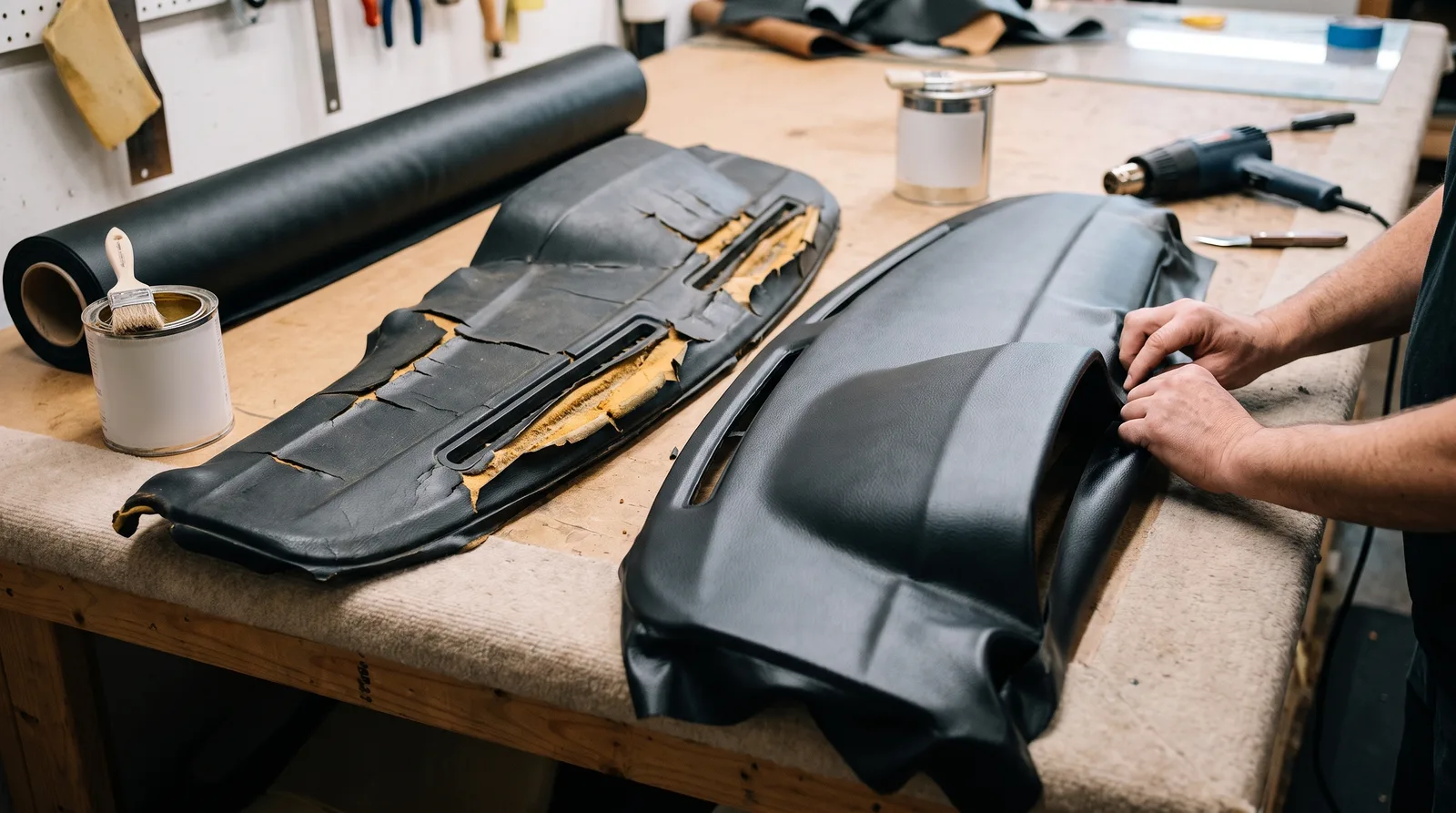
The right answer depends on what sits under the skin, how original the car needs to be, and how much of the cabin is already done. For the bigger picture, our guide to classic car interiors covers sequencing and budget across the whole cabin.
Why dash pads fail
Most pads from the 1960s through the 1980s are a vinyl skin over a foam layer, bonded to a steel or composite substrate. Over time the plasticizers in the vinyl migrate out, and the skin loses flexibility. Heat cycling then does the rest, and old open-cell foam expands faster than the vinyl over it. The skin is stressed against the foam, a crack starts at a stress point such as a screw boss or defroster opening, and it runs.
The foam beneath often degrades into a crumbly powder. That matters, because a crack repair on top of collapsed foam will telegraph through within a season. Press along the crack with a thumb. If the surface gives and rebounds, the foam is sound. If it feels hollow or gritty, the pad needs rebuilding, not patching.
Some cars used a hard molded plastic or a fully padded one piece top. Those fail differently, usually by warping or by brittle splits at mounting points, and they take different repairs.
Repair, recover or replace
There are four realistic routes, and they sit on a clear cost ladder. A hairline crack on an otherwise solid pad can be filled and grained. A pad with open splits can be stripped and recovered in new vinyl over the original substrate. A reproduction pad replaces the whole assembly. For a car with a documented original dash, the last resort is a good used pad from a car that spent its life in a garage.
| Route | Best for | Typical 2026 cost | Watch for |
|---|---|---|---|
| Filler kit and regraining | Hairline cracks, sound foam | Around $20 and up for a repair kit | Color match, cracks returning |
| Professional crack repair | Single splits, driver cars | Roughly $100 to $300 for a small repair, $500 to $1,000 for extensive damage | Grain texture mismatch |
| Recover original pad | Original substrate, damaged skin | Several hundred dollars to four figures, depending on the model and the substrate work | Pattern availability, stitch lines |
| Reproduction pad | Popular models with supply | $250 to $1,200 for the part, $600 to $2,500 installed | Fit at windshield and vents |
Prices swing with the model. A common pad for a high volume car is cheap and available off the shelf. A pad for a low volume coupe may be a special order, or may not exist at all, which pushes you toward recovering the original.
What goes wrong in the shop
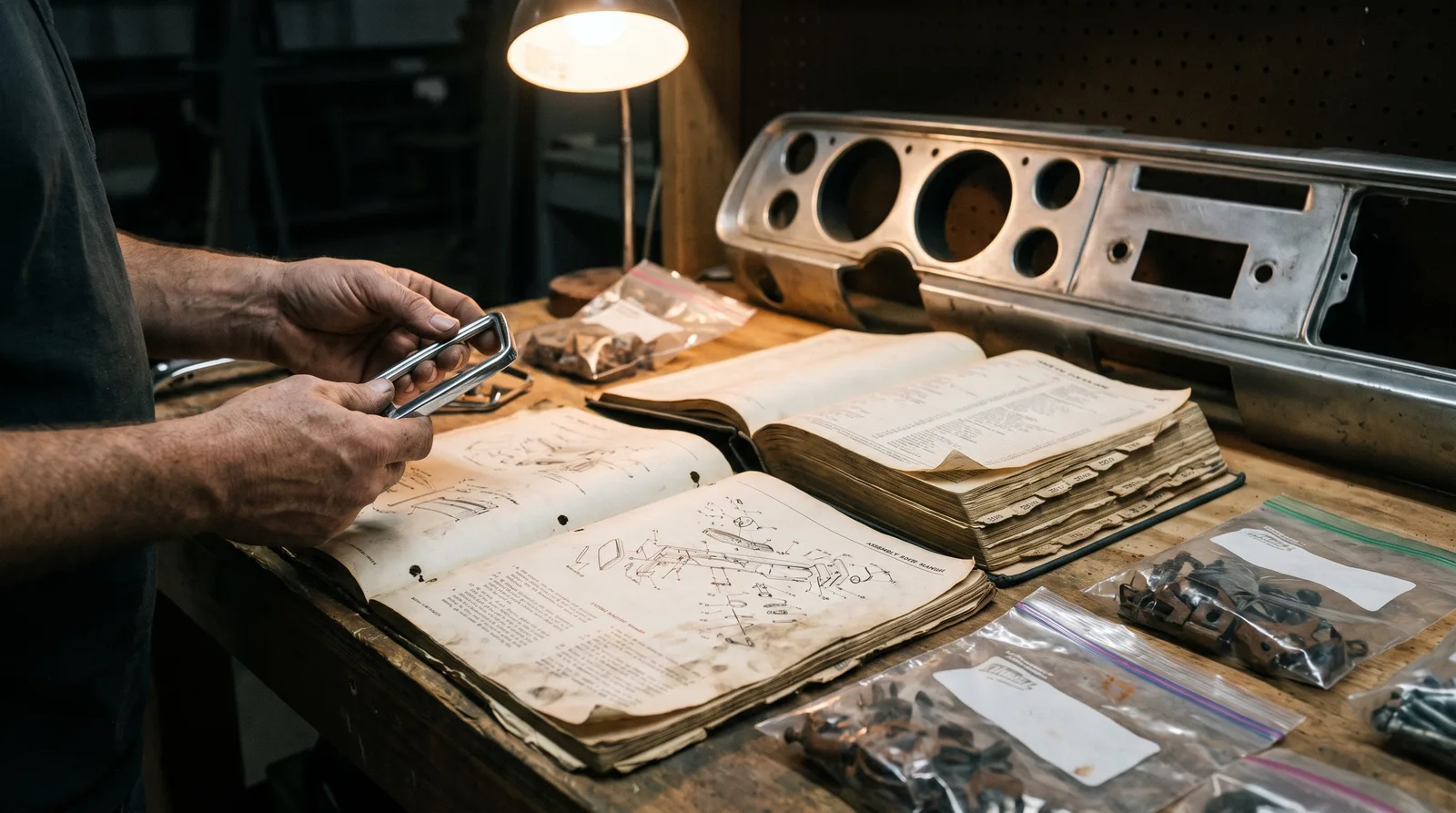
Most failed dash jobs fail in preparation. The pad has to come out of the car, and on many models that means removing the windshield trim, defroster ducts, and the instrument bezel. Photograph every screw location and bag fasteners by position before you start.
A recovered pad needs a clean, sound substrate. Old adhesive must be removed completely, rust on steel frames treated and primed, and any foam rebuilt or replaced. Skip that and the new skin will lift at the edges within a summer. Heat-resistant contact adhesive rated for automotive interiors is the usual choice, and it needs a forgiving ambient temperature to cure properly.
The grain pattern deserves care too. Matching the original texture and sheen is what separates an honest restoration from a pad that looks like a recent repair. A low-luster finish is usually right for a dashboard, and a glossy vinyl or a heavy silicone dressing tends to read as wrong at once. A sound pad also needs protection afterward. A fitted sunshade does more for a dash than any dressing.
Cost control comes down to scope. Get written quotes that separate removal and installation labor from the vinyl work, and ask what happens if the substrate turns out to be rusted or the foam has to be rebuilt. A pad that looks like a simple recover on the phone can become a larger job once it is on the bench, and a clear estimate with a stated contingency avoids an argument later.
Originality and the judges
If the car is headed for a judged field, the question is not whether the pad is perfect but whether it is correct. A sound original pad with a few documented cracks is often preferred to a bright new reproduction. Judging classes differ, so check the rules for the class you plan to enter before committing to a route.
"A dashboard is read as a whole. The pad, the bezel, the gauge faces and the glass all have to age at the same speed, or the eye finds the mismatch immediately."
Sarah Whitfield
For a driver, the logic reverses. Repair what is failing, keep the car usable, and spend the savings elsewhere. A well-executed filler repair on a hairline crack is invisible at arm's length, and it costs a fraction of a recover.
What to do next
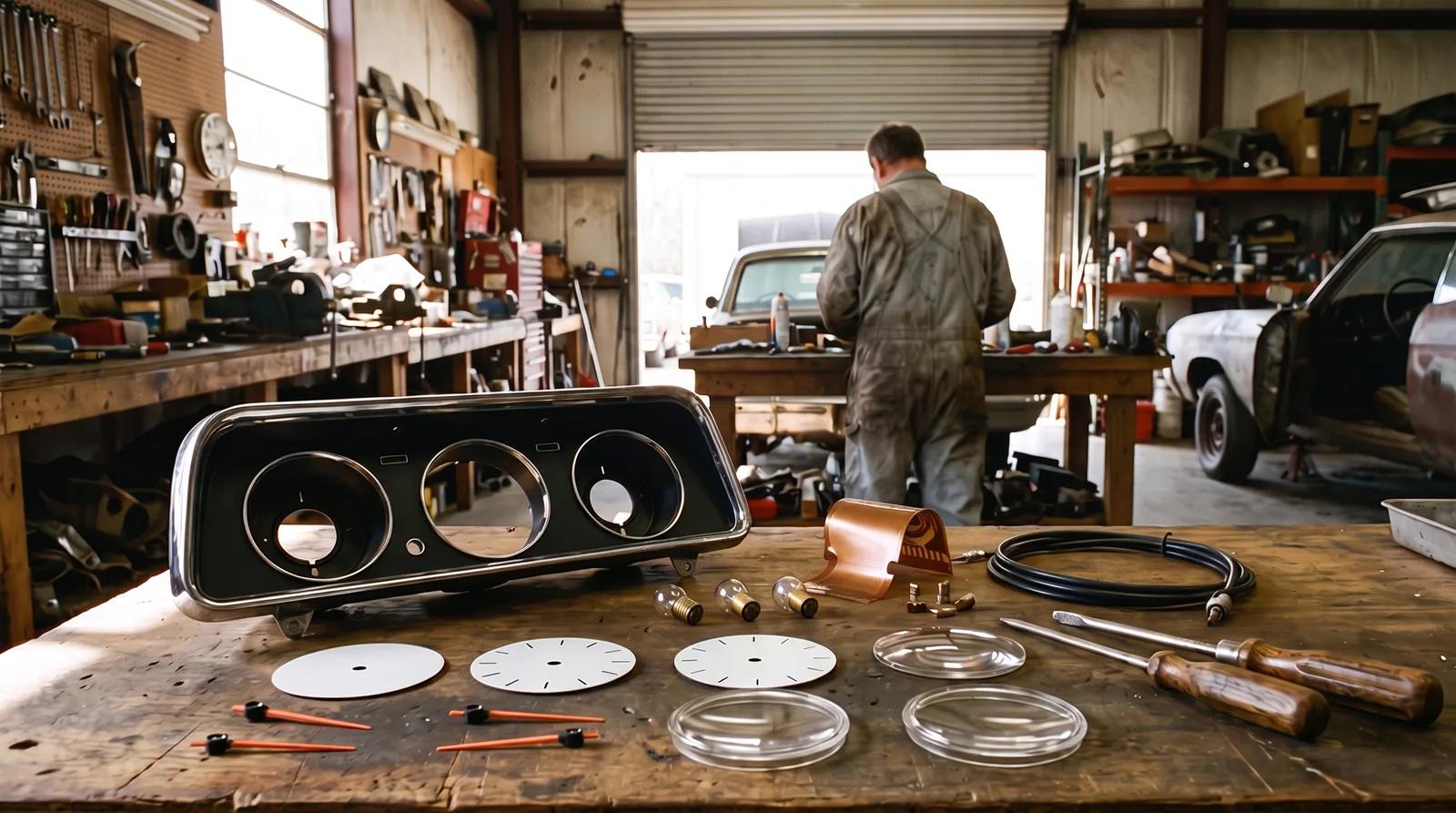
Once the pad is sorted, look immediately below it. A new dash top over tired instruments looks incomplete, and the cluster is usually accessible while the pad is out. That is the natural time to plan gauge restoration and to refresh lenses, bezels and lighting.
If the job exceeds your tools or patience, a specialist can often handle the pad, the substrate and the vinyl work in one visit. Our directory of interior restoration shops is a sensible place to start, and a good shop will quote the pad separately from the rest of the cabin so you can compare routes cleanly.
Sources and notes
- AutoRestorer: repairing a cracked and faded dash, open-cell foam expansion, brittle vintage vinyl, closed-cell rebuild
- eEuroparts: how to restore and repair a cracked padded dash, UV and heat damage, filler limits, wrapping with contact cement, sunshades
- Rub 'n Restore: repairing a cracked dash, epoxy filling, re-graining, low-luster finish, limits of repair
- Coconix: repairing a cracked vinyl dashboard, kit price, professional repair ranges, when to see a trim specialist
- Wikipedia: Plasticizer, plasticizer migration causing embrittlement and cracking
Related Reading
#interior restoration
#dash pad restoration
#classic car dashboard
#cracked dash repair
#vinyl recovering

About the author
Sarah Whitfield
Third-generation classic car collector specializing in pre-war American and European coachbuilt automobiles. Researcher and concours enthusiast.
More in Restoration & Tech

Comments
Be the first to comment on this article.