
I have pulled up a lot of floors. Most of the time the carpet is the least of the problems, because underneath it sits a layer of old jute padding that has been holding water against the pan for thirty years. The carpet is just the part you see. If you are shopping for a classic car carpet kit, the first thing to settle is what the floor looks like with the old stuff out, and the second is which kind of kit actually fits your car and your plans.
Restoration & Tech
7 min read
Carpet Kits: Molded vs Cut-and-Sew, Loop vs Cut Pile
Molded or cut and sew, loop or cut pile? How to pick the right classic car carpet kit, prep the floor and budget the install in 2026.
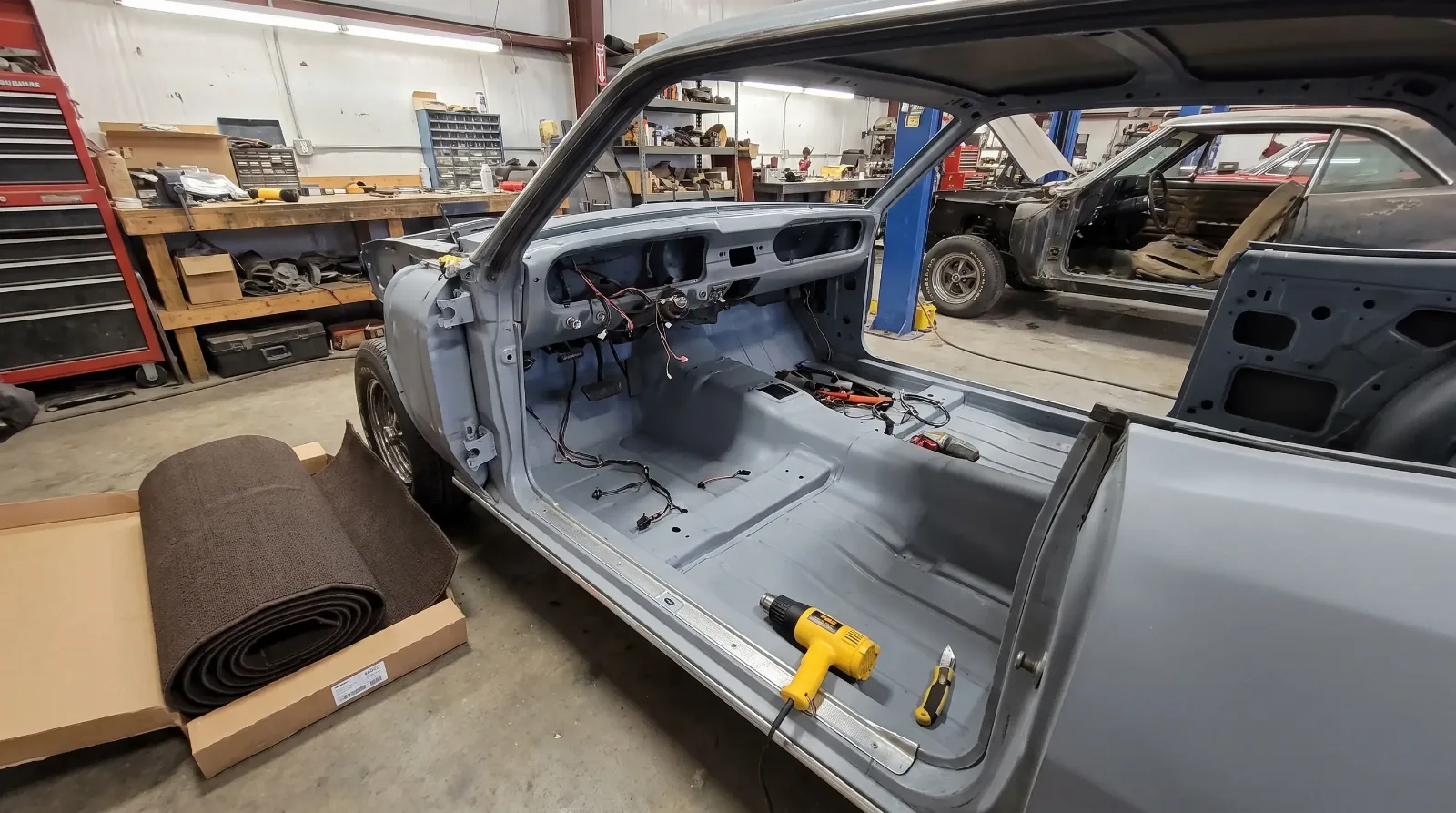
There are two main constructions, molded and cut and sew, and two main pile styles, loop and cut. They get mixed up in forum arguments all the time. Here is how they differ, where each belongs, and what a decent job costs in 2026. If you want the bigger picture on the order of an interior job, the interior restoration guide lays out the sequence.
Molded carpet, and what it really is
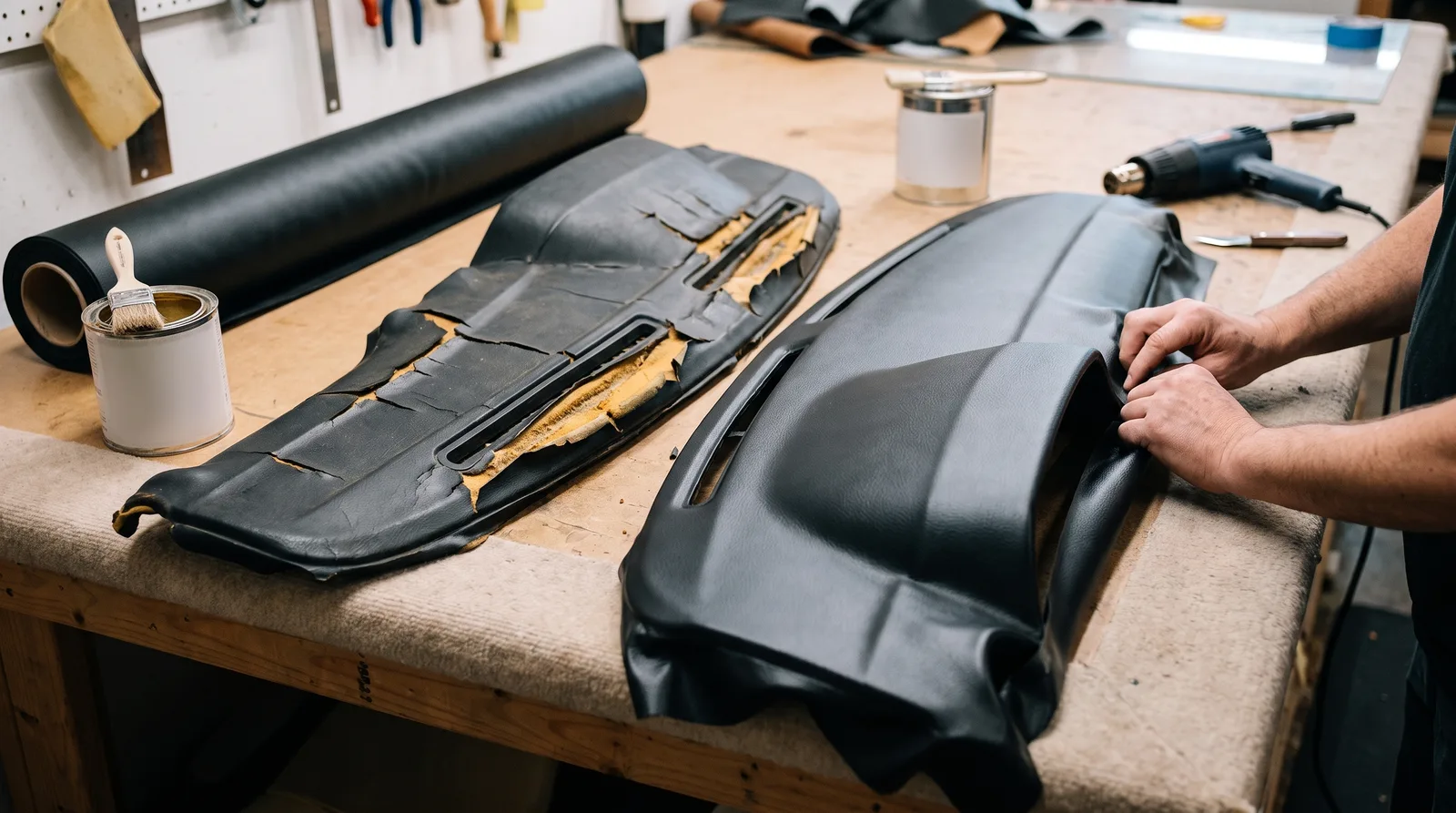
A molded kit is shaped to the floor before it ships. The carpet is formed over a pattern that matches the contours of the floor pan, the tunnel and the footwells, with a backing laid between carpet and pan, then trimmed to size. When it goes in, it lies where the factory put the original. There is little to cut, little to guess and no visible seams along the hump unless the original had them.
The strength is fit. The weakness is that a mold is only as good as the car it was cast from, and floor pans on the same model can vary by year, body style and even by which plant built the car. A kit made for a hardtop can be wrong in a convertible. Some molded carpet is also backed with a stiff, heavy material that is harder to work into a tight corner, though a heat gun and patience cure most of it.
Molded carpet is designed to hug the floor pan with no pockets of loose carpet, and it is the usual construction for most American cars of the postwar decades. If your car was molded from new, a molded kit is the right choice for originality, and it is the easier one to install well.
Cut and sew, and when it earns its place
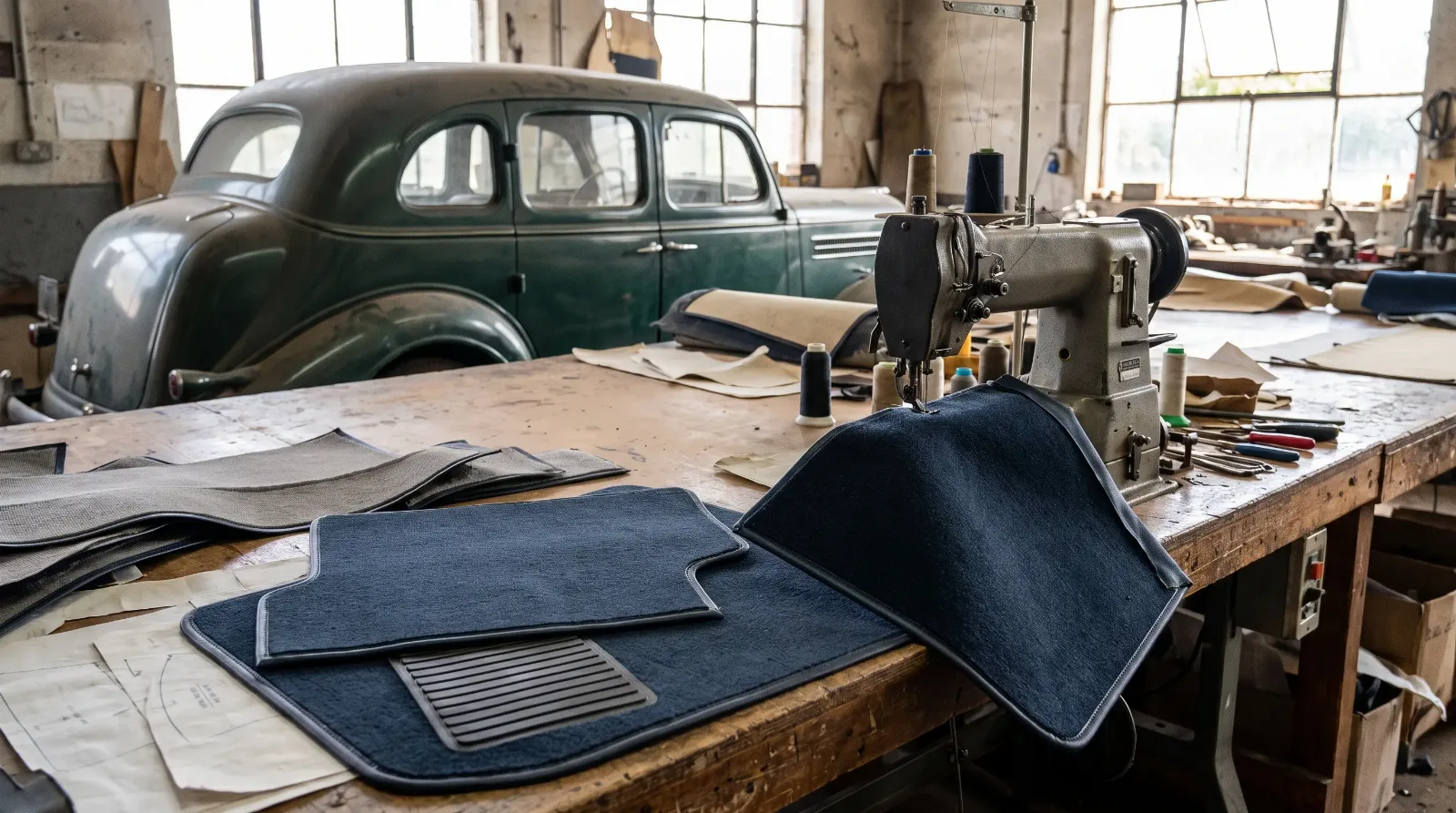
A cut and sew kit arrives as flat pieces, sewn together in the shop along patterns taken from the car, with binding on the edges and heel pads sewn in. This was the usual construction on cars built before about 1960, and the method persisted on certain makes long after others abandoned it. It is the correct choice for most prewar cars and for many early postwar cars, and for any car where the original used visible seams, bindings or loose fitted pieces.
It is also what you want for a very low volume car where no mold exists. A good cut and sew supplier will make you a kit from your measurements or from a template, and the result can be better than a poor molded kit. The cost is labor. Done by a shop, a cut and sew carpet job takes more hours than a molded one, and you pay for them.
| Feature | Molded | Cut and sew |
|---|---|---|
| Typical use | Most postwar mass production cars | Prewar, early postwar, low volume cars |
| Fit on the floor | Shaped to the pan, few seams | Fit depends on the installer's skill |
| Kit price in 2026 | Often a few hundred dollars, about $200 to $600 with padding | Usually more than a molded kit for the same car, depending on the number of pieces |
| Install effort | Moderate, heat and trim | Higher, fitting and sewing |
| Originality | Correct for most later cars | Correct for older and some specialty cars |
Loop pile versus cut pile
Loop pile has tight, uncut loops of yarn forming a flat, hard wearing surface. Most American cars from the 1940s to the mid-1970s wore an 80/20 loop carpet, a blend of 80 percent rayon and 20 percent nylon that looks a lot like berber, and it is what you see in a lot of original photographs. It wears well, hides dirt and resists crushing, but it can look flat to a buyer who expects something plush.
Cut pile shears the loops open into upright tufts, giving a softer, thicker look. Cadillac used it early, and from about 1974 onward manufacturers moved to cut pile or the longer, plusher essex style. It feels better underfoot and looks richer, though it shows footprints and vacuum tracks, and it can crush in heavily used spots. Cheap cut pile is where a lot of reproduction kits disappoint, because the yarn is thin and the tufts lay down quickly.
The trap is picking by feel. The right pile is the one your car left the factory with, matched to the model and year. A 1960s car with a plush cut pile is a modification, and a car that wore cut pile from new looks wrong in a flat loop. Look for color and texture codes in the production records or ask the owners club what the car wore.
Prep the floor, then install
This is where jobs are won or lost. Pull the old carpet and the old padding together and take everything to bare metal. Look for pinholes along the pan seams, especially under the front seats and at the toe boards, where water collects from leaking windshield seals and clogged cowl drains. Wire wheel the surface rust, treat it, seal the seams and prime. Sound deadening mats and a thin insulation layer go on next, and they are worth the money, because an old car with no insulation is loud.
A heat gun is the molded carpet installer's best friend. Lay the carpet in the car, let it relax in the sun or under a heat source, and work it into the contours from the middle outward before you trim. Cut the holes for seat bolts, shifter and seat belts from the underside once the carpet is positioned, and use sharp tools. A badly cut hole around a shifter boot is the first thing a buyer notices.
Door sill plates, kick panels, seat brackets and console pieces go back after the carpet, and they are your final fit. If the kit includes a pad, install it first. The dash and everything above it are best finished beforehand, which is why the dash pad belongs earlier in the sequence than the carpet.
For labor, a shop in 2026 typically charges roughly $600 to $1,500 for a molded carpet job installed, kit included, depending on how much the console and seats complicate it. A cut and sew job takes more hours. Floor repair for rust comes on top and can run to several thousand dollars.
"Buy the carpet after you have fixed the floor, not before. A new kit over a rusty pan is a very expensive way to hide a problem."
Mike Sullivan
One last piece of advice. Test fit before you glue, trim or cut anything. Lay the kit in place, check the seat tracks and the pedal clearances, and confirm the color against the door panels and seats in daylight. Then commit. A carpet job done in a clean, patient afternoon outlasts one done in a hurry by decades.
Sources and notes
- Molded carpet (Wikipedia), definition, mass versus poly backing, 80/20 loop carpet to the mid-1970s, cut pile and essex from 1974
- Sewn-molded carpet kit, 240Z (The Z Store), how a sewn-molded kit is built, heel pad, loop and cut pile options
- Automotive carpet guide (Midwest Fabrics), loop versus cut pile, molded versus universal, pre-cut binding, padding
- How to replace classic car carpet (PowerNation), floor prep, test fitting, heat gun technique, trimming and sill tuck
- How to install carpet in a car (Classic Car Restoration Club), cut-sewn carpet installs differently from molded; steaming, gluing, trimming
Related Reading
Have a
Classic Car
for Sale?
Reach thousands of serious classic car collectors across the US.
Sell It Here →
Selling a classic? Here's how: compare the places to sell classic cars
Are You a Classic Car Dealer?
List your full inventory and connect with targeted classic car buyers.
Join as a Dealer →

About the author
Mike Sullivan
Detroit-area muscle car enthusiast and restoration specialist with three decades of hands-on experience working on American iron.
More in Restoration & Tech
Comments
Be the first to comment on this article.