
I have been in both kinds of shop. One was a two-bay garage with a man who had been turning wrenches on the same marques for forty years and answered his own phone. The other was a facility with a front office, a paint department, a trim department and a sales manager. The cars that came out of each could be excellent. The cars that went wrong in each went wrong in completely different ways.
Restoration & Tech
7 min read
One-Man Shop vs Large Restoration Facility
A one-man shop and a large facility fail in different ways. Here is how to weigh craftsmanship, capacity, cost and risk before you pick one for your car.
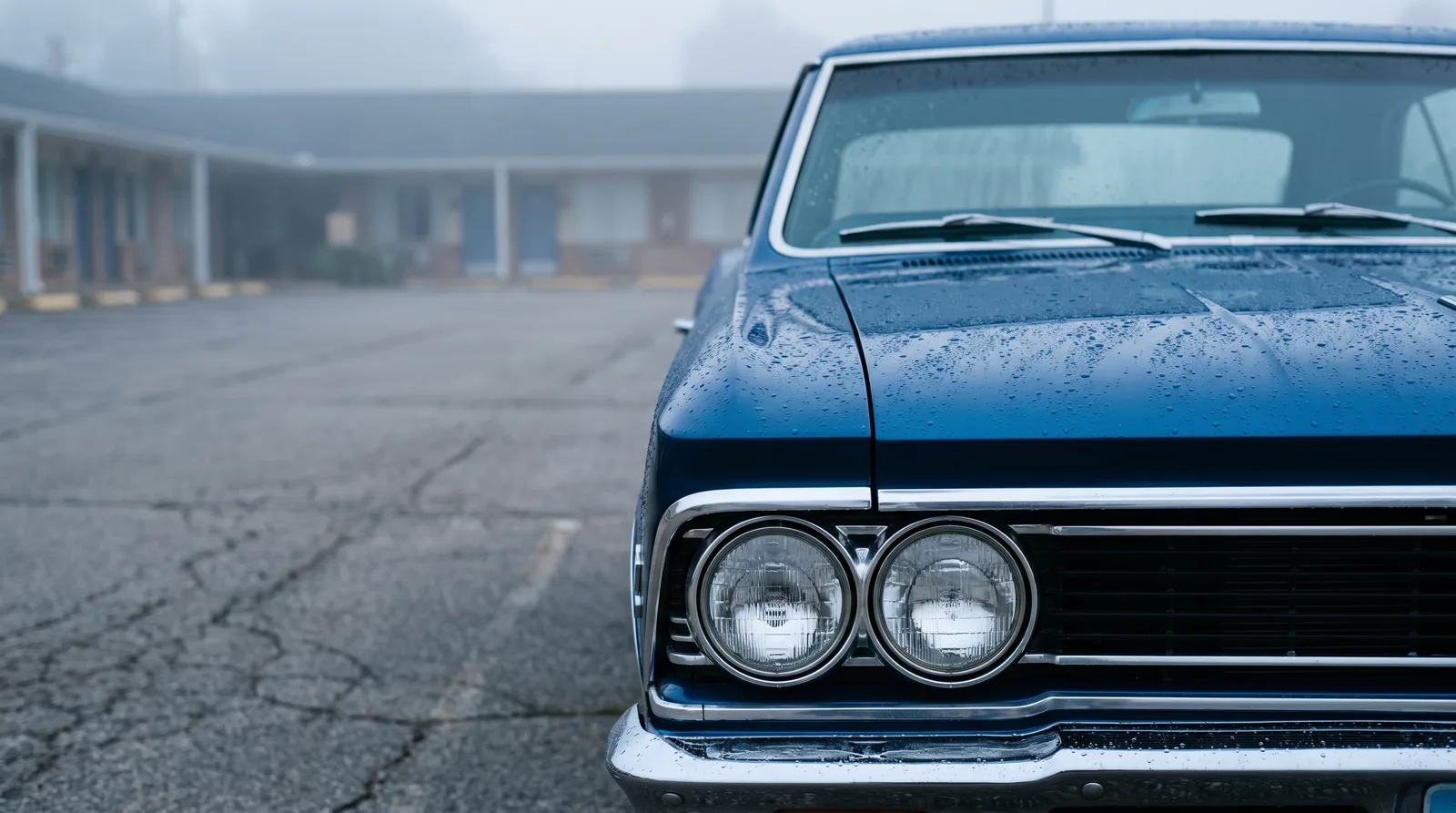
So here is the honest comparison. Neither size is better. They fit different cars, different owners and different budgets. What you want is to know how each one fails before you hand over the keys. If you have not shortlisted yet, start with our guide to choosing a shop, which covers the full process. This piece deals with the size question alone.
What a one-man or small shop does well
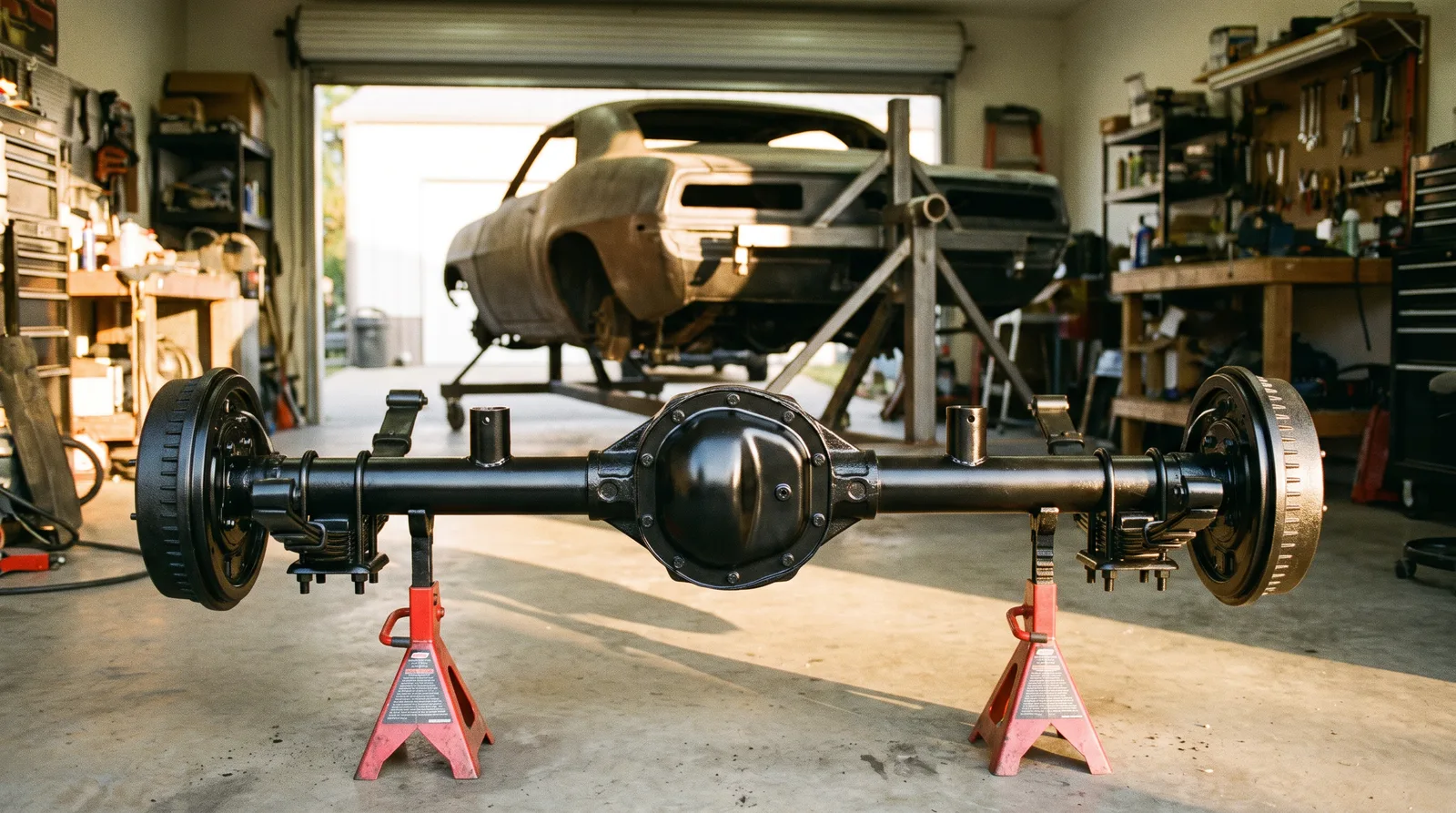
A small shop is a person. The work reflects their hands, their eye and their standards, and you can usually talk to them directly. Nobody relays your instructions through three people. If you want a particular detail done a particular way, or you care about originality, the person who makes the decision is the person with the tool. For a single car with a specific story, that matters.
Small shops often specialize. A man who has restored the same family of cars for decades knows where they rust, which parts are scarce and which reproduction pieces fit and which do not. That knowledge is worth money. Overhead is also lower, which can mean a lower hourly rate, although a lower rate with fewer hands can still take longer overall. And the shop's reputation is tied to one name, which concentrates the incentive to get the work right.
Where small shops break down
The weakness is capacity, and it shows up in three ways. First, schedule. One person can only do so much, and one illness, one family emergency or one backlog stretches a job without warning. Second, range. Few small shops do everything in house. Paint, upholstery, machine work and chrome are often sublet, which adds coordination, cost and hand-offs you will not always see. Third, continuity. If the owner retires, the shop closes, or gets overwhelmed, your car and your records go with them.
Waiting lists are common. Busy restoration shops of any size may keep a waiting list of a year, 18 months or longer. That is not a flaw, but it should factor into your plan. Beware the opposite: a small shop with an empty calendar and a promise to start right away. Ask why.
What a large facility does well
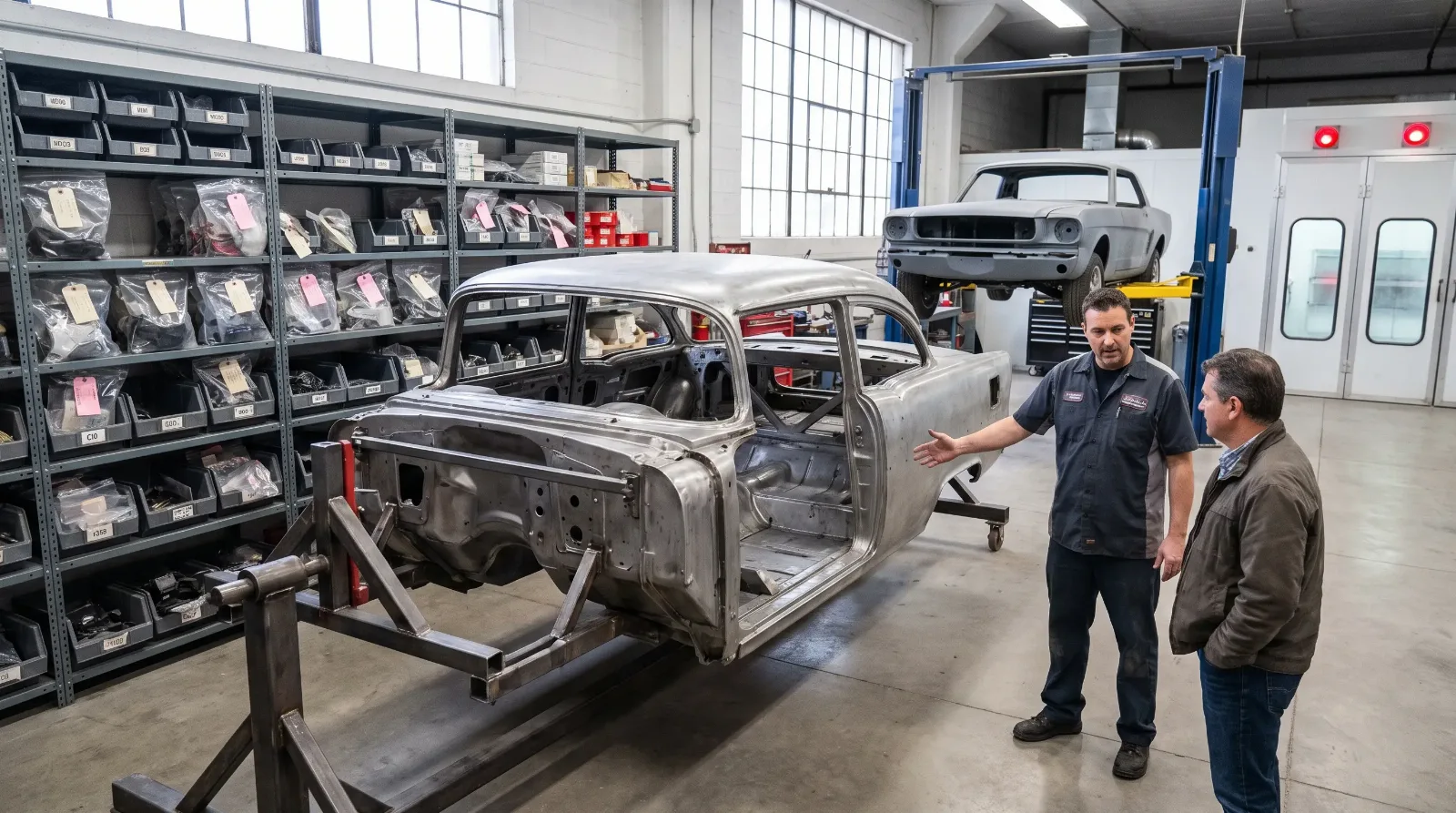
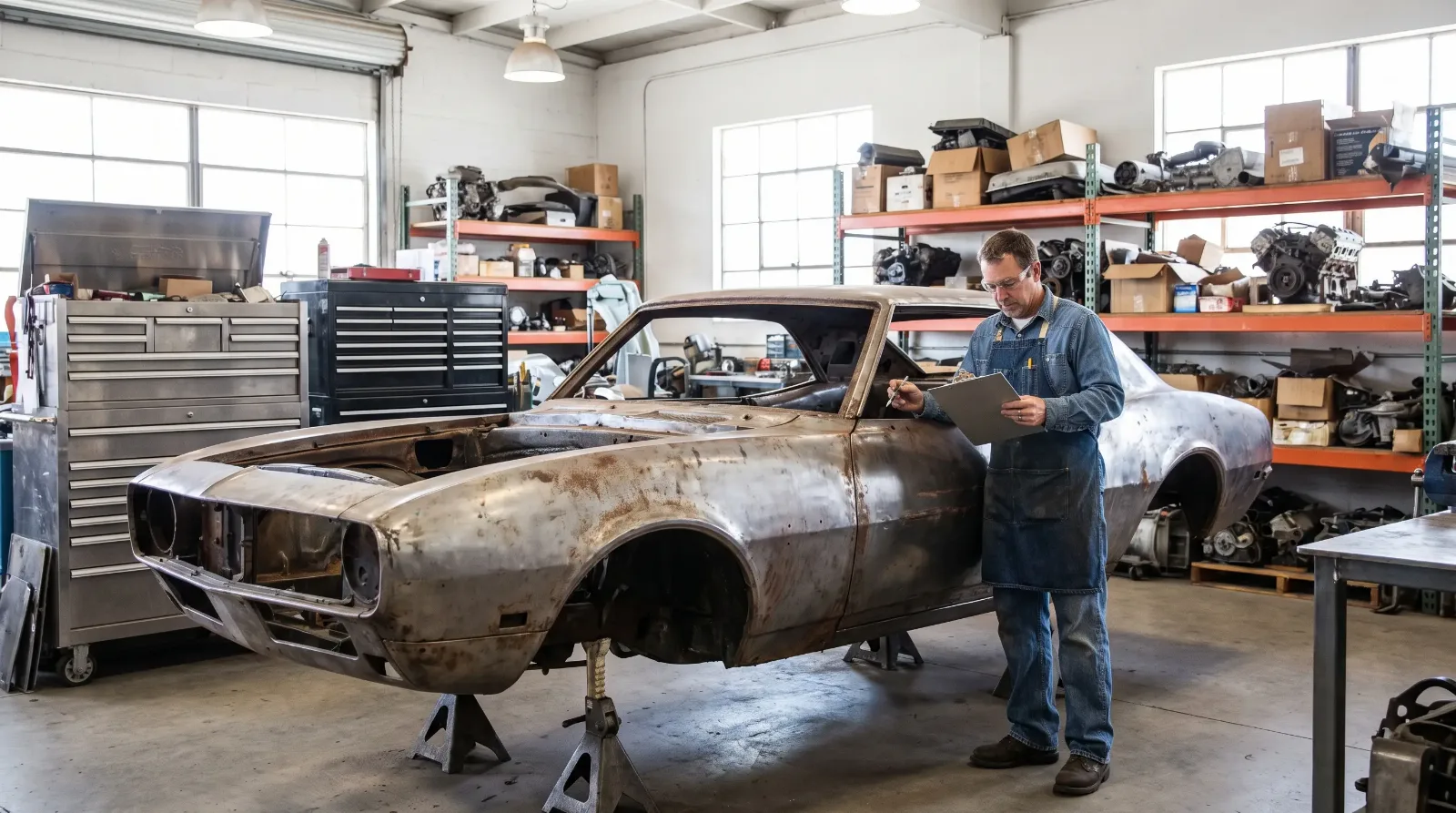
A large operation has depth. It has several skilled people, dedicated stations for metalwork, paint, trim and mechanical, and a process that keeps work moving when one person is out. Most of the work happens under one roof, which reduces sublet delays and gives the shop control over quality across stages. For a complex, high-value or multi-system restoration, that integration is a real advantage.
Larger shops also tend to have formal systems: written estimates, detailed work orders, project managers, photo documentation and regular updates, plus insurance and facilities that handle high-value cars. If you live far away and cannot visit often, those systems count for a lot. Capacity also means a shorter timeline on some jobs, since several people can work on the car in parallel.
Where large shops break down
The risk is distance. Your car becomes a job number. The person you speak to is a manager and not the person welding. Work may be assigned to whoever is free, not whoever is best. Quality can vary by technician, and overhead is higher, which usually shows up in higher rates, though more hands can shorten the schedule. Large shops may also prefer big, profitable jobs and give modest cars less attention.
Watch for a shop that takes on more than it can handle. A full floor looks like success, but a floor that is too full means cars sit while the shop chases cash flow. Ask how many projects are in progress, how many people work on them, and how they handle a backlog. The answers show whether your car will move.
| Factor | One-man or small shop | Large facility |
|---|---|---|
| Who works on your car | The owner, directly | A team, assigned by workload |
| Communication | Direct, informal | Through a manager, more formal |
| Hourly rate | Often lower | Often higher |
| Schedule risk | One person, so delays stack | Parallel work, but queues can be long |
| In-house capability | Limited, more sublets | Broad, one roof |
| Continuity risk | Retirement or closure can strand a car | Lower, but depends on finances |
Matching the shop to the car
Start with the car. A common, well-documented model with a straightforward restoration suits either size, so choose on price, schedule and trust. A rare or highly original car often suits a specialist, who may be a small shop. A complex project that needs metalwork, paint, trim and drivetrain in sequence may suit a facility that does all of it in house. A car you plan to show at a high level needs a shop with proven concours experience, whatever its size.
Then consider yourself. If you want to be involved, visit weekly and talk to the person doing the work, a small shop fits. If you live far away and want formal reports and a project manager, a large one fits. If you plan to share the work, as in a hybrid build, ask first. Small shops are often more flexible.
"I would take a man who has done forty of your car over a building full of people who have done none. Then I would ask him what happens if he gets sick."
Mike Sullivan
Questions to ask either one
The questions do not change with size. How many cars like mine have you finished, and can I speak to the owners? What do you do in house, and what do you sublet? How many projects are open, and who works on each? How will you update me, and how often? What does your estimate cover, and how are changes approved? What happens to my car and my records if something happens to you or the shop?
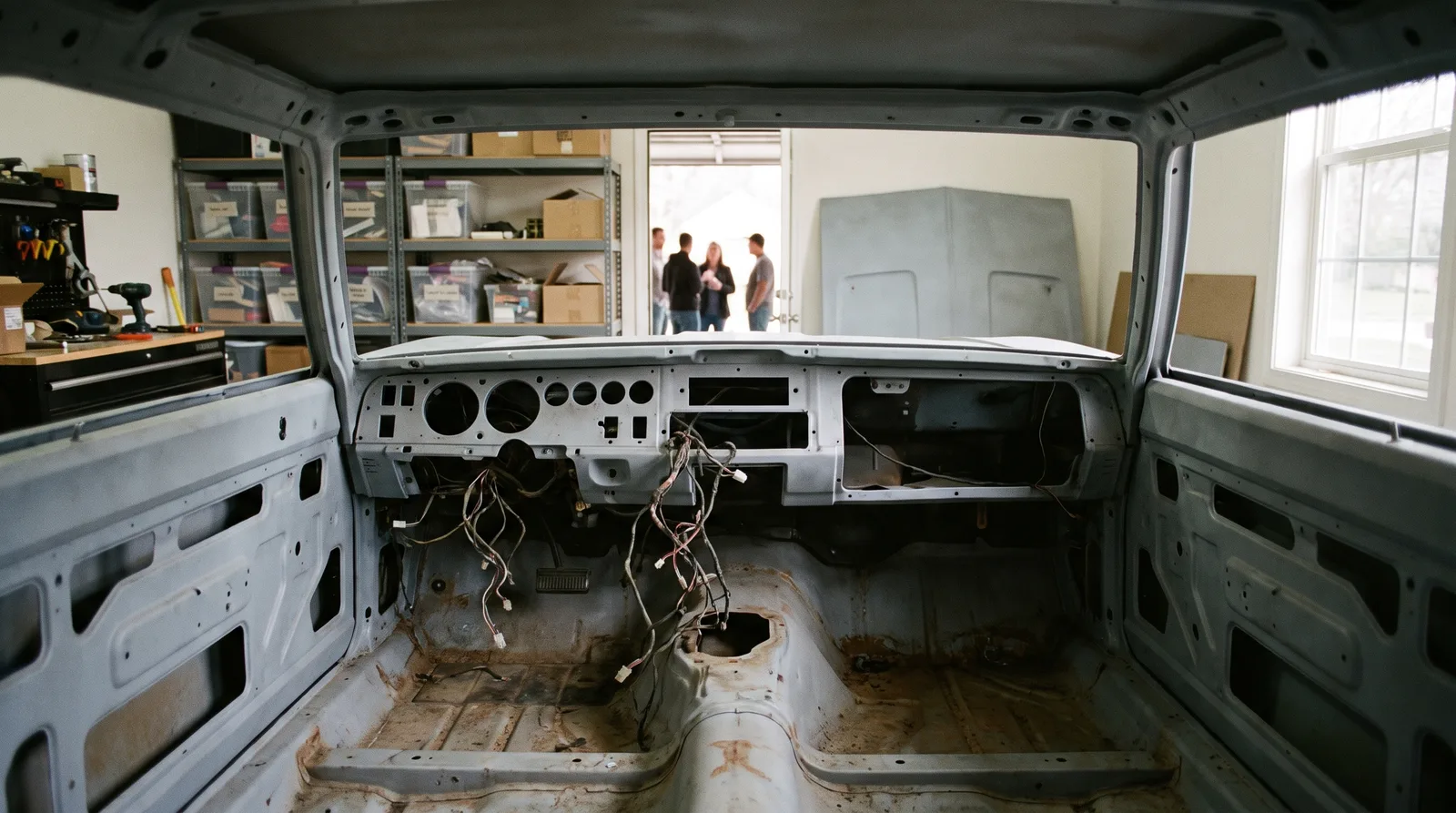
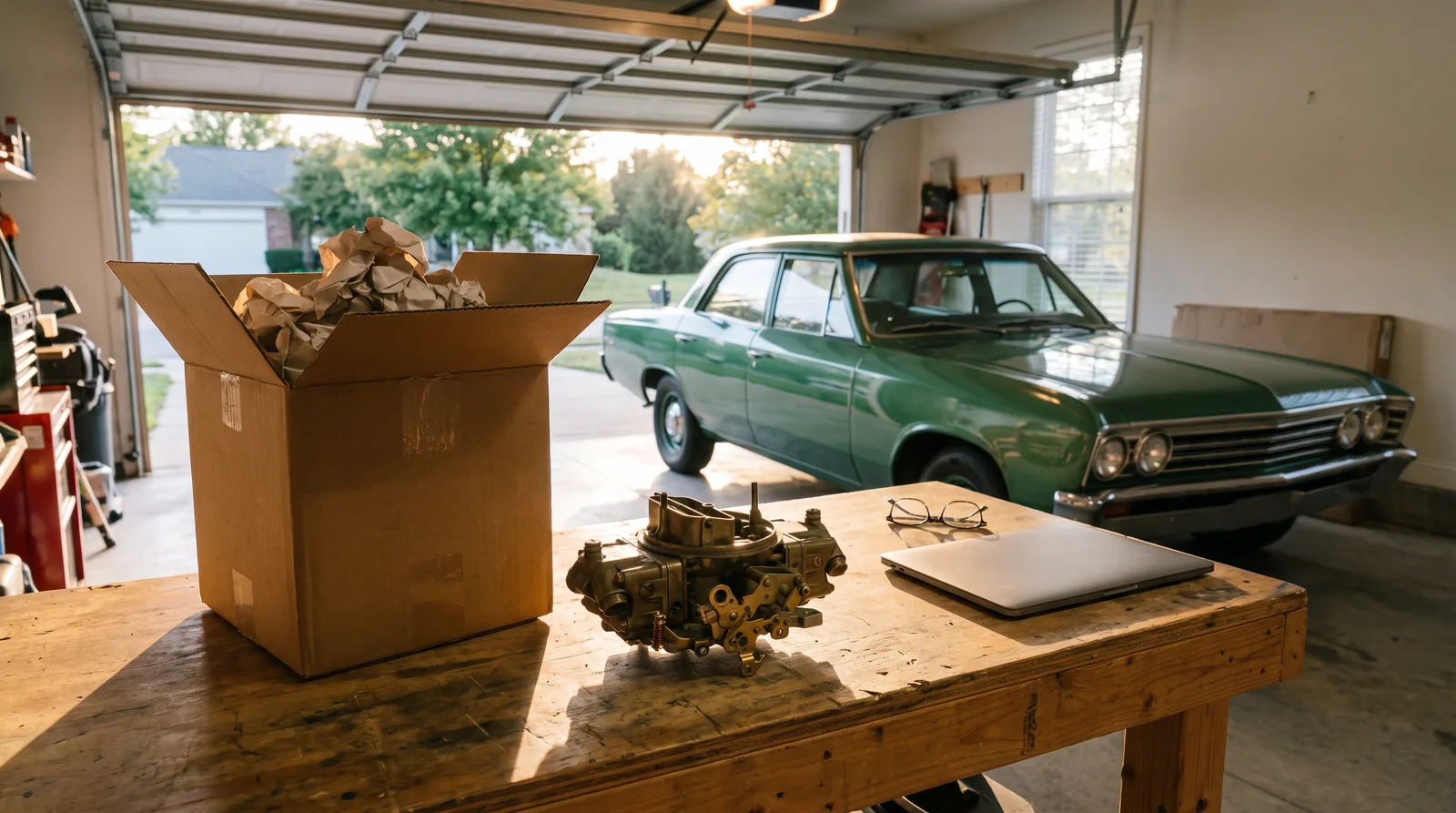
Take the answers seriously, and watch how the shop receives the questions. A good shop of any size welcomes them. Once you have chosen, do the groundwork before the car leaves: photograph everything, note the condition, and make a full list of parts that go with it. We cover that step in detail in inventory before drop-off. A clean record at the start protects you with a small shop and a large one alike.
Sources and notes
- Useful tips in finding the right restoration shop, All Chevy Performance, supports waiting lists, rate versus headcount, staff retention and sublet questions
- Committing to a professional restoration, All Chevy Performance, supports backlog lengths and asking what is done in house versus farmed out
- Choosing a restoration shop, In The Garage, supports reputation over size, specialization and subcontracted engine, upholstery and chrome work
- Muscle Cars Illustrated, 10 questions to ask a muscle car restoration shop, smaller shops often handle one or two cars at a time while larger ones run several, and asking what is done in house versus sent to outside vendors
- Car Guy Chronicles, how to choose a professional restorer, choosing a shop that specializes in your kind of car, inspecting equipment and parts tracking, and agreeing on cost, timeline and goals up front
Related Reading
Have a
Classic Car
for Sale?
Reach thousands of serious classic car collectors across the US.
Sell It Here →
Selling a classic? Here's how: compare the places to sell classic cars
Are You a Classic Car Dealer?
List your full inventory and connect with targeted classic car buyers.
Join as a Dealer →

About the author
Mike Sullivan
Detroit-area muscle car enthusiast and restoration specialist with three decades of hands-on experience working on American iron.
More in Restoration & Tech
Comments
Be the first to comment on this article.