
A part that looks right in a photo and arrives wrong is the most common loss in this hobby, and it is rarely fraud. It is usually a listing written by someone who does not know what they have, or a reproduction sold as something it is not. Buying classic car parts online works well when you treat each purchase like a small appraisal: condition, documentation, and what happens if it goes wrong.
Restoration & Tech
7 min read
Buying Classic Car Parts Online Without Getting Burned
How to buy classic car parts online without losing money: telling NOS from reproduction, reading listings, protecting payment, and knowing when to walk away.
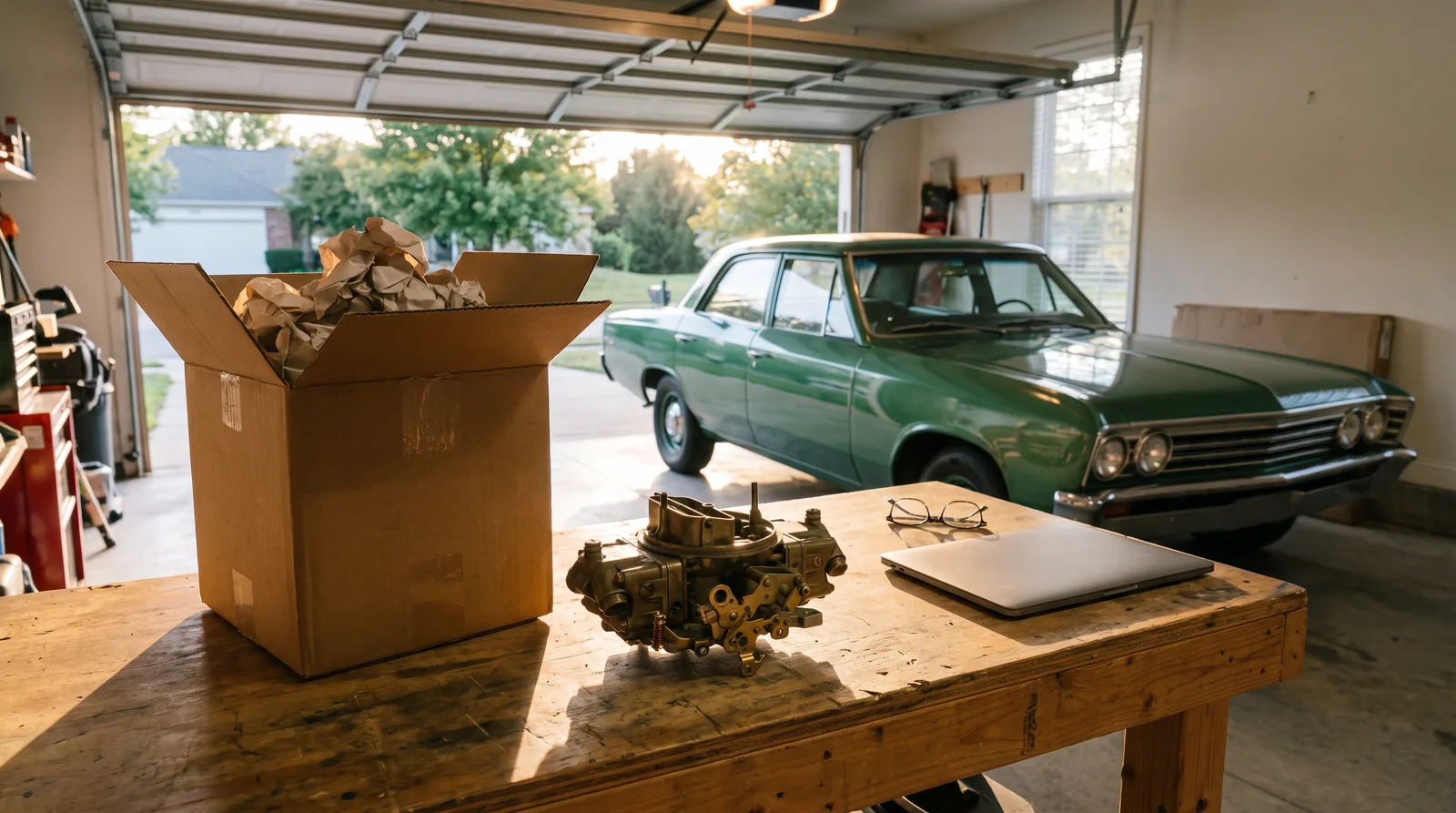
Start with the map of the market. It helps to understand where restoration parts come from before you open a browser tab, because the category of part decides how much risk you carry. New old stock, reproduction, remanufactured, and used original are four different products with four different failure modes, and sellers blur them on purpose.
Know which of the four you are buying
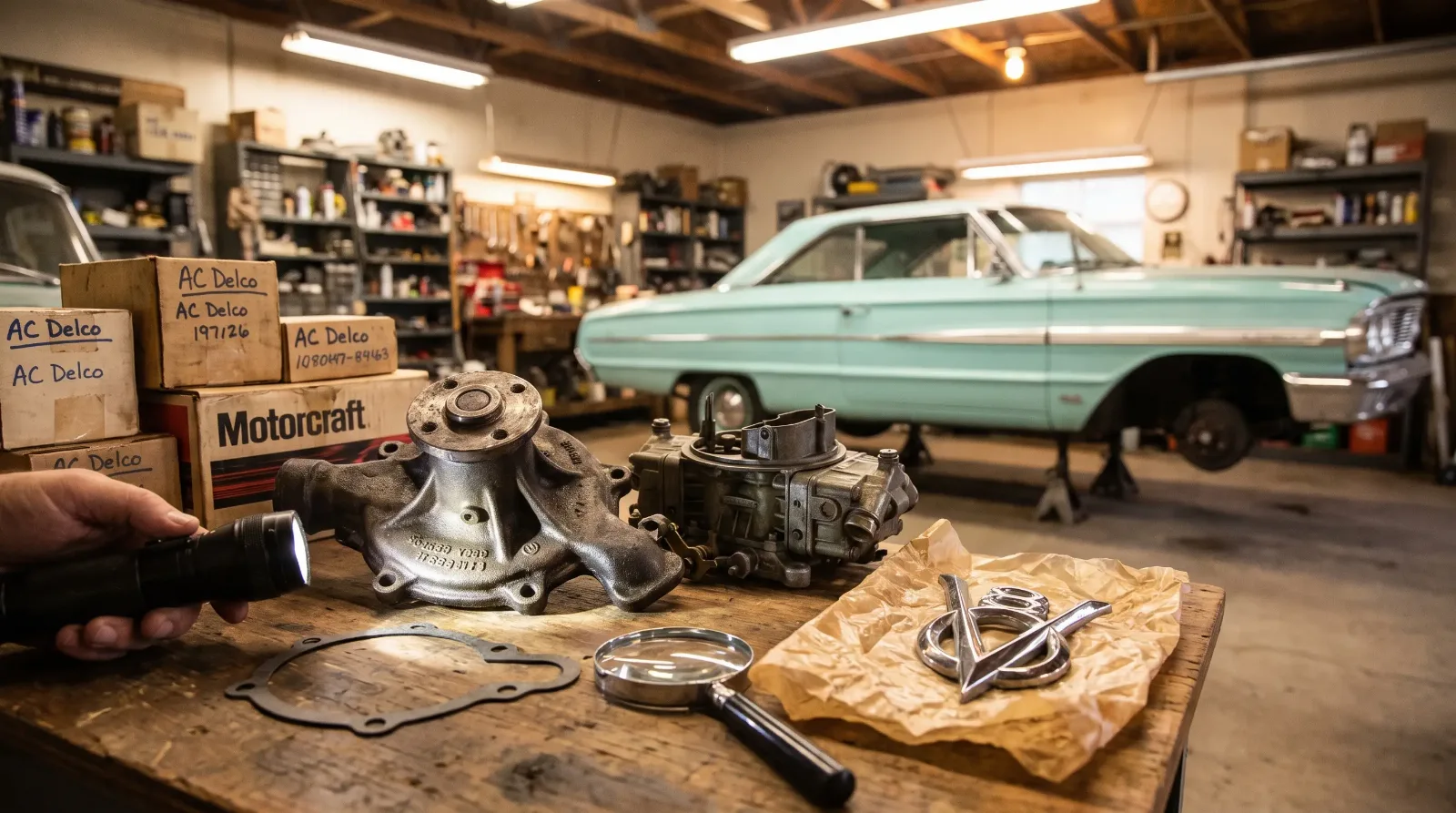
New old stock (NOS) means an original part made in the period and never installed. It commands the highest price and attracts the most fakes, because a faded box and a bit of dust are cheap to produce. Reproduction parts are newly made to resemble the original, and quality ranges from better than factory to unusable. Remanufactured parts are original cores rebuilt to a standard, which is common for carburetors, starters, and gauges. Used originals are the cheapest and the least predictable.
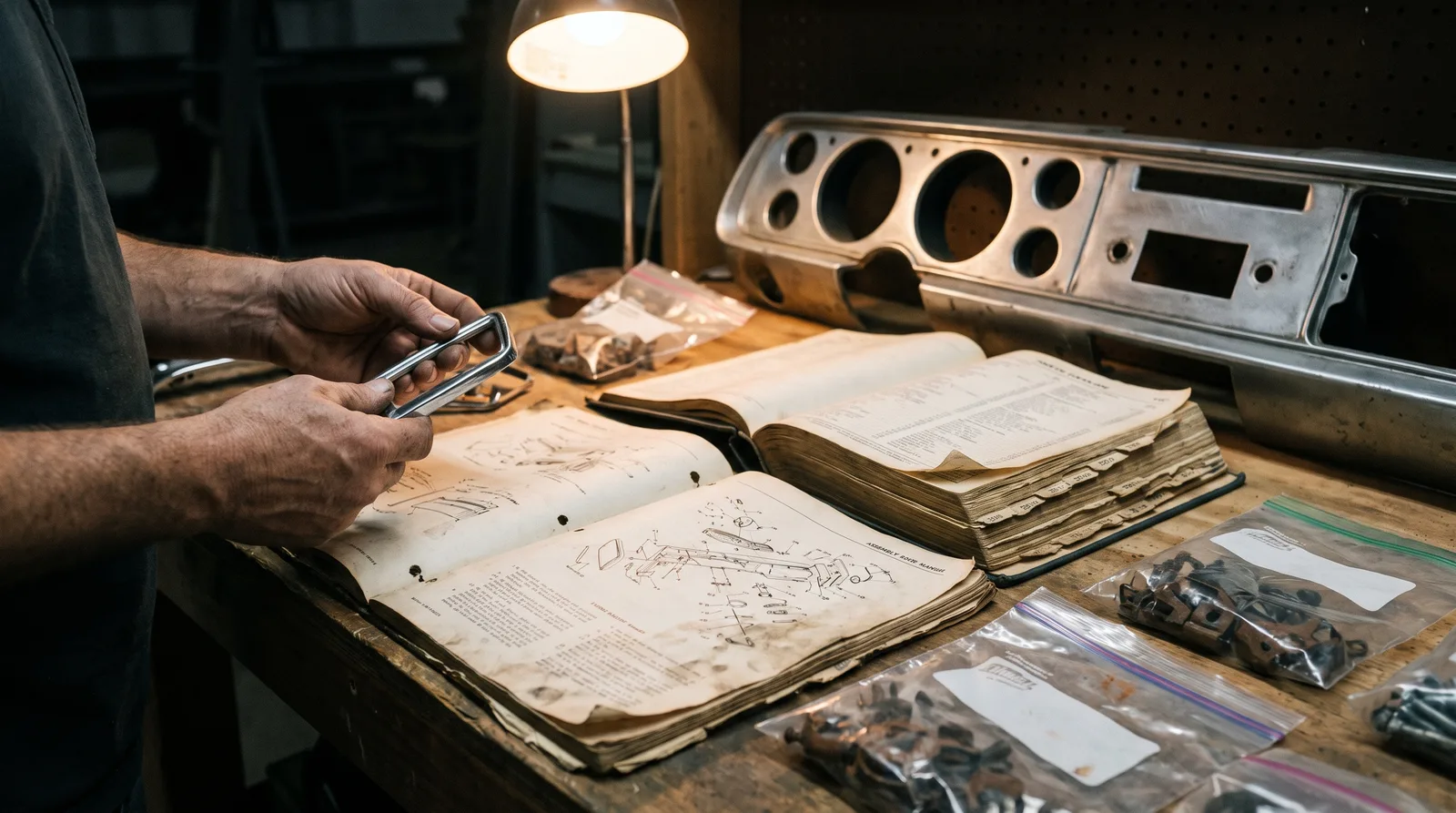
Ask the seller to say, in writing, which of the four applies. A seller who answers vaguely has told you something. If the part is described as NOS, ask for the part number and the packaging date codes, then compare them against the factory parts book for that year.
| Part type | Price compared with new reproduction | Main risk |
|---|---|---|
| NOS original | Often several times higher | Relabeled or aged reproduction sold as NOS |
| Quality reproduction | Baseline | Fit and finish differ from original |
| Remanufactured | Varies by part and core; often in the same range or somewhat higher | Core quality and rebuild standard unknown |
| Used original | Usually lower, but varies widely with condition | Hidden wear, cracks, previous repairs |
Read the listing like a condition report
A good listing has a part number, several photos from different angles, and a stated return policy. A bad one has a single stock image and the phrase "fits many years." Treat that phrase as a warning. Interchange claims are where buyers lose money, since a bracket that fit a 1968 model can be wrong for a 1969 by a few millimeters, and those millimeters stop the part from bolting up.
Ask for photos of the casting numbers, date codes, and mounting surfaces. Sellers who have the part in hand can send these in ten minutes. Sellers who are listing from a distributor's catalog cannot, and that is useful to know. For rare items, the guide on the parts that are hardest to find shows how scarcity drives both price and fakery, and why the scarce pieces deserve the slowest purchase process.
Protect the payment, not just the part
Pay with a credit card or a platform that holds funds until delivery. Marketplace buyer protections, such as the money back programs on large auction sites, vary by category, and some exclude vehicles entirely, so read the current terms for motor parts and do not assume a vintage item is covered. eBay, for example, excludes motor vehicles from its Money Back Guarantee but covers some parts under a separate fit guarantee. The FTC lists wire transfers, gift cards, payment apps, and cryptocurrency as the payment methods scammers insist on, so never pay by wire, gift card, or a "friends and family" setting to a seller you have not dealt with before. The discount offered for doing so is the price of your protection.
Check the seller's history. Look at how long the account has existed, whether the feedback is for parts or for small unrelated items, and whether negative comments mention misdescribed goods. Established specialists often have a phone number and a shop address. Calling one before you order is the cheapest due diligence available. If you want a vetted place to start for American performance cars, read about muscle car parts specialists who stake their reputation on correct stock.
Shipping, inspection, and the return window
Insure anything valuable, and photograph the package before opening it. Chrome, glass, and thin cast aluminum travel badly. Open the box the day it arrives, test fit the part on the car or against the old one, and decide inside the return window. A part that sits on a shelf for three months cannot be returned, and a restoration shelf is where bad parts go to be forgotten.
"A bargain is not a price. It is a price that survives the part arriving and fitting. Until the part is on the car, you have only a deposit on a guess."
Marcus Feld
New options that change the math
Parts that no one has made in decades are now reappearing through scanning and printing, and the buying rules differ. 3D-printed parts come with their own questions about material, durability, and who owns the design file, so ask the maker those questions before you pay. Judge the maker the way you would judge any seller: ask for samples, references, and a written description of what you will receive.
When to walk away
Walk away from sellers who refuse to share photos, push you off the platform, or rush you with claims of other buyers. Walk away from prices far below the going range, since a NOS part at a fraction of market is either not NOS or not theirs. A cheap price with no recourse is not cheap. Patience costs nothing, and the part you want will usually reappear, often from a seller who is glad to answer questions.
One last habit pays for itself. When a purchase goes well, write down the seller, the part number, and what you paid. When it goes badly, write that down too, and leave honest feedback. Your notes build a private list of sellers you trust, and over a long restoration that list becomes the most useful tool in the garage, more reliable than any search result.
Sources and notes
- FTC: Using credit cards and disputing charges, the 60-day written notice rule under the Fair Credit Billing Act
- FTC: Fair Credit Billing Act, statute summary covering billing errors and goods not delivered as agreed
- eBay: Money Back Guarantee policy, time limits, and the exclusion of motor vehicles
- FTC: How to avoid a scam, payment methods scammers demand
- Classic Industries: panel damaged or defective, inspecting and test fitting on arrival and contacting the seller before returning
- AutoGuide: Ford boosts restoration parts inventory, licensed reproduction parts and the history of poor-fitting reproductions
Related Reading
Have a
Classic Car
for Sale?
Reach thousands of serious classic car collectors across the US.
Sell It Here →
Selling a classic? Here's how: the best sites to sell a classic car
Are You a Classic Car Dealer?
List your full inventory and connect with targeted classic car buyers.
Join as a Dealer →

About the author
Marcus Feld
Accredited collector-car appraiser who reads the market through hammer prices, condition tiers and risk.
More in Restoration & Tech

Comments
Be the first to comment on this article.