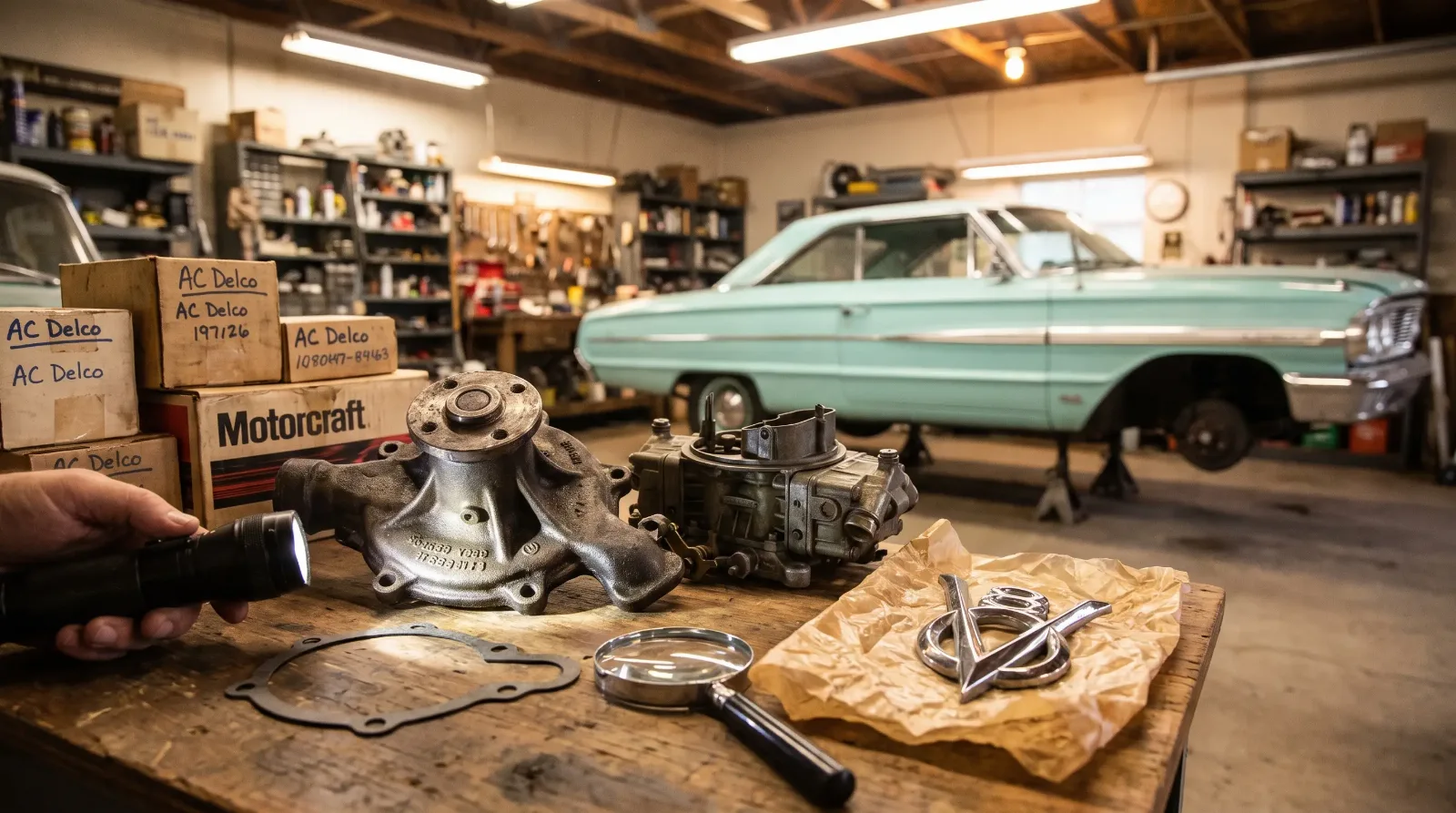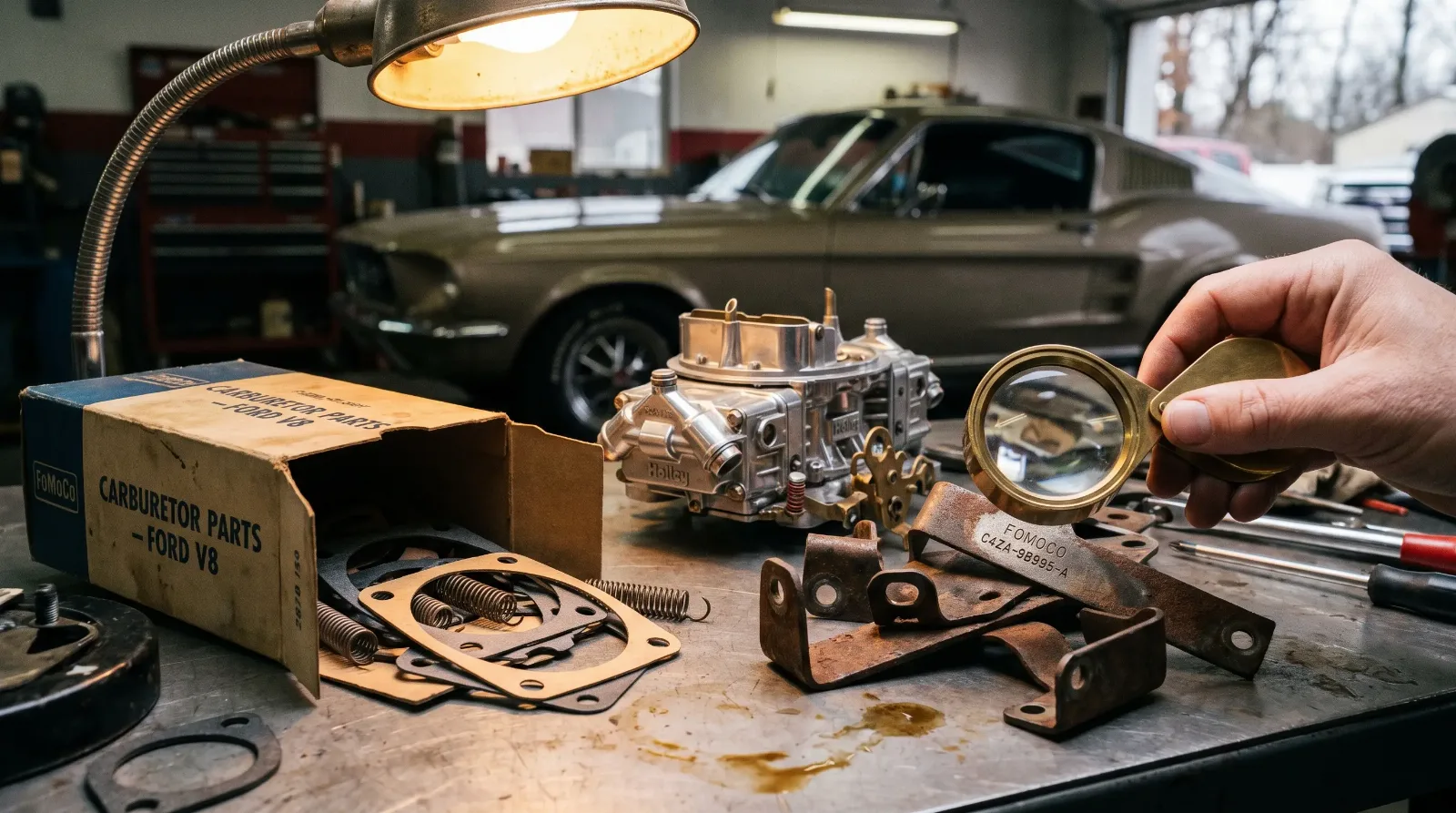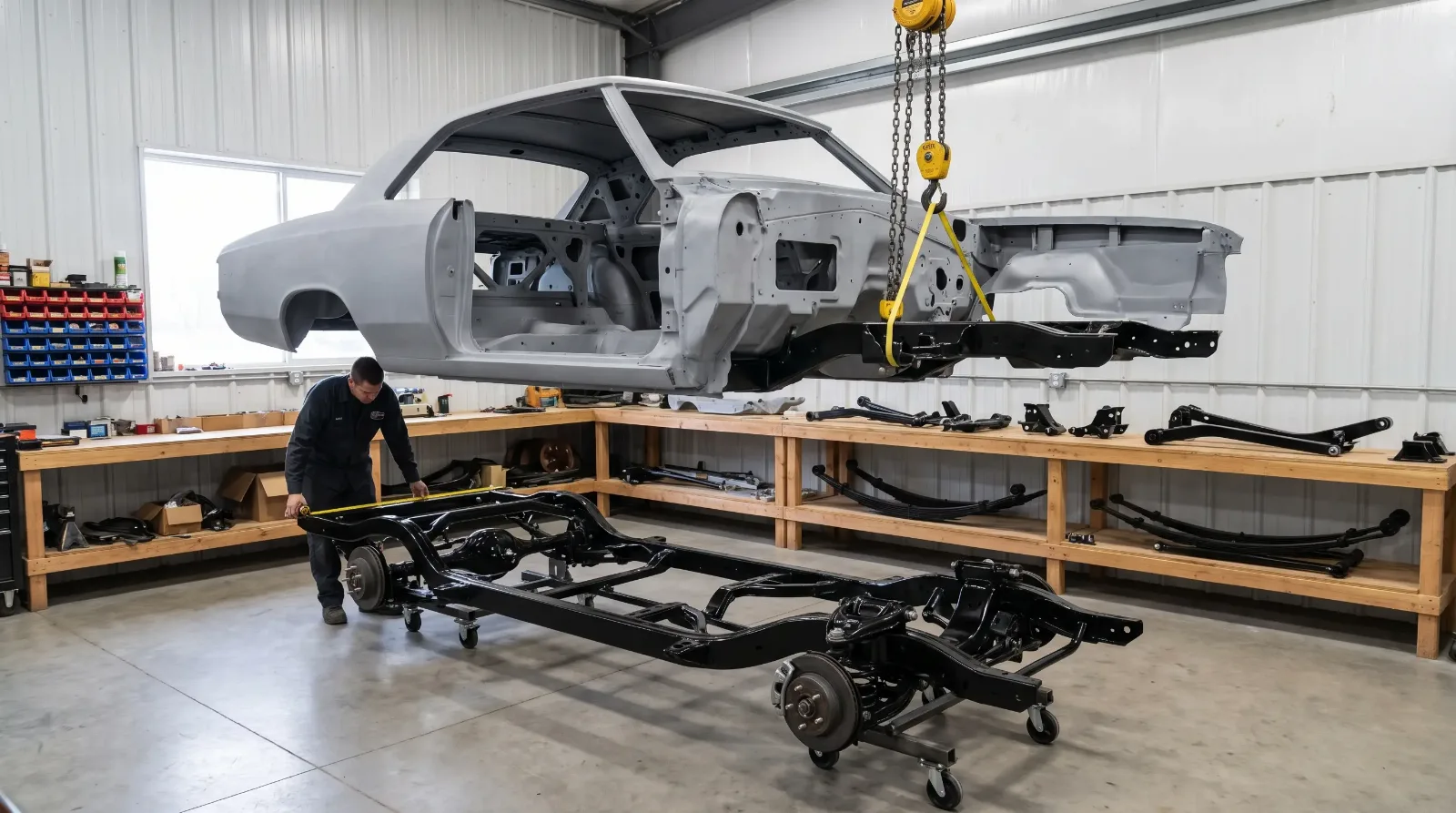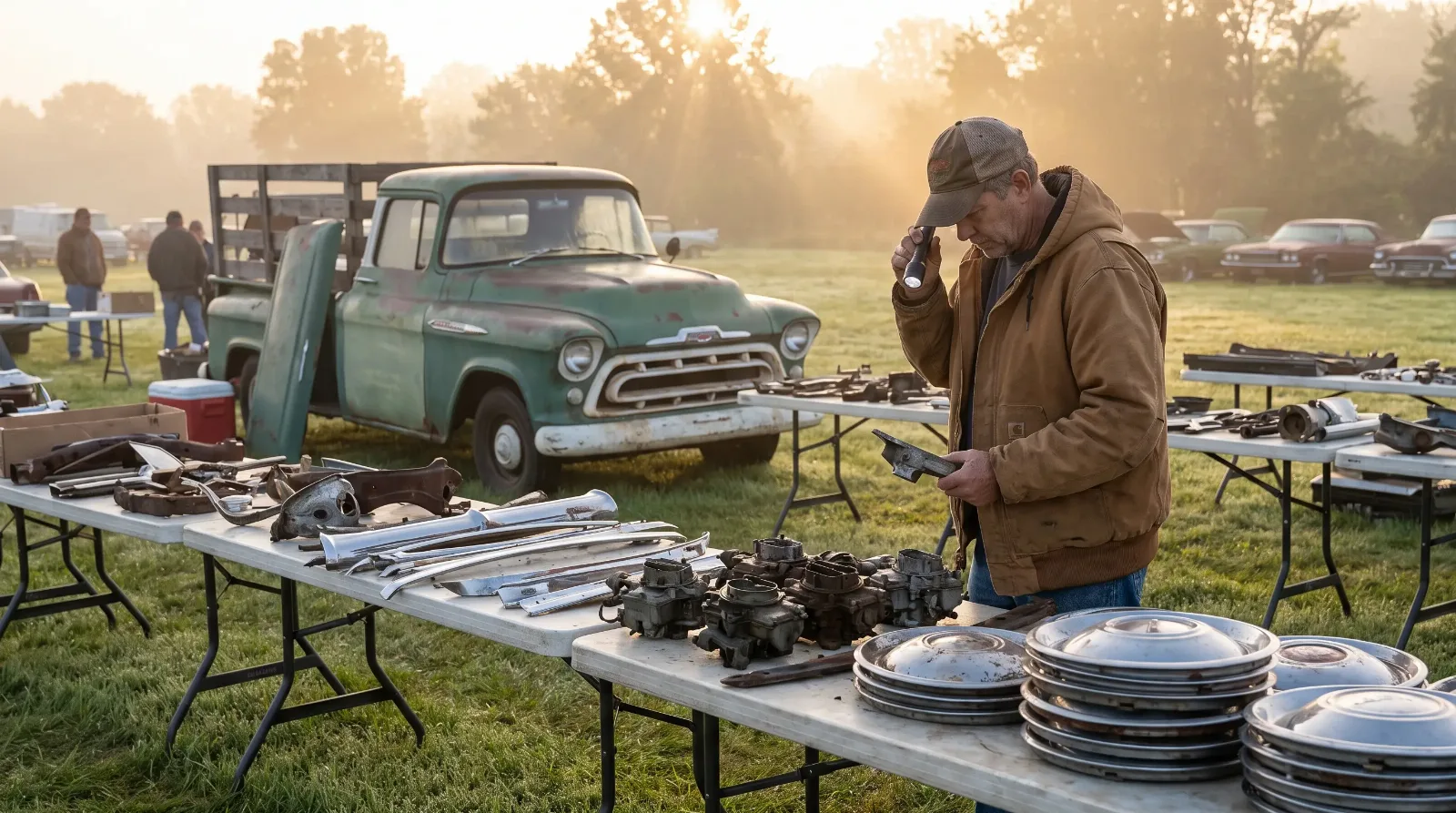
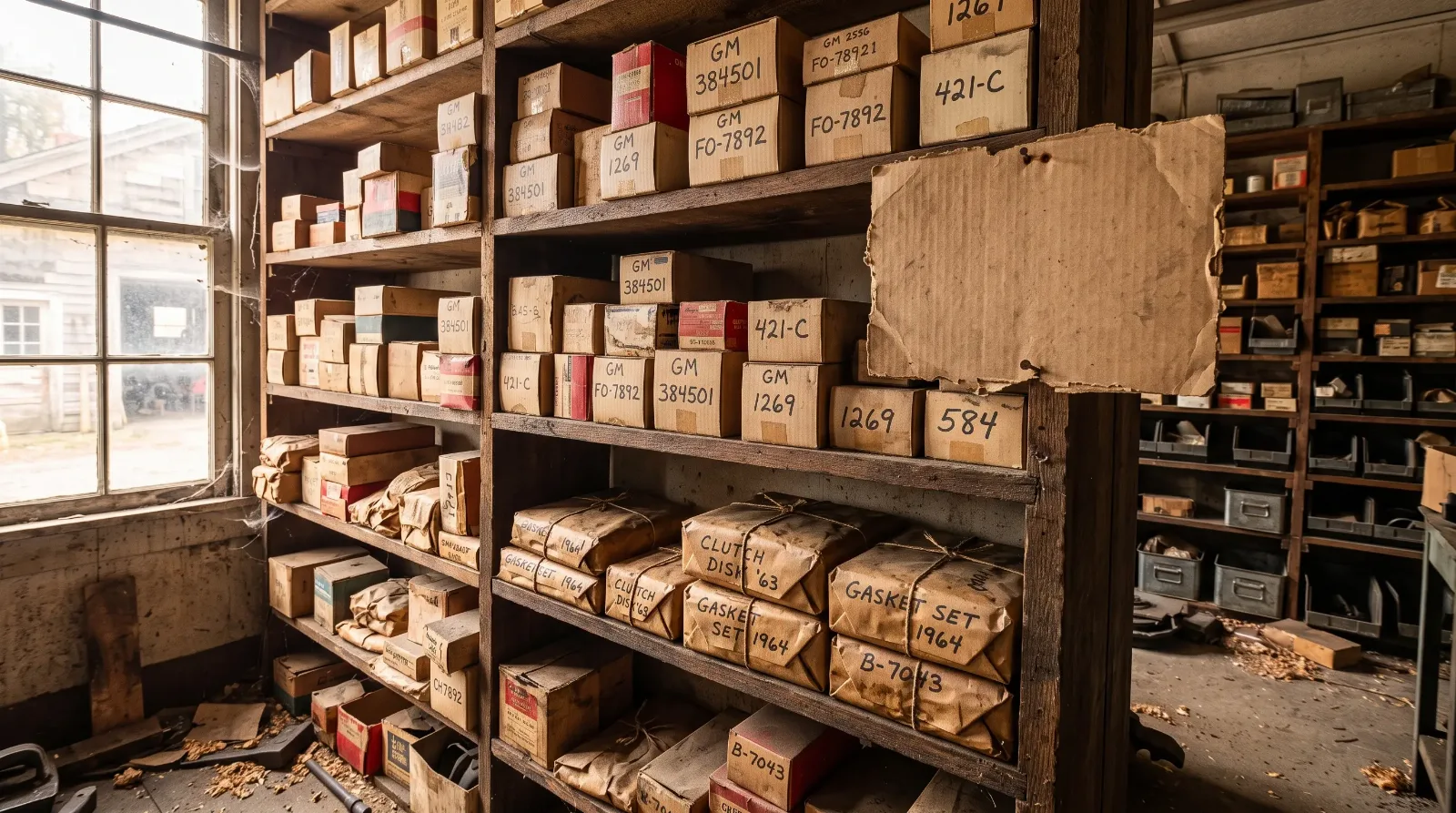
Every parts table at a swap meet has a hand-lettered sign somewhere that says NOS, and every year somebody argues with the seller about what it means. The seller usually has a confident answer. The buyer usually has a different one. They are rarely arguing about the same thing.
NOS stands for new old stock. It describes an original part that was manufactured decades ago, never sold to a customer, and never installed on a car. It sat in a warehouse, a dealer parts room or a box on a shelf until someone found it. That is the whole definition, and every piece of it matters.
The three words, one at a time
New means unused. The part was never fitted, never run and never worn. Old means it was made in the period, not last year. Stock means it came from inventory, not from a car. Take any one of those away and the label stops being accurate. A part pulled off a car and cleaned up is a used part. A part made recently to the old drawings is a reproduction. A part that sat in a box but was made by a different company than the one the car maker used is something else again.
The term also gets stretched. You will hear NOS applied to parts that were new when someone bought them in 1995 and stored them. That is old stock, but not necessarily from the period. For a restorer, the useful question is not whether the box is old. It is whether the part inside it was made to the car maker's specification in the right period.
NOS, NORS, OEM and reproduction
The vocabulary has grown, and it helps to keep it straight when you are shopping for classic car restoration parts.
| Term | Meaning | Where it falls in value |
|---|---|---|
| NOS | Original part, period made, never installed | Highest, often a premium over reproduction |
| NORS | New old replacement stock, an aftermarket or supplier part made in the period and never used | Good, but not factory correct |
| OEM | Part made by the original equipment supplier, can be current production | Depends on whether it matches the original design |
| Reproduction | New part made to copy the original | Lowest, but widely available and usually fine for drivers |
| Used original | Taken off a car, cleaned or refinished | Varies with condition and correctness |
NORS is a useful term to know. It describes a part from an independent supplier that fit the car in the period, often sold through a parts store rather than the dealer. These can be perfectly good, but a judge checking for factory-correct details may not accept them. For the full comparison, the existing article on weighing reproduction against NOS and original parts lays out when each one earns its place.
Why people pay more for NOS
NOS commands a price for three reasons. First, it is original, so the fit, finish and markings match what the factory built. Second, it is scarce, because only so many were made and fewer survived unused. Third, in judged restorations it can earn credit that a reproduction cannot. Date codes, part numbers and the look of the finish are all things a careful judge may check.
The premium varies a lot. Real NOS usually costs more than a reproduction, and for a common part the gap may be modest. A scarce trim piece, a rare emblem or a hard-to-find mechanical part often sells for several times the cost of a modern copy. When a part is no longer reproduced, NOS may be the only way to get one at all.
What NOS does not guarantee
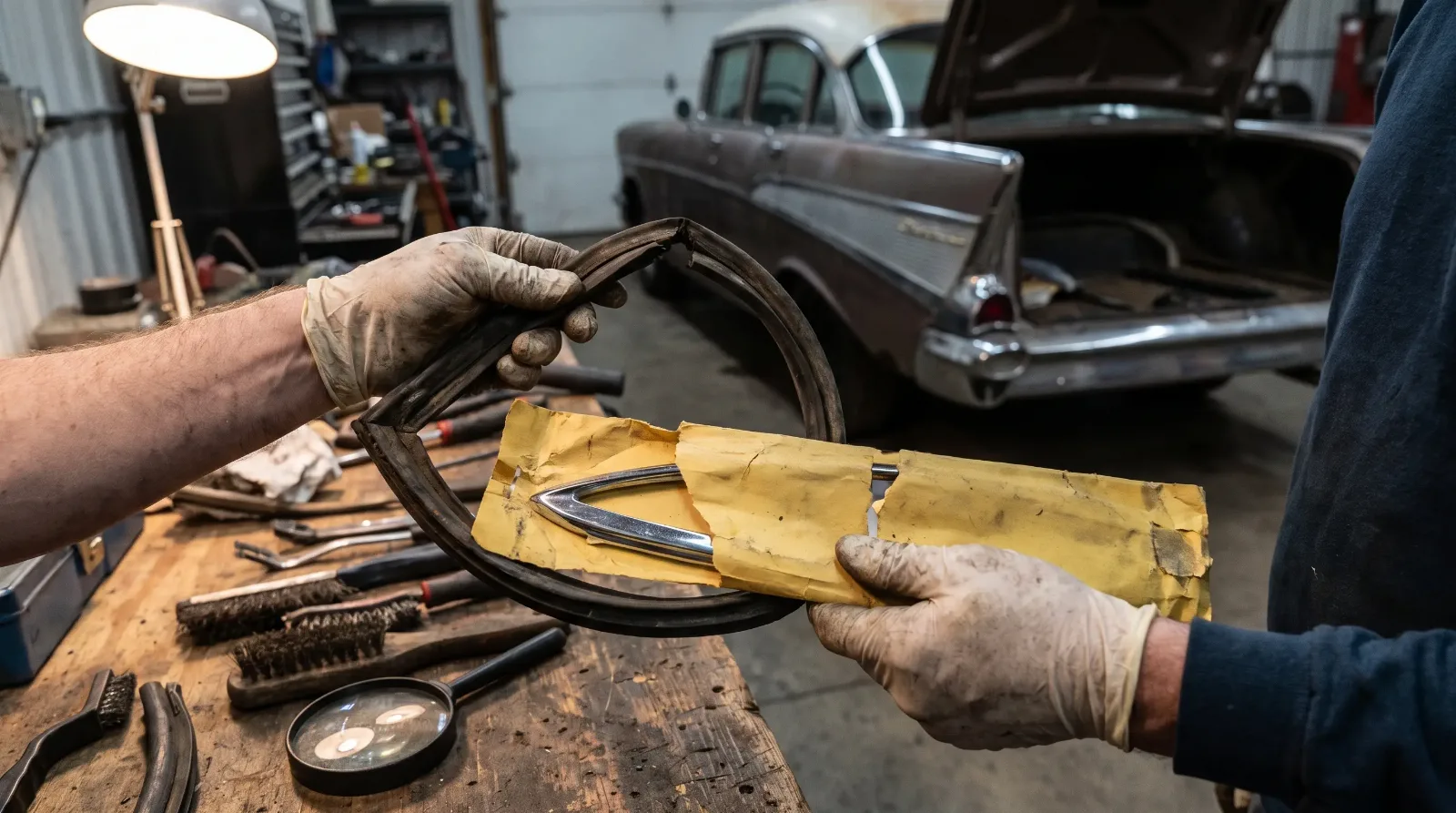
Here is the part that gets people in trouble. NOS does not mean perfect. A part can sit in a box for fifty years and still deteriorate. Rubber hardens and cracks. Seals dry out. Chrome can pit under old packaging. Paint on a bracket can flake. Old gaskets may no longer seal. Anything made of rubber or soft plastic is a risk, and a sealed box does not make it immune. Rubber ages whether or not it is installed, so a brake hose is commonly treated as a roughly six-year part no matter how few miles it has covered, and a hose that sat on a shelf for decades deserves the same suspicion.
It also does not guarantee authenticity. Because the NOS label carries a price premium, some parts have been repackaged, relabeled or passed off as original when they are not. That deserves its own discussion, and the guide to avoiding fake NOS covers the signs to look for. For now, treat the word on the sign as a claim, not a fact.
"Everybody trusts the box until somebody opens it. The part inside is what you are buying, so look at the part."
Wayne Coburn
How to buy NOS without regret
Start by asking the seller where the part came from. A real NOS find has a story: a dealership that closed, an estate sale, a warehouse clearance. The story does not prove anything, but a seller who cannot tell you anything is a warning. Ask about the part number and compare it to a parts book or factory catalog for the car. Check that the packaging matches the period, including the brand, the printing and the way the part is wrapped.
Look at the part itself. Original NOS usually shows its age in subtle ways, like a slight yellowing of the wrapper or light oxidation on bare metal, rather than looking freshly made. Be wary of anything too clean. Check rubber and plastic components for stiffness, and test any seal you plan to rely on.
Finally, decide whether you need NOS at all. If the car is a driver, a good reproduction may serve you better, last longer and cost much less. If it is headed for a judged field, then NOS in the correct places is worth the money. Spend it where it shows.
The short version
NOS means an original, period-made part that never went on a car. One wrinkle: a service-parts NOS piece sold over the counter can differ slightly from the one used on the assembly line, so check it against the car. It is valuable because it is correct and scarce, and it is risky because of age and because the label is easy to misuse. Learn the terms, ask the seller for the story, inspect what is inside the box, and put your money where originality actually counts.
Sources and notes
- Popular Restorations, sourcing parts for a restoration, NOS defined as never-installed factory parts, usual premium, caution with NOS claims, and long-established shops as sources
- Wikipedia, New old stock, the term, its alternate reading as new original stock, and the collector premium
- MustangSpecs, deciphering Ford part numbers, how Ford prefixes identify service parts and divisions
- AutoGuide, Ford boosts restoration parts inventory, licensed reproduction parts and their fit compared with earlier poorly fitting copies
- MGOC Spares, extending the life of rubber parts, rubber degrades with age whether or not it is used
- Phoenix Systems, how often to replace brake hoses, roughly six years regardless of mileage and internal deterioration